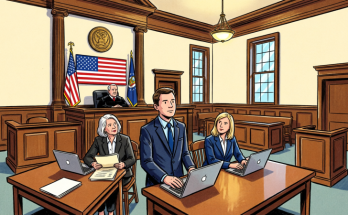
Brandon chose compliance, because he finally understood the court wasn’t impressed by his entitlement.
As we left the courthouse, he tried to speak to me.
Sarah stepped between us without hesitation. “No contact,” she reminded him, voice sharp.
Brandon’s eyes met mine anyway. He looked like he wanted to say something meaningful, but he didn’t know how.
Maybe he never did.
I didn’t feel triumph as I walked away.
I felt closure.Not the kind that repairs relationships. The kind that seals a door.
Back at the beach house, I hosted a wedding for the Patterson daughter on a bright August morning. White chairs on the lawn. Soft music over the sound of waves. People laughing in a way that didn’t take anything from me.
After the ceremony, Mrs. Patterson hugged me and said, “This house feels like a gift.”
I looked out at the ocean and smiled. “It is,” I said. “To me.”
That night, I sat on the deck alone, barefoot, watching the moonlight ripple across the water. The air smelled like salt and grilled shrimp from a neighbor’s barbecue.
My phone buzzed.
An email from Sarah.
Brandon’s attorney has sent another letter. Formal apology. Requests counseling. Requests limited visitation.
I stared at the message for a long time.
The old part of me—the mother part—felt the ache first. The instinct to fix, to soften, to give one more chance.
Then the newer part of me—the woman who’d survived boardrooms and betrayal—stood up.
Because apologies that arrive through attorneys are usually strategies, not transformations.
I wrote Sarah back one sentence.
Respond with the same statement.
Miss Sterling has moved on with her life and wishes you well in yours.
Then I turned my phone face down and went back to watching the ocean.
I didn’t feel angry anymore.
I felt free.
And that, I realized, was the real surprise—not the catering bill, not the LLC, not the courtroom victories.
The real surprise was how peaceful life becomes when you stop negotiating with someone who only understands control.
In the morning, I woke to sunlight spilling across my deck like gold.
I made coffee.
I breathed.
And I enjoyed the retirement I bought for myself—fully, finally, and without anyone else’s permission.
Part 9
By September, the Outer Banks looked like a postcard again—thin crowds, softer light, mornings cool enough to make you reach for a sweater. The rental calendar stayed packed anyway, because peace sells, and after the summer chaos I’d survived, I had a very specific relationship with peace.
It wasn’t a feeling.
It was a policy.
I’d just finished reviewing next month’s bookings when David Chen from the management company called. His voice had the careful edge of someone who’d learned my family came with complications.
“Ms. Sterling,” he said, “we’re tracking a tropical system. Could become something significant. I wanted you aware before the guests start seeing headlines.”
I glanced out at the ocean. Calm. Innocent. Like it had never torn roofs off houses in the same breath it gave people sunsets.
“What’s the forecast?” I asked.
“Uncertain,” David said. “But the model has it strengthening fast. If it turns into a hurricane, we’ll be looking at evacuation protocols.”
I nodded, even though he couldn’t see me. “Keep me updated,” I said. “And make sure guests get clear information. No panic, just facts.”
That afternoon, the sky turned that particular shade of gray that makes locals stop joking and start checking plywood. The air got heavy. The wind shifted. If you’ve lived near the ocean long enough, your body learns to recognize when the water is thinking.
The guests currently in the house were a young couple from Ohio celebrating an anniversary. They’d been polite from the start, the kind of renters who left shoes by the door and wiped counters without being asked.
Kara, the wife, knocked on my door near dusk. “Mrs. Sterling,” she said, cheeks flushed from the wind, “we saw the news. Are we in danger?”
I didn’t pretend the ocean was harmless. “Not tonight,” I said. “But we prepare early. That’s how coastal living works.”
Her husband, Matt, hovered behind her. “We don’t want to be a burden,” he said quickly. “If we need to leave, we will.”
I smiled. “You won’t be a burden,” I said. “You’re paying for a vacation, not a disaster. Let me do my job as the homeowner and make sure you’re safe.”
That night, I did what I always did when a situation tried to become emotional: I turned it into a plan.
I walked through the house and checked supplies—flashlights, batteries, bottled water, first aid kit. I confirmed the generator had fuel. I pulled the outdoor furniture inside. I shut storm shutters on the windward side.
Then I did something I hadn’t expected to do again.
I called Brandon’s attorney.
Not to talk to Brandon. Not to re-open the wound. But because I’d learned a hard truth: storms make people opportunistic. And Brandon’s entire recent personality was opportunism disguised as “family concern.”
Sarah answered before the first ring finished.
“Eleanor,” she said, “tell me you’re calling because you need legal reassurance and not because your son found a new way to be awful.”
“I’ve got a hurricane watch,” I said. “If there’s an evacuation, I want everything documented. If Brandon tries to show up, or tries to use this as an excuse to violate the order, I want immediate enforcement.”
Sarah exhaled. “Smart,” she said. “I’ll notify the sheriff’s office that the protective order remains active regardless of emergency conditions. And Eleanor—if you evacuate, go somewhere your son doesn’t know.”
“He doesn’t know my hotel preferences,” I replied.
“Good,” Sarah said. “Keep it that way.”
Two days later, the storm strengthened.
The weather warnings shifted from casual to urgent. Evacuation orders began for lower-lying areas. The management company called every guest in the next week’s bookings, offering rescheduling or cancellation without penalty. Some people chose to come anyway—because people who don’t live near the ocean tend to think storms are entertainment until the power goes out.
Kara and Matt decided to leave early.
“We don’t want to be trapped,” Kara said, hugging herself against the wind. “My mother would have a heart attack if we stayed.”
“I don’t blame her,” I said. “Drive safe.”
They left with polite gratitude, and the house fell quiet again.
That’s when Brandon tried to come back into the story.
Not with a knock.
With a post.
A neighbor texted me a screenshot: Brandon had put something on social media, tagged with my town name and a dramatic caption about “worrying for an elderly parent living alone on the coast” and “hoping she’s safe.” He didn’t mention the protective order. He didn’t mention the threats. He didn’t mention the locksmith.
He just framed himself as the worried son.
The comments were full of people who didn’t know anything cheering him on.
You’re such a good son.Go check on her.
Family first.
My jaw tightened so hard it hurt.
This was what Brandon was good at: public performance. He didn’t need to win in court if he could win the narrative. He didn’t need access to my house if he could access pity.
I didn’t respond online. I didn’t argue in the comments. I didn’t feed the machine.
Instead I called Mike Santos.
“Mike,” I said, “I need documentation. Screenshots, timestamps, everything. If Brandon uses this storm to violate the order or harass me again, I want a clean record.”
Mike didn’t sound surprised. “Already on it,” he said. “And Eleanor? He’s not just posting. He’s messaging people.”
My stomach dropped. “Who?”
“Local community groups,” Mike said. “Trying to fish for your evacuation plans. He’s asking where you’ll go, who’s checking on you, whether anyone has keys.”
The storm outside wasn’t the only one building.
“Okay,” I said, voice steady. “Keep tracking.”
That evening, as the wind began to howl and the first hard rain hit the shutters, my driveway camera lit up.
A car.
I leaned closer to the feed, and my stomach turned cold.
Brandon, stepping out, hood up, walking toward my gate like he belonged there.
Not alone.
Melissa was with him.
And behind them, Patricia.
A full theater cast, ready for a “concerned family” scene.
I didn’t open the door.
I didn’t step onto the porch.
I watched them from the security screen as Brandon tried the keypad I’d installed and failed. Then he pressed the intercom button.
His voice crackled through the speaker. “Mom,” he said, louder than necessary. “It’s me. We came to make sure you’re safe.”
I lifted my phone and called the sheriff’s office with the same calm I used when vendors tried to slip extra fees into contracts.
“This is Eleanor Sterling,” I said. “Protective order violation in progress. My son is at my property attempting entry.”
Brandon pressed the intercom again, voice rising. “Mom, don’t be stubborn. There’s a storm coming. You need family.”
Family.
As if he hadn’t tried to weaponize family into a court case.
As if he hadn’t called APS.
As if he hadn’t tried to pry my locks open.
I spoke into the intercom once, keeping my voice low and clear.
“You are trespassing,” I said. “Leave now.”
Brandon’s voice sharpened. “This is ridiculous—”
A siren cut him off, distant at first, then closer.
He turned his head toward the road, and even through the camera I saw his posture change. Not regret. Calculation. He didn’t want deputies on his record again.
Melissa tugged his arm. Patricia gestured in frustration.
Brandon leaned in one last time, trying to salvage the performance. “I’m trying to help you,” he called.
“No,” I said, voice steady. “You’re trying to be seen helping.”
The deputies arrived, headlights cutting through rain. Brandon backed away before they even reached the gate.
By the time the deputy knocked on my front door—professional, calm—Brandon’s car was already disappearing down my street.
The storm outside kept roaring.
But inside my house, something settled.
Not fear.
Certainty.
Brandon had tried to use the hurricane as a ladder back into my life.
Instead, he’d just shown the court exactly what kind of man he was under pressure.
The same kind.
Only now, I was done treating him like a weather event I had to endure.
I was treating him like a threat I knew how to contain.
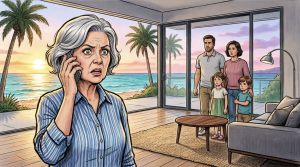
Part 10
The hurricane never hit us head-on.
It skirted the coast, angry and unpredictable, dumping rain and pulling the ocean into a frenzy, then drifting north like it had simply come to remind everyone who was in charge. We lost power for a day. A few homes down the road lost sections of roof. The dunes shifted. The beach looked rearranged, like a child had dragged fingers through sand.
When the wind calmed, the neighborhood emerged slowly—people checking fences, pulling debris out of yards, waving at each other with that quiet camaraderie you only see after shared danger.
I walked the property with David on a video call, showing him any damage so insurance could be filed properly. “Shingles are intact,” I said. “No flooding inside. Some deck furniture got scuffed, but that’s cosmetic.”
“Good,” David said. “You got lucky.”
“I got prepared,” I replied, and I didn’t say it with arrogance. Just truth.
The next day, Sarah emailed me: the sheriff’s report of Brandon’s trespass attempt had been filed. The deputies had documented the intercom exchange. Mike had screenshots of Brandon’s social media posts and local group messages.
Sarah’s note was short.
If you want to press for contempt, we can.
I stared at the message for a long moment, then wrote back:
Yes.
Not because I enjoyed the process. Because I understood patterns.
Brandon didn’t learn from mercy. He learned from enforcement.
A week later, the contempt hearing happened in the same courthouse where Brandon had once looked at me like I was ruining his life.
This time, he looked tired.
He walked in with Melissa, both of them stiff and silent. Patricia wasn’t there. I assumed she’d decided this wasn’t fun anymore now that deputies were involved.
Brandon’s lawyer tried to frame the trespass as a “misunderstanding in a time of emergency.”
Sarah didn’t raise her voice. She simply laid down evidence like bricks.
“He arrived with multiple adults,” Sarah said. “He attempted entry. He pressed the intercom repeatedly. He fled when law enforcement arrived.”
Brandon’s lawyer tried again. “He was concerned for his mother’s safety.”
Sarah nodded slightly. “Concern does not override a protective order,” she said. “And the respondent’s history shows that ‘concern’ is his preferred costume for coercion.”
The judge looked at Brandon with weary clarity.
“Mr. Sterling,” she said, “you have continued to violate boundaries. Do you understand what a protective order is?”
Brandon swallowed. “Yes.”
“Do you understand you do not get exceptions because you share DNA?” she asked.
Brandon’s jaw tightened. “Yes.”
The judge leaned forward slightly. “Then explain why you went to the property.”
Brandon’s voice came out quieter than I’d ever heard it. “I thought… I thought it was different because of the storm.”
The judge didn’t soften. “No,” she said. “It’s not different. It’s worse. You used a crisis to push a boundary.”
She held him in contempt and ordered supervised compliance requirements—meaning if he violated again, there wouldn’t be warnings. There would be consequences that involved bars and time.
Brandon’s face tightened with humiliation.
I didn’t feel happy.
I felt protected.
After court, Sarah walked with me down the courthouse steps.
“You’re doing the right thing,” she said.
“I know,” I replied. “It just doesn’t feel good.”
Sarah nodded. “Doing the right thing rarely feels good when it involves family,” she said. “But it feels better than being bullied.”
Back at the house, the management company resumed bookings. The next renters arrived with apology and gratitude. The ocean returned to being beautiful instead of threatening.
But Brandon wasn’t done trying to salvage his own story.
Two weeks after the contempt hearing, a certified letter arrived from an insurance adjuster.
It was brief and confusing: a claim had been initiated related to “storm damages” on my property, filed by someone claiming to be authorized to act on my behalf.
My stomach went cold.
I called the adjuster immediately. “This is Eleanor Sterling,” I said. “I did not initiate any claim.”
A pause. “Ma’am,” the adjuster said cautiously, “the claim was filed by a Brandon Sterling. He provided identifying information.”
Of course he did.
Brandon couldn’t get into my house, so he tried to get into my money.
“Flag it as fraud,” I said. “And I want the documentation of the filing.”
The adjuster’s tone shifted. “Yes, ma’am,” he said. “We will.”
I called Sarah, and Sarah called the insurance company’s legal department.This time, Brandon’s lawyer didn’t have a friendly explanation.
Because insurance fraud doesn’t live in the soft gray area of family conflict. It lives in criminal territory.
When Brandon realized what was happening, he sent another letter through his attorney—an apology, a claim of misunderstanding, a request to “resolve privately.”
Sarah showed me the letter and raised an eyebrow. “Do you want to resolve privately?” she asked.
I stared at the paper. Brandon’s phrasing was careful. Smooth. Like he’d learned to write remorse without changing behavior.
“No,” I said. “I want a record.”
Sarah nodded. “Then we proceed.”
We filed another report. We submitted the insurance documentation. We forwarded the adjuster’s statement. Brandon’s attempt to exploit the storm didn’t just backfire—it detonated.
For the first time since this began, I saw real consequences ripple into his life.
Melissa’s social media disappeared. Brandon’s business page went dark. Mutual acquaintances stopped calling me with “concerned” questions about my health, because people tend to shut up when the word fraud enters a conversation.
One evening, as I watched the sun sink into the Atlantic, my phone buzzed with a text from an unknown number.
It was short.
Mom. Please. I’m sorry. I didn’t mean it.
I stared at it a long time.
Not because I believed it.
Because I recognized it.
That was the sound of a man realizing his favorite tools—guilt, threat, performance—had finally run out of power.
I didn’t respond.
I forwarded it to Sarah as documentation and set my phone down.
Then I poured myself a glass of wine and listened to the ocean.
Some people mistake silence for weakness.
Brandon had learned, the hard way, that my silence was a door locking.
Part 11
By winter, Brandon’s life looked smaller from a distance.
Not because I enjoyed watching him fall, but because information travels in coastal towns the way wind does—quietly, inevitably. Sarah didn’t share details unless they mattered, but certain things become visible when legal systems start pulling threads.
Brandon’s insurance fraud report triggered a deeper look into his finances. The harassment of tenants, the false APS report, the attempt to access management records, the locksmith incident—each one was a breadcrumb. Together they formed a pattern.
And patterns are what prosecutors understand.
Sarah called me one morning with a tone that meant she’d just read something unpleasant.
“Eleanor,” she said, “the district attorney’s office is considering charges.”
My chest tightened. “Charges for what, specifically?”
“False reporting,” Sarah said. “Harassment. Potential fraud related to the insurance claim attempt. They’re also looking at whether his behavior qualifies as attempted elder financial exploitation.”
I closed my eyes for a second. I’d wanted consequences, yes. But wanting consequences doesn’t erase the fact that Brandon used to be the baby I held at three a.m. when he cried with a fever.
“What happens now?” I asked.
“They’ll likely offer a plea,” Sarah said. “Probation, court-ordered counseling, strict no-contact continuing. Potential community service. Possibly a short jail term if the judge wants to make a point.”
I exhaled slowly. “And if he fights?”
“Then it becomes public,” Sarah said. “And the evidence is… not kind.”
Two weeks later, Brandon’s lawyer requested a meeting.
Not with Brandon present.
Just lawyers.
Sarah asked if I wanted to attend. “You don’t have to,” she said. “Sometimes it’s better not to sit in the same room with someone who trained themselves to treat you like an asset.”
I surprised myself by saying, “I’ll come.”
Not because I wanted to negotiate.
Because I wanted to see what reality looked like on his side now.
The meeting took place in a neutral conference room with bad lighting and worse coffee. Brandon’s attorney—someone new, someone sharper—arrived with a thick folder and an expression that suggested she’d inherited a mess.
“Ms. Sterling,” she said, polite but strained, “my client is prepared to accept responsibility.”
Sarah didn’t move. “Define responsibility,” she said.
The attorney cleared her throat. “He’s willing to plead to the false report and harassment elements,” she said. “He will agree to a long-term no-contact order. He will attend counseling. He will cease all inquiries about the property.”
“And the insurance claim?” Sarah asked.
A pause. “He claims he misunderstood authorization.”
Sarah’s tone turned colder. “A grown man doesn’t misunderstand authorization when he’s filing a claim on someone else’s property,” she said. “He understood. He gambled.”
The attorney swallowed. “He’s… under financial stress,” she said, as if that was a moral coupon.
Sarah’s smile was thin. “So are most criminals,” she replied.
I watched the exchange with a strange calm. A year ago, I would’ve been shaking. Now I felt almost clinical, like I was observing a negotiation from the outside of myself.
“What does he want?” I asked.
The attorney hesitated. “He wants… a path back,” she admitted. “He wants reconciliation.”
My jaw tightened. “Reconciliation isn’t something you request through legal counsel,” I said.
Sarah glanced at me, approving.
The attorney looked uncomfortable. “He is genuinely sorry,” she said.
I leaned forward slightly. “Is he sorry he hurt me,” I asked, “or sorry he got caught?”
The attorney’s silence answered louder than words.
Sarah closed her folder. “Here’s what my client wants,” she said, voice firm. “No contact. No access. No inquiries. No public commentary. And restitution for legal fees and documented damages.”
The attorney blinked. “Restitution?”
“Yes,” Sarah said. “Your client created costs. He will pay them.”
There was negotiation after that—numbers, timelines, compliance terms. Nothing dramatic. Just the slow, grinding work of turning harm into accountability.
In the end, Brandon accepted a plea arrangement. Probation. Mandatory counseling. Community service through a local senior advocacy program—ironic, but appropriate. Extended no-contact. Restitution payments.
No “visitation rights.”
No court-mandated family therapy.
No special access because he shared my blood.
When Sarah called me with the final details, she sounded relieved. “This closes a chapter,” she said.
“Good,” I replied.
That night, I sat on my deck wrapped in a blanket, watching moonlight ripple across the water. The air was cold enough to sting. The house was quiet.
And then I felt it: grief, settling in like a low tide.
Because a closed chapter is still a loss.
A week later, Sarah forwarded me something unexpected.
A letter.
Not from Brandon’s lawyer.
From Brandon’s therapist, sent through official channels with Sarah’s review.
It was short. No demands. No manipulation. No threats disguised as concern.
Just a page in Brandon’s handwriting.
Mom,
I don’t deserve a response. I’m writing because my therapist said responsibility means naming what I did without excuses.
I threatened you. I tried to control you. I lied about you. I used your life like it was something I could manage.
I told myself it was protection. It wasn’t. It was fear and greed and entitlement.
I don’t expect forgiveness. I know I broke something I may never repair.
I’m sorry for humiliating you. I’m sorry for trying to turn strangers against you. I’m sorry for making you feel unsafe in your own home.
If you never want to speak to me again, I understand. I’m going to keep going to counseling anyway.
Brandon
I read it twice.
Then I sat very still.
The letter didn’t erase what happened. It didn’t rebuild trust. But it also didn’t smell like performance.
For the first time in a long time, Brandon’s words didn’t feel like a lever.
They felt like a human admitting he’d been ugly.
I didn’t respond.
Not because I wanted to punish him.
Because I wasn’t ready.
And because forgiveness, if it ever came, would come on my schedule—not his.
I folded the letter and placed it in a file labeled CLOSED, not because the story was gone, but because the control was.
Then I went back outside, listened to the ocean, and let myself feel the strange mix of relief and sadness that comes when you finally stop pretending a broken thing isn’t broken.
Part 12
Two years after I bought the beach house, I stopped thinking of it as a battlefield.
It became what it was always supposed to be: a place where my nervous system could rest.
The rentals were still profitable, but they didn’t run my life. The management company handled everything. I kept strict screening. No “family exceptions.” No personal key copies floating around. People paid, people stayed, people left.
And the house stayed mine.
I expanded the legal aid clinic into something bigger—a quarterly program that brought in elder-law attorneys, financial counselors, and a retired judge who explained conservatorship rules in plain English and terrified the right people with her bluntness.
We called it the Independence Clinic.
The first year, it served sixty people. The second year, it served nearly two hundred.
It wasn’t charity in the sentimental sense.
It was prevention.
One morning, between bookings, I hosted a small group of first-generation business students at the house—scholarship winners from the trust I’d set up. They were nervous, polite, amazed by the ocean view. They asked me questions about selling a company, about negotiating contracts, about how to spot manipulation dressed as love.
I told them the truth.
“Success makes people curious,” I said, holding a mug of coffee. “Curious isn’t always dangerous. But entitlement is. And entitlement will wear any outfit that gets it through your door.”
A young woman in the group raised her hand. “How did you… not crumble?” she asked.
I looked at the water and thought about Brandon’s threats, the crowd in my foyer, the locks clamping shut around my boundaries.
“I did crumble,” I admitted. “Quietly. Then I rebuilt myself with policies.”
They laughed nervously.
I smiled. “I’m serious,” I said. “Feelings matter, but they’re not enough. You protect your life with structure.”
After they left, the house returned to its calm rhythm. Wind. Waves. Sunlight. The kind of quiet that used to feel unfamiliar and now felt like a reward.
Brandon stayed away.
He complied with the orders. He paid restitution slowly. Through Sarah, I learned he’d separated from Melissa. I didn’t celebrate it. But it wasn’t surprising. Relationships built on taking rarely survive accountability.
Sometimes, once a year, a letter arrived through the same therapeutic channel. Never a demand. Never a request to meet. Just updates that felt like someone practicing honesty.
I got a job. I’m paying my bills. I’m staying sober. I’m learning.
I never wrote back.
Not because I hated him.
Because writing back would have reopened a door I’d fought too hard to seal.
One November afternoon, I received a call from Sarah.
“Eleanor,” she said, “I want you to know something before you hear it from anyone else. Brandon’s probation ends next month. The no-contact order can remain, but legally, the court supervision will be done.”
I stared out at the gray ocean. “Okay,” I said.
Sarah hesitated. “Are you nervous?”
I checked my body for fear. There was none. Not anymore. Just awareness.
“I’m prepared,” I said.
That night, I walked through my house and checked the locks—not obsessively, just routinely, the way you check a seatbelt before a drive.
Then I poured myself a glass of champagne.
Not the angry kind. Not the triumphant kind.
The quiet kind you drink when you realize you’ve made it to a life you can actually live in.
I stepped onto the deck. The sky was clear, stars sharp above the dark water.
I thought about the first day I arrived here, champagne in hand, believing retirement would be an easy exhale.
It hadn’t been easy.
But it had been mine.
I raised my glass toward the ocean, toward the darkness, toward the life that kept moving no matter what people tried to take from you.
“To peace,” I said softly.
The wind carried my words away, indifferent and perfect.
Inside, my phone buzzed once.
A message from Sarah: No new filings. Quiet.
Good, I thought.
I finished my champagne and went back inside.
The next morning, I woke up early, made coffee, and sat in my favorite chair by the window. The sun rose over the Atlantic in slow, patient gold. The world looked new again, like it always does when you give it permission.
I didn’t feel like a woman who’d lost a son.
I felt like a woman who’d saved herself.
And that, in the end, was the real surprise.
Not that Brandon tried to bring a crowd.
Not that I outmaneuvered him.
But that I learned, at sixty-four, that retirement isn’t just about rest.
It’s about finally refusing to live on anyone else’s terms.
THE END!
Disclaimer: Our stories are inspired by real-life events but are carefully rewritten for entertainment. Any resemblance to actual people or situations is purely coincidental.