Grace absorbed the information slowly.
Three toes gone.
Permanent nerve damage.
But she was alive.
Her babies were alive.
That was enough.
“I want to see them,” Grace said.
Twenty minutes later she was wheeled into the neonatal intensive care unit.
Two incubators stood side by side.
Inside were the smallest babies Grace had ever seen.
Emma had dark hair.
Noah was blond.
They looked nothing alike.
Fraternal twins.
Tiny wires and tubes surrounded them, but their chests rose and fell steadily.
Grace reached through the opening in Emma’s incubator and gently touched her hand.
“Mama’s here,” she whispered.
A nurse stood nearby watching.
“They’re amazing,” the nurse said. Her name tag read Jennifer. “The doctors keep saying it’s impossible.”
“They get it from their mother,” a voice said behind Grace.
She turned.
Connor Hayes stood in the doorway.
Tall. Dark hair. Expensive suit.
She remembered him immediately.
“You saved us,” Grace said.
Connor stepped closer.
“I noticed a car,” he said simply. “Anyone would have checked.”
“But you did.”
Grace’s voice broke.
“You saved my babies.”
Connor shook his head.
“You saved them. You delivered two babies alone in a freezer and kept them alive for ten hours. I just opened a door.”
Grace studied him carefully.
“You’re Connor Hayes,” she said slowly. “Derek’s old business partner.”
“Enemy,” Connor corrected quietly.
“He stole from me seven years ago. Nearly destroyed my life.”
He looked toward the incubators.
“But right now, I’m here because you need help.”
Grace absorbed that.
Connor continued.
“Derek’s mother is hiring the best lawyers money can buy. You’re going to need someone who isn’t afraid of them.”
Before Grace could respond, the NICU doors burst open.
“Grace!”
A red-haired woman rushed forward with tears streaming down her face.
Rachel Morrison.
Grace’s best friend from college.
Rachel hugged her carefully.
“The news said Derek tried to kill you,” Rachel said, shaking. “I couldn’t believe it.”
“It’s true,” Grace said quietly.
Rachel looked at the babies.
“They’re beautiful.”
Grace followed her gaze.
“They’re alive,” she said. “That’s all that matters.”
But memories were flooding back now.
All the red flags she had ignored.
Derek controlling their finances.
Questioning every purchase.
Gradually pushing her away from friends.
Convincing her that her family did not understand their marriage.
Isolation had come slowly.
One small decision at a time.
Until Derek was her entire world.
Grace looked at the people standing beside her now—Rachel, Connor, Dr. Matthews.
“I know what people will ask,” she said.
“Why didn’t I leave?”
No one interrupted.
“You can’t see the cage when someone builds it one bar at a time.”
The words hung in the air.
Grace turned back toward her children.
“But I’m out now,” she said.
“And I’m never going back.”
Connor kept his promise.
Within days he brought financial records, emails, and evidence about Derek’s past.
“Derek has four hundred thousand dollars in gambling debt,” Connor explained.
Grace stared at the documents.
“Your life insurance policy is two million,” he added. “He increased it six months ago.”
Grace felt sick.
“How long has he been planning this?”
“At least since you got pregnant.”
Detective Laura Friedman soon arrived to take Grace’s formal statement.
Grace described everything.
The phone call.
The empty building.
The freezer.
Derek’s voice explaining the insurance money.
The ten hours of cold.
The birth.
The desperate effort to keep her babies alive.
Detective Friedman listened carefully.
“This is one of the worst domestic violence cases I’ve ever investigated,” she said when Grace finished.
“But it’s also one of the strongest.”
Security footage.
Keycard logs.
Medical evidence.
Everything aligned.
But Derek had money.
And powerful lawyers.
Connor leaned forward.
“Let them try.”
He placed another folder on the table.
Inside were documents from seven years earlier.
Evidence that Derek had committed fraud against Connor when they were business partners.
Forged signatures.
Financial deception.
A pattern of manipulation.
“If we introduce this,” Connor said, “it proves Derek’s behavior wasn’t a mistake. It shows a pattern.”
Grace looked at him carefully.
“You could get in trouble for withholding this evidence.”
Connor shrugged slightly.
“Maybe.”
“Then why help me?”
Connor considered the question.
“Seven years ago Derek stole my work and destroyed my reputation. I spent years rebuilding my life.”
He paused.
“Then I found you in that freezer.”
Grace waited.
“And I remembered what it felt like to do something without calculating the return on investment.”
Grace studied him.
For the first time since waking up, she felt the smallest flicker of trust.
“Okay,” she said quietly.
“Help me.”
Derek’s arraignment became national news.
The story spread quickly.
A pharmaceutical manager accused of locking his pregnant wife inside a freezer.
Twins born at −50°F.
A miraculous survival.
Grace watched the coverage from her hospital room.
Derek appeared on television wearing a tailored suit and a devastated expression.
He cried during interviews.
He claimed he loved his wife.
He called the accusations a tragic misunderstanding.
His mother, Marjorie Bennett, stood beside him during press conferences and defended his character.
“He would never hurt his family,” she insisted.
Some media outlets believed him.
Others questioned Grace’s story.
Online comments accused her of exaggeration.
Some suggested pregnancy hormones had made her unstable.
Rachel paced angrily in the hospital room.
“He’s gaslighting the entire country.”
Grace watched the screen calmly.
“That’s what he does,” she said.
Her phone rang.
Unknown number.
She answered.
“Grace,” a voice said.
It was Marjorie Bennett.
“I want you to drop these ridiculous charges,” Marjorie said. “Derek made a mistake. You’re being vindictive.”
Grace’s voice stayed steady.
“He locked me in a freezer to die for insurance money.”
“You were always dramatic,” Marjorie replied coldly. “Derek says pregnancy made you unstable.”
Grace hung up.
Then she deleted the voicemail that followed without listening.
Connor returned that evening with more evidence.
Security footage showed Derek entering the freezer with Grace.
Twenty minutes later he left alone.
Then he drove away.
Sixteen hours later he returned to the building and reported Grace missing.
“He had already prepared a story,” Detective Friedman explained.
“He claimed you called saying you needed space.”
Grace felt a strange calm settle over her.
Every detail had been planned.
Every lie rehearsed.
Derek had been minutes away from committing the perfect murder.
“I’m testifying,” Grace said.
Connor frowned.
“His lawyers will attack everything. Your memory. Your mental health.”
Grace looked toward the NICU hallway.
“I survived a freezer,” she said quietly.
“I can survive a courtroom.”
Weeks later, Emma and Noah came home from the hospital.
They were still small but strong.
Grace moved into a small apartment.
Rachel helped set it up.
Connor quietly paid for furniture and legal fees.
Grace noticed.
“Why are you doing all this?” she asked one evening.
Connor shrugged.
“I’m a billionaire,” he said simply.
“That money doesn’t change my life. But helping you might change yours.”
Grace looked at him carefully.
“I don’t know how to repay you.”
“I’m not asking you to.”
He stood up to leave.
“Just focus on your babies.”
Grace watched him go.
For the first time in years, someone had helped her without expecting anything in return.
It was unfamiliar.
And terrifying.
But it was also the first real step toward rebuilding her life.
Part 3
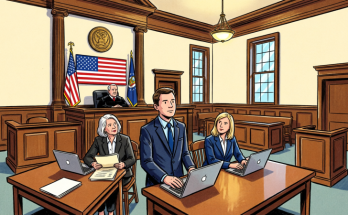
The trial began on a cold Monday morning in February.
Grace arrived early and sat beside the prosecution team wearing a navy-blue suit Rachel had helped her choose. It was simple, conservative, and strong—the kind of clothing that demanded seriousness without saying a word.
Across the courtroom, Derek Bennett sat beside his attorneys.
His suit was immaculate. His hair was perfectly styled. His expression carried the look of a wounded man falsely accused.
Grace studied his face and felt nothing.
Jury selection lasted two full days.
The prosecution wanted jurors who could understand the horror of the crime—parents, women, people who would grasp the reality of a pregnant woman locked in a freezer.
The defense wanted the opposite. Jurors who might view Grace as emotional or unstable. People who might doubt her.
In the end the jury consisted of seven women and five men. Their ages ranged from twenty-eight to sixty-five. Some had children. Some did not.
It was a cross-section of ordinary citizens.
It would have to be enough.
Opening statements painted two completely different realities.
The prosecution described a calculated plan. A man drowning in gambling debt who increased his wife’s life insurance policy to two million dollars and devised a murder disguised as an accident.
They described the empty building, the locked freezer, the ten hours of freezing exposure, and the birth of two premature babies inside a metal room designed to store pharmaceuticals.
The defense told a different story.
They described a tragic misunderstanding. A stressed husband, a confused wife, pregnancy hormones, and an unfortunate accident.
Grace watched the jurors carefully.
Some nodded during the prosecutor’s statements.
Others looked thoughtful during the defense’s argument.
The trial would not be easy.
The first witnesses were security personnel.
They confirmed the keycard logs showing Derek entering Storage Bay C at 9:05 p.m.
They confirmed that he left alone twenty minutes later.
Security footage showed the same sequence clearly.
Derek entering the freezer corridor with Grace.
Derek exiting alone.
Then leaving the building.
Next came medical testimony.
Dr. Vivian Matthews took the stand.
She described Grace’s injuries in precise clinical language—severe hypothermia, frostbite, nerve damage, and the amputation of three toes.
She explained the medical impossibility of surviving prolonged exposure to −50°F.
“In my thirty years as an emergency physician,” she testified, “I have never seen anyone survive exposure like this.”
She paused before continuing.
“The fact that Mrs. Bennett delivered two premature babies under those conditions and kept them alive is beyond extraordinary.”
The defense attempted to challenge her.
They suggested confusion, exaggeration, or memory distortion caused by trauma.
Dr. Matthews shut the argument down calmly.
“The injuries speak for themselves,” she said. “Medical evidence does not lie.”
Connor Hayes testified next.
He described noticing the abandoned car in the parking lot.
He explained how the hazard lights had been blinking for hours and how the phone inside the car suggested someone had disappeared suddenly.
He described the moment the freezer door opened.
And what he saw inside.
“A woman and two newborn babies,” Connor said quietly.
“All alive.”
The courtroom remained silent.
The prosecution then introduced Connor’s evidence regarding Derek’s past fraud.
The defense objected repeatedly.
The judge overruled them.
The evidence established a pattern of deception and calculated financial manipulation.
It strengthened the prosecution’s argument that Derek was capable of planning elaborate crimes.
Grace took the stand on the fourth day of the trial.
She had rehearsed her testimony countless times.
But sitting in the witness chair across from Derek still felt surreal.
The prosecutor asked her to begin at the start of that night.
Grace described the phone call.
The empty building.
The moment the freezer door closed.
She repeated Derek’s words exactly as she remembered them.
“The life insurance pays triple for accidental death.”
She described the cold.
The contractions.
The birth of Emma and Noah on the frozen floor.
Her voice remained steady throughout.
She did not cry.
She simply told the truth.
The defense attorney began cross-examination.
The questions were sharp and aggressive.
“Mrs. Bennett, isn’t it true you threatened to leave your husband shortly before this incident?”
“Yes,” Grace answered. “After he pushed me down the stairs while I was five months pregnant.”
The attorney changed direction.
“Isn’t it true you suffered from depression during your marriage?”
“Yes,” Grace said calmly. “Because I was living with an abusive husband.”
Another attempt.
“Is it possible your memory of the event was distorted by stress or pregnancy hormones?”
“No,” Grace said. “I remember every second.”
The attorney pressed harder.
“Mrs. Bennett, these accusations have brought you public sympathy and financial support. Isn’t it possible you benefit from portraying your husband as a monster?”
Grace looked directly at him.
“I benefit from being alive.”
The courtroom fell silent.
After nearly an hour, the defense attorney ended the cross-examination.
Grace stepped down from the stand.
Rachel squeezed her hand.
Connor gave a small nod.
Grace had done exactly what she needed to do.
The defense called their own witnesses.
Several of Derek’s coworkers testified about his professionalism and kindness.
Friends described him as generous and hardworking.
Finally, Derek’s mother took the stand.
Marjorie Bennett spoke harshly about Grace.
She described her as unstable, jealous, and manipulative.
She suggested Grace had exaggerated the entire incident to destroy Derek’s reputation.
Grace listened without reacting.
Then the defense called their final witness.
A woman named Miranda Stevens.
She testified that she had dated Derek several years before he met Grace.
The defense attorney asked about Derek’s character.
“He’s kind,” Miranda said nervously. “He cares deeply about family.”
Then the attorney asked about Grace.
“Have you ever observed Mrs. Bennett’s behavior toward Mr. Bennett?”
Miranda hesitated.
“She seemed jealous… controlling… quick to anger.”
Grace felt her stomach drop.
The testimony sounded convincing.
The jurors listened carefully.
The defense attorney sat down.
The prosecutor rose slowly for cross-examination.
“Miss Stevens,” she asked, “how did you come to testify today?”
“Mr. Bennett’s lawyer contacted me,” Miranda said.
“And were you compensated for your testimony?”
Miranda hesitated again.
“Yes.”
“How much?”
“Ten thousand dollars.”
The courtroom erupted in noise.
The judge struck the gavel repeatedly.
Miranda began crying.
“I’m sorry,” she said. “I can’t do this.”
She turned toward the jury.
“Derek paid me to lie.”
Gasps filled the room.
“He did the same thing to me,” Miranda continued. “Seven years ago he locked me in an apartment basement for three days when I tried to leave him.”
She wiped her face.
“I was too scared to report it then. But I can’t stay silent now.”
The defense had no response.
Their case collapsed instantly.
The jury deliberated for six hours.
Grace paced the hallway outside the courtroom.
Connor sat beside her.
“Whatever happens,” he said quietly, “we’ll deal with it.”
Grace nodded but said nothing.
The bailiff finally called them back inside.
The jury had reached a verdict.
Grace could barely breathe.
“On the charge of attempted murder of Grace Bennett,” the judge said, “how do you find?”
“Guilty.”
Grace’s knees weakened.
Rachel caught her arm.
“On the charge of attempted murder of Emma Bennett?”
“Guilty.”
“On the charge of attempted murder of Noah Bennett?”
“Guilty.”
Three guilty verdicts.
Derek Bennett was sentenced to three consecutive life sentences.
He would never be released.
Six months later, Grace’s life looked completely different.
She lived in a small house in a quiet neighborhood.
Emma and Noah were thriving.
They laughed constantly and had no memory of the freezer.
Grace worked from home as a marketing consultant, rebuilding her career and financial independence.
Connor visited often.
At first it was simply dinner, conversation, and help with the twins.
Over time it became routine.
One evening Grace asked him a question.
“Why are you really here?”
Connor thought for a moment.
“Because you reminded me how to be human.”
Grace smiled slightly.
But trust still came slowly.
Months passed before she allowed herself to consider the possibility of something more.
Their first real date happened nearly a year after the trial.
It was simple dinner at a quiet restaurant.
Grace felt nervous and out of practice.
Connor remained patient.
Their first kiss came months later.
Grace cried afterward—not from sadness but from relief.
She had thought happiness was no longer possible.
Now she knew it was.
Derek attempted several appeals from prison.
Every request was denied.
Grace changed the twins’ last name to Morrison—her maiden name.
Derek Bennett disappeared from their lives completely.
On Emma and Noah’s first birthday, Connor proposed.
It was a quiet moment in Grace’s backyard.
“I don’t want to rescue you,” Connor said. “You already saved yourself. But I would like to be part of your family.”
Grace took time to think.
She spoke with her therapist, her parents, and Rachel.
Only when she felt certain she was choosing freely did she say yes.
They married in a small ceremony surrounded by friends and family.
Connor legally adopted Emma and Noah.
The twins began calling him “Dad.”
Five years later, Grace stood on stage at a domestic violence awareness conference.
Thousands of people filled the auditorium.
She told them her story.
The marriage.
The freezer.
The birth.
The survival.
“Derek thought cold would kill me,” she said.
“Instead, it forged me into someone who cannot be broken.”
She paused.
“I survived because people showed up. A doctor who believed me. A detective who investigated. A stranger who noticed something wrong.”
Grace looked toward Connor sitting in the audience with Emma and Noah.
“And a man who understood that love means standing beside someone—not saving them.”
The audience rose in applause.
After the speech, dozens of women approached her.
Some were survivors.
Some were still trapped in abusive relationships.
Grace listened to every story.
She gave them resources.
Hope.
Proof that survival was possible.
That healing was real.
That evening Grace returned home.
Emma and Noah were six years old now.
Connor was cooking dinner.
The children were arguing over homework at the kitchen table.
The house was noisy and messy.
It was perfect.
Later that night Grace and Connor sat together on the porch.
“What are you thinking?” Connor asked.
Grace smiled.
“That I’m happy.”
She looked toward the house where their children slept peacefully.
“Derek tried to erase me,” she said quietly.
“Instead, he forced me to discover how strong I really was.”
Connor squeezed her hand.
Grace leaned against him, feeling safe and calm.
The freezer was no longer the center of her story.
It was just one chapter.
The rest of her life was still being written.
And it was beautiful.
Ending