The call kept me awake all night, because an unknown voice repeated two words as if they were a condemnation: “DNA scandal,” and I felt like the whole house was breathing fear with me.
My name is Lara, I am twenty-nine years old, and for months the neighborhood looked at me with the exact mixture of curiosity and judgment that appears when a young woman marries an eighty-year-old man.
Don Raúl Hernández lived next door before I rented my small apartment, and he was one of those old people who greet you by name, who repair other people’s locks and never accept more payment than a coffee.
His house was old, humble and beautiful, with a patio full of bougainvillea, a crooked lemon tree and an iron bench where he read every afternoon as if the world still had time.
The problem arose when his nephews arrived, three people who didn’t know the color of his favorite cup, but did know the value of the land, and began to “help” by asking for papers, keys and signatures.
One morning I saw one of them checking the mailbox without permission, and that same afternoon Raúl confessed to me, with a shame that was not his own, that they wanted to declare him incapable of selling the house.
They had no moral right, but they did have legal resources, and he was tired, and besides, there was a cruel detail: the overdue loan, the accumulated taxes, and a threat of foreclosure that he hid so as not to worry anyone.
I wasn’t rich, but I worked in accounting, I understood numbers and tricks, and when I saw the letter from the bank I knew it wasn’t just debt, it was the perfect lever to push him out of her life.
Raul told me that he didn’t want to fight, that he just wanted to die in his armchair, looking at his lemon tree, without ending up in a cold residence while others divided up what he built with the hands of a carpenter.
That night I brought soup, and without planning it we ended up talking about my childhood, about my mother who died young, about how I had sworn not to look the other way when someone was alone.
It was then that I heard my own voice propose the unthinkable, not as a movie romance but as a desperate strategy: “Marry me, and let them try to move you if I am your wife.”
Raúl looked at me for a long time, with those clear eyes that always seemed calm, and said that he didn’t want to drag me into a fight, that people would talk, that my life could be complicated because of someone else’s house.
I replied that the house was not foreign, that it was his history, and that if the world insisted on measuring everything on paper, then we would use the oldest and most powerful paper: the marriage certificate.
We got married at the civil registry on a Tuesday, with two neighbors as witnesses, and without music or expensive dresses, just a bouquet of flowers from the garden and a brief promise to take care of each other in everyday life.
The scandal still came, because it always does when someone loses control of an inheritance, and the next day the nephews appeared with strained smiles and a lawyer who spoke as if he had already won.
They filed a lawsuit to invalidate the will that Raúl had updated, alleging undue influence, manipulation, and “abuse” of an elderly person, as if my care were a crime and his loneliness an argument.
I took a deep breath, because I knew that the trial would not be about love or dignity, but about how to turn suspicions into headlines and headlines into pressure, until one gives up from exhaustion.
For weeks I endured stares in the store, comments in the hairdresser’s and laughter disguised as a joke, while I organized documents, paid arrears and took care of Raúl when his hands trembled.
And then something happened that no one saw coming, not even me: I became pregnant, and the news spread like wildfire, multiplying rumors and awakening an older greed.
The nephews stopped pretending to be polite, and their lawyer uttered the phrase that ignited my anger: “It is biologically improbable that I will be a father at eighty, so this smells like fraud.”
My blood wasn’t boiling over because of the money, because money was never the driving force behind my decision, but because of the automatic contempt that people reserve for what they don’t understand.
Raúl, with his stubborn calm, held my hand and said that if the world needed proof, we would provide it, but that no one was going to call the son we already felt was the truth a lie.
The neighborhood, which had previously murmured, lined up like a silent wall when it saw the cruelty, and Doña Carmen began to bring food as if feeding us was also an act of defense.
Mr. Julian fixed the fence and the back door for free, saying that Raul had paid for his medicine years ago without asking for anything, and that now it was his turn to return the favor.
Each neighbor remembered something different about Raúl: help during storms, a repair in the early morning, an outstretched hand when no one was looking, and that shared memory became my best armor.
Even so, the system required paperwork, not stories, and the next day the nephews’ lawyer officially filed a request for genetic testing with the court.
They alleged that I was fabricating a paternity to secure the house, that the marriage was a setup, and that the baby was “the final tool” of a carefully designed scam.
The judge accepted the evidence with a neutral expression, and that neutrality frightened me more than the insults, because it contained no justice, only procedure.
For days I lived with a knot in my stomach, not because I doubted Raúl, but because I doubted the spectacle, because I doubted what people invent when a signature is worth more than a life.
The clinic took the samples with a coldness that hurt, and I saw Raúl press his lips together while a technician talked about percentages as if love were measured in columns.
At home, at night, he would tell me stories to calm my anxiety, and he would say that fear is a thief that enters when one believes that one does not deserve to defend what one loves.
I listened to him, but I also heard inside me the murmur of other voices, the “he surely did it for his own gain”, the “how strange”, the “poor man”, as if they were all experts on my soul.
The nephews didn’t come to see him, they came to count rooms, to mention “market value”, to insinuate that I should leave “for the good of all”, as if the good were a calculation.
My lawyer, a small but fierce woman named Mariela, told me to save every message, every visit, every threat, because legal predators feed on silence.
The pressure increased when a local blog published a poisonous headline about “the old man’s young wife and the miracle baby,” and I knew that the trial was already taking place outside the courtroom.
Even so, there were moments of light, like when I found Raúl in the courtyard caressing the lemon tree, speaking tenderly to the baby, as if the tree and the future were the same thing.
She told me she never imagined starting over at that age, that life sometimes opens up when one has already closed doors out of habit, and I cried without shame.
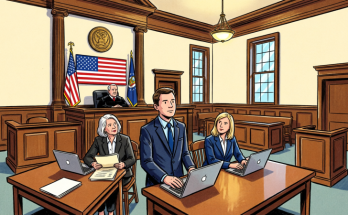
Three weeks later, the court set a hearing to open the results, and the room was filled as if it were a spectacle, with onlookers, journalists and relatives who smelled blood.
The nephews arrived dressed in anticipation of triumph, murmuring among themselves, and one even looked at my belly with a bitter smile, as if my son were an object in dispute.
Raúl entered slowly, leaning on his cane, but with his back straight, and when he sat down he squeezed my hand with a simple gesture that gave me back my breath.
The judge asked for silence, slowly opened the envelope containing the genetic test, and the paper crackled like a small thunderclap that stopped everyone’s breath.
“The test confirms with a 99.98% probability that the minor is the biological son of Mr. Raúl Hernández,” he read, and my whole body relaxed as if a rope had been loosened.
I felt the air return to my lungs, the noise of the world decrease in volume, and I saw my nephews turn pale as their confidence silently crumbled.
But the final blow didn’t come with the percentage, but with the next document, when Mariela stood up and asked for authorization to present a full video of Raúl.
The nephews had already shown an edited fragment, trying to portray him as confused, but Mariela explained that we had the complete recording, without cuts, without tricks.
On the screen appeared Raúl sitting in his favorite armchair, with the light from the patio behind him, looking at the camera with a serenity that made the entire room seem smaller.
“I know my family is going to fight this,” he said, “so let me make something else clear: even if biology hadn’t been possible, that child would still be my son.”
“Because blood begins life, but love sustains it,” he continued, and the silence that fell was different, not one of expectation, but of collective shame.
I saw a journalist lower her camera, I saw an official swallow hard, and I saw the judge blink more slowly, as if something human had broken through the wall of procedure.
Two weeks later the written judgment arrived, and every line felt like a solid brick: the marriage was valid, the will legitimate, and the house and property belonged to his wife and son.
The nephews appealed, of course, because greed rarely accepts limits at first, and for months they tried to reopen old wounds with technicalities and new rumors.
The appeal was rejected, and the war ended not with applause or celebrations, but with a profound weariness, as if the body could finally stop clenching its teeth.
Raúl aged faster that year, not because of the trial itself, but because of the weight of seeing his blood turned into a threat, and I learned that betrayal also tires the heart.
The day our son was born, the hospital smelled of soap and promise, and Raúl cried with humble joy, like someone receiving a gift he never asked for out loud.
She held him with trembling hands, sang him an old melody that her mother used to sing to her, and said that time is not measured in years, but in moments that justify having lived.
The neighborhood celebrated in silence, leaving diapers, food, blankets, without asking for photos or stories, because they understood that defending Raúl was defending themselves.
Sometimes people still think I married for money, and I don’t waste my energy arguing, because whoever only sees money in the world also sees lies in love.
The truth is simpler: I married to protect a man who didn’t deserve to end up alone or destitute, and I stayed because I discovered a tenderness with no expiration date.
One afternoon, when things had calmed down, I sat in the yard where it all began, and I watched my son kick a small ball with the same broad laughter as his father.
I looked at the house, that wooden structure and walls that so many tried to turn into loot, and I understood that it was actually memory, dignity and refuge built with repeated acts.
Raúl didn’t leave millions, he left a story and an example, he left a child who will grow up knowing that he was chosen with courage, not with calculation.
He also left behind a community that understood something essential: family is not always inherited or bought, sometimes it is chosen, and it is sustained by presence when the world turns dark.
And every time my son runs through the yard and the lemon tree casts its shadow over him, I remember the trial, the percentage, the video, and I smile because there is no sentence that can take away what is loved.