Part 4
By the end of the week, Birmingham felt smaller than ever.
News vans parked outside my father’s office. Reporters stood under the sun holding microphones, talking about “a prominent local developer” and “allegations that appear extensive.” People I hadn’t heard from in years messaged me with cautious congratulations, like they were afraid my father’s name might still carry consequences.
Victims came forward in waves. A retired couple who’d invested their savings in a project that didn’t exist. A nonprofit director who realized promised donations had been announced publicly but never arrived. A former business partner whose “joint venture” records didn’t match the money that vanished.
Every story added weight. Every detail confirmed the pattern.
My family, meanwhile, collapsed into noise.
Kevin left angry voicemails blaming me for “ruining everything.” Paige sent frantic texts about hiring lawyers. My mother called and screamed until she was hoarse, telling me I’d “killed” my father.
Only my grandmother stayed steady.
When she called, her voice was quiet and honest. “This is going to get worse before it gets better,” she warned. “Your father won’t go down quietly.”
“I know,” I said.
And she was right.
My father tried to move assets. Investigators froze accounts. He tried to spin narratives. Timothy published follow-up pieces. The attorney general’s office announced a formal investigation, and federal agencies joined because tax evasion doesn’t care about local reputation.
One Friday afternoon, exactly a week after the article, Timothy texted me a link.
I clicked it and watched a video of my father being led out of his office in handcuffs. Reporters shouted questions. Cameras flashed. His lawyer tried to block the view. My father looked directly into a camera, his face twisted with rage and humiliation.
I expected satisfaction.
What I felt was emptiness, like a door closing on something that had been loud my whole life.
My phone exploded again.
Kevin: I hope you’re proud of yourself.
Paige: This is your fault.
Mother: I will never forgive you.
Then, a message from my grandmother:
He made his choices. You made yours. I’m proud of you.
That night, I cried. Not because I regretted anything, but because grief is sneaky. It shows up even when you know you did the right thing. I cried for the child version of me who kept trying, who kept hoping a better family was hiding somewhere behind the cruelty.
Winston curled up beside me and purred until my breathing steadied.
Three months later, the trial began.
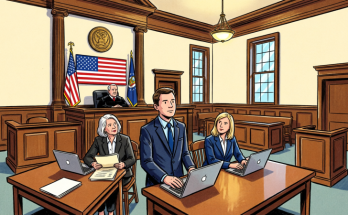
The charges were heavy: fraud, embezzlement, tax evasion. The courtroom was packed with victims, reporters, and people who just wanted to watch a powerful man fall.
My father didn’t look at me when I walked in.
My mother sat with Kevin and Paige on the opposite side, their faces stiff with anger and fear. Their world had been built on my father’s image. Now the image was evidence.
On day four, the prosecution called me to the stand.
I swore to tell the truth. I did.
I explained how I’d recognized patterns in documents my mother gave me. I explained the shell companies, the transfers, the forged signatures, the mismatched tax returns. I kept my voice calm and professional. I gave the jury facts, not drama.
My father’s lawyer tried to turn it into revenge.
“You were angry with your father,” he said.
“Yes,” I answered.
“And you wanted to hurt him.”
“I wanted the truth documented,” I said. “My feelings don’t change the bank statements.”
He tried again. “You were motivated by jealousy.”
“I was motivated by evidence,” I replied.
When I stepped down, I felt my father’s gaze for the first time in years. Not love. Not pride. Just a cold calculation that had finally run out of numbers.
After six weeks, the jury found him guilty on all counts.
Sentencing came three weeks later. Victims spoke. The judge listened.
When it was my turn, I stood and said what I needed to say, without theatrics.
“I spent most of my life trying to earn his approval,” I told the court. “I thought being perfect would make him love me. It didn’t. When I refused to be silent, he tried to destroy me. He failed.”
The judge sentenced my father to fifteen years in federal prison, plus restitution.
My mother sobbed. Kevin looked stunned. Paige stared straight ahead like she was trying not to vanish.
I felt relief. Real, clean relief.
Over the next year, the rest of the family fallout happened in slow motion.
My mother filed for divorce, not out of principle, but because she needed distance from the wreckage. Kevin lost his job after the scandal made its rounds. Paige’s boutique collapsed under debt she’d ignored for years.
I received one letter from my father. He asked for forgiveness. He wrote about “family” as if that word had ever protected me.
I didn’t respond.
Kevin and Paige tried to reach out eventually, using softer voices, claiming they understood now. I listened once, long enough to hear the hidden ask beneath their apologies: support, money, a bridge back to stability.
I declined politely.
Some people don’t miss you. They miss what you provided.
I stayed close to the one relationship that didn’t feel like a transaction: my grandmother.
We met once a month for lunch. She never pressured me. She never asked me to reconcile. She just looked at me like I was real.
One afternoon, as we sat near a window with sweet tea and fried green tomatoes, she reached across the table and squeezed my hand.
“You were alone for a long time,” she said.
I nodded. “Yeah.”
“You aren’t now,” she replied.
She was right.
My firm promoted me. I moved into a better apartment. I mentored younger analysts who reminded me of myself before I learned how to stop apologizing for existing. I built friendships that felt mutual. I dated carefully, not because I was afraid, but because I finally understood that love without respect isn’t love.
On the anniversary of the article, Timothy invited me to dinner. He didn’t treat it like a celebration. He treated it like a marker: the day the truth stopped hiding.
Afterward, I walked home through downtown Birmingham, the skyline glowing, the streets humming with ordinary life.
I thought about that fancy family dinner. The laughter. My father’s announcement. The way they’d all agreed I deserved nothing.
They had been wrong in the most important way.
They thought inheritance meant money.
They didn’t understand that what I’d inherited from them wasn’t wealth. It was resilience. Precision. The ability to watch a room full of people try to break you, take a sip of wine, and leave without giving them the satisfaction.
Two days after that dinner, their world began to burn.
A year later, mine was finally calm.
And when people asked me if it had been worth it, I always answered the same way, because it was the only honest answer:
I didn’t destroy my family.
I stopped letting them destroy me.
Part 5
The first time I saw my last name on a billboard, I almost choked on my coffee.
It wasn’t my father’s name anymore. Not in the polished, philanthropic way he’d paid for in glossy magazines and gala programs. It was in a lawyer advertisement that screamed consequences: victims’ rights, restitution, class actions, fraud representation.
Anderson was no longer a brand. It was a warning.
I sat in my new office at Bright Fen, the one they’d given me after the promotion, and watched the city move outside the window. Birmingham looked the same, but it felt different. Like everyone had learned to speak a little more carefully. Like people were finally aware that the men who shook hands at country clubs could also steal with a smile.
Patricia knocked once and stepped inside without waiting for an answer.
“You’ve got a visitor,” she said.
My stomach tightened on instinct. “Family?”
Patricia’s mouth twisted. “Worse. Howard’s former CFO.”
I stared at her. “He’s not in jail?”
“Not yet,” Patricia said. “He’s been cooperating. Federal loves a cooperative witness.”
My brain snapped into work-mode, a place I trusted more than feelings. “What does he want?”
Patricia’s eyes sharpened. “He asked for you by name.”
Of course he did.
In conference room B, a man in a tailored suit sat with his hands folded like he was waiting for a job interview. He was in his late forties, silver hair, calm face, eyes that didn’t quite meet mine.
“Ms. Anderson,” he said as I walked in, standing quickly. “Thank you for seeing me.”
“Call me Tara,” I said, taking the chair across from him. I didn’t offer my hand. I didn’t want his touch in my world.
He hesitated. “Tara. I’m Malcolm Redd.”
“I know,” I replied.
Malcolm swallowed. “I… worked for your father for nine years.”
“And you’re here,” I said calmly, “because you’re worried he’s going to take you down with him.”
His eyes flicked up. Not offended. Just caught.
“I’m here,” he said carefully, “because there’s more.”
I didn’t move. “More what?”
“More people,” he said quietly. “More deals. More money moving through places you haven’t looked.”
My pulse stayed steady, but my mind lit up. “Are you telling me my father didn’t do this alone?”
Malcolm’s mouth tightened. “Your father was the face. But Birmingham real estate… it’s a web. Always has been. He wasn’t the only one using shell entities. He wasn’t the only one inflating expenses.”
I watched him, letting the silence stretch until he had to fill it with truth.
“I’ve been cooperating with federal investigators,” he continued. “They asked me who could map the structure cleanly. Who could explain it in a way a jury would understand. I told them you could.”
I almost laughed at the irony. My father had spent decades telling everyone I was unremarkable. And now his world needed my competence to finish collapsing properly.
“Why are you telling me this?” I asked.
Malcolm’s eyes looked tired. “Because Howard Anderson is furious,” he admitted. “He’s telling everyone you framed him. He’s telling certain people that you ruined them, too.”
I felt cold settle in my bones. “Is that a threat?”
“It’s a warning,” Malcolm said. “You should be careful.”
Patricia’s voice cut in from beside me. “She is careful.”
Malcolm stood, smoothing his suit jacket. “They’ll contact you,” he said, and slid a card across the table. It wasn’t his personal number. It was a federal agent’s.
After he left, Patricia closed the door and exhaled.
“You okay?” she asked.
“I’m fine,” I said automatically.
Patricia raised an eyebrow.
I corrected myself. “I’m functional.”
She nodded once, like that was a respectable answer in our line of work. “The Feds are digging wider,” she said. “If they ask for you, it’s because they trust your work. It’s also because you’re now… visible.”
Visible. That word used to feel like victory. Now it felt like a target.
That evening, I drove home and sat in my car for a full minute before going inside. Winston pressed his face against the window, meowing like he’d been holding a grudge all day.
Inside, my apartment felt safe in its smallness. I fed Winston, set my keys down, and checked my phone.
There was a missed call from an unknown number.
Then another.
Then a text.
You think you’re untouchable now? You’re still an Anderson.
I stared at the message, my heartbeat slow and deliberate. Fear tried to rise, but it couldn’t find the same foothold it used to. My father had trained me in one thing he never intended: staying calm when someone tried to scare me.
I took a screenshot, forwarded it to Patricia, and then to the federal agent on Malcolm’s card.
No drama. No panic.
Just documentation.
Two days later, a federal investigator met me in a coffee shop that smelled like burnt espresso and old muffins. He wore a plain jacket and the expression of someone who’d seen enough lies to stop reacting.
“We’re looking at broader corruption,” he said, sliding a folder toward me. “Contractors, appraisers, a few attorneys. The usual suspects.”
I opened the folder and felt my stomach drop.
Names I recognized. Men my father used to greet warmly at holiday parties. People my mother praised as “good families.” People whose kids went to school with Kevin and Paige.
“Why me?” I asked, voice level.
The investigator’s gaze held mine. “Because you understand the language,” he said. “And because you’re not afraid to tell the truth.”
I thought of the dinner again. The laughter. The way they’d all agreed I deserved nothing.
They’d been wrong about my value, but they’d been right about one thing: I wasn’t loyal in the way they wanted.
I was loyal to reality.
“I’ll help,” I said.
The chaos that followed wasn’t loud like family drama. It was procedural. Subpoenas. Depositions. Quiet meetings. The slow, grinding machine of accountability moving through the city.
My family tried to make it loud anyway.
Kevin showed up at my office once, unannounced, wearing a blazer like he was playing businessman for the day. The receptionist called me, voice wary.
“You have a… Kevin Anderson here. Says it’s urgent.”
I stepped into the lobby and saw him pacing like a caged animal.
“Tara,” he snapped when he saw me. “We need to talk.”
“We don’t,” I replied.
He glanced around at the polished lobby, the firm’s logo, the people walking by. His eyes narrowed with resentment. “You really think you’re something now.”
I held my expression neutral. “What do you want, Kevin?”
His voice dropped, urgent. “Dad’s going to prison for fifteen years. Mom’s broke. Paige is drowning. The family’s getting sued from every direction. And you’re just… sitting on your high horse.”
“I’m working,” I said.
Kevin’s jaw tightened. “We need help.”
There it was. Not remorse. Not apology. A request.
“What kind of help?” I asked, already knowing.
“Money,” he admitted, then quickly added, “Just a loan. Just until things stabilize. You owe us—”
I laughed once, sharp enough to make him flinch. “I owe you nothing.”
Kevin’s face reddened. “We’re family.”
“You weren’t family at that dinner,” I said calmly. “You were an audience.”
His eyes flicked with anger, then desperation. “You don’t understand what it’s like,” he snapped. “People look at us like we’re criminals now.”
“I do understand,” I replied. “I’ve been treated like a problem by this family my whole life. You’re just tasting it now.”
Kevin’s hands curled into fists. “So you’re going to let Mom lose the house?”
I stared at him. “What house?” I asked softly.
His expression faltered.
“The inheritance was gone,” I continued, voice steady. “Grandma told me. Dad was broke before he humiliated me. You all laughed anyway.”
Kevin’s mouth opened, then closed.
I stepped closer, lowering my voice. “If you want to rebuild your life, get a job. If Paige wants to stop drowning, stop pretending her boutique is a business and start being honest. If Mom wants to survive, she can do what she’s always expected other people to do: adjust.”
Kevin’s eyes flashed. “You’re cold.”
“No,” I said. “I’m clear.”
He stared at me for a long moment, then spat, “You’re going to regret this.”
“Maybe,” I said. “But not for the reasons you think.”
He stormed out, leaving the lobby buzzing with quiet curiosity.
That night, I sat on my couch with Winston purring against my leg and realized something I hadn’t expected.
The chaos wasn’t coming from me anymore.
It was coming from the consequences they’d spent decades dodging…..
Click Here to continuous Read Full Ending Story👉: Disinherited At Family Dinner. I Smiled. 2 Days Later, Chaos_part3(ending)