For one stupid, lingering moment, I still wanted an explanation that kept this smaller. Family theft I could understand, in a twisted way. Entitlement. Favoritism. Emotional manipulation. Ugly, yes. Criminal, sure. But laundering? Shell corporations? International movement? That was something else. Something that didn’t merely stain my family—it threatened to drag my own name into it, because the account they had siphoned from belonged to me.
“Focus on personal spending for now,” I said. “Track everything they bought for themselves. Trips. Watches. Bags. Cars.”
Daniel was silent.
Then he said, not unkindly, “Ignoring the larger pattern won’t make it disappear.”
“I know.”
But I wasn’t ready. Not yet.
For the next week, I lived in a grotesque double life.
By day I returned to the office, put on tailored suits, gave opinions in conference rooms, approved comps, joined calls with clients who had no idea I was spending every spare minute tracking the theft of my own life. By night I sat alone in my apartment and read Daniel’s encrypted updates.
Gucci. Rolex. First-class flights to Italy. A five-star resort in Lake Como. Furniture. Boat dock maintenance. Wine club memberships. A pair of custom golf clubs for my father.
Every indulgence had a date attached to it, and every date aligned almost perfectly with some moment when my mother or father had called sounding worried, beleaguered, embarrassed, in need.
There was one for a “plumbing emergency” that coincided with my mother posting a photo from Florence.
One for “property taxes” that coincided with Ryan’s Mustang upgrade.
One for “specialist consultations” that had funded a weekend in Napa.
Each item was disgusting on its own. Together they formed something worse than theft.
They formed contempt.
Then Daniel asked me a question that changed everything.
We were on a secure call late one evening when he said, “I need to understand whether there were other family assets. Legitimate ones. Inheritances. Trusts. Anything that might have seeded this before the joint account was tapped.”
My breath caught.
There was a pause long enough for him to notice.
“Ethan?”
“My grandmother,” I said.
Even saying the words made my skin go cold.
My maternal grandmother, Eleanor, had been the one clean love of my childhood. She never compared Ryan and me. Never weaponized generosity. Never confused success with worth. She would sit at her kitchen table with me for hours while I did math homework, sliding cookies toward me and asking questions no one else bothered asking: Are you happy? Do you feel lonely at school? Do you still want to live in New York one day? What kind of buildings do you dream about when you say architecture? She bought me my first proper suit for a debate competition and told me I looked like a man who would make rooms listen.
When she died, I was twenty-two and drowning in analyst hours. I flew home for the funeral and found my mother and father already managing everything. They told me afterward, with solemn regret, that Grandma Eleanor had left most of her estate to Ryan because “he needed a head start” and because she supposedly “always believed you would thrive on your own.”
It hurt at the time. Deeply. But I believed it because by then I believed everything that fit the family script. Ethan the capable one. Ethan the self-sufficient one. Ryan the golden boy who somehow always required more.
“Did you ever see the will?” Daniel asked.
I was already shaking.
“No.”
“You need to.”
The next morning, I drove to the county surrogate’s court where my grandmother’s estate had been probated.
The building was small, municipal, vaguely decaying. Inside, everything smelled like old paper and toner and dust. I filled out a records request form with fingers that wouldn’t quite steady, handed it to a bored clerk, and waited in a hard plastic chair while she disappeared into the back.
When she returned, she dropped a thin beige file on the counter and said, “Callahan estate.”
I carried it to a table in the records room and opened it.
I found the final distribution page almost immediately. My eyes skipped past the legal language until they landed on the sentence that cleaved my life cleanly in two.
I give, devise, and bequeath the entirety of my residuary estate, without encumbrance or condition, to my beloved grandson, Ethan Martin Callahan.
To Ethan.
To me.
The page blurred.
I blinked hard, looked again, and felt the room tilt.
Not Ryan.
Not split.
Not some complicated family arrangement with me nobly passed over because I was the strong one.
To me.
The file slid out of my hands and hit the floor.
People talk about betrayal as a sharp thing, like a knife, but that wasn’t what I felt in that courthouse records room. It was gravitational. Like something enormous inside me collapsed under its own weight and took every surrounding structure with it. The wire transfer, the lakehouse, the luxury purchases, even the laundering—suddenly they were not separate horrors. They were extensions of the original crime.
My parents had stolen my grandmother from me after she died.
Not her memory, because that remained mine and always would. But her final act of love. Her last protection. Her proof, written and legal and unambiguous, that someone in my family had seen me clearly and meant to arm me against exactly this kind of life.
And they had forged the story. Taken the money. Told me she had chosen Ryan.
I sat on the floor for a moment because my legs would not hold me.
Then I picked up the file, took photographs of every page, requested a certified copy, and walked out of the courthouse into bright daylight feeling like a different species of man.
Mrs. Whitaker texted me that evening.
There was no preamble, just a short message and an attached video.
You should see this, honey.
Please be careful.
I hit play.
The footage came from a home security camera mounted on the Whitakers’ garage. It was grainy and black-and-white, angled just right to capture my parents’ front steps and part of the driveway.
The timestamp read Thanksgiving Day, nineteen minutes after I had driven away.
I watched my father close the red front door. Then my mother and Ryan stepped out beside him.
And then the three of them laughed.
Not nervously. Not grimly. Not the brittle laughter of people caught in some painful necessity.
Real laughter.
My mother bent forward slightly, one hand to her chest.
“Oh, the look on his face,” she said, wiping at tears that were clearly from amusement. “Thomas, you were perfect. So cold.”
My father, the man who had taught me that dignity mattered, allowed himself a small, vicious smile.
“He served his purpose,” he said. “He won’t be a problem anymore.”
Ryan threw an arm around both of them and grinned straight into the yard.
“Cash cow’s gone,” he said. “But he already left us a whole barn full of milk.”
They laughed again.
Then they went back inside.
I watched the video three times in absolute silence.
By the third, I was no longer crying. I was no longer shaking. There is a kind of pain so total it burns itself out and leaves behind only clarity. That footage did it. It removed the final hiding place for doubt. There would be no reconciliation built on misunderstanding because there had never been misunderstanding. There had been calculation, mockery, greed, and delight.
I called my lawyer.
Her name was Julia Mercer, and she was exactly the kind of person people mean when they say shark as a compliment. I had used her once on a personal property dispute years earlier and remembered two things vividly: she did not waste words, and she did not blink.
When she answered, I said only, “I need you.”
By the time I arrived at her office the next morning, I had printed the grandmother’s will, the wire records, Daniel’s summary memos, and the stills from Mrs. Whitaker’s video. Julia listened while I spoke, said nothing for nearly twenty minutes, then leaned back in her chair and folded her hands.
“This is no longer civil theft,” she said. “This is criminal conspiracy.”
The words should have frightened me.
Instead they steadied me.
She brought Daniel in by secure video. He walked her through the structured transfers, the shell companies, the suspicious outbound wires. Julia skimmed the grandmother’s probate file, then the joint account authorization documents, then the video.
When she finished, she looked at me and said, “We’re going to federal law enforcement.”
I stared at her.
“White-collar crime,” she said. “Potential fraud, laundering, forgery, grand larceny. We hand them everything. We control the narrative before anyone tries to put your name in the wrong column.”
That decided it.
The next forty-eight hours moved with military precision.
Daniel assembled a forensic report that traced money from my accounts to the lakehouse, to Ryan’s dealership, to offshore shell entities. Julia drafted affidavits. I signed so many statements my hand cramped. By the end, we had a dossier thick enough to look theatrical.
The FBI office smelled like bad coffee and recirculated air.
Agent Torres from white-collar crime met us in a conference room with cinderblock walls and no decoration except a clock that seemed louder than clocks should ever be. He was broad-shouldered, tired-eyed, and carried the deeply ingrained skepticism of a man who had heard every version of family grievance and knew that many of them curdled into exaggeration the minute legal consequences entered the chat.
Julia presented cleanly.
Daniel walked him through the money trail.
Then she played the video.
Torres watched it once.
Then asked to see it again.
When it ended the second time, he rubbed a hand slowly over his jaw and looked at me with something like professional recognition.
“We’ve had Nate’s Premier Auto on a watch list for months,” he said. “Suspected vehicle export fraud. Titles, VIN swaps, shell movement, possible laundering. We couldn’t figure out the initial funding channel.”
Daniel slid a printout toward him.
Torres looked at it, then at me.
“You just gave us the front door.”
He extended his hand.
“Mr. Callahan,” he said, “thank you for coming in.”
The week that followed was the longest of my life.
I moved through my days in a state of suspended dread. Every phone vibration made my stomach seize. Every black SUV outside my building made me glance twice. I imagined a hundred outcomes—botched warrants, tipped-off suspects, evidence destroyed, my family somehow wriggling out and turning their full hatred on me.
Then, on a gray Tuesday morning, Agent Torres called.
“Warrants are being served now.”
I turned on the television.
The news helicopter footage came in shaky at first, then sharpened. Black SUVs fanned out across a long curved driveway leading to a lake property I recognized from Mrs. Whitaker’s description—stone facade, boathouse, wide glass windows facing the water. Ryan’s lakehouse. My lakehouse, if you followed the money back far enough.
Agents in tactical jackets moved with terrifying efficiency. Doors were breached. Men were led out.
Ryan came first.
He was handcuffed, his face twisted into a look I had never seen before because I had never seen him stripped of audience approval. He looked smaller without the smirk. Meaner. Ridiculous, almost. A boy caught playing gangster in expensive clothes.
Then the feed cut to my childhood home.
The red front door—my mother’s precious red door—hung open. My father stood on the front porch with two agents beside him, his face gray, shoulders caved in. My mother was brought out moments later, and for once her expression contained no artifice at all. Just raw animal panic.
The anchors were practically salivating.
Multi-state financial crime ring.
Luxury vehicle export scheme.
Money laundering.
Asset seizure.
Arrests in three counties.
My name was not mentioned.
I sat on my couch in Manhattan with a glass of water in my hand and watched the life that had shaped me be dismantled in real time.
There was no joy in it.
People imagine revenge as heat. As satisfaction. As some deep exhale after years of pain.
What I felt was cold.
Then something extraordinary happened.
As agents pushed my father toward the SUV, he twisted around and shouted—not at them, but toward the house, toward the cameras, toward anyone who would hear.
“It was him!” he yelled, jerking his chin back toward where Ryan had been taken. “It was all him! He was going to run with everything and leave us with nothing!”
Even then.
Even with handcuffs on his wrists and cameras overhead, even in the final collapse, his first instinct was not loyalty, not dignity, not silence.
It was betrayal.
That was the moment the last sentimental illusion died.
They were not merely a corrupt family. They were predators who had spent so long feeding on one another, protecting one another, using one another, that when the structure buckled they turned instantly, naturally, to self-preservation.
I turned off the television and sat in the quiet.
That was the sound of something ending.
The months after the arrests were their own strange war.
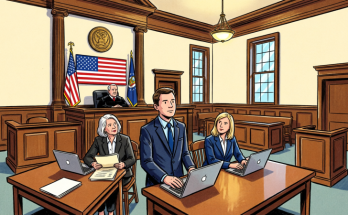
There were depositions. Sealed motions. Financial disclosures. Testimony. My firm’s internal review, which terrified me more than I admitted to anyone. Morgan Stanley did what powerful institutions do best when self-protection aligns with fairness: they investigated quickly, documented thoroughly, and concluded that I was the victim and reporting party, not a participant. I was given paid leave and discreet support. My managing director called me into his office after the internal review ended and said, with a sincerity I hadn’t expected, “Take care of yourself, Ethan. Deals can wait. This can’t.”
Then the jail calls started.
Ryan’s came first.
I almost didn’t answer. Morbid curiosity made me press accept.
He did not bother with apology.
“You sanctimonious bastard,” he spat the second the line connected. “You did this. You ruined all of us.”
There was a faint echo on the line, voices in the background, prison noise and static. He sounded smaller than I remembered, but not humbled. Rage had taken the place of charm the way rust takes the place of polish when metal is finally exposed.
“You stole from me,” I said.
“Oh, spare me. You always thought you were better than us. Better than this family. Better than me.”
I let the silence sit.
Then I said, “You stole Grandma Eleanor’s money. You stole from me for years. You used my account to fund your criminal operation. And you think I ruined you?”
His breathing sharpened.
“You were always jealous,” he hissed. “They loved me more, and you couldn’t stand it.”
There it was.
Not denial. Not even defense.
A confession of spirit, if not fact.
“I’m done with you,” I said.
“You think this is over?” His voice rose, feral now. “When I get out—”
I ended the call……….