My husband’s last words to me were not about love.
He did not whisper that he would miss me, or that I was his whole world, or anything that might have given me comfort as the machines hummed gently around his hospital bed. His fingers, cold and papery, dug suddenly into my wrist with a surprising strength, and his eyes, clouded but fiercely focused, locked onto mine.“Naomi,” he rasped. “Promise me you’ll never go to the old house in Blue Heron Ridge.”
I blinked at him, thinking I had misheard. The old house? In Blue Heron Ridge? We didn’t own property there. As far as I knew, my husband, Michael Quinn, owned exactly one house—the modest, ivy-covered colonial where we had spent seventeen years of marriage, raised our daughter, and argued over things as small as the proper way to organize spices.
“Michael, it’s okay,” I murmured, brushing his hair back from his damp forehead. “You don’t have to talk. Just rest.”
He shook his head, the EKG line flickering irregularly with the effort. His hand tightened more. “Promise me,” he repeated. His voice shredded, no more than a breath. “Don’t… go there. Never. Promise.”
The word “never” stabbed through the haze of grief and confusion like a pin through glass.
Something in his face—a panic, almost childlike—startled me. I had seen my husband angry, exhausted, delighted, even broken. But I had almost never seen him afraid. Not like this. His pupils had the wild, cornered look of an animal that smells fire.
“I promise,” I whispered, because I couldn’t think of what else to say, and because he was dying and my instinct was to give him anything that might soothe him, even if it made no sense. “I won’t go. I swear.”
Some of the tension left his body. His grip loosened, sliding from my wrist to the back of my hand. The sharp beeping of the machine slowed, then steadied.
“Good,” he said faintly. “Good, my love. I’m… I’m sorry.” Something like a smile flickered at the corner of his mouth. “You… you deserved more truth.”
I didn’t understand what he meant. I opened my mouth to ask—more truth about what? About Blue Heron Ridge? About our marriage? About him?
But the moment passed, stolen by a cough that shook his whole frame. Nurses flowed in, a blur of pale scrubs and efficient hands. There was a flurry of movement, the word “aneurysm” floating somewhere above my head like a balloon I couldn’t quite reach. Someone asked me to step back. Someone else touched my elbow, guiding me toward a chair I didn’t remember sitting in.
And then, suddenly and yet also after a lifetime, the room grew very quiet.
The machine went flat.
My husband’s chest was still.
The doctor—a woman with kind, exhausted eyes—said something about how they had done all they could. How the bleeding in his brain had been too severe. How I needed to contact family. Her voice came from very far away, as though she were standing at the end of a long hallway.
All I could hear, over and over, was Michael’s last request.
Promise me you’ll never go to the old house in Blue Heron Ridge.
I left the hospital with a plastic bag containing his wedding band and his watch. The clouds that night hung low and heavy, pressing down on the city. I drove home on autopilot, and when I walked into our house, it felt suddenly too large, as if the walls had expanded in my absence. Every room had a hollow echo.
It took three days for the reality to sink in.
During those three days, I moved like a ghost. I ordered flowers for the funeral, signed forms, stood beside our seventeen-year-old daughter, Sophie, while she stared at the polished wood of her father’s coffin like she might actually be able to see through it if she just tried hard enough.
People hugged us. People told us stories about what a good man Michael had been. People brought casseroles, which piled up in our refrigerator like sad monuments to their helplessness.
And all the while, in the back of my mind, the phrase looped endlessly.
Don’t go to the old house in Blue Heron Ridge.
It made no sense. It was like a sentence from someone else’s life. Michael had mentioned Blue Heron Ridge maybe twice in all our years together, both times in passing. Once when we were driving through the mountains years ago and he’d gone unusually quiet, staring out at a sign that said BLUE HERON RIDGE – 10 MILES.
The other time had been during an argument early in our marriage, when we were still learning where each other’s scars were.
I had asked, foolishly, “Why don’t you talk more about your childhood? Your parents, your brothers? It’s like that entire part of your life is sealed off.”
Michael had gone very still, then said in a voice that chilled me, “Because not everything that shapes you deserves to be revisited.” He’d turned away then, muttering something about “that damn house on the ridge” and how if he never saw it again, it would still be too soon.
I remember thinking at the time that it was a strange way to talk about your family home.
But life had been full and busy and noisy, and the question got buried under the layers of everyday survival—packing lunches, grading papers, paying bills, forgetting anniversaries, remembering apologies. We had our share of problems like any couple, but we also had routines and inside jokes and the kind of easy silence that comes only after years of being known.
I would have sworn, at any point, that there were no major secrets between us.
Three years after his death, I learned how wrong I’d been.
Grief is not a straight line. People like to draw it that way in pamphlets—the five stages, each a tidy box you can check off. Denial, anger, bargaining, depression, acceptance.
In reality, grief is a messy circle, a tide that recedes and then rushes back at the most inconvenient times. A song on the radio. An old shirt at the back of a drawer. A recipe card in his handwriting. The smell of his shaving cream on a towel you somehow missed in the last load of laundry.
For three years after Michael died, I lived inside that tide.
I went back to teaching at the university after a semester off. My students were gentle with me in the way that only the very young can be when they recognize something fragile in an adult they’re used to perceiving as invulnerable. I taught my classes on botany and plant physiology, talked about vascular systems and stomata and root nodules, and sometimes I would hear my own voice from the outside and think, Oh, there I am, functioning. Look at me.
Sophie went away to college two hours south, studying psychology. On the days she came home, the house felt briefly alive again. She would sit at the kitchen table, textbooks splayed open, hair pulled up in a messy bun, and for a few hours it was almost like the world had returned to its axis.
But then she would leave, and the silence would fall back into place.
I did not go to Blue Heron Ridge. It barely entered my thoughts anymore. My promise to Michael felt like one small stone in a mountain of things I wished I had done differently.
Then, on a rainy Thursday afternoon in early spring—three years almost to the day after his death—I got a call from a man named Daniel Price.
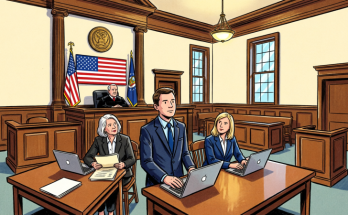
“Mrs. Quinn?” he said, his voice crisp and professional. “This is Daniel Price. I was your husband’s attorney.”
I frowned, shifting the phone from one ear to the other. “I thought we… handled everything after Michael died. The estate, the insurance—”
“Yes, we did,” he said. “But there is one final matter he instructed me to address exactly three years after his passing. He was… very specific about the timing.” There was a brief rustle of paper. “Would you be able to come into my office this week? It’s regarding a property.”
A property.
The word sat there, oddly heavy.
“Property?” I repeated slowly.
“Yes. An estate in Blue Heron Ridge.”
The mug slipped a fraction of an inch in my grip. Coffee sloshed over my fingers, hot enough to sting.
For a moment I forgot how to breathe.
“Blue Heron Ridge,” I whispered.
“Yes, ma’am. I know this may come as a surprise, but your husband purchased it about four years before his passing. He left specific instructions for me to contact you now and only now.”
My mind was suddenly split in two—the part remembering the hospital room, Michael’s desperate grip, his pleading voice: promise me you’ll never go to the old house in Blue Heron Ridge—and the part that was a rational, functioning adult.
“That must be a mistake,” I said quietly. “My husband never mentioned owning… anything there. Are you certain?”
“I’m quite certain,” Daniel said. “If you’d like, I can show you the purchase documents when you come in. You are the sole heir to the property. It’s important that you understand what it entails.”
“I…” I hesitated. “What exactly does it entail?”
There was a pause, then a soft exhale, as though he were bracing me for something.
“Mrs. Quinn, the land has become extremely valuable. A development company—Summit Crest—has been acquiring adjacent parcels for a large resort complex. They’ve already made offers on your husband’s estate. Offers in the high seven-figure range.”
Seven figures.
I stared at the rain streaming down the kitchen window, blurring the maple tree into streaks of green and gray. The kettle on the stove hissed softly. Somewhere nearby, a neighbor’s dog barked.
A second house. A secret estate. Millions of dollars.
My husband had died with a warning on his lips about a house he didn’t want me to visit.
And now, from beyond the grave, he had orchestrated this. This revelation. This choice.
“Okay,” I heard myself say. “I’ll come in tomorrow.”
Daniel Price’s office sat on the eighth floor of a glass building downtown, its lobby decorated with abstract art and a fountain that made a gentle trickling sound. The receptionist offered me water and a sympathetic smile when I said my name, and in that smile I saw the faint echo of all the times I had been “the widow” in someone else’s day—worthy of a softer tone, a little more care.
“I appreciate you coming in,” he said, settling into the leather chair opposite me. “I know this might feel sudden.”
“That’s one word for it,” I said, forcing a small smile.
He nodded and opened the box. Inside, nestled in a velvet lining, was a key.
It was old-fashioned and ornate, larger than a normal house key, made of dark metal that looked almost black until the light hit it just right and revealed a faint bronze sheen. Attached to it by a short chain was a brass tag with a single word engraved in elegant letters:
RIDGE.
Something in my chest fluttered. My fingers tingled.
Daniel slid the box toward me. “This is the main gate key to the estate in Blue Heron Ridge,” he said. “Your husband wanted you to have it personally.”
“How long have you known about this?” I asked, not quite trusting my voice.
“Since he purchased it,” Daniel replied. “I handled the transaction. Michael was very… private about it.” His eyes met mine. “He emphasized that no one was to be informed of the property’s existence until three years after his death, at which point I was to contact you and provide you with the key and this.”
He opened a folder and withdrew a single envelope. My name was written on the front in Michael’s unmistakable handwriting—the slightly angular script, the capital N with its dramatic slanted line, the Q that looped too wide.
My throat constricted.
“Thank you,” I whispered.
Daniel looked away politely as I slid my finger under the flap, as if giving me a moment of privacy even though he surely knew every word inside. But the intimacy of seeing Michael’s handwriting again, unfolding a letter he had written knowing that I would read it when he was gone—it felt like something too fragile to share.
Naomi,
If you are reading this, I am no longer beside you, but I am still, in my clumsy way, trying to plan for you.
I have asked Daniel to give you the key to the house in Blue Heron Ridge. I know what you’re thinking. I also asked you, in my last moments, never to go there.
I’m sorry for that. I was afraid. Afraid that if you went while I was alive, my brothers would find out and drag you into the mess I spent my life trying to escape. Afraid that you’d see too much of where I come from before you understood what I built for us.
The house is yours now. Everything on that land is yours.
I ask only this: go there once. See what I’ve made for you. See what I’ve tried to protect. After that, decide for yourself what to do. Keep it. Sell it. Burn it down if you must. But do not walk away without knowing.
There are things I never told you, truths I was too much of a coward to say face to face. You’ll find them there. I hope, even knowing everything, you’ll remember that I loved you. That part was always true.
You always loved orchids. You used to talk about wanting a garden full of them. I listened more than you thought.
Love,
Michael
The words blurred as tears welled and spilled over before I could stop them.
He’d known he was dying. The letter didn’t say it directly, but it threaded through every line. The knowledge. The planning. The careful, maddening secrecy that had always been part of him, now revealed as both a defect and, in some twisted way, an act of love.
“Mrs. Quinn?” Daniel said softly. “Are you alright?”
I wiped my cheeks quickly with the back of my hand. “Yes. Yes, I just… I didn’t know he had this whole part of his life. Whole plans.”
“Michael was a very strategic man,” Daniel said gently. “He thought several moves ahead.” He tapped the stack of papers. “As far as the law is concerned, the estate is entirely yours. His brothers, if they are aware of it, have no standing to contest that. However, given the recent surge in property values up there, I would not be surprised if they… show interest.”
The phrase “show interest” felt like a polite gloss over something darker.
“I thought Michael was estranged from his brothers,” I said.
“Estranged, yes,” Daniel replied. “Disconnected, no. They have their own ventures, some more legitimate than others. Summit Crest’s resort project has magnified everything. If you choose to keep the land, you should be prepared for pressure, both from family and from developers.”
I let out a shaky breath. “And if I sell it?”
“Then you would become a very wealthy woman,” he said, without a hint of irony. “Which carries its own… complications.” His gaze softened. “You don’t need to decide today. His request was simply that you see the property before making any judgment. I think, knowing Michael, that’s worth honoring.”
I stared down at the key, glinting faintly in the light. It felt absurd that something so small could unlock not just a gate, but an entire hidden chapter of my husband’s life.
Blue Heron Ridge.
The name no longer felt distant. It felt like a stone lodged under my skin.
“Alright,” I said quietly. “I’ll go.”
Two days later, I was driving into the mountains with the key on the passenger seat beside me like a silent passenger.
At a turnout, I pulled over for a moment to steady my breathing. The valley spread below in a quilt of green slopes and distant roofs. The sky was a pale, clear blue that made everything look sharper.
I closed my eyes and remembered Michael’s face when he’d seen that road sign years ago. How the muscles in his jaw had clenched. How he had gripped the wheel like it might fly out of his hands.
“This place was bad for you,” I murmured to the empty car. “So why did you come back? Why did you buy a house here and never tell me?”
No answer, of course. Just the whisper of the wind.
I started the car again.
After another ten minutes, the trees thinned, and the road widened just enough for one more vehicle to pass. A few scattered houses appeared—weathered cabins and newer chalets, tucked into the hillside. A wooden sign arched over the road, its lettering painted in a shade of blue so faded it was nearly gray.
WELCOME TO BLUE HERON RIDGE, ELEVATION 4,812.
A shiver skated down my arms.
“Arrive at destination,” the GPS announced pleasantly moments later.
The road dead-ended at a pair of stone pillars.
Between them stood a wrought-iron gate.
Even from a distance, I could see that it was not ordinary. Twisting along the metal were shapes worked into the bars—long, elegant bird silhouettes with outstretched wings, reeds, curling waves. At the top, in proud, looping letters, the name spelled itself:
BLUE HERON RIDGE.
Up close, the gate towered over me. It looked like something out of an old estate, not the modest cabin I had half expected. A heavy chain ran through the center, securing it.
Hands trembling, I took the key from my pocket. The metal felt surprisingly warm.
There was a thick, square lock attached to the chain. The key slid in with the smooth inevitability of something that had been designed for exactly this, exactly now. As I turned it, there was a deep, reluctant clank, and the chain loosened.
The gate opened with a slow, almost theatrical groan.
My pulse hammered in my ears.
I drove through and stopped just past the threshold, leaving the gate swinging behind me. The driveway stretched ahead, a gently curving ribbon of compacted gravel edged with low stone walls and clusters of flowering shrubs. Beyond, the land unfurled around a house that took my breath away.
It was not just a house. It was a statement.
A sprawling structure of stone and timber, it seemed to rise organically out of the hillside, as though it had grown there rather than been built. The walls were made of rough-hewn stone, their color a mix of slate and warm brown. Large windows reflected the sky. A wide front porch wrapped around part of the ground floor, its beams entwined with flowering vines—clematis and wisteria and climbing roses, all trained to weave together into cascades of color.
The rooflines overlapped in varying pitches, some sections slanting down low with dormer windows, others rising into peaks that gave the house a sense of movement, like a cluster of waves frozen mid-crest. Chimneys of stone punctured the roof at intervals, and somewhere within, I could faintly smell the lingering ghost of wood smoke.
Land stretched out on either side—terraced gardens, carefully sculpted beds, stone paths threading between them like quiet invitations. At the far edge of my view, glass flashed, catching the light. A greenhouse, perhaps.
Michael had not bought a simple getaway cabin.
He had built an estate.
I pulled the car into a circular turnaround near the front steps and shut off the engine. The silence that fell was thick and almost reverent, broken only by the distant call of a bird and the rustle of leaves.
Climbing out, I stood for a moment just absorbing the scale of what he had kept from me.
“You idiot,” I whispered, the word more affectionate than angry. “You absolute idiot. Why didn’t you just bring me here?”
The answer was there in the letter, of course, tangled up with old fears and old wounds. His brothers. The mess he had left behind to build a life with me.
Still, standing in front of this house, knowing he had poured time and money and thought into it for years without ever so much as hinting at its existence, I felt a hot flare of anger beneath the grief.
“This is not how marriage is supposed to work,” I muttered, wiping my palms on my jeans.
The front steps were wide and shallow, made of stone. The front door was solid oak, its surface carved with a pattern of overlapping leaves. A brass handle gleamed, polished and unweathered.
I fitted the key into the lock.
Inside, the air had that faint, closed-up scent of a place long unused—dust and old wood, a whisper of stale air that had been waiting to move again. Light from the large windows cut through it in bright shafts, illuminating floating motes.
The foyer opened into a great hall, and for a moment I forgot how to think.
The ceiling arched high above, supported by thick wooden beams that crossed in a lattice. At one end, a stone fireplace climbed the wall all the way to the ceiling, its hearth large enough that a person could almost stand inside it. Wrought-iron chandeliers hung down, though they were dim in the daylight.
But it was not the architecture that stole my breath.
It was the walls.
Everywhere I looked, there were paintings.
Large canvases, small canvases, vertical and horizontal, framed and unframed, arranged in grids and clusters and careful groupings. They covered almost every inch of wall space.
And every single one—every single one—was of orchids.
Orchids in lush, velvety purples. Orchids in luminous whites, their centers tinged with gold. Orchids the color of ripe peaches, of pale lemons, of deep, blood-red wine. Close-up petals that seemed to glow, entire sprays of blooms arching gracefully from slender stems, roots tangled around bark, blossoms unfurling from buds.
The style varied. Some were hyper-realistic, the veins in each petal rendered with scientific precision. Others were more impressionistic, brushstrokes thick and textured, colors bleeding into one another in almost abstract ways. A few bore tiny brass plaques with Latin names—Paphiopedilum, Cattleya, Phalaenopsis, Dendrobium.
My knees went weak.
Orchids had been my passion long before I met Michael. I had written my dissertation on the pollination strategies of Orchidaceae. I had spent countless evenings at the kitchen table, flipping through catalogues, pointing out rare hybrids and sighing wistfully over their prices. I had once told Michael, half joking, that my dream was to have a house with an entire room full of orchids—real ones, in pots and hanging baskets and mounted to bark, a jungle of them.
“You and your orchids,” he’d teased, smiling as he sautéed onions in a pan. “Most people fantasize about vacations in Italy. You fantasize about plants that are too finicky to keep alive.”
“They’re not finicky,” I’d argued. “They’re particular.”
He’d kissed my cheek and said nothing else.
Clearly, he had been listening.
In the center of the great hall, on a small oak pedestal table, sat a silver laptop. Closed. Balanced carefully atop it was a single white orchid in a clear glass cylinder—a live plant, its roots wrapped around a chunk of bark, its blooms pristine, almost impossibly pure.
My throat tightened. My eyes burned.
The sound cut through the stillness like a blade.
Heart hammering, I crossed the room to the tall windows that overlooked the front drive. A black sedan I didn’t recognize was rolling to a stop in the circular turnaround. The doors opened one by one.
Three men got out.
Even from this distance, the family resemblance hit me like a physical thing.
The first man was in his late fifties, tall and broad-shouldered, with graying dark hair cut in an executive style and a jaw that looked permanently set. The second was slightly shorter, leaner, with sharp cheekbones, dark eyes, and a quickness to his movements that put me instantly on edge. The third was younger than the other two by at least ten years, with softer features, his expression guarded.
Victor. Pierce. Noah.
I had seen them only once, more than a decade ago, at Michael’s mother’s funeral. Even then, there had been tension simmering between them and Michael. They had stood in a cluster at the back of the church, whispers passing between them like currents, while Michael stood with me and Sophie near the front, offering no acknowledgment.
Afterward, as we drove home, I’d asked him why he hadn’t even greeted them.
“They’re my brothers by blood,” he’d said, staring straight ahead. “That’s all.”
He had never elaborated. And I had never pressed.
Now, they were striding toward the front steps of the house my husband had secretly purchased, their faces set in expressions that had nothing to do with grief or nostalgia.
They looked like men on a mission.
Like men who believed this place belonged to them.
I stepped away from the window, my heart pounding.
They mounted the porch and pounded on the door.
“Naomi!” a deep voice boomed—Victor’s. “We know you’re in there. We saw the gate open. We need to talk about the house.”
How did they know I would be here? Had someone at the county office notified them about a change in title? Had they bribed a clerk? Or had they simply kept tabs on every property in the area, waiting for some sign that Michael’s estate had finally shifted?
“You don’t have to answer,” I muttered to myself, backing toward the table with the laptop. This was my house. My land. Legally, I had no obligation to invite them in.
The pounding came again, louder.
“Naomi,” Victor called, his tone shifting into something that tried to sound reasonable. “This is family business. You can’t just hide from us. Open up before we make this legal.”
That line—that one, smug, thinly veiled threat—did something to my spine. It straightened.
“Make this legal?” I whispered. “You think you’re the only ones with lawyers?”
My gaze dropped to the laptop. It felt suddenly like a lifeline.
Hands shaking, I moved the orchid carefully to one side and opened the computer. The screen lit up, flooding my fingers with a cool glow. A password prompt appeared.
Of course. Michael had never been careless about security.
My mind raced. What would he use? My first guess was our anniversary, but that felt too obvious. His childhood address? His mother’s birthday? The coordinates of this place?
Under the pounding at the door, I heard my own voice from years ago, laughing at our favorite café. “Hope,” I’d said. “It’s a cliché, but it’s what I cling to every time something goes wrong. That one word.”
Michael had smiled and tapped the sugar packet between his fingers. “Hope and patience,” he’d said. “You’re the hope. I’m the patience. That’s why we work.”
Hope…………………………………………………………………………………………………………………………………………………………………………………………………….