I looked at him for a long moment. “You told me to leave with them.”
His jaw tightened. “I was angry.”
“You were honest.”
That shut him up for at least three minutes.
By dessert, Olivia had switched strategies entirely. “If you want,” she said, “Andrew and I could connect you with some people. Financing experts. Lawyers. Tax people. It’s a lot to handle alone.”
I sipped my coffee. “I’m not alone.”
And I wasn’t. I had Mrs. Alvarez. I had my sons. And now, thanks to one call from the next morning, I also had my father’s attorney, who met me in his office on Tuesday and smiled when I showed him the note.
“Classic Arthur,” he said, reading the lines with visible fondness. “He always said Emma was the only one who didn’t confuse surface with substance.”
Mr. Levin helped me understand exactly what my father had left me. The motel, as inheritance, was separate property. The letters mattered. The timeline mattered. Michael’s abandonment mattered. If he decided to fight, he would have an uphill climb and a judge who would not enjoy hearing the story of how he sent his wife and children to sleep in a derelict motel while he drank champagne with her sister.
I did not say I enjoyed hearing that.
But perhaps my silence suggested it.
Horizon was not the only company interested. Once word spread that the estate had changed hands and I was answering calls, others started circling. Some were sloppy. Some arrogant. One man tried to explain my own acreage to me using a satellite printout that omitted half the utility easements. I thanked him for his time and never returned his follow-up emails.
My father had been right. People rush women they think are frightened.
I let them discover I wasn’t.
Daniel from Horizon came back twice. The second time, I had Noah and Eli with me, both boys coloring at the desk while I discussed frontage, phased development, and revenue participation. Daniel never once spoke down to me. He asked if he could bring in a traffic consultant. He showed me three conceptual site plans. One included a gas station. Another a mid-range hotel. The third a mixed-use commercial strip with a family restaurant and a small business hotel behind it.
“What would you choose,” I asked him, “if you had to keep part of the land?”
His answer came quickly. “A carried equity position in the hotel and the pad site nearest the exit.”
That was the moment I knew my father had been right about Horizon too.
By the end of the month, I had two formal offers and one revised proposal. The highest bid would have given me the largest immediate check. Horizon’s structure gave me less cash upfront but long-term revenue and retained ownership in a portion of the land.
I chose Horizon.
Not because it was safer. Because it was smarter.
When I told Olivia, she was quiet for so long I checked to see if the call had dropped.
“That’s risky,” she said finally.
“So is underestimating me.”
Michael was not quiet. Once he understood the money might actually materialize, he started showing up.
First at the motel, carrying coffee and pastries as if sugar could erase memory.
Then at Noah’s soccer practice, asking careful questions in front of other parents so he would look concerned.
Then at the grocery store near the motel where he “happened” to run into us and crouched down in front of Eli with a toy truck he’d bought from the checkout aisle.
I watched him perform fatherhood and felt something colder than anger settle into place.
One night he came to the motel office after the boys were asleep. The sign outside buzzed. Rain tapped against the window. He stood in the doorway with both hands in his coat pockets and said, “Can we talk?”
I did not invite him in, but he came in anyway.
The office looked different by then. Cleaner. Brighter. I had brought in a rug from storage and replaced the dead lamp with two standing lights. There was a space heater under the desk and children’s drawings taped to the wall behind it. The motel had begun, almost despite itself, to feel like ours.
Michael noticed all of it. I could tell by the way his eyes moved.
“You’ve done a lot,” he said.
“You told me to live here.”
He winced. The first genuine one I’d seen. “Emma…”
“No,” I said. “Say it exactly.”
He looked away.
“You told me to take our sons and go live in a broken motel because you thought it proved something about me.”
“I was angry.”
“And?”
His silence stretched long enough that I knew he was choosing between truth and strategy.
“I was wrong,” he said at last.
That would have mattered once.
Now it only sounded late.
He stepped closer to the desk. “You know I’ve been under pressure. The business, your dad dying, the inheritance, Olivia and Andrew in my ear all the time—”
I held up a hand. “Do not blame my sister for your mouth.”
His face flushed. “I’m trying here.”
“No,” I said quietly. “You’re recalculating.”
He looked startled because men like Michael rarely expect the invisible wife to become precise.
“This money changes things,” he said.
I laughed then, not kindly. “For you, maybe.”
“For the boys.”
I leaned forward. “The boys slept in a motel room on jackets because you were too proud to survive one humiliating dinner.”
He opened his mouth, closed it, opened it again. “I didn’t think you’d actually go.”
There it was.
Not remorse. Underestimation.
My father’s note might as well have been burning in my pocket.
“I did go,” I said. “And what I found there saved me.”
He stared at me for a long time. Finally he said, “Do you want a divorce?”
The question should have broken me. Once, it would have. But by then the answer had already grown roots inside me.
“Yes,” I said.
Michael’s face changed. It wasn’t devastation exactly. More disbelief that I had said the word first.
“You’d throw everything away?”
“No,” I said. “You already did that. I’m just refusing to pick it back up.”
He left without another word.
The divorce filing happened the following week.
Mr. Levin recommended a family attorney who had the calm manner of a person who had seen every version of male regret and no longer found it persuasive. She listened to the story once, asked three excellent questions, and filed within seventy-two hours.
Michael called six times that day. I did not answer.
Then he texted: We can work this out privately.
And later: Don’t do this to the boys.
I stared at the screen for a long time before responding.
You already did.
Olivia reacted differently.
She came to the motel in person one Thursday afternoon wearing sunglasses and cashmere, stepping carefully around the cracked asphalt as if it might stain her shoes. I was in the office reviewing the revised partnership agreement while Noah and Eli played with toy cars on the floor.
“I brought lunch,” she announced.
She set down a bag from a deli that charged eighteen dollars for turkey sandwiches and looked around with the strained curiosity of someone visiting a relative in prison.
The boys shouted her name and ran to hug her because children love according to old maps until new ones are drawn for them. Olivia hugged them back, genuinely I think. She had never been cruel to my children. Only careless around them.
After I sent the boys outside with juice boxes, she removed her sunglasses and said, “You look… good.”
“I’m sleeping.”
She nodded. “I heard you filed.”
“I did.”
She sat down across from me and folded her hands, mirroring our father in a way that made something twist under my ribs. “Michael is furious.”
“I imagine he is.”
“And hurt.”
I smiled without warmth. “Interesting order.”
Her gaze dropped. For the first time since the will reading, my sister looked uncertain.
“Emma,” she said, “I didn’t know.”
“About the land?”
“About how bad things were.”
I studied her face. Olivia had always been beautiful in a polished way that made people straighten their own clothes around her. She had also always been skilled at moving through rooms without getting touched by the mess inside them. That was her gift. Maybe also her damage.
“You laughed,” I said.
She closed her eyes briefly. “I know.”
“At the will reading. At dinner.”
“I know.”
I waited.
The office heater clicked softly. Outside, Eli shrieked with laughter over some game Noah had invented. A semi-truck growled past on the highway.
“I thought Dad had made a statement,” Olivia said at last. “I thought…” She swallowed. “I thought he trusted me more.”
There it was. Not just greed. Hurt. The sort siblings carry without admitting because it sounds too childish once you’re adults.
I leaned back slowly. “He trusted you with what would make sense to you.”
She looked at me.
“He trusted me with what needed patience.”
Olivia’s mouth trembled once, almost imperceptibly. “Do you know how many times I heard him say you were the calm one? The one who took after him? I hated it.” She laughed faintly, bitterly. “I thought being like him meant I should get the big city portfolio. I thought it meant he saw me.”
“He did see you.”
“Did he?”
“Yes,” I said. “He just didn’t flatter you.”
We sat in silence after that, two daughters with the same father and entirely different wounds.
When she left, she kissed the boys and paused at the office door. “For what it’s worth,” she said, not turning around, “Michael is a fool.”
Then she walked to her car, got in, and drove away.
It wasn’t an apology. Not exactly.
But it was closer than I expected.
The negotiations with Horizon stretched into two months.
I learned more in those weeks than I had in years of managing everyone else’s lives. I learned the language of site plans and ingress points and development tranches. I learned how long banks take when millions are involved and how quickly men begin using the word partner when they realize they can no longer use the word sweetheart. I learned that I liked boardrooms more than I liked family dinners. At least in a boardroom everyone admitted money was the subject.
Most importantly, I learned that my father had left me more than land. He had left me timing.
The old motel rooms came down in stages, but not all at once. I asked Horizon if we could keep the office standing until final demolition because I wasn’t ready to lose the place where my father had left me his last lesson. Daniel agreed without hesitation.
On the final afternoon before the demolition crew arrived, I brought Noah and Eli to the office. We sat on the worn floor and ate takeout fries while the boys asked if bulldozers were louder than fire trucks.
“Probably,” I said.
Noah touched the front desk and asked, “Were you here when you were little?”
“All the time.”
“Did Grandpa know this place was special?”
“Yes.”
“Did you?”
I looked around at the lamp, the key cubbies, the wall where our shadows leaned long in the late light.
“Not until I had to.”
That seemed to satisfy him.
I took the bell from the desk before we left. And the wall clock stopped at 3:14. And my father’s chair, though Horizon had to carry it because one leg wobbled dangerously and it smelled faintly of thirty years of dust and coffee.
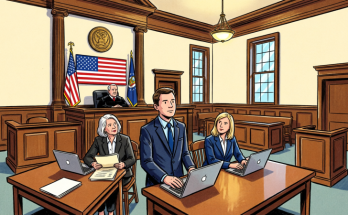
The divorce moved faster than Michael expected and slower than I wanted. He tried first to sound conciliatory, then injured, then practical. His lawyer floated mediation in a tone that implied reasonable women loved mediation. My attorney responded with dates, documents, and one polite paragraph describing the night Michael expelled me and the children from the marital home.
After that, the tone changed.
He did not get a share of the motel or the development proceeds. The inheritance had remained separate. He did not get to portray himself as blindsided by my “sudden financial decisions” when text messages existed showing exactly how little he valued the asset until others did. He got parenting time, because he was still their father and I would not use my sons as instruments of revenge. But he did not get me back. That part was done.
The hardest moments were not the legal ones. They were the small domestic echoes.
Noah asking why Daddy wasn’t coming to the motel office anymore.
Eli drawing four stick figures in one house and then crossing one out.
Standing in a store deciding whether to buy new towels and realizing no one would accuse me of wasting money on softness.
But there was joy too, and it arrived without permission.
The first check from Horizon’s initial payment hitting my account.
The day I rented a small furnished townhouse near the boys’ school while construction got underway, signing the lease with hands that did not shake.
Mrs. Alvarez bringing over arroz con pollo and declaring the kitchen too empty.
Noah telling his teacher his mother “owns land under a future hotel,” with the solemn pride of a child whose personal mythology has suddenly improved.
Eli informing everyone that we used to live in a motel “but not the creepy kind.”
In late spring, I drove past the construction site just after dawn and had to pull over because the scale of it hit me all at once. Earthmovers. Steel frames. Workers in hard hats. Survey flags whipping in the wind. The old motel sign was gone. The back acreage had been carved into lanes and foundations and possibility.
The land was still mine, in part and in profit.
My father had not handed me a relic. He had handed me a turning point.
Michael texted me the day the first crane went up.
I drove past. It looks incredible.
I stared at the message for a long time.
Then I wrote back: It does.
Nothing more.
Olivia’s apartments, it turned out, were not the effortless treasure everyone assumed. The refinancing dragged. One building needed major plumbing work. Another lost tenants when a larger luxury complex opened three blocks away with a gym and better parking. She was still wealthier than most people. She was still sharp. But for the first time in our lives, my sister began asking me questions instead of explaining things to me.
“What would you do with deferred maintenance if cash flow’s tight?” she asked one evening over takeout after the boys were asleep.
I told her.
We were not suddenly best friends. Real life does not rearrange itself that neatly. But something brittle between us softened. Not because of the money. Because she had watched me survive public contempt, private betrayal, and uncertainty, and come out clearer on the other side.
That changed how she saw me.
It changed how I saw myself too.
A year after the night Michael told me to go live in the motel, Horizon held a small private event at the site before the hotel structure was enclosed. Daniel invited me because of my equity position, but also, I think, because he understood the story mattered to me.
I brought Noah and Eli in little button-down shirts. Olivia came too, to my surprise, in a navy coat and low heels suitable for gravel. She stood beside me while workers and investors drank coffee from paper cups and discussed timelines.
“Dad would have loved this part,” she said quietly.
“The part where everyone suddenly acts like they understood his plan all along?”
She smiled. “Exactly that part.”
I laughed.
For a moment we stood shoulder to shoulder looking at the framework rising out of the ground where our so-called joke once sat.
“He knew,” she said after a while.
“Yes.”
“That you would do something with it.”
I thought of the note. Of the keys. Of the way he had written my name. “Yes,” I said again. “He did.”
That night, after I put the boys to bed, I sat alone at my kitchen table with my father’s note open beside me.
The paper had softened at the folds from how often I handled it.
You are not less because loud people failed to recognize your value.
There are sentences that sound comforting when you first read them and then become revolutionary only later, once you’ve lived enough to understand what they are asking of you.
I had spent years letting loud people define me. Husband. Sister. Aunt. Men with opinions. Rooms full of laughter. I had mistaken volume for truth because it was easier than questioning the people I loved.
Then one night, with my sons asleep on motel beds covered in jackets, I opened a cabinet and found out the truth had been waiting quietly for me all along.
That is the thing nobody tells you about power.
Sometimes it does not arrive like a thunderclap.
Sometimes it arrives in paperwork. In a key hung on a nail. In a note from a dying father who trusted your mind more than other people trusted your shine. Sometimes it arrives when the whole world thinks you have been discarded and you discover instead that you have been positioned.
Years later, when the hotel was open and the restaurant pad leased and the traffic from the new exit never seemed to stop, people liked to talk about my luck.
I hated that word.
Luck suggested accident. Luck erased my father’s patience, my own restraint, the nights I spent reading contracts after the children were asleep, the day I said no to the biggest offer because the structure mattered more, the morning I filed for divorce and chose peace over familiarity.
Luck also ignored what came before.
The laugh in the lawyer’s office.
The wineglass in Michael’s hand.
The drive through the rain.
The flickering sign in the dark.
Without those things, I might never have gone to the motel that night. I might have waited. I might have caved. I might have sold in shame to the first predatory buyer waving cash at a grieving woman.
Pain had not been a gift. I will never romanticize that.
But pain had shoved me onto the right road before I knew where it led.
On some Sundays, when the boys are with Michael and the house is too quiet in a tolerable way instead of a frightening one, I drive out to the edge of the development and park where I can still see the slope of land beyond the hotel. The landscaping is better now. There are lights and signs and a steady stream of cars exiting from the highway. Families stop for coffee. Sales reps check in after midnight. Truckers sleep in rooms where my children once played tag among stripped mattresses and dust.
I keep the old motel bell on a shelf in my living room.
The wall clock sits in my office, still stopped at 3:14.
My father’s chair, restored and reupholstered, is where I sit when I go through quarterly reports.
Sometimes Noah rings the bell for no reason at all. Eli, who is older now and no longer carries his blanket, once asked why I keep a broken clock.
“Because it reminds me,” I told him.
“Of what?”
“That the wrong time in your life can still lead you to the right place.”
He considered that seriously, the way children do when they suspect adults have said something important but inconveniently complicated.
Then he shrugged and asked if we could get tacos.
We got tacos.
My father did not leave me the smallest asset.
He left me the strongest one.
And the night my husband told me to go live in that motel, he believed he was throwing me away. He believed he was sentencing me to failure, to embarrassment, to the kind of life people whisper about with pity over dessert.
He did not realize he was sending me straight to the only place where my future was waiting for me with the key already hanging by the door.