Home is supposed to be a soft landing.
That’s what they put in the speeches—how the war ends when you step off the plane, how the uniforms come off and the world becomes ordinary again, how the scent of familiar streets and old kitchens and cheap local coffee puts you back together. People love the idea of it, the neatness of it. They love believing a front door is a finish line.
But when I came home, it didn’t feel like a landing.
It felt like stepping into a room where everyone had rehearsed forgetting my name.
My name is Clara Whitmore. I served twenty-three years in the United States Marine Corps, the last five as a major general. I’ve led missions most civilians couldn’t stomach reading about. I’ve stood in dusty compounds in Kandahar and listened to grown men pray under their breath because they were trying not to shake. I’ve held bleeding soldiers in my arms and whispered the only promises I could keep. I’ve signed letters no commander ever wants to write—letters that start with the same words and end in a grief that never gets lighter.
I’ve lived inside noise most of my adult life: rotors, radio chatter, alarms, mortars, voices shouting coordinates. I thought I understood silence, too—those long stretches after action when you sit on a crate or the edge of a cot, hands still, eyes blank, waiting for your heartbeat to remember it can slow down.
Nothing prepared me for the silence of a room full of family pretending I was a stranger.
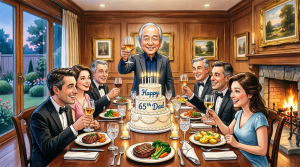
It was my mother’s sixty-fifth birthday. The party was in the Hawthorne Room—Everstead’s version of upscale class. Candlelit tables, white linens that felt stiff as paper, servers moving like shadows with trays of champagne and tiny plates that cost too much to be that small. The sort of place my mother loved because it made her feel like her life was polished, well-managed, worthy of admiration.
I hadn’t been back to Everstead in fourteen years. Fourteen years of combat zones, sunrise briefings, and nights spent writing names into condolence letters. Fourteen years of being a person my hometown only knew as a rumor.
The invitation had come in the mail like a formality: a cream envelope, my name written in my mother’s careful script, as if handwriting could make distance disappear. Inside was a simple card.
Patricia Whitmore requests the pleasure of your company…
It didn’t say Mom wants to see you. It didn’t say Please come home. It didn’t say We miss you.
It read like a civic event.
I told myself it was still something. I told myself that showing up mattered. I told myself that if I walked into that room in a plain dress with my shoulders squared and my face calm, I could take whatever awkwardness came and leave with the quiet satisfaction of having done the right thing.
I’d done right things my whole career. Often they cost something. Often they hurt. But the code was simple: you show up.
So I showed up.
I walked into the Hawthorne Room alone—no spouse on my arm, no entourage, no laughter trailing behind me—and every head turned.
For a heartbeat, the entire room looked at me.
Then, just as quickly, the heads turned away as if eye contact might burn.
My father saw me first. He was standing near the bar in a blazer he only wore for weddings and funerals, a glass of bourbon in his hand. He gave me that tired half-smirk I remembered from being thirteen and tracking mud into the house. The one that meant you’re trouble, but also you’re ours, though it had been a long time since the second part felt true.
My sister Isabelle clinked her wine glass, not loudly—just loud enough for the people nearest her to hear, and for the laughter to ripple outward like a signal.
“Well, well,” she said, voice sweet as varnish. “Look who made it. I didn’t realize they still invited you to these things.”
Her husband chuckled behind his bourbon like he’d been waiting for a punchline. A couple of my mother’s friends smiled politely in that way people smile when they don’t want to take a side but enjoy watching someone else squirm.
My mother didn’t turn toward me.
She looked down at the table settings as if they needed her attention more than I did.
No one stood. No one offered a seat. The chairs were filled with bodies angled toward each other, shoulders turned inward, as if the space at the table had already decided I didn’t belong in it.
I stood for a beat too long, long enough to feel the heat of humiliation rise under my collarbone where scar tissue still lived. Then I sat myself in the only open chair near the kitchen doors, close enough to smell burnt garlic and dish soap every time the swinging doors opened.
A cold draft rushed past my calves with each swing. The metal hinges squealed faintly. The sound got under my skin.
No one asked me how I’d been.
Not one person said, Clara, it’s good to see you.
Someone—a cousin I barely recognized—made a joke about whether I’d started looking for grocery store jobs now that I was retired. The table laughed lightly, like that was harmless.
I smiled faintly and let it burn quietly under my skin.
What they didn’t know—what they couldn’t imagine fitting into their small, curated version of my life—was that I’d just turned down a classified position at the Pentagon because I refused to sign off on a weapons contract I didn’t trust. That I still wore a bullet scar beneath my collarbone, hidden by the neckline of my plain navy dress. That only a week ago, I’d signed papers to take in the daughter of a man who died under my command because he had no one else and she deserved more than a file number.
I could have told them any of that. I could have dropped medals on the table like coins and watched their faces change.
But I didn’t.
Because I wasn’t there to win.
I was there because somewhere deep, under the discipline and the years and the blood, I was still my mother’s daughter, and part of me still wanted to believe coming home meant something.
Isabelle, of course, made sure it meant something else.
She entered the Hawthorne Room the way she always had entered rooms: a half-second late, so heads would turn, so people would notice her arrival as an event. Crimson gown, hair in loose waves, heels sharp enough to puncture the floor. She moved straight to the head of the table and kissed the mayor’s cheek like they were family.
“It’s such an honor,” she beamed, voice carrying, “to lead New Horizons into its next phase.”
New Horizons was her boutique nonprofit-brand hybrid, a thing she talked about the way other people talked about salvation. It did some good, I’m sure. It also did an excellent job of keeping Isabelle at the center of attention.
She didn’t look at me.
Not a glance. Not even the courtesy of pretending.
Our mother stood for her speech a few minutes later, tapping her fork against her glass until the room quieted. The sound was delicate and controlled, the way my mother liked everything—no mess, no raised voices, no unplanned truths.
She spoke about family resilience and blessings. She praised Isabelle’s nonprofit. She congratulated cousin Reed on getting into med school. She boasted about a five-year-old spelling between correctly. She laughed in the right places and smiled at the right people.
She never once mentioned the daughter who had worn the American flag on her shoulder across three continents.
I raised my glass anyway because my hand needed something to do.
A great aunt leaned in beside me, adjusting her bifocals. “What do you do in the military, dear?” she asked with genuine curiosity. “Logistics? Rations? Something with supplies?”
I smiled politely. “Something like that.”
She nodded, satisfied. The truth wouldn’t fit into her version of patriotism, and honestly, I was too tired to shrink myself into something digestible for them.
The night moved the way these nights always moved: plates cleared, glasses refilled, laughter floating above everything like perfume. Isabelle performed. My mother glowed. My father watched with the expression of a man who had decided long ago which battles were worth fighting.
I sat near the kitchen doors and let the cold drafts remind me I was on the edge of their story.
After the cake was served and the small talk wore thin, Isabelle finally made her way down the table toward me. She moved like a predator in velvet—smooth, confident, sure I’d flinch.
She leaned down, close enough that her perfume filled my lungs, and whispered in my ear, her voice all charm and artifice.
“You really shouldn’t have come.”
I didn’t react.
“Mom didn’t want the vibe tonight to feel overshadowed,” she continued softly. “It’s her birthday. Not a war memorial.”
I turned my head slowly and stared at her. Her eyes were bright, polished, and entirely unashamed.
She held my gaze without blinking, like she’d practiced that too—how to look at someone’s pain and not see it.
The same girl who once begged me not to leave for basic training.
The same girl who never wrote back once I did.
The same girl who copied my homework in school, then blamed me when we got caught.
Somehow, she still thought she had the right to narrate my absence.
I kept quiet because I knew something Isabelle didn’t.
I knew the kind of lies people tell themselves when they’re afraid of the truth. I’d seen it in war zones and boardrooms. I’d seen it in commanders who wanted clean stories more than they wanted reality. I’d seen it in politicians who thanked us for our service while cutting our budgets.
I recognized it in my family too.
And I knew the story Isabelle was telling tonight—the one where Clara Whitmore was an uncomfortable shadow, an embarrassing complication—was about to meet something real.
But it didn’t happen at the table.
It happened as dessert was being served, as forks clicked against plates and my mother’s friends leaned in for gossip, as Isabelle laughed too loudly at something the mayor said.
A new voice cut through the clinking of glasses.
Firm. Deliberate.
Unmistakably military.
“Excuse me,” he said.
A man stepped toward our table. He wore a dark suit, but his posture gave him away: shoulders back, chin level, the kind of controlled movement that doesn’t come from confidence alone but from training.
He stopped at the edge of the table and looked directly at me.
Then he spoke clearly enough for half the room to hear.
“Ma’am. Welcome back, Major General Whitmore.”
You could have heard a fork hit the floor.
The room froze so abruptly it felt like someone had pulled the power.
My mother’s head snapped up, eyes wide. Isabelle went still, her smile catching halfway and cracking at the edges. My father’s bourbon glass hovered mid-air.
The man—young, early thirties maybe, clean-shaven, eyes sharp—held his position as if he’d just addressed a superior officer on a parade deck.
“I’m Captain Harlan,” he added, then softened slightly. “I served under Colonel Sanderson. He asked me to extend his regards. He said if you ever came back to Everstead, he wanted someone to make sure you were properly welcomed.”
Properly welcomed.
The words landed like something between gratitude and grief.
I stood slowly, chair scraping just once, and the sound in the silence was loud. I offered my hand. “Captain,” I said quietly.
His grip was firm. Respectful. Real.
Around us, the Hawthorne Room breathed again—but now it was different breathing. Not laughter. Not ease. More like people realizing they had just watched a truth appear in a place built to ignore it.
Isabelle’s husband cleared his throat. Someone shifted a chair. My mother’s friends looked confused, then curious, then—some of them—embarrassed.
My mother’s lips parted as if she wanted to say something. No sound came out.
For a moment, I could have said everything. I could have told them my rank. I could have told them what it cost. I could have made Isabelle swallow her words and forced my mother to look at me.
But I didn’t.
I nodded once at Captain Harlan, thanked him quietly, and sat back down.
Because in war, you learn that showing your hand too early gives people time to scramble.
And I had a feeling—an old, familiar feeling in my gut—that Isabelle’s performance wasn’t just petty. It was strategic. It was built on something. And that something was about to show itself.
The next morning, my motel room smelled like bleach and air conditioning and nothing else.
No one had offered me a place to stay. Not out of politeness. Not even out of image. They could have spared a guest room and pretended they were kind.
They didn’t.
The only message on my phone came from my father.
Thanks for coming. Your mother’s tired. Not up for visitors.
I stared at it, thumb hovering over the screen, and felt something cold settle in my stomach.
I set the phone face down on the nightstand.
Then I walked out into Everstead’s two familiar streets.
The town looked the same and smaller than my memory—brick buildings, a handful of shops, a main street that tried hard to look charming. Fourteen years away had turned it into a snow globe I could hold in my hand and shake.
I didn’t have a plan. Just a need to breathe air that wasn’t perfumed by the past.
But Everstead had a way of steering you toward things you didn’t ask for.
Two blocks later, I found myself standing in front of New Horizons—Isabelle’s boutique nonprofit/brand.
The display window was covered with a life-sized promotional banner. It was Isabelle in a tailored navy uniform dress with brass buttons and heels, chin lifted, smile confident.
A bronze star medal was pinned neatly to her chest.
Except it wasn’t just any medal.
My throat tightened instantly.
The bronze star design she wore was the old one—the recalled design from over a decade ago, pulled because of an engraving flaw. That flaw wasn’t aesthetic. It was procedural. It meant the medals couldn’t be verified properly. They were never supposed to be distributed.
The only way someone had one was if it had been discarded improperly… or stolen.
And there she was, wearing it like part of an outfit.
Beneath the photo, the caption read:
From family legacy to civic duty.
My mouth went dry. My stomach went cold.
I remembered something Isabelle had said the night before, half laughing to a guest over champagne.
“My sister tried the military thing,” she’d said with a shrug. “But it wasn’t for her. I learned from her mistakes.”
I stood there on the sidewalk with my hands in my coat pockets, staring through the glass at that medal, and felt something shift.
Not anger.
Clarity.
Isabelle wasn’t just mocking me.
She was using me.
She was wearing my life like a costume. Like a prop. Like a story she could sell.
I didn’t go inside.
I turned away and walked down the block toward the place I used to know as home.
My father’s bookstore still smelled the same—dust and paper and old wood. The brass bell above the door jingled when I stepped inside, and for a second my chest tightened with memory. I’d spent afternoons in that store as a kid, perched on a stool, reading while my father worked.
He wasn’t at the front when I walked in. The store was quiet, empty of customers, the air warm from a space heater. I moved toward the desk, and that’s when I saw it.
A framed certificate.
My name on it.
Under a fake rank.
Next to a photo cropped just right to cut off every ribbon.
The image was from years ago, early in my career. A formal portrait. But whoever had framed it had sliced away everything that made it real, leaving only a sanitized version that could fit on a bookstore wall without making anyone uncomfortable.
I picked up the frame.
The glass was cold.
My father walked in from the back room and stopped when he saw it in my hands.
He didn’t speak. His face tightened slightly, like he’d been caught in something he didn’t want to explain.
“Why?” I asked.
It was the only word I could manage.
My father exhaled, the sound weary. “Your mother didn’t want people to think of you as someone who’s killed people,” he said quietly.
The words hit with a dull force.
“Isabelle fits better,” he added. “She’s… public-friendly.”
Public-friendly.
As if my life had been an inconvenience to their social comfort……………………………….