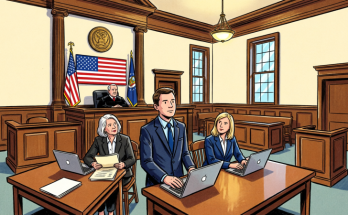
“You’re going to sign over fifteen percent of this place to your brother tonight.”
My father said it the way other people say pass the salt, like it was a minor request, like I’d asked him if he wanted still or sparkling. He didn’t bother lowering his voice. He didn’t bother checking whether anyone was listening. He said it as if the world existed to confirm his decisions.
He was sitting at table seven—my best table, the one by the window where the Austin skyline breaks into glitter right at dusk. No reservation. No phone call. No knock on the front door. Just presence, like entitlement could open any locked thing if you pressed it hard enough.
A glass of my house Cabernet sat in front of him. Unpaid for. Untouched, too—because this wasn’t about enjoying anything. It was about the way the glass looked on the table, the way a man like my father could sit in a restaurant his daughter built and treat it like an extension of his own living room.
My mother sat beside him, scrolling on her phone with reading glasses perched on the end of her nose. Her posture said she was already bored of the conversation before it started, but her eyes flicked up every few seconds—quick checks, like a pilot monitoring instruments. Not because she cared about me. Because she cared about control.
Across from them, Tyler leaned back in his chair with his arms crossed, legs stretched too far under the table like he owned the place.
He didn’t.
I did.
My floor manager, Priya, found me in the kitchen twenty minutes before the dinner rush. She stood in the doorway between stainless steel and candlelight, clipboard pressed to her chest, looking at me the way people look at someone who just stepped into traffic.
“There’s a family at seven,” she said carefully. “They said they didn’t need a reservation. That you’d understand.”
I understood.
I hadn’t spoken to any of them in four years.
I took off my apron. Folded it over the counter so neatly it was almost a prayer. Then I walked out through the kitchen doors into the dining room.
The restaurant was beginning to fill. The lighting was low and warm, the kind that forgives faces and makes everyone look like the best version of themselves. The smell of rosemary and charred oak floated under the soft hum of a playlist I’d curated myself—slow soul, a little jazz, the kind of music that makes people linger and spend money without noticing.
I’d built every detail from scratch: reclaimed wood on the walls, brass lettering above the door, a menu that changed with the season because I’d promised myself we would never serve food that tasted like compromise.
RENS—no apostrophe. Just my name. Clean. Simple. Mine.
My father looked up when he saw me and smiled like no time had passed.
“There she is,” he said. “Look how well you clean up.”
I stopped at the edge of the table.
I didn’t sit.
I needed the height. The small advantage of being the only one standing.
“You need to leave,” I said.
I kept my voice steady. Calm is a weapon when you’ve learned how to hold it.
“I have a full house in twenty minutes.”
“We’re not going anywhere,” my mother said, still not looking up from her phone. “We came a long way, Ren. The least you can do is hear us out.”
“You came from San Antonio,” I said. “It’s a two-hour drive.”
My mother’s thumb paused mid-scroll. She set the phone down slowly. Folded her hands on the table as if she were settling into a negotiation.
“Don’t be smart,” she said.
She looked older. They both did. My father’s hair had gone more salt than pepper. My mother’s jawline had softened, but not into kindness—into fatigue. Tyler looked the same as he always had: handsome in a careless way, like he’d been born into second chances.
“Your brother needs your help,” my mother said. “That’s all this is.”
Tyler looked at me then, and for one half-second—one flicker—I saw something real cross his face. Not shame exactly. More like the shadow of it. Then it passed, swallowed by the posture he’d practiced his whole life.
“Nice place,” he said, letting his eyes sweep the room as if he were inspecting an investment. “Bigger than I expected.”
“Get out,” I said again.
My father didn’t flinch. He leaned forward slightly, as if we were discussing menu options.
“Fifteen percent,” he repeated.
He reached into the inside pocket of his jacket and produced a folded document, sliding it across the table without standing.
“We had a lawyer draw it up,” he said. “It’s clean. You sign tonight. Tyler gets a silent partnership stake and we’re done. No drama.”
I didn’t touch the paper.
I looked at it like it was a dead rat someone had set on my table to see how I’d react.
“You had a lawyer draw up a document giving my brother a stake in my business,” I said, slowly. “And then you drove two hours and showed up unannounced to have me sign it tonight.”
“We knew you wouldn’t take our calls,” my father said.
There was a reason for that.

My mother’s voice shifted into the register she used when she wanted to sound reasonable—patient, a little sad, the tone of a woman who’d been wronged by someone else’s stubbornness.
“Your brother made some mistakes,” she said. “He’s trying to get back on his feet. You have this.”
She gestured around the room—the vaulted ceiling, the gleaming bar, my staff in their neat black aprons moving like a well-rehearsed dance.
“You have all of this, and he has nothing. Does that feel right to you? Does that feel like family?”
The word family landed the way they intended it to: like a small stone thrown at glass, testing for cracks.
It almost worked.
Not because I believed them. Because my body remembered the old reflex—the one that made me smaller, quieter, easier to manage.
But then the other memories rose too.
The ones they didn’t know I still carried.
The thirty-seven unanswered calls I made before I stopped calling.
The Christmas I spent in my studio apartment eating Thai takeout alone, telling myself I was fine until the silence started to feel like it had teeth.
The two years I spent paying off debt I didn’t create.
They didn’t know I knew about the loan.
The loan my father took out in my name when I was nineteen, using my social security number to cover Tyler’s first “business.”
Thirty-two thousand dollars.
It took me until I was twenty-four to find it on my credit report. It took me another year to pay it off. It took me three years to stop waking up panicked over the idea that I’d never be able to rent an apartment again.
They didn’t know I’d built my life around that secret, like I’d built my restaurant around a foundation no one else could see.
“I need to get back to the kitchen,” I said, keeping my face still. “I’ll have Priya bring you the check.”
“We’re not leaving,” my father said, voice dropping. The smile disappeared.
“You owe this family, Ren.”
There it was.
Not the guilt. Not the sentimental appeal.
The threat.
“I don’t want to make it ugly,” he continued, leaning in. “But I will. You want me to start talking to your investors? Your landlord? I know Marcus Chen holds your commercial lease. We went to the same church for fifteen years.”
My throat tightened, but I didn’t let it show.
“One phone call,” my father said, voice smooth as oil, “and I can make your life very complicated.”
My mother watched me like she was waiting for the flinch. Tyler watched me like he was waiting for the win.
I looked at my father for a long moment.
I kept my face neutral.
Then I nodded.
“Give me until end of service,” I said. “Ten o’clock. I’ll come back to this table and we’ll talk.”
My father leaned back, satisfied. He picked up his wine glass as if we’d just agreed on dessert.
“That’s all we’re asking.”
I walked back to the kitchen.
I did not panic.
I want to be clear about that because what happened next required me to be very calm.
And I was.
I had spent four years building something that couldn’t be taken from me—something that existed because I learned, the hard way, what it meant to be disposable in your own family.
And I’d spent every one of those years knowing, somewhere in the back of my mind, that a moment like this would come.
Not the specifics. Not this table. Not this Tuesday.
But the shape of it: the return, the hands out, the demand dressed as love.
I pulled my phone out behind the walk-in cooler where the air smelled of lemons and cold steel. I texted one person.
They’re here. Table 7. Need you.
Three dots appeared immediately.
On my way. Don’t sign anything.
I exhaled slowly and tucked the phone away.
Priya glanced at me from the expo line. Her eyes asked a question without words. I gave her a small nod that said: I’ve got this.
The dinner rush hit like it always did—tickets printing, flames snapping, my sous chef calling orders, the clean rhythm of a kitchen that knew what it was doing. I slid into my role like armor.
I plated scallops with brown butter and sage. I tasted a sauce and added salt without looking. I called out timing, moved like my body had been trained by heat and stress into a language my family didn’t speak.
In the dining room, table seven stayed occupied like a stain.
My father ordered another glass of Cabernet. Tyler ordered the ribeye medium-rare, like he had the right. My mother asked if we had anything “lighter,” as if my menu was a suggestion.
Priya brought them a cheese plate on my instruction. Hospitality is theater, and if there was one thing I could do better than the Row family, it was a show with purpose.
Let them feel taken care of.
Let them soften.
Let them believe.
At 8:45, Diana arrived.
Diana was my father’s age and somehow looked ten years younger, silver hair cut close, eyes sharp enough to slice. She carried herself with the posture of someone who’d spent three decades in courtrooms and never once apologized for it.
She’d been my mentor since I was a line cook at twenty-two.
The woman who taught me the difference between a lease clause and a liability, who looked at my first business plan and circled six things that would have bankrupted me without writing a single discouraging word.
She’d also—once—been my family’s next-door neighbor.
She knew them.
That mattered.
We sat in my office, a narrow room off the kitchen that smelled like coffee and printer paper. I told her everything in ten minutes—my father’s demand, the fifteen percent, the threat about my landlord, the old loan I’d never exposed.
Diana listened without interrupting. When I finished, she was quiet, turning her coffee cup slowly like she was thinking through a chessboard.
“The loan,” she said. “The one in your name. Do you have documentation?”
“Everything,” I said. “Credit report, payoff receipts, bank records. I’ve had them in a folder for three years.”…..
 :
: