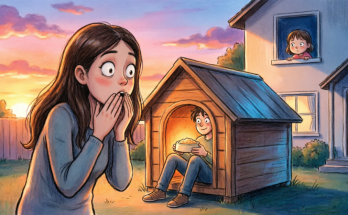
Part 1
When Lily was two weeks old, she slept best on my chest.
The nurse at the hospital had told me it was normal, that newborns liked the sound of a heartbeat because it reminded them of the only world they’d ever known. I believed her because I needed to believe something. I’d been living on three-hour naps, microwave burritos, and a kind of adrenaline I didn’t know my body could make.
That morning, Lily’s tiny fist was curled under her chin, her mouth doing little half-sucks in her sleep. My phone buzzed on the couch cushion beside us. I didn’t pick it up right away because any notification felt like a threat. Bills. Spam. Another email from the hospital billing portal reminding me I was broke in more than one way.
The message was from my mother.
I need $2,600 for new iPhones for your sister’s kids. Christmas is important for them.
I read it once, twice, three times, waiting for it to turn into a joke, waiting for a follow-up text that said Sorry wrong person, or I’m stressed and not thinking, or Are you okay, Maya? How’s the baby? How are you healing?
Nothing came.
Just that.
A demand for phones. A number so specific it meant she’d already priced them out, already imagined the glossy boxes under a tree, already decided my money was the solution to her preferred version of family.
My hands went numb. Lily shifted against me and sighed, soft and innocent, and the contrast made me feel like I might break in half.
My mother hadn’t called me once during my entire pregnancy. Not a real call, anyway. She answered texts when she wanted something, but she never asked how I was. She never asked if I was scared. She didn’t ask if I’d eaten. When I sent her the ultrasound picture at twelve weeks, she replied with a thumbs-up emoji and then asked if I could babysit my sister’s kids that weekend.
And when labor started at three in the morning, I called her seventeen times. She didn’t pick up once.
Now she wanted my savings to buy iPhones for kids who still needed help tying their shoes.
I stared at Lily’s face and tried to make my brain work in straight lines.
Let me back up, because the way people look at a twenty-year-old mother depends on what story they think they’re hearing.
My name is Maya. I’m twenty. I work at a call center that sells extended warranties for appliances nobody wants to repair. I used to think I’d be in community college by now, maybe studying something useful, maybe living in a place with a real bedroom instead of a studio where my bed and my kitchen share the same air. But plans are a luxury when your family treats you like an afterthought.
Six months before Lily was born, I told my boyfriend Derek I was pregnant.
We’d been together almost two years. We’d talked about moving somewhere nicer, about getting a dog, about saving for a used car that didn’t smell like other people’s cigarettes. I wasn’t naive enough to expect him to throw confetti, but I thought he’d at least stay in the room.
He stared at me like I’d handed him a diagnosis instead of a pregnancy test.
Three days later, his stuff was gone from our apartment. No conversation, no fight, no goodbye. He moved to Portland with a girl he met online and blocked me on everything.
That was the moment I realized you can know someone’s favorite pizza order and still not know who they are when things get hard.
I called my mother that night, crying so hard I couldn’t breathe. I remember standing in the bathroom because the tile felt cold and solid under my feet and I needed something solid.
She answered on the third ring and sighed like I’d interrupted her show.
“Maya, I have enough problems,” she said. “Lauren just got divorced and she’s moving back in with her three kids. I can’t deal with your drama right now.”
Drama.
My father got on the phone for forty-five seconds. “You made your choices,” he said. “You’re an adult now. Figure it out.” I could hear the football game roaring in the background like it mattered more than my life.
Lauren, my older sister, texted me: That’s crazy. Anyway can you watch the kids this weekend?
There was one person who checked on me.

My cousin Jesse. He was older, worked construction, had the kind of hands that looked permanently dusty. He brought me groceries when my paycheck didn’t stretch. He fixed my leaking sink. He never asked what I’d done wrong.
“You’ve got this, Maya,” he’d say, leaning in my doorway with a bag of oranges like it was nothing. “That baby is lucky to have you.”
Sometimes I believed him.
Most nights during pregnancy, I lay in bed with my hand on my stomach, listening to my neighbors argue through thin walls, trying not to drown in my own thoughts. I worked until eight months along because rent didn’t care that my feet swelled and my back felt like it was splitting. I lived on ramen and Costco samples and stubbornness.
The worst part wasn’t Derek leaving.
It was watching my parents show up for Lauren like she was the only daughter they’d ever had.
They co-signed her mortgage. They threw her kids birthday parties. They watched them every weekend. They held her through her divorce, made her casseroles, told her she was strong.
For me, silence.
And the whole time, I kept a joint bank account with my mother because it had been set up when I was sixteen. At the time, it felt normal. A way to “teach me responsibility.” In reality, it was a leash.
I’d been saving in that account for years. Every spare dollar. Every birthday check from my grandmother before she died. It was supposed to cover hospital bills and a crib and diapers and the things you need when you’re about to be responsible for a human being.
The balance was $3,847.
Labor started on a Tuesday night. It felt like someone tightened a belt around my spine. I timed contractions on a free app, tried to breathe through them, tried to convince myself I could handle it until morning.
By three a.m., I couldn’t.
I called my mother. Seventeen times. No answer.
I called my father. Voicemail.
I called Lauren. She texted back: Can’t talk. Kids have school tomorrow.
Jesse was in Denver for work.
So I took an Uber to the hospital, clutching my belly while the driver ran two red lights like he was racing an invisible clock.
Sixteen hours of labor. Nurses rotating in and out, asking where my family was, trying not to look at me with pity. One nurse named Patricia stayed past her shift. She held my hand when I started shaking. She coached my breathing. When Lily was born, six pounds eleven ounces of perfect, Patricia cried with me.
I named my daughter Lily after my grandmother, the only person in my family who ever loved me without conditions.
I brought Lily home to my studio and tried to keep her alive while barely keeping myself afloat. Hospital bills arrived like threats. I set up a payment plan that stretched into years.
My mother finally called on day thirteen postpartum. Not to ask how I was. Not to ask about Lily.
She called to complain about Lauren’s kids being loud and how expensive everything was.
I listened numb, waiting for her to remember I’d just had a baby.
She didn’t.
And then came the text about the iPhones.
That was when something in me stopped trying to earn her love.
I set Lily gently in her crib, even though she hated it, and called my mother back.
She answered like everything was normal. “Hi, sweetie. Did you get my message about the phones?”
“Yes,” I said.
“Great. Can you transfer it today? I want to order them before—”
“No,” I said.
Silence.
“What?” Her voice sharpened.
“No, Mom,” I repeated. “I’m not giving you $2,600 for iPhones.”
Her tone went cold. “Maya, don’t be selfish. You know how hard this year has been for Lauren. Those kids deserve a nice Christmas.”
“It’s not Lily’s fault her father left,” I said, my voice shaking now. “Or that her grandmother didn’t care enough to check if she was born alive.”
“Oh, don’t be dramatic,” my mother snapped. “I’ve been busy.”
“Did you know I almost had seizures during delivery?” I interrupted. “Did you know my blood pressure spiked? Did you even wonder?”
“This isn’t about you,” she said, like a verdict. “This is about family.”
Something cracked inside me. Or maybe it finally healed.
“You’re right,” I said quietly. “This is about family. That’s why I’m taking care of mine.”
I hung up.
Then I logged into the joint bank account, stared at the $3,847, and transferred every single dollar into my personal account. I removed my mother from the joint account and closed it.
My phone started ringing immediately.
I blocked her number. Then my father’s. Then Lauren’s.
Jesse called five minutes later. “What’s going on? Your mom just called me screaming.”
“Tell me honestly,” I said, staring at Lily’s tiny face. “Am I wrong?”
Jesse went quiet. “Tell me what happened.”
So I did.
When I finished, he breathed out slowly. “Jesus Christ, Maya. No. You’re not wrong. Not even a little. She’s going to make your life hell.”
“Then make yours heaven,” Jesse said. “You don’t owe them anything.”
Three days later, I was at Target with Lily strapped to my chest, trying to decide if I could afford the good wipes or if I had to stick with the scratchy cheap ones, when I heard my name.
“Maya.”
I turned around and my heart stopped.
Derek stood there holding a basket with fancy coffee and protein bars, looking healthy, well-rested, like a man who hadn’t spent months avoiding consequences.
He stared at the baby carrier. “I heard you had the baby,” he said awkwardly. “I saw something on Facebook.”
“This is your daughter,” I said flatly. “Lily.”
He stepped closer, trying to peek at her, and I shifted my body away instinctively, protective.
“She’s beautiful,” he whispered.
“You left,” I said, voice sharp enough to make a woman nearby glance over. “You don’t get to show up in Target and feel things.”
He flinched. “I know. I messed up. I moved back last month. I broke up with Kristen. I’ve been thinking—”
“You can start by paying child support,” I cut in. “My lawyer will be in touch.”
I didn’t have a lawyer. I could barely afford diapers. But the look on his face was worth the lie.
I walked away shaking. In the parking lot, Lily fussed, and I rocked her gently until she settled.
When I came back out after loading groceries, I found a note tucked under my windshield wiper.
Nice card stock. Neat handwriting.
I saw what happened in there. You handled it with serious grace. If you ever need someone to talk to who understands complicated family stuff, here’s my number. Carter.
I stood there in the parking lot holding the note like it was a strange kind of lifeline.
That night, after Lily finally fell asleep and I ate cereal for dinner, I looked at the note again and thought: What do I have to lose?
Part 2
I texted the number at 11:47 p.m. because my life had become a series of weird hours.
This is Maya from Target. This isn’t some weird pyramid scheme thing, right?
The reply came in less than a minute.
No pyramid schemes, I promise. I’m Carter. I was in line behind you. I hope it’s not creepy that I left a note. I just recognized that look. The one where you’re holding yourself together because you don’t have a choice.
I stared at the message until my eyes burned. The fact that someone noticed felt almost embarrassing, like being seen without makeup.
I replied: That look is called postpartum exhaustion.
Fair, he wrote. And also anger. The kind that tries to eat you from the inside.
My thumbs hovered above the screen. Then, without meaning to, I typed: My mom asked me for money for iPhones two weeks after I gave birth alone.
There was a pause, then: That’s not a mother. That’s a creditor with a title.
That made a laugh escape my throat, sharp and sudden. Lily stirred in her crib, and I froze until she settled again.
We texted for three hours. Carter told me his own family story in careful pieces. Parents who treated his older brother like the sun and him like weather. A nephew he wasn’t allowed to see because his brother’s wife decided Carter was “a bad influence” after Carter refused to lend them money one too many times.
I didn’t tell him everything. Not at first. I left out the worst parts. The way I’d sat in the hospital bed pretending it didn’t matter that nobody came. The way I still caught myself hoping my mother would suddenly show up and act like a mother.
But Carter didn’t push. He didn’t pry. He asked normal questions like What’s Lily like? and Are you sleeping at all? and Do you have anyone helping you?
I told him about Jesse.
Carter responded: Good. Keep that person close.
Around midnight, Carter wrote: Would you want to meet for coffee sometime? Somewhere public, obviously. You can bring Lily. I’ll buy. No pressure.
I replied: That’s exactly what a serial killer would say.
Fair point, he wrote. How about Main Street Coffee? Always crowded. Saturday at 2. You can leave whenever. No hard feelings.
I agreed, then immediately panicked.
Saturday arrived anyway.
I almost didn’t go. I stood in my apartment staring at my reflection in the mirror, a twenty-year-old with dark circles and spit-up on her shoulder, holding a diaper bag like a shield. Who meets a stranger for coffee two weeks postpartum? Who trusts a note on a windshield?
But Lily needed formula. I needed air. And some small part of me needed proof that the world contained people who didn’t look at me like a burden.
So I went.
Main Street Coffee was packed, and Carter was already there, tall with dark hair and a friendly face that didn’t feel too perfect. He stood when he saw me and helped me maneuver Lily’s carrier into a chair spot like he’d done it before.
“Hi,” he said softly, as if loudness might scare me away. “I’m Carter.”
“Maya,” I replied.
He ordered my coffee before I could say I’d pay. When I protested, he smiled. “Let me,” he said. “I left a note on your windshield. I feel like I owe you a beverage for the emotional whiplash.”
That made me smile despite myself.
We talked for two hours. About nothing and everything. About Asheville, where he lived now. About why he was in town (visiting a friend). About my job at the call center. About how newborns smell like warm bread one minute and chaos the next.
Then Carter leaned forward, hands wrapped around his cup, and said, “I’m going to be honest because you seem like someone who appreciates honesty.”
“Oh no,” I muttered. “Here it comes. You’re married. You’re moving. You’re in a cult.”
He laughed. “None of those. I owned a software company. Sold it two years ago. I’m thirty-two. I’m single. I’m not broke. And I’m not offering because I want anything from you.”
I blinked at him. “You’re… rich.”
“I’m comfortable,” he corrected. “And when I saw you in Target, standing between that guy and your baby like you’d do it a thousand times, I don’t know. It hit me. I had to meet you.”
I stared, suspicious and exhausted. “So you left a note on my car.”
“I’m terrible at approaching women,” he admitted. “The note seemed less scary than walking up to you while you were holding a baby.”
That answer felt oddly human.
When Lily started fussing, Carter didn’t flinch. He didn’t look annoyed. He just said, “Do you want me to hold her while you drink your coffee?”
I hesitated, then handed Lily’s carrier handle to him. His hands were careful. His voice turned soft when he looked down at her. “Hey, Lily,” he murmured, like she mattered.
My throat tightened.
Before we left, Carter asked, “Can I see you again? Maybe dinner next week? I can bring food to you so you don’t have to go out.”
“I have a baby,” I said, like it was a warning.
“I noticed,” he grinned. “She can come too.”
Over the next three weeks, Carter showed up in small ways that made my life easier. He brought takeout and didn’t act like he deserved applause. He sat on the floor and folded tiny onesies while I fed Lily. He asked if I’d eaten. He offered to run errands. He never tried to touch me unless I initiated it, like he understood my body belonged to me again after being a public object for nine months.
Then one night, as Lily slept and my apartment felt too small for my stress, Carter looked around and said carefully, “Maya, can I ask you something without you getting mad?”
“That’s a terrible start,” I replied.
“Are you safe here financially?” he asked. “I mean… are you okay?”
I wanted to lie. Pretending I was fine was the only talent my family ever praised.
But I was tired of pretending.
“No,” I whispered. “I’m not okay. I’m drowning.”
Carter nodded slowly, as if he’d already suspected. “Okay,” he said. “Thank you for telling me.”
Then he said the sentence that changed my life.
“Move in with me.”
I laughed, startled. “What? Carter, we’ve known each other for three weeks.”
“I know how it sounds,” he said quickly. “But hear me out. I have a four-bedroom house in Asheville. You and Lily could have your own floor. Your own space. No pressure, no expectations. Just safety. Stability. Time to breathe.”
“That’s insane,” I said, but my heart was pounding.
“Maybe,” he admitted. “But I’d rather sound insane than watch you drown because the people who should help you don’t.”
The next morning, Jesse called, voice urgent.
“Your mom showed up at my place last night,” he said. “She’s losing it, Maya. She’s telling everyone you stole from her. She’s saying you’re an unfit mother. She says she’s going to sue for grandparents’ rights.”
My blood went cold.
“She can’t do that,” I whispered.
“Maybe not successfully,” Jesse said. “But she can make your life hell trying.”
I thought about Carter’s quiet house in Asheville. About a nursery already set up. About Lily growing up in a studio where my mother could show up and demand things like I was still sixteen and trapped.
Jesse paused. “Maybe getting out of town isn’t the worst idea.”
That night, I looked at Lily sleeping in her crib and realized something terrifying and clear.
If I stayed, my mother would keep trying to pull me back into the role she’d assigned me: the daughter who gives, the daughter who owes, the daughter who exists to solve problems she didn’t create.
If I left, I might finally become the mother Lily needed.
I texted Carter: I need time, but I’m seriously considering it.
He replied: Take your time. I’m here either way.
And for the first time in a long time, I believed someone when they said that.
Part 3
Two days later, my mother found my apartment.
I don’t know how. Maybe Lauren told her. Maybe she tracked my old Uber receipts through the shared account she’d once controlled. My mother has always been frighteningly resourceful when there’s something she wants.
It was late afternoon. I was rocking Lily in the worn chair by the window, trying to get her to settle after a crying spell that made my nerves feel raw. When the knock came, it was aggressive, like the door owed her something.
I froze.
Then I heard her voice through the wood. “Maya. Open up.”
Lily startled and began to wail. My stomach dropped.
I didn’t open the door. I didn’t answer. I moved quietly to the corner of the room and called Jesse with shaking fingers.
“She’s here,” I whispered. “She found me.”
Jesse’s voice went hard. “Don’t open the door. Call the police if she doesn’t leave.”
“She’s my mom,” I whispered, as if that meant she couldn’t hurt me.
Jesse snorted. “That woman asked you for iPhones two weeks postpartum. She’s not here to check on you. She’s here to take.”
The pounding got louder. “Maya! I know you’re in there! Don’t be ridiculous!”
Lily screamed harder, her tiny face turning red. My body reacted like an alarm system, every muscle tight, panic rising.
I called the non-emergency police line with my free hand, voice trembling as I explained that someone was banging on my door and refusing to leave and I had a newborn.
Ten minutes later, two officers arrived. I watched through the peephole as my mother shifted instantly into a performance: hands clasped, voice tearful, shoulders shaking like she was the victim.
“I’m just worried about my daughter,” she said loudly enough for me to hear. “She’s not answering me. I think she’s unstable.”
Unstable. The word slammed into me.
One officer knocked gently and asked me to open the door. My hands shook so badly I almost dropped my phone, but I opened it on the chain, Lily crying in my arms.
The officer’s gaze flicked to Lily, then to my face. “Ma’am, are you okay?” he asked quietly.
“I’m fine,” I said. “I asked her to stop contacting me. She won’t.”
My mother’s eyes narrowed, then widened dramatically. “Maya, sweetheart, I’m your mother. I’m trying to help.”
“You didn’t help when I went into labor,” I said, voice low and steady in a way that surprised me. “You didn’t call during my pregnancy. You asked me for money for iPhones. You’re not here to help.”
The second officer watched my mother carefully now, like he’d seen this before.
My mother’s voice sharpened. “You stole from me.”
“I transferred my money,” I corrected. “The money I saved. For my baby.”
“Family money,” she snapped.
“No,” I said, and this time the word felt like a door slamming shut. “My money.”
The officer cleared his throat. “Ma’am,” he said to my mother, “she’s asking you to leave. You need to leave.”
My mother looked offended, like being told no was a violation of her rights. “This is my grandchild,” she said, voice rising. “I have rights!”
The officer’s face stayed neutral. “Not in this hallway,” he replied. “Leave, or we can escort you.”
My mother turned her glare on me, pure fury beneath the tears. “You’ll regret this,” she hissed.
Then she walked away, heels clicking like punctuation.
When the door shut, I slid down to the floor and cried silently while Lily hiccuped against my chest. Not because I missed my mother. Because I finally understood she would never stop unless I made it impossible.
That night, I told Carter everything. The text. The joint account. The police. The word unstable.
Carter’s expression tightened with controlled anger. “Okay,” he said. “Then we don’t wait.”
Jesse agreed. “Leave,” he said over the phone. “Now. Before she tries something bigger.”
So I did.
Carter drove up the next morning with a truck. My whole life fit into a few boxes. That should have made me sad. Instead, it made me feel strangely light, like I’d been carrying things that weren’t mine for years.
I left no forwarding address. I changed my number. I kept only Jesse’s contact and Carter’s.
The drive to Asheville took eight hours. Lily slept most of the way, her tiny breaths steady. I watched the landscape change from familiar streets to rolling hills and then, finally, to mountains that looked like someone painted them.
When we pulled up to Carter’s house, I actually gasped.
It was a craftsman-style home with a wraparound porch and trees everywhere, like a place where people heal in movies. Carter carried my boxes inside while I stood in the driveway with Lily, stunned.
“This is your house,” I whispered.
“Our house for now,” Carter said gently. “Yours and Lily’s too. For as long as you want.”
He’d already set up a nursery. An actual nursery: crib, changing table, rocking chair, little lamp that cast warm light on soft walls. I put Lily down in her own room and stared at her sleeping face like I’d transported her into a different universe.
That night, I sat in the rocking chair and cried. Relief tears. Grief tears. The kind that happen when your body realizes it’s safe enough to feel.
The next week, Jesse helped me find legal aid in Asheville. A woman named Ms. Rivas met with me in a small office and listened to my story without flinching.
“We can file for child support,” she said. “And if your mother harasses you, we can document it. Grandparents’ rights cases exist, but they usually depend on an established relationship with the child. Your baby is a newborn. Your mother has not been involved. That matters.”
For the first time, someone spoke about my mother like she was a person who could be handled, not a force of nature.
Derek was served paperwork within a month. He texted Jesse asking if I was really doing this.
Jesse replied on my behalf: Pay for your child. That’s what adults do.
Then my mother found out where I was anyway.
A message request popped up on Facebook from her account: I know where you are. How dare you run away with my granddaughter. I’m calling a lawyer.
My skin went cold, but Carter read it calmly, like it was just noise.
“Do you want to respond?” he asked.
I stared at the screen and thought about the night I called her seventeen times. About the silence. About the iPhones.
I typed one sentence and hit send.
You had seventeen missed calls the night I gave birth. You didn’t come. You didn’t ask her name. You don’t get to be a grandmother now.
Then I blocked her.
Two weeks later, she showed up in Asheville.
Not at Carter’s house, thank God, but at a grocery store near our neighborhood. I was in the baby aisle with Lily in the carrier when I heard her voice behind me.
“There you are.”
My whole body went rigid.
She stepped closer, eyes bright with possession. “Give me my granddaughter.”
“I’m not doing this here,” I said, moving my cart like a shield.
She reached for Lily’s carrier handle.
I reacted without thinking, yanking the carrier back and shouting, “Don’t touch her!”
People turned. A store employee rushed over. My mother’s face morphed instantly into wounded innocence.
“She’s unstable,” she told the employee. “She stole money from me and kidnapped my granddaughter.”
I didn’t scream. I didn’t cry. I did the only thing Ms. Rivas had taught me to do.
I pulled out my phone and said clearly, “I’m calling the police.”
The word police made my mother step back. She hated witnesses. She hated official records. She thrived in private where she could rewrite reality.
Carter arrived within minutes because I’d started sharing my location with him when I ran errands. He walked into the aisle, saw my mother, and his face went still.
“Ma’am,” he said calmly, “you need to leave.”
My mother looked him up and down like she was trying to decide what kind of threat he was. “Who are you?”
“The person who is going to stand here until the police arrive,” Carter said.
When the officers came, my mother tried her performance again. Tears, concern, dramatic statements about family.
But this time, I had documentation. Text screenshots. Call logs. Police report numbers from my apartment. Legal aid filing receipts.
The officers listened. Then they told my mother to leave.
And as she walked away, her voice turned sharp and cruel.
“This isn’t over,” she said.
I held Lily tighter and realized she was wrong.
It was over.
Because I wasn’t alone anymore, and I wasn’t scared of her stories now that I knew how to write my own in ink.
Part 4
The first real winter in Asheville was the quietest winter of my life.
Not empty quiet. Safe quiet. The kind where the loudest sound in the house is the heater clicking on and Lily’s little sighs in her sleep.
Carter worked from home in an upstairs office. He’d come down between meetings to kiss Lily’s forehead and ask me if I’d eaten. Not in a controlling way, not like a supervisor checking performance. Like someone who understood survival is made of small things.
I started sleeping more. I started cooking because I wanted to, not because I needed to prove I was worthy of staying. I learned the grocery stores. I learned which parks had the smoothest walking trails for the stroller. I learned that my shoulders didn’t have to stay tense all the time.
Derek’s child support case moved slowly, but it moved. Ms. Rivas made sure it moved. Derek tried to argue at first that he “wasn’t sure” Lily was his.
Ms. Rivas’s response was simple: Then you can pay for the test you should have requested months ago.
The results came back. Derek was Lily’s father. A judge ordered payments, not huge, but consistent. Derek was also ordered to carry health insurance coverage for her when possible.
When the order came through, I didn’t feel victory. I felt a strange, calm satisfaction.
This was accountability. Not closure. Accountability.
My mother tried three more times in different ways.
Once, she emailed Ms. Rivas pretending to be concerned about Lily’s “well-being.” Ms. Rivas replied with a single sentence: All communication should go through counsel.
Once, she sent Lauren to message me from a new Facebook account with a photo of the kids and the caption: They miss their cousin.
I stared at the photo and felt nothing but distance. Lauren had not shown up when I was pregnant. She had not answered my calls when I was in labor. She didn’t get to use her kids as bait now.
I blocked her too.
The third time, my mother actually filed for visitation.
Ms. Rivas warned me it might happen. “Some people file not because they’ll win,” she said, “but because they want to frighten you back into compliance.”
The hearing took place in a small courtroom. I wore a plain blouse and held Lily’s tiny socks in my pocket like a talisman. Carter sat behind me, close enough that I could feel his presence without needing to look.
My mother stood at the front with a lawyer who looked bored. She cried on cue. She talked about family, about tradition, about how she was “worried” about Lily being raised away from her roots.
The judge listened, then asked one question that sliced through my mother’s performance.
“How often did you see the child before this filing?”
My mother blinked. “She’s an infant—”
The judge’s gaze sharpened. “How often did you see the mother during pregnancy? Did you provide support? Did you have an established relationship with the child?”
My mother’s lawyer shifted uncomfortably.
Ms. Rivas stood and presented my call logs, my text messages, the iPhone demand, the police reports, the documentation of my mother showing up and attempting to grab the carrier in a grocery store.
Then Ms. Rivas said quietly, “Your Honor, this is not a case about loving grandparents. This is a case about control.”
The judge looked at my mother for a long time, then said, “Petition denied.”
My mother’s face twisted. “That’s not fair,” she snapped, forgetting her tears.
The judge’s expression didn’t change. “Fair would have been showing up when your daughter called you seventeen times while in labor,” he said evenly. “Court is not a substitute for relationship.”
I pressed my lips together hard, fighting tears.
After the hearing, my mother tried to approach me. Carter stepped between us.
“Leave,” he said calmly, and there was something in his voice that made even my mother hesitate.
We walked out into bright winter sunlight. I buckled Lily into her car seat, hands steady.
In the car, Carter reached over and squeezed my knee. “You did it,” he said.
“No,” I replied, surprising myself. “I’m doing it. Every day.”
Time moved in a way I didn’t expect. Slowly, then quickly.
Lily learned to smile. Then to laugh. Her laugh sounded like a tiny bell, like joy without history.
I enrolled in online classes. I chose nursing because I couldn’t forget Patricia’s hands holding mine in the hospital when nobody else came. I wanted to be that person for someone else someday.
Carter never treated me like a project. He treated me like a partner even before we officially used that word. When I insisted on paying for something small, he let me. When I asked for space, he gave it. When I cried without warning because a commercial showed a grandmother cuddling a baby, he didn’t tell me to be grateful for what I had. He just sat with me until the wave passed.
One evening, when Lily was about ten months old, Carter was dancing around the living room with her, singing a ridiculous made-up song about mashed bananas and tiny toes. Lily squealed with laughter, her whole face lit up, and Carter looked so happy it made my chest ache.
“Maya,” he said softly later, after Lily fell asleep. “Can I tell you something?”
I braced automatically. Old reflex.
Carter touched my hand. “I love you,” he said simply. “I love Lily. I don’t need you to say anything back right now. I just don’t want to keep it inside.”
My throat tightened. “I love you too,” I whispered, and it didn’t feel like a lie. It felt like stepping into warmth after years of cold.
He proposed six months later. Not with a big crowd, not with a camera, but on the porch at sunset while Lily napped inside.
“I’m not trying to rescue you,” he said, voice steady. “You rescued yourself. I just want to build a life with you. If you want that too.”
I said yes.
We got married in a small ceremony in the mountains. Jesse came. Ms. Rivas came. A few neighbors and Carter’s best friend Marcus, who cried openly and didn’t apologize for it. No one from my family was invited.
I didn’t miss them.
After the wedding, I wrote a letter to Patricia, the nurse from the hospital. I told her Lily’s name again. I told her she’d mattered. I told her I was studying nursing because of her.
Weeks later, a card arrived in the mail.
I think about you and that baby sometimes, Patricia wrote. I’m glad you found your people. Now go be someone’s Patricia.
I kept that card in my desk drawer like it was proof of something holy.
My mother tried one more message after she heard I got married.
I heard your husband has money. Maybe now you can help your sister.
I stared at it, then wrote back one sentence, not because she deserved it, but because I wanted it on record.
I’m fine because I left everyone who treated me like I didn’t matter.
Then I blocked her again.
And that time, it didn’t hurt.
It just felt like closing a door that should have been closed years ago.
Part 5
Lily turned two on a bright spring morning, wearing a little yellow dress and an expression of serious concentration as she tried to blow out her candles.
She didn’t quite manage it. She puffed her cheeks, leaned forward, and spit slightly instead, which made Jesse laugh so hard he had to wipe his eyes. Carter scooped Lily up and helped her blow, and when the flames went out, Lily clapped like she’d personally conquered fire.
Her laugh filled the room, and for a second I stood back and watched my life like it belonged to someone else.
Not because it felt unreal.
Because it felt earned.
I was halfway through my nursing program by then, doing clinical rotations that left my feet aching in the exact way they used to ache when I was eight months pregnant and still answering angry customer calls at the call center. The difference was that now the ache meant I was becoming something. Building a career that didn’t depend on someone else’s approval.
One night during my rotation, I met a young woman in triage who reminded me too much of myself.
She was pale, sweating, gripping the sides of the bed, eyes wide with fear. No one sat beside her. No bag on the chair. No partner pacing. No mother holding her hand. Just her and the beep of monitors.
When the nurse assigned to her stepped out for supplies, the woman whispered, “Is it normal that nobody came?”
My throat tightened.
“It happens,” I said gently, adjusting her blanket. “But you’re not alone right now. I’m here.”
Her eyes filled, and I saw that same look I must have worn in the hospital: the look of someone trying not to drown.
I stayed with her a little longer than my tasks required. I held her hand when a contraction hit. I coached her breathing the way Patricia had coached mine.
Later, in the break room, I sat with my coffee and thought about the chain of it. How one nurse staying past her shift had changed the shape of my story. How I’d carried that kindness like a seed and now it was growing into something I could give away.
That was the kind of inheritance I wanted for Lily.
Not money demands. Not conditional love. Not family loyalty that only flowed in one direction.
At home, Carter built Lily a little play kitchen out of wood because he said, “She deserves something that lasts longer than plastic.” Lily “cooked” pretend soup and offered it to everyone like generosity was her natural language.
Sometimes, late at night, the past tried to return. A memory of my mother’s voice calling me dramatic. My father’s football game in the background. Lauren’s text about school tomorrow.
But those memories felt farther now, like they belonged to a town I’d moved away from.
Jesse still gave me occasional updates I didn’t ask for, mostly because he wanted to protect me from surprises.
“Your mom asked about you,” he said once, after Lily’s birthday. “Then she asked if you’d be willing to ‘help’ with Lauren’s car payment.”
I felt a flicker of old anger, then nothing.
“What did you say?” I asked.
Jesse smiled. “I said, ‘Maya’s happy. Leave her alone.’ Then I hung up.”
I leaned into him and hugged him because he was the closest thing I had to a brother. “Thank you,” I whispered.
A week later, another message request appeared on Facebook from a brand-new account with no profile picture.
Maya. It’s Mom. I’m sorry. I need help.
I stared at it for a long moment.
Two years ago, I would have cracked. I would have responded. I would have tried to squeeze myself back into the role of fixer, even while bleeding.
Now, I thought about Lily’s face when she laughed. About Carter making coffee in the morning. About my nursing textbooks on the table. About a judge telling my mother that court was not a substitute for relationship.
I didn’t respond.
I deleted the request and went back to my homework.
That night, I tucked Lily into bed. She curled into her pillow and said, “Mama,” with sleepy certainty, like the word meant safety.
“Yes, baby?” I whispered.
She reached for my hand. “Stay.”
“I’m here,” I promised, and I meant it in a way my mother never could.
After Lily fell asleep, I walked onto the porch and looked out at the mountains silhouetted against the dark sky. Carter came up behind me and wrapped his arms around my waist.
“You okay?” he asked.
I leaned back into him. “I’m good,” I said. “Actually good.”
Carter kissed my temple. “You built this,” he murmured.
I thought about the night Lily was born, Patricia holding my hand, the terror of doing it alone. I thought about the iPhone text, the way it finally snapped something in me and forced me to choose.
“I built it,” I agreed quietly. “And I’m still building.”
Inside, the house was warm. Lily slept safely. My books waited. My future waited.
Far away, my mother could keep writing messages into the void.
But I wasn’t the void anymore.
I was a life. A mother. A woman who learned, painfully and completely, that family is not the people who demand your money after abandoning you.
Family is the people who show up.
And now, I knew how to show up.
Part 6
The first time Derek asked to see Lily, she was two years and three months old and obsessed with blueberries.
I know that detail like it’s tattooed on my brain because it’s the kind of ordinary thing that makes betrayal feel even sharper. Lily was sitting at the kitchen table in her little booster seat, cheeks stained purple, humming to herself while Carter washed dishes. I was scrolling through my online class portal, half-listening to the dishwasher, when my phone buzzed with an unknown number.
I don’t answer unknown numbers. That’s one of the rules I learned the hard way.
But something in me—some old reflex—made me pick up anyway.
“Maya?” a man’s voice said, cautious and thin.
My stomach dropped. “Derek.”
He exhaled like he’d been holding his breath for years. “Yeah. It’s me.”
The last time I’d heard his voice in real life was in Target, when he tried to act like he hadn’t disappeared. Back then, Lily was two weeks old and tucked against my chest. Now she was a toddler with opinions and a favorite color and a laugh that could fill the whole house.
“How did you get this number?” I asked, already feeling my pulse climb.
“Your mom,” he said quickly. “She… she gave it to me.”
Of course she did.
Carter’s head snapped up from the sink. He didn’t speak, but his eyes narrowed in a way that told me he understood exactly what was happening without needing a recap.
“What do you want?” I asked, voice flat.
“I want to see her,” Derek said. “I want to see Lily.”
I felt something cold spread through my chest. “You mean the kid you didn’t bother to meet for two years? The kid you tried to avoid paying child support for until a judge made you?”
“I know,” he said fast, like speed could erase facts. “I know I messed up. But I’ve been paying. I’ve been trying to get my life together.”
I stared at Lily across the room as she shoved another blueberry into her mouth and announced, “More!” like the world was safe and reliable.
“Why now?” I asked. “Be honest.”
There was a pause. I could hear traffic in the background. A car door closing.
“My mom died last month,” Derek said quietly.
The words hit me in a strange way. Not sympathy exactly. More like shock that life kept happening around him while I’d been building mine without him.
“And?” I asked, softer than I meant to.
“And it made me think about… about what I’ve done,” he said. “I don’t want to be that guy forever.”
Carter turned off the faucet and dried his hands slowly, watching me like he was ready to step in the second I wanted him to.
“You can’t show up because you had a moment,” I said. “She’s not a self-improvement project.”
“I know,” Derek whispered. “I’m not asking to take her. I’m not trying to disrupt anything. I just… I want to meet my daughter.”
My daughter.
The possessiveness of the phrase made my jaw tighten.
“You don’t get to call her that like it means something,” I said. “You didn’t earn that.”
Derek’s voice cracked. “I’m trying to.”
I took a slow breath and heard Ms. Rivas’s voice in my head from years earlier: Don’t negotiate on the phone. Document everything. Keep it clean.
“If you want visitation,” I said, “you go through the court. You go through the lawyer. You don’t get my number from my mother and try to guilt your way in.”
“Maya, please—”
“No,” I said, and the word landed with finality. “You don’t contact me directly again.”
I hung up and immediately blocked the number.
My hands shook as I set the phone down. Carter moved closer, quiet, steady. “You okay?” he asked.
“I hate that she’s involved,” I whispered.
He nodded. “She will always try to get in through the weakest door.”
“What if Derek is that door?” I asked, panic flaring. “What if he—”
Carter’s voice stayed calm. “Then we reinforce the door.”
That night, I called Ms. Rivas. She didn’t sound surprised.
“Your mother is using him,” she said bluntly. “And he’s letting her because it benefits him.”
“What do I do?” I asked, voice tight.
“We do what we always do,” she said. “We document. If he wants visitation, he files. And if he files, we request it be supervised at first. Given his absence, the court will likely agree.”
The idea of Derek sitting across from Lily in any context made my stomach twist.
But avoiding reality wasn’t a strategy.
Two weeks later, papers arrived.
Derek filed for visitation.
He wanted “a relationship with his child.” He included a paragraph about personal growth and grief and wanting to do the right thing. The language looked suspiciously polished, like someone else had drafted it.
My mother’s influence smelled like cheap perfume on the paper.
Lauren called me the next day from a new number. “This is ridiculous,” she snapped. “You can’t keep Lily from her real family.”
I laughed once, harsh. “Real family shows up,” I said. “Where were you when I was in labor?”
Lauren’s voice sharpened. “You’re punishing everyone because you’re bitter.”
“No,” I said. “I’m protecting my child because I’m a mother. Something you’d understand if you stopped being Mom’s assistant.”
Lauren started to yell. I hung up and blocked the number.
The hearing was scheduled for a month later. In the meantime, my mother did what she always did: she escalated.
She started telling people I’d “stolen” her money. She posted vague Facebook statuses about ungrateful daughters and stolen grandchildren. She told Jesse she was “sick with worry” and “praying for justice.”
Jesse told me all of this only because he wanted me prepared.
“She’s trying to build a narrative,” he said. “She wants everyone to think you’re unstable again.”
“I’m not,” I said, but the old fear still slithered up my spine. Fear isn’t logical. It’s memory.
The night before the hearing, Carter found me sitting on the nursery floor—Lily’s old nursery, now turned into a toddler room with stuffed animals and tiny shoes—staring at nothing.
“You don’t have to be brave alone,” he said gently.
I swallowed. “I’m not scared of Derek,” I admitted. “I’m scared of what my mother will do if she gets even an inch.”
Carter sat beside me on the carpet. “Then we don’t give her an inch,” he said. “We give her a wall.”
In the morning, Lily woke up and asked for blueberries.
I packed her snack cup, kissed her head, and drove to court with my spine straight.
Because whatever Derek wanted, whatever my mother plotted, one thing was true and simple.
I had already given birth alone.
I had already survived what was supposed to break me.
I wasn’t the same girl they used to push around.
And I wasn’t going to let them rewrite that.
Part 7
Courtrooms all smell the same: paper, old carpet, and the faint panic of people who thought consequences would never reach them.
Derek sat on the opposite side with a woman I didn’t recognize—his attorney, maybe, or a girlfriend pretending to look supportive. His hair was trimmed. His clothes were clean. He looked like a man trying to appear stable.
My mother wasn’t there, which didn’t mean she wasn’t present. Her influence sat in the air like a second witness. Derek kept glancing toward the back doors, as if expecting her to storm in at any moment and take over.
Ms. Rivas sat beside me, calm and sharp, flipping through my binder of documentation like she was about to present a case she’d already won.
Carter sat behind me. Jesse couldn’t be there—worksite accident that morning, minor but urgent—but he texted me: You’ve got this. Do not let her get in your head.
The judge listened to Derek’s statement first. Derek spoke about grief, about regret, about wanting a chance. He said he’d been paying support “consistently.” He said he wanted to “build a relationship” with Lily.
Then Ms. Rivas stood.
“Your Honor,” she said evenly, “Mr. Walker abandoned the mother during pregnancy, blocked contact, and made no effort to meet the child until she was over two years old. His sudden desire for involvement coincides with a grandparent seeking access.”
Derek’s attorney objected. The judge raised a hand.
Ms. Rivas didn’t flinch. She presented timelines: Derek’s disappearance, the child support filing, Derek’s initial refusal, the court order, the consistent payments only after enforcement.
Then she submitted call logs from the night I went into labor. Seventeen missed calls to my mother. No family present. Hospital notes verifying I gave birth without support.
The judge’s eyes flicked toward me briefly. Not pity. Recognition.
Ms. Rivas concluded simply: “We are not asking to erase the father. We are asking to protect the child. If visitation is granted, we request it be supervised initially, gradually increasing based on consistency and the child’s comfort.”
The judge nodded slowly and looked at Derek. “Supervised visitation,” he said, “is reasonable given the absence.”
Derek’s shoulders dropped, disappointment and relief tangled. He’d expected to be denied entirely, I could tell. Supervised visitation sounded like a win to him.
I didn’t feel like it was a win for anyone.
The first supervised visit took place at a family center that smelled like disinfectant and crayons. Lily wore pink sneakers and clutched her stuffed bunny like a weapon. Carter walked with us to the door, but the supervisor explained only parents could enter.
I knelt beside Lily. “You’re safe,” I whispered. “I’ll be right outside.”
Lily’s eyes were huge. “Mama stay,” she said, voice trembling.
“I’m right here,” I promised.
Inside the room, Derek sat stiffly at a tiny table, hands folded like he was waiting for an interview. When Lily walked in, she stopped short and stared.
Derek’s face softened. “Hi,” he said quietly. “I’m Derek.”
Lily didn’t move.
The supervisor offered toys. Lily stayed close to my leg until the door closed, then she turned and looked at Derek again, uncertain.
He reached out slowly as if not to scare her. “I brought you something,” he said, pulling out a small stuffed dog.
Lily didn’t take it.
She looked up at the supervisor and asked, “Where Mama?”
The supervisor smiled gently. “Your mom is right outside, sweetheart. She’ll be here when you’re done.”
Lily’s lower lip trembled. She backed away from Derek and sat on the floor with her bunny, watching him like he was a strange animal.
Derek’s eyes flicked toward the two-way mirror, and I knew he was thinking about me. About whether I was watching. About whether I’d “made” Lily act this way.
But Lily wasn’t acting.
She didn’t know him.
That was the truth no court order could solve instantly.
The visits continued every other week. Derek tried. Sometimes. He showed up with snacks and toys. He sat on the floor and built block towers Lily immediately knocked down. He learned her favorite song after hearing it once. He started bringing blueberries because someone told him she liked them.
But consistency is a language, and Derek spoke it with an accent.
He missed one visit because he “had to work.” Then another because he “was sick.” Then another because he “forgot” to confirm with the center.
Each missed visit hit Lily in a quiet way. She’d ask that morning, “Go see man?” and I’d say, “Not today,” and she’d frown and move on—but later, she’d cling to me harder at bedtime.
My therapist, who I’d started seeing again when the visitation began, explained it gently.
“She’s learning adults can appear and disappear,” she said. “You’re the steady one. That’s why she holds tighter.”
Derek called once after missing a visit, voice frustrated. “You’re telling her bad things about me,” he accused.
I laughed, exhausted. “I don’t have to,” I said. “Your actions are doing the talking.”
He went quiet.
Then, two months into visitation, my mother made her move.
A report came to our door from child services. Anonymous. Allegations that Lily was “being raised in an unsafe environment” by a mother who “kidnapped her from family.”
It wasn’t subtle. It wasn’t clever. It was spite with paperwork.
The caseworker, a woman named Tasha, arrived with a calm face and a clipboard. She looked around our clean home, noted the stocked pantry, the childproof locks, Lily’s medical records neatly filed, my nursing textbooks on the table.
“I’m sorry you’re dealing with this,” Tasha said quietly after she spoke to me and Carter. “This looks like retaliation.”
“You think?” Carter said, polite but sharp.
Tasha gave a small, sympathetic smile. “We’ll close it quickly,” she said. “But document everything. This likely won’t be the last attempt.”
That night, I sat on Lily’s floor after she fell asleep, staring at the stuffed animals arranged in a messy line.
I realized something hard and clear.
My mother didn’t want to be a grandmother.
She wanted a claim.
And if she couldn’t control me directly, she would try to control me through Derek, through courts, through systems meant to protect children.
The only way to stop her was to keep being unshakably steady.
So I did what I’d always done since Lily was born.
I held my ground.
I kept records.
I loved my child out loud.
And I refused to be frightened into giving away an inch of our peace.
Part 8
When Lily started calling Derek “Blueberry Man,” I knew we were living in a reality I never could have predicted.
It wasn’t affectionate, exactly. It was literal. Derek had started bringing blueberries to every supervised visit like a peace offering, and Lily’s toddler brain had filed him under Snacks. That was her way of coping: reducing a stranger to something manageable.
The supervisor told me Lily was less afraid now. She’d sit closer. She’d accept the toy. She’d let Derek read a book if the supervisor sat nearby.
Derek took that as progress. My mother took it as an opening.
She began emailing Derek’s attorney, demanding he “fight harder.” She started sending Derek long messages about how Lily “needed her real grandmother.” Derek forwarded one to me by accident one night—probably meant to send to his lawyer.
It said: Don’t let Maya poison Lily. You have to get custody. Once you do, I can finally have her.
My hands went cold reading it.
I forwarded it to Ms. Rivas immediately.
Ms. Rivas replied: Keep it. It’s evidence of motive.
Carter found me at the kitchen counter, staring at my phone like it was a snake.
“You okay?” he asked softly.
I handed him the message.
His jaw tightened. “She’s never going to stop,” he said.
“No,” I whispered. “She’s not.”
That night, after Lily fell asleep, Carter and I sat on the porch with coffee and the mountains dark against the sky.
“I’ve been thinking,” Carter said carefully. “About adoption.”
My stomach clenched. It was a word that carried weight.
“Not because Derek doesn’t exist,” Carter continued quickly. “Not to erase him. But because Lily deserves legal stability. And because your mother is using Derek as a crowbar.”
I stared at my mug. “If you adopt her, Derek has to agree,” I said, voice tight.
Carter nodded. “I know.”
The idea of asking Derek to sign away rights felt complicated in a way that made me angry. Derek had already signed away responsibility in every way that mattered emotionally. Why did he get to hold the legal power now?
Ms. Rivas explained the options in a meeting a week later.
“Step-parent adoption is possible,” she said. “But Derek would need to voluntarily relinquish his rights, or the court would need grounds to terminate, which is harder and uglier. Voluntary is cleaner.”
“Why would he do it?” I asked, bitter.
Ms. Rivas’s expression was blunt. “Because it’s easier than being a father,” she said. “And because your mother’s pressure will eventually turn on him too. She doesn’t want him. She wants access.”
I hated how true that sounded.
We didn’t rush it. For Lily’s sake, I didn’t want Derek to feel cornered and lash out. We waited until the supervised visits had been going for six months. Long enough that the pattern was clear: Derek could show up for an hour in a supervised room. He could not show up consistently for the invisible parts of parenting.
Then Derek missed three visits in a row.
The supervisor called me after the third no-show. “I’m sorry,” she said. “He hasn’t confirmed. We’ll have to suspend until he contacts us again.”
Lily didn’t cry. She just asked, “Blueberry man gone?”
“I don’t know,” I said honestly.
Lily nodded and went back to coloring.
That night, Derek called me for the first time in months. His voice sounded tired, scraped down.
“I can’t do this,” he said.
I didn’t answer right away. Silence is powerful when you don’t fill it with rescue.
“I thought I could,” he continued. “I wanted to prove… something. To my mom, I guess. To myself. But every time I walk into that room and she looks at me like I’m a stranger, I feel like I’m drowning.”
“You did that,” I said quietly. “Not her. You.”
“I know,” he whispered. “And my life is a mess. I’m behind on rent. I’m working two jobs. My girlfriend hates this situation. And my mom—your mom—keeps calling me, telling me what to do, like I owe her.”
I almost laughed. Of course she’d turned on him too.
Derek exhaled shakily. “I don’t want her to get Lily,” he said suddenly. “I don’t trust her.”
Something in my chest loosened. Not because Derek had suddenly become noble, but because for once, he was seeing my mother clearly.
“If I sign,” Derek said, voice low, “does that mean she can’t use me anymore?”
“It means she loses a lever,” I said. “Yes.”
He was quiet for a long time.
Then he said, “Carter’s good to her?”
“He’s her dad,” I said simply.
Derek made a small, broken sound. “Yeah,” he whispered. “Okay. I’ll sign.”
The paperwork took weeks. Derek met with his own counsel. Ms. Rivas handled everything cleanly. There was a court appearance where the judge asked Derek if he understood what he was doing.
Derek stared at the floor and said, “Yes.”
The judge asked if he was being pressured. Derek shook his head. “No,” he said. “I’m doing what’s best for her.”
I didn’t pretend that sentence healed anything.
But it mattered.
When the adoption was finalized, Carter and I took Lily to the park and bought her ice cream. She got it all over her face and laughed so hard she snorted, and Carter looked at her like she was the best thing he’d ever been part of.
That night, Carter read Lily a bedtime story and she curled into his chest and said, half-asleep, “Dada.”
Carter’s eyes met mine over her head. He didn’t look triumphant.
He looked grateful.
In the weeks that followed, the harassment slowed. My mother tried sending messages from new accounts, but Ms. Rivas filed for a no-contact order based on the repeated false reports and harassment. The judge granted it.
For the first time since Lily was born, my nervous system stopped bracing for the next knock at the door.
I graduated nursing school the following spring. At the ceremony, Lily sat on Jesse’s lap clapping wildly every time someone walked across the stage, like she believed the whole event was for me.
Carter squeezed my hand and whispered, “You did it.”
I looked out at the crowd—Jesse grinning, Ms. Rivas smiling proudly, neighbors cheering, Lily waving like a tiny celebrity.
No mother. No father. No Lauren.
And yet, I had never felt less alone.
Part 9
The first time Lily asked about Grandma, she was four.
It happened in the most unfairly normal way: we were driving home from preschool, Lily’s shoes kicked off in the backseat, her hair in messy pigtails, and she said casually, “Why I don’t have Grandma like Ava?”
The question landed in my chest like a stone.
I kept my eyes on the road, hands steady on the wheel. “Some people have grandparents who live close,” I said carefully. “Some people don’t.”
“But I had one,” Lily insisted, brows furrowing. “Teacher said everybody got Grandma.”
I felt my throat tighten. “Not everybody,” I said.
Lily was quiet for a moment. Then: “Did Grandma not like me?”
I pulled into the driveway and turned off the engine, because I refused to answer that while driving. I turned in my seat and looked at her small face—so open, so ready to blame herself the way kids do.
“No,” I said firmly. “This is important. Grandma’s choices are not about you. They’re about her.”
Lily’s lip trembled. “Then why?”
Because she wanted money. Because she wanted control. Because she loved the idea of family more than the actual work of it.
I couldn’t dump that truth on a four-year-old.
So I gave her the most honest version she could hold.
“Some grown-ups have trouble loving in a safe way,” I said. “And my job is to keep you safe.”
Lily considered that. “You keep me safe,” she said, like a conclusion.
“Yes,” I whispered. “Always.”
That night, after Lily fell asleep, I sat at the kitchen table with Carter and cried quietly.
“I hate that she has to ask,” I whispered.
Carter reached across the table and held my hand. “You’re doing it differently,” he said. “That’s the whole point. Lily’s questions don’t mean you failed. They mean she feels safe enough to ask.”
The next day at work, I had a patient in postpartum who reminded me of myself again—young, terrified, alone. The baby’s father hadn’t shown up. Her mother was “busy.” She kept apologizing for crying.
I pulled up a chair and said, “You don’t have to apologize for being human.”
Her eyes filled. “My mom says I’m dramatic,” she whispered.
I felt something steady settle in me. “You’re not dramatic,” I said. “You’re overwhelmed. There’s a difference.”
She cried harder, and I stayed. Not because I had extra time, but because that’s what Patricia did for me, and I’d promised myself I would pay it forward until the world felt less cruel.
That summer, Jesse called me with news I hadn’t asked for but probably needed.
“Your mom’s sick,” he said quietly.
I froze. “Sick how?”
“Heart stuff,” Jesse said. “She’s telling everyone it’s serious. She’s also telling everyone you’re heartless for not calling.”
My stomach tightened with old reflexes. The instinct to rush back. To prove I wasn’t cruel. To offer money, time, myself, like a sacrifice.
Carter watched my face as I paced the kitchen. “What do you want to do?” he asked gently.
“I don’t know,” I admitted. “I don’t want her to die and—”
“And what?” Carter asked softly. “And you feel guilty for not letting her keep hurting you?”
The words made my eyes burn.
I called my therapist that week, and she didn’t tell me what to do. She asked me what I owed myself.
“I owe myself peace,” I said finally.
“And what do you owe Lily?” she asked.
“Safety,” I whispered.
“And what does safety look like here?”
It took me two days to answer that honestly.
Safety looked like not letting my mother back into my life through illness.
Safety also looked like not becoming the kind of person who ignores suffering just because the suffering person is cruel.
So I chose a third path.
I asked Jesse for the hospital information. Then I sent my mother a message through Ms. Rivas—formal, clean, boundaries welded in place.
I hope you recover. I will not have direct contact. If you need resources, your case manager can contact my attorney.
No money. No visits. No emotional access.
My mother responded the way she always did when she couldn’t control someone: with fury.
She left Jesse a voicemail screaming that I was “cold” and “ungrateful” and “brainwashed by my rich husband.”
Jesse played it for me once, then deleted it.
“She hasn’t changed,” he said simply.
“No,” I whispered. “She hasn’t.”
A month later, Jesse visited us and brought Lily a small stuffed bear. Lily hugged it and asked, “Is Jesse my family?”
Jesse’s face softened. “Yeah, kid,” he said. “I’m your family.”
Lily smiled, satisfied. “Okay,” she said, like that settled it.
I watched that exchange and felt something shift. Lily wasn’t missing my mother the way I once missed mine. Lily had people. Consistent people. People who showed up.
Maybe that was the closest thing to closure I’d ever get.
That fall, Derek sent one final message through his attorney—nothing dramatic. Just a short statement that he wanted no contact moving forward and he acknowledged the adoption.
He didn’t ask for forgiveness. He didn’t perform regret.
For some reason, that felt more honest than any apology.
I filed it away and moved on.
Because the truth was simple now, even if it wasn’t easy.
The people who abandoned me didn’t get to define my motherhood.
I did.
And every time Lily laughed in our kitchen, every time she reached for Carter’s hand, every time she asked a question and got an answer instead of silence, I knew the cycle was breaking.
Not with fireworks.
With consistency.
With safety.
With love that didn’t come with a price tag.
Part 10
On the morning Lily started kindergarten, she wore a backpack that was almost bigger than her body and insisted she didn’t need help with the zipper.
“I got it,” she said sternly, tongue sticking out in concentration.
Carter crouched beside her, smiling. “Okay, independent lady,” he said.
I stood in the doorway watching them and felt a familiar ache—pride mixed with grief. Not grief for what I’d lost, exactly, but for the version of life I’d once wanted: a mother who braided my hair, a father who showed up, a sister who cared.
I didn’t get that.
But Lily was getting something better.
A home where love wasn’t earned through obedience.
At the school, Lily marched into the classroom like she owned it. She turned once, waved, and then disappeared into a world of tiny chairs and bright posters.
In the car afterward, I sat in silence for a moment, hands on the steering wheel, breathing.
Carter reached over and squeezed my hand. “You okay?” he asked.
“I’m fine,” I said. Then, because I didn’t lie about feelings anymore, I added, “I’m emotional.”
Carter nodded. “Me too,” he admitted.
We celebrated that night with pizza and a cupcake Lily insisted tasted “like victory.”
Later, after she fell asleep, I sat on the porch with Carter and looked out at the dark trees.
“Do you ever think about her?” Carter asked quietly.
My mother.
“Sometimes,” I admitted. “Mostly when I’m tired. The old part of my brain still thinks I should fix things.”
Carter’s voice stayed gentle. “And the newer part?”
“The newer part knows she doesn’t want fixing,” I said. “She wants control.”
Jesse called a few days later with an update I didn’t ask for: my mother had recovered enough to go home. She was telling people I’d abandoned her. She was also telling people I “owed” Lauren help because Lauren’s life was “hard.”
I listened without reacting, surprised by my own calm.
“Do you want me to tell her anything?” Jesse asked.
I looked through the window at Lily asleep in her bed, one arm flung over her stuffed bear.
“No,” I said. “Tell her nothing.”
That winter, I started a postpartum support group at the hospital.
It wasn’t glamorous. Just a small room with folding chairs and tired women holding babies and looking like they might fall apart. But I knew that look. I knew the way loneliness can make you feel like you’re failing even when you’re doing the hardest thing in the world.
The first meeting, a young mother named Renee arrived with a newborn and no diaper bag. She sat down, eyes wide, and whispered, “I don’t know what I’m doing.”
I smiled gently. “None of us do at first,” I said. “That’s why we’re here.”
Women started sharing. About partners who didn’t help. About mothers who criticized instead of comforted. About financial stress and exhaustion and fear.
In the middle of it, Renee started to cry. “My mom said I’m selfish for needing help,” she whispered.
I felt something steady rise in me. “Needing help isn’t selfish,” I said clearly. “It’s human.”
The room went quiet for a moment, like everyone had been waiting to hear that sentence.
After the meeting, Renee lingered. “Thank you,” she said softly. “For saying that.”
I watched her walk out into the hallway carrying her baby and thought about Patricia. About Ms. Rivas. About Jesse. About Carter.
I’d been kept alive by people who chose kindness.
Now I was choosing it too.
Not for my mother.
For the women she reminded me of.
For the daughters who were told they were dramatic.
For the babies who deserved steadiness.
On Lily’s sixth birthday, she asked for a “real party” with classmates. We filled the backyard with cheap decorations and made cupcakes and let kids scream themselves tired. Lily ran through the yard with her friends, hair flying, laughter loud.
At one point, she ran back to me and threw her arms around my waist.
“Best day,” she announced.
I kissed the top of her head. “I’m glad,” I whispered.
Later, after the kids left and the house was quiet, I sat on the porch steps with Carter and watched Lily chase fireflies in the fading light.
“Do you ever feel like you ran away?” Carter asked softly. “Like people say?”
I thought about the studio apartment. The iPhone text. The police at my door. My mother’s hand reaching for Lily’s carrier.
I shook my head. “I didn’t run away,” I said. “I ran toward something. Safety. Love. A chance.”
Carter smiled. “That’s what I see too.”
That night, I tucked Lily into bed. She yawned and said, “Mama?”
“Yes, baby?”
She blinked sleepily. “You always come.”
My throat tightened. “Yes,” I whispered. “Always.”
When I turned off her light and closed the door, I stood in the hallway for a moment, breathing.
My mother once tried to convince me love was something I had to purchase with obedience and money.
She was wrong.
Love was what I did every day.
Love was showing up.
And no matter what story my mother told people—about stolen money, about ungrateful daughters, about runaway granddaughters—the truth lived in my house, in my child’s laugh, in the steady rhythm of a life built by choice.
I had given my family twenty years of chances.
They chose not to show up.
So I chose to leave.
And that choice didn’t just save my life.
It built Lily’s.
THE END!