PART 2: THE TRUTH
That evening, I found Grandma in the kitchen, making her famous beef stew. The smell filled the house, warm and familiar.
“Grandma,” I said, “why didn’t you tell me about the life estate?”
She stirred the pot slowly. “Your mother asked me not to. She said, ‘Rose, if they know, they’ll fight it. If they don’t know, they’ll reveal themselves.'”
I felt a chill. “Mom planned this?”
“Your mother knew her sons,” Grandma said. “She knew David would see money before family. She knew he’d try to sell this house the minute she was gone.”
She turned to me, eyes bright.
“But she also knew about you, Sarah. She knew you’d stay. She knew you’d care for me. She knew you’d choose family over convenience.”
I felt tears prick my eyes. “Why didn’t she tell me?”
“Because she wanted to see what you’d do without knowing you’d be rewarded,” Grandma said gently. “She wanted to know if your love was real.”
I sat down heavily. “And now?”
“Now,” Grandma said, “you know the truth. This house is mine for life. But when I’m gone, it goes to you. Not to be sold. Not to be split. To be your home. If you want it.”
I stared at her. “What? Why me?”
“Because you earned it,” she said simply. “Not with money. With time. With patience. With love.”
She pulled out another document from the folder.
“Your mother left something else. A letter. To be opened after the funeral. I was waiting for the right time.”
She handed me an envelope. My name was written in Mom’s handwriting.
My hands trembled as I opened it.
“My dearest Sarah,
If you’re reading this, I’m gone. And you’ve probably just discovered that your brother wants to sell the house and put Grandma in a home.
I’m sorry I couldn’t protect you from that pain. But I could protect Grandma. And I could protect you.
You’ve always been the one who showed up. When I was sick, you took time off work. When Grandma needed rides to the doctor, you drove her. When the house needed repairs, you fixed it.
David sends money but never time. Jennifer sends cards but never presence.
You sent yourself.
The life estate ensures Grandma’s security. The inheritance ensures yours.
Don’t feel guilty. You earned this. Not because you’re perfect. But because you chose love when it was hard.
Take care of each other.
Take care of that old house.
And know that I’m proud of you.
Always,
Mom”
I cried. For a long time, I just sat at that kitchen table and cried.
Grandma sat beside me, her hand on mine, saying nothing.
When I finally stopped, I looked at her.
“She knew,” I whispered.
“She knew,” Grandma agreed.
PART 3: THE CONFRONTATION
David came back two days later, this time with a lawyer.
I answered the door to find them standing on the porch, David looking smug, the lawyer looking bored.
“Sarah,” David said. “This is Mr. Patterson. He specializes in elder law.”
I didn’t invite them in. “What do you want?”
Mr. Patterson stepped forward. “I’m here to discuss the validity of certain documents that may have been signed under duress or by someone not of sound mind.”
My blood ran cold. They were challenging Grandma’s competence.
“Grandma Rose is of sound mind,” I said firmly.
“We’ll see about that,” David said. “If she’s as sharp as she claims, she won’t mind a competency evaluation.”
I wanted to slam the door. But I knew that would only make things worse.
“Wait here,” I said.
I found Grandma in the garden again. She was pruning her roses, calm as ever.
“David brought a lawyer,” I told her. “They want to challenge the life estate. They’re saying you’re not competent.”
Grandma didn’t look surprised. “Of course they are.”
“What do we do?”
“We let them try,” she said. “And then we win.”
She set down her shears and walked inside with surprising steadiness.
David and Mr. Patterson were in the living room now, looking uncomfortable on Mom’s old couch.
“Grandma Rose,” Mr. Patterson said, all false warmth. “I just need to ask you a few questions. Standard procedure.”
Grandma sat in her rocking chair, spine straight.
“Ask away.”
“What is your full name?”
“Rose Margaret Henderson.”
“What is your date of birth?”
“March 15, 1937.”
“Who is the current President of the United States?”
Grandma raised an eyebrow. “That’s not relevant to my competence. But I’ll answer anyway. It’s [current president]. And before that was [previous president]. And before that was Obama.”
Mr. Patterson shifted. “Do you understand what a life estate deed is?”
“Yes,” Grandma said. “It’s a legal document that grants me the right to live in this house for the rest of my life. It was signed by my daughter-in-law Margaret Henderson, witnessed by two people, and notarized on June 12, two years ago.”
She pulled the document from the folder.
“Would you like to see it?”
Mr. Patterson took it, scanned it, and his expression tightened.
“This appears to be in order,” he admitted.
“Of course it is,” Grandma said. “We went to a lawyer. We did it properly. Unlike your attempt to challenge it, which will fail.”
David’s face was red. “Grandma, you’re being manipulated. Sarah is—”
“Sarah is the only one who has shown up,” Grandma interrupted. “You haven’t visited in eight months. You sent a card on my birthday and called it ‘thoughtful.’ You haven’t asked how my arthritis is. You haven’t asked if I need anything.”
She looked at him, and for the first time, I saw real disappointment in her eyes.
“David, I raised your father. I watched him grow from a boy into a man. And I watched him become someone who valued people over money.”
She paused.
“You are not your father’s son.”
The words hung in the air like a verdict.
David stood up abruptly. “This is ridiculous. We’re contesting this. We’ll take it to court.”
“You can try,” Grandma said. “But you’ll lose. And you’ll waste money you don’t have. And you’ll reveal to everyone what kind of person you are.”
David left without another word. Mr. Patterson followed, looking uncomfortable.
I stood in the doorway, watching them go.
“Grandma,” I said, “are you okay?”
She turned to me, and her face softened.
“I’m tired, Sarah. Not from the confrontation. From the disappointment.”
She sat back down heavily.
“I loved David. I loved him from the moment he was born. But love doesn’t mean accepting cruelty.”
I sat beside her.
“What happens now?”
“Now,” she said, “we live our lives. We tend the garden. We bake pies. We love each other. And we let David face the consequences of his choices.”
PART 4: THE RESOLUTION
Six Months Later
David did try to contest the life estate.
His lawyer sent letters. He filed motions. He demanded evaluations.
And every single one failed.
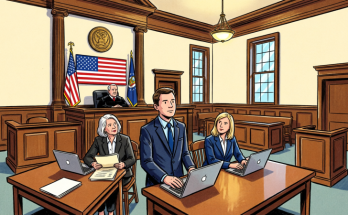
The judge dismissed his case in ten minutes, calling it “frivolous and motivated by greed.”
David was ordered to pay legal fees. He couldn’t afford it. He had to take out a loan.
He stopped calling after that.
Jennifer, on the other hand, started visiting.
She’d show up on Sundays with groceries, sit with Grandma on the porch, listen to her stories.
“I’m sorry,” she said one afternoon, tears in her eyes. “I was scared. David was so insistent. And I didn’t want to fight.”
Grandma took her hand. “It’s never too late to choose differently, child.”
Jennifer started bringing her kids. They’d run through the garden, pick roses, eat Grandma’s cookies.
For the first time in months, the house felt full again.
One Year Later
Grandma’s health began to decline.
Not suddenly. Not dramatically. Just… slowly.
Her walks to the garden became shorter. Her naps became longer. Her memory, always sharp, began to fade at the edges.
One evening, she called me to her bedside.
“Sarah,” she said, her voice weak but clear. “I need to tell you something.”
I sat beside her, holding her hand.
“When I’m gone,” she said, “the house is yours. But I need you to promise me something.”
“Anything.”
“Keep the garden. Keep the roses. Keep this house full of love.”
She squeezed my hand.
“Don’t let it become just a building. Let it remain a home.”
“I promise,” I whispered.
She smiled. “Good. Now go make some tea. And put some music on. I want to hear your mother’s favorite song.”
I did.
And as the music filled the house, Grandma Rose closed her eyes and drifted to sleep.
She didn’t wake up.
EPILOGUE: THE GARDEN
Two Years Later
I still live in Mom’s house.
Grandma’s house.
My house.
The garden is thriving. The roses bloom every spring, just like they did when Grandma was here.
Jennifer visits every week with her kids. They help me weed the garden, bake Grandma’s apple pie, tell stories about her.
David sent a card when Grandma died. One sentence: “I’m sorry.”
I kept the card. Not because I forgave him. But because it reminded me of what happens when you choose money over family.
I still don’t know if he’ll come around. Maybe he will. Maybe he won’t.
But the house is still here. The garden is still here. The love is still here.
And that’s what matters.
Sometimes, on quiet evenings, I sit on the porch with a cup of tea and watch the sunset.
I can almost hear Grandma’s rocking chair creaking. I can almost smell Mom’s lavender tea.
And I remember what they taught me:
Family isn’t about blood.
It’s about showing up.
Home isn’t about walls.
It’s about love.
And legacy isn’t about money.
It’s about the people you protect.
I tend the garden. I bake the pies. I keep the music playing.
And I wait.
For Jennifer and her kids. For friends who’ve become family. For anyone who needs a place to feel loved.
Because that’s what Mom and Grandma would have wanted.
That’s what they built.
That’s what I’ll protect.
THE LESSON
Don’t underestimate the quiet ones.
The ones who don’t shout. The ones who don’t boast. The ones who simply show up, day after day, without asking for recognition.
They are the ones who hold families together.
They are the ones who protect what matters.
And sometimes, they are the ones who hold the documents that save everything.
If someone in your family is being dismissed as “too old” or “too much trouble”…
Stand up for them.
Because the way we treat our elders is the way we teach our children to treat us.
Choose love.
Choose presence.
Choose family.
Always.