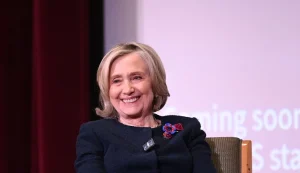
For several days, the public conversation refused to disappear.
People continued searching for information, hoping that a clearer explanation would emerge. Some television programs discussed the uncertainty. Comment sections filled with questions. Social media users reposted old photographs and statements, trying to determine whether any hidden meaning could be found in them.
But none of those efforts could replace confirmed information.
The more people searched, the more obvious one uncomfortable truth became:
Nobody outside the immediate circle truly knew what was happening.
That realization forced some observers to reconsider the way they were approaching the situation.
At first, curiosity had driven the conversation.
Then concern had taken over.
Now, for many people, patience was becoming the most responsible response.
They could remain concerned without pretending they knew the answer.
They could hope for good news without inventing explanations.
They could wait.
And waiting, although difficult, sometimes showed more respect than speculation.
 The Human Side of a Famous Name
For decades, Hillary Clinton had been discussed as a political figure.
People remembered elections.
They remembered speeches.
They remembered controversies.
They remembered moments that had divided the country.
But behind all those headlines was a person with a private life.
She had family members who knew her differently than the public did.
Friends who had conversations that never appeared on television.
People who worried about her without posting anything online.
People who might have preferred silence over attention.
That distinction became increasingly important.
A public figure can spend decades answering questions about politics without becoming obligated to answer every question about personal matters.
There is a difference between public responsibility and private vulnerability.
The public may debate a politician’s decisions.
It does not automatically gain ownership of the politician’s personal life.
Part 3 — The Messages That Mattered
Among the thousands of comments being shared, some were surprisingly simple.
“Wishing her strength.”
“Hope she is okay.”
“Praying for her family.”
“Politics can wait.”
Those messages did not solve the uncertainty.
They did something else.
They changed the tone.
Instead of demanding details, they expressed concern.
Instead of turning the situation into another partisan battle, they recognized the possibility that someone might be going through a difficult moment.
For some people, that was enough.
One older woman wrote that she had spent years disagreeing with Clinton but still understood what it meant to worry about someone’s health.
A younger man wrote that political arguments could continue later.
Another commenter simply wrote:
“Whatever your politics, nobody deserves unnecessary cruelty when they may be facing a difficult time.”
The comments spread.
Not because they contained new information.
Because they contained something increasingly rare online:
Restraint.
When the Rumors Became Too Much
But not everyone chose restraint.
Some accounts continued posting dramatic claims.
One rumor suggested a serious diagnosis.
Another claimed an emergency had occurred.
A third suggested that Clinton’s absence from a public event proved something was terribly wrong.
None of those claims came with reliable confirmation.
Yet each was repeated hundreds of times.
This was the danger.
A rumor did not need evidence to become popular.
It only needed to sound convincing.
People could take a photograph from one year, combine it with an unrelated statement from another, and create an entirely new story.
Within hours, the invented narrative could look more familiar than the truth.
That was why responsible observers began emphasizing the same message again and again:
Do not confuse attention with evidence.
Part 4 — A Family Waiting in Private
While strangers debated online, the people closest to Clinton had something the public did not.
They knew what was actually happening.
They could make phone calls.
They could sit together.
They could ask questions directly.
They could offer support without posting it publicly.
That private circle mattered.
In moments of uncertainty, family often becomes the place where the outside world disappears.
There are no hashtags there.
No arguments.
No viral headlines.
Only people asking the simplest questions.
Are you okay?
Do you need anything?
What can I do?
Those are very different questions from the ones being asked online.
They don’t demand a story.
They offer support.
The Silence Was Difficult
For people watching from the outside, the lack of information was frustrating.
Some believed the family should say more.
Others believed they had already shared enough.
There was no universal agreement.
But one thing remained true:
Silence does not automatically mean the worst.
A quiet period can mean many things.
It can mean someone is protecting privacy.
It can mean a family is waiting.
It can mean there simply isn’t information ready to share.
Without confirmation, outsiders cannot know which explanation is correct.
And that uncertainty should discourage certainty—not encourage it.
Part 5 — Politics Was Still There
Eventually, political arguments returned.
They always do.
Supporters remembered Clinton’s accomplishments.
Critics revisited old controversies.
Commentators debated her legacy.
Different sides interpreted her career through completely different lenses.
But something had changed.
For a short time, many people had remembered that political identity was only one part of a person.
A political career can be examined.
Policies can be criticized.
Decisions can be challenged.
But personal vulnerability is not a campaign issue.
Health is not an ideological position.
And concern does not require surrendering one’s beliefs.
That became perhaps the most important lesson of the entire episode.
The Perspective of Age
For older Americans especially, the story carried another meaning.
Many had reached an age where health concerns were no longer abstract.
They had watched parents become ill.
They had cared for spouses.
They had taken relatives to appointments.
They had spent nights waiting for phone calls.
They knew how quickly a normal day could become a day defined by uncertainty.
When someone you love may be facing a serious situation, the outside world can suddenly become very small.
The only thing that seems important is the next update.
The next phone call.
The next answer.
That experience does not belong to one political party.
It belongs to families.
Part 6 — What the Public Could Actually Do
As the conversation continued, a more reasonable approach began to emerge.
People could wait for reliable information.
They could avoid repeating unverified claims.
They could separate genuine reporting from speculation.
They could remember that photographs do not automatically reveal someone’s medical condition.
They could allow family members to speak for themselves.
And they could express concern without demanding private details.
None of those choices required anyone to become a Clinton supporter.
None required anyone to change a political opinion.
They required only a small amount of patience.
A Different Kind of Strength
Some people assumed that strength meant speaking loudly.
Others discovered that strength could mean saying less.
It took very little courage to repeat a dramatic rumor.
It took more discipline to say:
“We don’t know yet.”
That sentence became important.
Because acknowledging uncertainty protects everyone.
It protects the person being discussed.
It protects the family.
And it protects the public from believing something that may later prove completely false.
Final Part — The Story Behind the Story
Eventually, the intense online discussion began to slow.
New headlines appeared.
Other stories replaced the old ones.
People moved on to the next political argument, the next breaking-news event, the next viral post.
But the lesson remained.
The concern surrounding Hillary Clinton had shown how quickly uncertainty surrounding a famous person could become a nationwide conversation.
It had also shown how differently people can respond to that uncertainty.
Some choose speculation.
Some choose outrage.
Some choose political attacks.
And some choose compassion.
The most responsible response does not require knowing every detail.
It simply requires recognizing the limits of what is known.
At the center of the entire conversation was one unanswered question:
Is Hillary Clinton okay?
Until reliable information answers that question, nobody else can honestly answer it for her.
And perhaps that is where the story should end—not with an invented diagnosis, not with a dramatic revelation, and not with another rumor.
But with hope.
Hope that she is surrounded by people who care about her.
Hope that her family has the privacy and support it needs.
Hope that whatever prompted the concern is manageable.
And hope that the next information people receive comes from a reliable source rather than from speculation.
Because politics will always provide another argument.
There will always be another election.
Another controversy.
Another disagreement.
But when uncertainty touches someone’s health, there is something more important than winning an argument.
There is humanity.
And for a brief moment, thousands of people from completely different political backgrounds remembered exactly that.
Politics can wait.
Compassion doesn’t have to.
THE END.