My Wife Has Been In A Coma For 6 Years, But Every Night I Noticed That Her Clothes Were Being Changed. I Suspected Something Was Wrong, And Pretended That I Was Leaving On A Business Trip. I Secretly Returned At Night And Looked Through The Bedroom Window… I Was In Shock…
Part 1
At 11:47 p.m., the house always smells like rubbing alcohol and old pine—like a cabin that tried to become a hospital and failed at both.
I learned to live inside that smell.
Six years ago, Bree and I were driving home from a late dinner on Commercial Street, the kind of night where the fog makes the streetlights look soft and forgiving. We argued about something stupid—whether we should move closer to her job, whether I should quit mine, whether we were allowed to want different things at the same time. Then the world snapped. Headlights. A horn that didn’t belong to us. The sickening sideways slide and the crunch that sounded like someone folding a ladder.
She never opened her eyes in the ambulance.
They called it a coma. A “persistent vegetative state” once, in a hushed voice, like the words were heavier than the truth. The hospital wanted her moved to a long-term facility. “It’s safer,” they said. “It’s appropriate,” they said. As if love had a policy manual.
I brought her home anyway.
In the mornings, I warmed a basin of water and washed her face like I was erasing six years of dust from her skin. I rubbed lotion into her hands until my thumbs ached. I brushed her hair and told myself that the softness meant she was still here. I talked while I worked—ordinary things, because that was how I kept from screaming.
“The neighbor finally fixed that fence,” I’d say. “The one that leans like it’s tired of standing.”
Sometimes, I read to her. Sometimes, I just sat in the armchair by her bed and listened to the oxygen concentrator hum and the faint, irritating click of the feeding pump. That clicking became my metronome. If it stopped, my heart would stop with it.
I kept a routine because routine was the only thing that didn’t argue back.
The day nurse, Mrs. Powell, came from 9 a.m. to 3 p.m. She was sixty-ish, blunt, and smelled faintly of peppermint tea. She charted everything with the seriousness of an air-traffic controller. She’d watch me lift Bree’s arm, guide it through a sleeve, and she’d say, “Matthew, you’re going to ruin your back.”
I’d say, “I’m already ruined,” and we’d both pretend it was a joke.
At night, it was just me.
Or at least, that’s what I believed until three months ago, when small wrong things started stacking up like dishes I hadn’t washed.
The first time, I noticed Bree’s sweater wasn’t the one I put her in. I distinctly remembered choosing the gray one with the tiny pearl buttons because it was cold and the heater in her room always ran a little behind. At midnight, when I went in to check her tube and adjust her blankets, she was wearing the blue cardigan. The one I hated because it snagged on her nails.
I stood there, staring, my fingers hovering above her shoulder.
Maybe I misremembered. I was tired. That was the easiest answer.
But then I saw the gray sweater folded in the hamper, perfectly squared, like someone had taken the time to make it look neat. I don’t fold like that. I shove things. I’m a shover. Bree used to fold like that. Bree used to make order out of everything.
I told myself Mrs. Powell must’ve changed her before she left and forgot to mention it. The next day, I asked.
“I didn’t,” she said, not looking up from her chart. “And I don’t go into that hamper, hon. That’s your territory.”
The second time, it was the scent.
Bree’s perfume—Santal and something smoky—had been sitting untouched on the dresser for years. The bottle was more symbol than object now. I couldn’t bring myself to throw it away, but I also couldn’t bring myself to spray it because it felt like faking her presence.
One night, I stepped into her room and smelled it. Not old perfume clinging to a scarf. Fresh. Like someone had just walked out of a department store.
I leaned over Bree, close enough to feel my own breath bounce back off her cheek, and I tried to find the source. Her hair smelled like her shampoo, nothing else. Her skin smelled like the oatmeal lotion I used.
The perfume was in the air.
My stomach tightened with a stupid, childish fear: a ghost. A presence. Bree’s spirit wandering because I’d trapped her here.
Then I saw the bottle. The cap had been put back on crooked, just slightly, like the hand that did it wasn’t careful.
I tightened it. My fingers shook, and I hated that they did.
The third time, I heard something.
Not a voice, exactly. More like the soft scuff of shoes across the hallway runner at a time when the house should’ve been asleep. I snapped awake in the recliner by Bree’s bed, my neck kinked, the room dim except for the green glow of her monitor.
The sound was gone. The house settled. The old beams made their familiar pops.
I told myself it was the radiator. The wind. My brain trying to fill silence with something it could fight.
But after that night, I started checking doors. I started counting the knives in the block like I was auditioning for paranoia.
And then came the smallest thing that ruined me: Bree’s fingernails.
I trim them every Sunday because if I don’t, they catch on fabric when I move her, and sometimes they scratch her skin. I keep the little clippers in the top drawer of her nightstand. One Sunday, I trimmed them and filed the edges until they were smooth. I remember because I nicked my own thumb and muttered a swear that would’ve made Bree laugh.
On Tuesday night, her nails were shorter. Cleaner. Filed into a gentle curve like they’d been done with patience.
I stared at her hands and felt my mouth go dry.
Someone was touching my wife when I wasn’t there.
The next day, I told Mrs. Powell I had to travel for a two-day training in Boston. It was a lie so clumsy it almost made me blush.
“Boston?” she said, skeptical. “Since when do you do trainings?”
“Since my boss suddenly loves professional development,” I said, forcing a smile.
Mrs. Powell narrowed her eyes, then shrugged. “Your sister said she’d stop by and check on things. Alyssa. She texted me this morning.”
My sister.
Alyssa had always been the loud one in our family. The kind of person who filled a room and didn’t ask permission. She’d been showing up more lately with casseroles I didn’t ask for and advice I didn’t want. She’d stand in Bree’s doorway, arms crossed, and say, “You know, Matt, you can’t keep doing this forever.”
I always answered the same way. “Watch me.”
I packed a suitcase anyway, because lies work better with props. I kissed Bree’s forehead like I always did—her skin cool, her hair smelling like soap and time—and I told her, “I’ll be back Thursday.”
Then I walked out like a normal husband.
I drove two blocks away and parked behind the closed hardware store. I turned off the engine and sat in the dark until my breath fogged the windshield. The town felt too quiet, like it was holding its own breath with me.
At 12:08 a.m., I got out of my car and walked back through the shadows, staying off the streetlights, my heart banging like it wanted to crack my ribs open and climb out. I hated myself for what I was about to do. I hated myself more for needing to.
Our house has a side yard that runs narrow between the clapboard and the neighbor’s fence. The grass there never grows right. I slipped along it, shoes sinking into damp soil, the air smelling like salt and leaves.
Bree’s bedroom window faces that side yard. The curtains are usually half-drawn, enough for privacy, enough for moonlight.
Tonight, the curtains were wider than I left them.
I crouched beneath the sill, my palms pressed into cold dirt, and slowly lifted my head.
At first, I saw only the familiar scene: Bree in her bed, her face turned slightly toward the door, her hair spread on the pillow like dark ink. The monitor beside her blinked green. The little bedside lamp cast a warm circle of light.
Then I saw movement.
Someone stood beside her bed.
My brain tried to reject it. Tried to turn it into a coat on a chair, a shadow, a trick of glass.
But it was a person. Tall. Wearing a hoodie. Hands gloved in pale latex.
They leaned down, close to Bree’s ear, and whispered something I couldn’t hear through the pane.
Then the person straightened, and the lamplight hit their face.
Alyssa.
My sister’s hair was pulled into a messy knot. Her jaw was tight, the way it gets when she’s determined. She looked nothing like someone bringing casseroles.
She reached into Bree’s nightstand drawer—my drawer, the one I kept the medical paperwork in—and pulled out the folder labeled TRUST & BENEFITS in my own handwriting. She flipped it open with quick, practiced motions, like she’d done it before.
My throat tightened so hard it hurt.
Alyssa set the folder down, then took Bree’s right hand in both of hers. Not gently. Like she needed Bree’s hand to do something.
I watched Alyssa lift Bree’s fingers and press them against the bedrail, one by one, like she was tapping out a code.
And then Bree’s lips moved.
It wasn’t a twitch. It wasn’t random. Her mouth formed a shape, slow and deliberate, like she was answering.
Alyssa bent closer again, and even through glass I could see the fierce, excited shine in her eyes.
“Good,” Alyssa whispered, and I felt my blood go cold. “That’s my girl. One more, and we’re done.”
I couldn’t breathe. I couldn’t swallow. My sister’s hands were on my wife, and my wife—my wife—was responding.
What were they doing to her in that room when I wasn’t watching, and why did Bree’s mouth—barely moving—shape what looked like Alyssa’s name?
Part 2
I didn’t burst in. I didn’t throw open the window and tackle my own sister like a movie hero.
I froze.
My body went heavy and useless, like it had been filled with wet sand. Every loud, brave impulse I’d ever imagined having shrank down to a thin thread of survival: Don’t be seen. Learn first. React later.
I backed away from the window so carefully my knees stayed bent, my shoes barely lifting from the grass. I slid along the side yard until the house was behind me, then I sprinted to my car like a teenager fleeing a prank.
Inside the car, I locked the doors even though that was stupid—if someone wanted in, glass is easy. My hands trembled on the steering wheel. I stared at the dark shape of my house and tried to make sense of what I’d just watched.
Alyssa is my sister. Bree is my wife. Bree has been unresponsive for six years.
Those facts did not belong together.
At 2:41 a.m., Alyssa’s silhouette crossed Bree’s window and the curtains closed again. A few minutes later, the porch light flicked on and off—our old motion sensor, triggered by someone leaving.
I waited until almost dawn before I drove back into the driveway, like I’d returned from Boston early. I made noise. I rattled my keys. I let the front door thump shut harder than usual. I even muttered, “Damn traffic,” to no one.
The house smelled the same. Alcohol and pine. The kitchen clock ticked with indifferent regularity.
Bree lay exactly as I’d left her the day before, except… she wasn’t.
Her hair was brushed smoother. The blue cardigan was back on her. Her hands rested on top of the blanket instead of tucked beside her. On her bedside table, the cap of her perfume sat slightly off-center again, like a crooked smile.
I stood over her and looked for proof that I was losing my mind.
The folder in her drawer was not where I kept it. It was shoved deeper, like someone had put it back quickly. The corner was bent.
The anger hit me then—hot, sudden, so sharp it made my eyes sting.
I had been bathing my wife and reading her novels and counting her breaths while someone else was using her like a tool.
My sister.
I sat at the kitchen table and waited for the sun to come up like it could make any of this more reasonable.
At 9 a.m., Mrs. Powell arrived with her tote bag and her peppermint-tea smell. She greeted me with the same brisk nod as always.
“Boston go okay?” she asked, washing her hands at the sink.
I forced my face into something neutral. “Fine.”
She studied me for a beat. Mrs. Powell has the kind of gaze that’s seen too many family lies to be fooled by a fresh one.
“You look pale,” she said. “You sleep?”
“A little.”
She didn’t push. She went into Bree’s room and checked the tube, the skin, the chart. I hovered in the doorway like a guard dog.
After an hour, when she was busy changing Bree’s linens, I said, as casually as I could, “Did Alyssa stop by last night?”
Mrs. Powell’s hands paused mid-tuck. “Your sister? No. Why would she?”
My mouth went dry. “She said she would.”
Mrs. Powell shook her head. “Honey, I leave at three. I don’t know what happens after that. But I haven’t seen her here lately. She calls sometimes, asks questions. That’s all.”
Questions.
I tried not to let my face change, but Mrs. Powell’s eyes narrowed again.
“Is something going on?” she asked quietly.
I wanted to tell her everything. I wanted to dump my fear into someone else’s hands like hot coals.
Instead, I said, “Probably nothing. I’m just… tired.”
She gave me a long look that said she didn’t believe me, then went back to work.
That afternoon, after Mrs. Powell left, I drove to Harbor Tech—the only electronics shop in town that still had dusty shelves and a guy behind the counter who looked like he’d rather be fishing.
I bought two small cameras, the kind people use to watch their dogs. I bought a door sensor. I bought a tiny microphone disguised as a phone charger. My hands shook less when I was doing something practical.
Back home, I installed the cameras with the care of someone building a bomb.
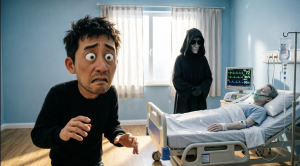
One above Bree’s dresser, hidden behind a framed photo of us at Acadia years ago—Bree squinting in the sun, me pretending not to hate being photographed. One angled toward the bedroom door. One in the hallway.
I told myself I was doing it to protect her.
But a darker part of me knew I was doing it to protect myself from the possibility that what I saw wasn’t real.
That night, I didn’t go to the hardware store. I stayed in the living room with my laptop open, the camera feeds tiled on the screen. I kept the volume low, just enough to catch a whisper.
Every creak of the house made my shoulders tighten. Every time the wind pushed a branch against the siding, my heart jumped.
At 12:13 a.m., the hallway feed flickered slightly—motion detected.
Someone stepped into frame.
Alyssa.
She wore the same hoodie as the night before, hood up. She moved like she knew the layout without thinking. Like she’d walked these floors in the dark enough times to trust her feet.
She didn’t hesitate at the bedroom door. She didn’t knock. She opened it with a key.
My fingers clenched around the edge of the laptop so hard my nails bit into my skin.
Alyssa slipped into Bree’s room and shut the door behind her. The camera above the dresser caught her profile as she approached the bed.
She leaned over Bree and touched her cheek—almost tender, almost sisterly.
Then she pulled a small bag from her pocket. A syringe glinted in the lamplight.
My stomach flipped.
Alyssa didn’t inject Bree’s arm. She reached for the line running into the feeding port and attached the syringe there, pushing the plunger slowly, professionally.
She’d done this before. She wasn’t guessing.
“Shh,” Alyssa whispered, and the mic caught it clear as day. “It’s just to keep you still, okay? He’s too attentive. He notices everything.”
My pulse roared in my ears.
Alyssa’s voice softened, turned coaxing. “We’re so close, Bree. You promised. Two more signatures and the account opens. Then we can finally breathe.”
Two more signatures.
Account.
I stared at Bree’s face on the screen. Her eyes stayed closed. Her expression stayed slack. But her lips moved—barely, like a secret squeezed through stone.
The mic crackled, then caught a sound so faint I almost missed it.
“Matt… no.”
It wasn’t a full sentence. It wasn’t strong. It was the ghost of a voice.
But it was Bree.
I covered my mouth with my hand because a sound came out of me that wasn’t quite a sob and wasn’t quite a laugh—something broken in between.
My wife was in there.
And my sister was drugging her.
Why was Bree warning me, and what did Alyssa mean by “two more signatures” when Bree couldn’t even lift her own hand?
Part 3
By morning, I hadn’t slept at all.
The sky turned from black to slate to that pale Maine winter blue that makes everything look washed out. I made coffee I didn’t drink. I stood in Bree’s doorway and watched her chest rise and fall like it was the only proof the world still worked.
Mrs. Powell arrived at nine, took one look at me, and sighed.
“You look like you got hit by a truck,” she said.
“I need to ask you something,” I replied.
She set her tote bag down slowly. “Okay.”
I shut Bree’s bedroom door behind us and lowered my voice like the walls had ears. “Do you recognize this medication?” I slid my phone across the nightstand. On the screen was a paused frame from the video: Alyssa’s gloved hand holding the syringe. The label on the vial was blurred, but the cap color was distinct—bright orange.
Mrs. Powell frowned, leaned closer. “That looks like midazolam,” she said after a moment. “A benzodiazepine. Sedative. Why?”
My mouth tasted like pennies. “Because someone’s been giving it to her at night.”
Mrs. Powell’s face went still in a way that made her look older. “Who?”
I didn’t say Alyssa. Saying it felt like making it real.
Instead, I asked, “Would it show up in her chart?”
“It should,” she said sharply. “If it’s prescribed.”
“And if it’s not?”
She stared at me, and I could see her mind rearranging the last few months—Alyssa’s “questions,” my fatigue, the subtle changes she must’ve noticed and dismissed.
Mrs. Powell straightened her shoulders. “Matthew, if someone is sedating your wife without a physician’s order, that is criminal.”
I let out a shaky breath. “I have proof. Video.”
For a second, something like relief flickered across her face—relief that I wasn’t imagining it. Then her jaw tightened.
“Call her neurologist,” she said. “Right now.”
Bree’s neurologist is Dr. Ellison, a man with careful hair and careful words. He’s the kind of doctor who always sounds like he’s reading from a brochure.
When his office picked up, I didn’t introduce myself politely. I said, “My wife is being sedated at home without my consent. I need her medication list and refill history.”
There was a pause—paper shuffling, a muffled voice asking who was on the line.
Then Dr. Ellison came on, voice smooth. “Mr. Rourke, it’s unusual to discuss—”
“I’m not discussing,” I snapped. “I’m telling you. Someone is administering midazolam through her feeding line at night. If your office ordered it, I’ll know. If you didn’t, I’m calling the police.”
Silence again. Longer this time.
“Mr. Rourke,” he said finally, and the carefulness in his tone slipped just enough for me to hear strain, “midazolam is not on her current regimen.”
Mrs. Powell, standing beside me, mouthed, Thank God.
“Then how is it getting into my house?” I demanded.
“I… don’t know,” Dr. Ellison said. “But if you suspect misuse, you need to bring her in. Immediately.”
Bring her in. To the hospital. Back into their system. Back into the place where she became a case number.
My hand clenched around my phone. “I’ll bring her in,” I said, “after I understand how my wife’s meds are being altered.”
Dr. Ellison exhaled. “I can print her prescription history. Pick it up today.”
After I hung up, Mrs. Powell looked at Bree, then at me.
“I’m going to stay late,” she said. “I don’t care what my schedule says.”
That should’ve comforted me. Instead, dread pooled in my stomach like cold water.
Because Mrs. Powell could stay late, but she couldn’t stay forever. And Alyssa had a key.
That afternoon, I drove to Dr. Ellison’s office and picked up the printout. The paper felt too light for how much it mattered.
Bree’s medications were listed in neat columns. Feeding formula. Anti-seizure meds. Muscle relaxants. All expected.
Then, in smaller type, there it was: “PRN sedation—midazolam.” Prescribed six months ago. The prescribing physician wasn’t Dr. Ellison.
It was Dr. Kent Marlowe.
The name made my skin prickle because I recognized it the way you recognize a face you’ve seen once in a grocery store aisle.
Dr. Marlowe ran a private “recovery clinic” thirty miles south—one of those glossy places with calming fonts and vague promises. Alyssa’s friend group talked about it sometimes, like it was a miracle factory.
I stared at the paper until the words blurred.
Alyssa hadn’t just decided to drug Bree. She’d gotten a doctor involved. A prescription. A paper trail.
My sister wasn’t improvising. She was executing a plan.
On the drive home, my phone buzzed.
Alyssa: Hey! Just checking in. How was Boston? Want me to swing by tonight?
My hands tightened on the steering wheel so hard my knuckles ached.
I texted back: Sure. Come by around 8.
It was a lie. A trap. I didn’t know which.
That evening, I made spaghetti because I needed something normal to do with my hands. The sauce simmered and smelled like garlic and tomatoes, and for a minute I remembered Bree leaning over the stove, tasting, adding salt like it was a secret ingredient.
At 7:55, Alyssa knocked, bright and casual, carrying a bag of cookies like she was a neighbor, not a thief.
“Look at you,” she said, stepping inside. “You look wiped.”
“Yeah,” I said, forcing a smile that felt like cracked glass. “It’s been a week.”
Alyssa’s eyes flicked toward Bree’s hallway. “How’s she doing?”
“Same.”
She nodded like that was expected, then flashed me a grin. “I brought snickerdoodles. Because you eat like garbage when you’re stressed.”
We ate dinner at the table like siblings who hadn’t been at war for six years. Alyssa talked about her job, her dating life, the new brewery downtown. I listened, answered in short phrases, my mind tracking every movement of her hands.
After dinner, she stood and stretched. “I should say hi to Bree,” she said lightly, like it was a sweet thought.
My pulse jumped. “Sure,” I said. “Go ahead.”
Alyssa walked down the hall without hesitation. Like she owned the place.
I followed a few steps behind, quiet. I watched her pause in Bree’s doorway, her face softening.
“Hey, babe,” Alyssa murmured, stepping in. “It’s me.”
She leaned over Bree’s bed and brushed hair off Bree’s forehead. The gesture was almost convincing.
Then Alyssa’s gaze drifted to the nightstand drawer. The one with the TRUST folder. Her eyes lingered there for half a second too long.
My throat tightened.
Alyssa turned back to Bree, voice low. “You doing okay in there? You being good?”
Bree’s face didn’t change.
Alyssa smiled anyway, then looked over her shoulder at me. “You’re doing an amazing job, Matt. Seriously.”
The words hit like a slap. Amazing job. At being played.
I forced myself to nod. “Thanks.”
Alyssa lingered another moment, then left the room and headed for the front door.
“Text me if you need anything,” she said, slipping on her shoes.
“I will,” I replied, my voice steady despite the earthquake inside me.
After she left, I locked the door. Then I went back to Bree’s room and sat beside her bed, staring at her closed eyes.
“Bree,” I whispered, my voice rough. “Can you hear me?”
Her breathing stayed even. The monitor blinked. The pump clicked.
I pulled a notepad from the drawer and a marker. My hands shook as I wrote the alphabet in big block letters.
“This is going to sound insane,” I murmured, “but if you can… if you can, blink when I get to the right letter.”
I started. A… B… C…
Nothing.
D… E… F…
Nothing.
I swallowed hard, trying to keep my voice steady. “Bree, please.”
G… H… I…
Her eyelid fluttered.
It could’ve been a reflex. It could’ve been a twitch.
But it happened again when I reached L.
My heart slammed against my ribs.
I kept going slowly, my mouth dry, my entire world narrowed to her lashes.
At M, her eyelid fluttered again.
At A, again.
At R—
Her lips moved, and this time there was sound. A breathy scrape of voice against air.
“He… knows.”
My stomach dropped so hard it felt like falling.
Who was “he,” and what did he know about me finding out?
Part 4
That night, I didn’t turn the cameras off.
I sat in the living room with every light in the house on, like brightness could keep danger away. Mrs. Powell had gone home hours earlier, but she’d squeezed my shoulder before she left.
“Call me if you hear a floorboard creak,” she’d said. “I’m serious.”
I almost did call her, right then, just for the sound of a steady voice. But Bree’s whisper kept ringing in my skull like an alarm.
He knows.
I replayed the footage from the last few nights, looking for anything I’d missed. Alyssa’s entry times. Her movements. The moment she injected the sedative. The way she always glanced at Bree’s closet, at the corner where the safe was tucked behind winter coats.
The safe.
I walked down the hall and opened it, my fingers clumsy with adrenaline. Inside were the things I kept because I thought I was being responsible: Bree’s medical papers, our marriage certificate, the life insurance forms I hated, a small velvet box with Bree’s grandmother’s ring.
And a file I hadn’t opened in years: Bree’s work folder.
Bree had been a compliance officer for a real estate development firm called North Harbor Group. It sounded boring when she described it. “I make sure people aren’t being evil,” she’d joked.
I’d believed her. I’d wanted to believe life was that simple.
Inside the folder were printouts of emails, bank statements, notes in Bree’s neat handwriting. None of it made sense at first glance—numbers, names, transfers.
But one name jumped out because it didn’t belong: Alyssa Rourke.
My sister’s name was in Bree’s work folder, circled in red ink.
A cold, slow horror spread through me.
Bree had been investigating something… and it involved my sister.
No wonder Alyssa cared so much about “checking in.”
I stood there, the safe door open, the closet smelling like cedar and dust, and tried to breathe through the tightness in my chest. Part of me wanted to slam the safe shut and pretend I’d never seen it. Pretend Bree’s eyelid flutters were nothing. Pretend Alyssa’s midnight visits were some misunderstood caretaking.
But the other part—the part that had lived on six years of love and stubbornness—wanted the truth like oxygen.
I grabbed the folder, tucked it under my arm, and went to the kitchen table. I spread the papers out under the harsh overhead light.
There were references to shell companies. Fake invoices. Properties bought and sold too quickly. Money moving like it was trying not to be seen.
And a set of initials at the bottom of one transfer note: K.M.
I didn’t know what those initials meant, but my skin prickled anyway. K.M. looked like the start of a name you didn’t want attached to your life.
At 1:19 a.m., the hallway camera pinged. Motion detected.
My breath caught. I clicked to the feed.
The hallway was empty.
A second later, the front door sensor chimed softly—the kind of sound you’d miss if you weren’t listening for it.
Someone was at my door.
I stood so fast the chair scraped the floor. I didn’t grab a bat. I grabbed the biggest kitchen knife because fear makes you stupid.
I crept toward the entryway, my bare feet silent on the wood.
The porch light was off. Outside was a smear of darkness and snowmelt.
I leaned toward the peephole.
Nothing. Just the porch railing and the street beyond.
Then I heard it: a faint metallic click at the lock.
Someone was trying a key.
My pulse went so loud I thought it would give me away. I pressed my eye harder to the peephole, my breath shallow.
The lock turned.
The door eased inward an inch, stopped by the chain I’d latched without thinking.
A face appeared in the narrow gap, half-hidden by the darkness outside. A man’s face. Stubbled. Wet hair plastered to his forehead like he’d been out in the fog.
His eyes flicked up, scanning the interior like he was checking whether the place was empty.
Then he smiled, just slightly, like he’d expected the door to open.
My grip tightened on the knife. I swallowed, forcing my voice to work.
“Who the hell are you?”
The man’s smile didn’t change. His eyes focused on the chain. On the knife in my hand.
“Wrong house,” he said smoothly, voice low and calm—too calm.
He took a step back, hands raised in a mock apology. “My mistake.”
He turned and walked down my steps like he belonged there.
I waited until his footsteps faded, then slammed the door shut and locked it with shaking hands. I turned the deadbolt twice. Then I stood there, listening, my lungs burning.
He had a key.
Not Alyssa’s key. A different one. Someone else had access to my home.
I ran back to the laptop and rewound the exterior camera feed—one I’d forgotten I had, pointed at the driveway.
The screen showed the man stepping out of a dark SUV parked down the street, hood up, collar raised. He didn’t look at the camera once. Like he knew exactly where it was and how to avoid it.
Then I saw something worse.
As he walked away from my porch, he pulled out his phone. The screen lit his face for a second, and on the screen was a text message thread.
At the top of the thread: Alyssa.
My stomach twisted.
My sister hadn’t just been sedating Bree and stealing papers. She’d been coordinating with someone who had keys to my house.
I staggered down the hall to Bree’s room, not thinking, not planning—just needing to see her, like she was the only anchor in a suddenly spinning world.
I pushed her bedroom door open.
The air was warm, heavy with the faint scent of her perfume again. The monitor blinked. The pump clicked.
And Bree’s eyes were open.
Fully open.
They were glassy, unfocused at first, then they shifted—slowly, deliberately—until they landed on me.
For the first time in six years, my wife looked at me.
My knees went weak.
“Bree?” I whispered, my voice breaking. “Bree, can you—”
Her lips moved, dry and trembling. Her voice was barely a thread.
“He’s… here.”
The hairs on my arms rose.
If he was here, where was he hiding, and how long had he been inside my house while I sat watching cameras like an idiot?
Part 5
I don’t remember crossing the hallway. I just remember the cold bite of fear spreading through my chest as if someone had poured ice water into my ribs.
“He’s here,” Bree had whispered.
I turned off Bree’s bedside lamp so the room would be darker, quieter. I didn’t want whoever “he” was to see light under her door and know I was awake.
My hand hovered over Bree’s blanket for a second, uselessly wanting to protect her with fabric.
“Stay with me,” I whispered, then immediately hated myself for the phrase—like she had any choice.
I stepped into the hall, the knife still in my hand, and listened.
The house was too quiet. No footsteps. No doors. Just the old wood settling and the distant rush of wind off the water.
Then—faintly—came the sound of something shifting in the basement. A soft scrape, like a box dragged across concrete.
We don’t go in the basement much. It’s unfinished, damp, full of Bree’s old office boxes and my half-forgotten tools. The door to it sits at the end of the hall, across from the laundry room.
I moved toward it slowly, every sense stretched thin. The air smelled slightly different down here—cooler, with a hint of wet stone.
The basement door was cracked open.
I stared at that thin line of darkness and felt my throat tighten.
I knew I’d shut it earlier. I knew it.
My fingers trembled on the doorknob. I nudged it open.
The basement stairs fell away into shadow. The smell down there was stronger now—diesel, maybe, or some oily tang that didn’t belong.
I took one step down. The wooden stair creaked under my weight.
From below, a voice spoke softly, almost amused.
“Matthew.”
I froze.
The voice wasn’t Alyssa’s. It was male. Smooth. Familiar in the way a bad memory is familiar.
I didn’t go farther. I tightened my grip on the knife and forced words out through clenched teeth.
“Get out of my house.”
A chuckle drifted up from the darkness. “You finally woke up.”
My skin prickled. “Who are you?”
The man sighed, like I was slow.
“Tell your sister she’s sloppy,” he said. “Texting me when she shouldn’t. Letting you see things.”
A shift in the shadows. A footstep. Something heavy moving.
My heart slammed. I backed away from the basement door, ready to sprint back to Bree, to lock her in, to call the police—
And then a hand shot out of the darkness and grabbed my wrist.
The grip was strong, shockingly fast. The knife wobbled. Panic exploded in my chest.
I jerked back, twisting, and the blade sliced air. The hand loosened just enough for me to wrench free and stumble into the hall.
The basement door slammed behind me.
For a half-second, everything went still.
Then the door burst open again and a man stepped into the hall.
Not the wet-haired guy from my porch—this was someone else. Taller. Broader. Wearing a dark jacket that looked expensive even in low light. His face was sharp, clean-shaven, eyes pale and flat.
He looked at the knife in my hand and smiled like it was cute.
“Don’t,” he said. “You’ll just make this messy.”
The urge to lunge was hot and stupid, but I didn’t. I’d been in enough bar fights in my twenties to know when someone actually wanted violence.
“What do you want?” I demanded, voice shaking despite my effort.
He tilted his head, listening, as if Bree’s pump clicking somewhere behind us was music.
“I want what your wife hid,” he said. “And I want you to stop asking questions.”
My mouth went dry. “Bree didn’t hide anything.”
His smile widened. “She hid everything.”
He took a step forward. I took a step back.
“You know what’s funny?” he said conversationally. “People think a coma makes someone useless. But a body is still a body. A name is still a name. A signature is still a signature… if you know how to guide a hand.”
My stomach lurched as the meaning clicked into place—Alyssa tapping Bree’s fingers, pressing them against the rail. Not comfort. Not communication.
Forgery.
“You’re forging her signature,” I whispered, the words tasting like bile.
The man’s eyes flicked with mild approval. “There it is. You’re not dumb. Just… devoted.”
My breath came fast. “Who are you?”
He shrugged. “Call me Kellan.”
Kellan. K.M.
My gaze darted to the kitchen table in my mind—the papers, the initials. The cold dread hardened into something sharper.
“You’re North Harbor,” I said.
Kellan’s smile didn’t reach his eyes. “Bree was a problem. Your sister tried to solve it. Bree tried to get heroic. Then she got unlucky.” He said it like the hit-and-run had been weather.
My hands shook harder. “You hit her.”
Kellan’s expression didn’t change, but something dark flickered behind his eyes. “I don’t drive.”
That was worse, somehow.
Kellan stepped closer, lowering his voice as if he was offering advice. “Here’s what’s going to happen, Matthew. You’re going to stop digging. Alyssa is going to finish what she started. The account opens. The paperwork clears. Bree stays quiet. You get to keep playing husband-of-the-century.”
The rage that surged up was so intense it made my vision blur. “And if I don’t?”
Kellan’s gaze slid past me, down the hall, toward Bree’s room. “Then we stop being careful.”
My blood turned to ice.
He reached into his jacket and pulled out a small device—black, rectangular. A key fob. He clicked it once, casually.
From Bree’s room, the steady clicking of the feeding pump stuttered—paused—then started again, faster.
Panic punched me in the gut.
“What did you do?” I barked, turning toward her room.
Kellan’s voice stayed calm. “Nothing permanent. Yet. But you see how easy it is to change a setting? A dose? A rate? A life?”
I was trembling now, barely holding myself together. “Get out,” I hissed.
Kellan watched me like I was a bug pinned to cardboard. “Tomorrow,” he said. “You’ll find the ledger Bree hid. You’ll give it to Alyssa. And you’ll forget you ever saw my face.”
He stepped back toward the basement door. “Be smart, Matthew. Devotion is cute until it gets you killed.”
Then he disappeared into the basement and the door shut softly behind him, like a polite goodbye.
I stood in the hallway, shaking, listening to my wife’s pump clicking too fast, my heartbeat matching it in awful sync.
I ran into Bree’s room and checked the settings with clumsy hands, adjusting the flow until it steadied. I leaned over Bree, my forehead nearly touching hers.
“Bree,” I whispered, voice ragged. “Where’s the ledger?”
Her eyes flicked once. Left. Toward the wall.
The wall behind her dresser.
My hands moved without thinking. I yanked the dresser away from the wall, the legs scraping the floor. The plaster smelled dusty. My fingers found something—an uneven spot, a faint seam.
A hidden panel.
I pried it open with shaking hands and pulled out a thin black notebook wrapped in plastic.
Ledger.
My throat tightened. “This is what he wants.”
Bree’s lips trembled. A tear slid down her temple, slow and silent.
I stared at her, the notebook heavy in my hands, and felt my world tilt.
Was Bree warning me because she was finally fighting back… or because she needed me to hand over the one thing that could save her and Alyssa?
Before I could decide, my phone buzzed with a text from Alyssa:
He came by, right? Don’t be scared. Bring the ledger to me tonight, or he’ll hurt her.
My stomach dropped as a new fear crashed over me.
How did Alyssa know I’d already found it—and what was she willing to do to make sure I gave it to her?……..