Part 8
The first time Lily saw Jared again, it wasn’t dramatic. It wasn’t a courtroom hallway or a surprise confrontation in a parking lot.
It was a grocery store.
I was reaching for a bag of rice when Lily’s fingers tightened around the hem of my jacket. Not tugging, not panicking—just a silent signal that her world had tilted.
I followed her gaze down the aisle.
Jared stood by the freezer section, older and thicker around the middle, like consequence had settled on him as weight. He held a basket with frozen pizzas and a six-pack. His hair looked unwashed. His shoulders had that defensive hunch of a man who’d learned the world wasn’t going to keep excusing him.
He didn’t see us at first.
Lily didn’t move. Her breathing quickened, but she stayed upright. That alone felt like a victory.
“Do you want to leave?” I asked softly.
Lily swallowed. “No,” she said, voice thin but firm. “I want… I want to do it.”
“Do what?” I asked.
“Walk past,” she whispered. “Like he’s not the boss of my body anymore.”
My chest tightened. I nodded. “Okay,” I said. “We do it together.”
We turned the cart and pushed forward, steady and slow. I kept my body between her and Jared, not as a wall but as a reminder: you’re not alone.
When we were almost even with him, Jared looked up.
His eyes snapped to Lily’s face. Recognition hit him like a slap of its own. His mouth opened, then closed. His face shifted through emotions too fast to name—surprise, shame, anger, something like pleading.
He took one step forward.
I stopped the cart.
Jared’s gaze darted to me. “Ryan,” he said, voice hoarse, like he’d practiced it and hated how it sounded.
I didn’t answer.
He looked back to Lily. “Lily,” he tried, and his tone made my skin crawl. Too familiar. Too entitled.
Lily’s shoulders rose slightly, then settled. She lifted her chin.
“You’re not allowed to talk to me,” she said clearly.
Jared flinched. “I just—”
“No,” Lily said, louder. A few heads turned at the end of the aisle. “You’re not allowed.”
His lips pressed into a thin line, and for a second I thought he might blow up, might lash out the way men like him always did when denied. But then he glanced around at the witnesses and the security camera above the aisle, and his face did something ugly.
He smiled.
It wasn’t a real smile. It was a threat disguised as friendliness.
“Wow,” he said. “Someone’s got you trained.”
My hands clenched around the cart handle.
Lily stared at him. Then she said something that made Jared’s smile falter.
“I trained myself,” she said. “After you hit me.”
The words landed hard. The aisle went quiet in that small-town way, where strangers pretend not to listen while their ears strain toward the truth.
Jared’s face flushed. He looked at me, rage flickering. “You think you’re so—”
I cut him off, voice calm and sharp. “Step back,” I said.
Jared’s nostrils flared. “Or what?”
I pulled my phone from my pocket and held it up, screen open. Not recording. Not yet. Just visible.
“Or you violate the order,” I said. “And you go back to jail.”
His jaw worked. He looked at Lily again, and there was something in his eyes that made my stomach twist—resentment that she wasn’t afraid enough, that she wasn’t making this easy for him.
He took a step back, muttering under his breath. “Whatever. Drama.”
Lily didn’t respond. She just kept her chin up and her eyes steady until he turned away.
When he was gone, Lily exhaled like she’d been holding her breath for months.
I leaned down slightly. “You okay?” I asked.
She nodded, tears in her eyes but not falling. “My legs are shaking,” she admitted.
“That’s normal,” I said. “Your body remembered. But you still did it.”
She wiped her eyes quickly, embarrassed. “Can we get ice cream?” she asked, voice small.
I smiled, relief cracking through me. “Yes,” I said. “We can get ice cream.”
That night, Sarah listened as Lily told the story.
Sarah didn’t interrupt. She didn’t offer a thousand solutions. She just sat beside Lily on the couch, hand on her back, and let her speak until the words ran out.
When Lily finished, Sarah whispered, “I’m proud of you.”
Lily shrugged like she didn’t care, but she leaned into her mother’s side.
Later, after Lily went to bed, Sarah stared into her tea like it held answers.
“He smiled,” Lily had said. “Like it was a joke.”
Sarah’s eyes were wet. “I hate him,” she whispered.
“I know,” I said.
Sarah looked up. “I hate what he did to her,” she said. “And I hate what I let happen.”
I reached for her hand. “You didn’t cause it,” I said. “But you’re allowed to regret. Just don’t turn regret into punishment.”
Sarah nodded slowly. “I want to do something,” she said. “Something that matters.”
“What do you mean?”
Sarah’s voice steadied. “I want to volunteer,” she said. “Somewhere. With kids. With women. I don’t know. I just… I don’t want silence to be my default anymore.”
So she did.
She started volunteering at a local support center that offered resources for families dealing with abuse and legal systems. Nothing glamorous. Paperwork, phone calls, childcare during group sessions.
But every time she came home from the center, she looked a little more like herself and a little less like Claudia’s daughter.
One evening, Lily asked where Mom went on Tuesdays.
Sarah paused, then said, “I help people who got hurt.”
Lily thought about that. “Like me?”
Sarah nodded. “Yes,” she said. “Like you. And like other kids too.”
Lily’s face softened. “That’s good,” she said. “Because nobody helped me at the table.”
Sarah’s breath caught, but she didn’t look away. “I know,” she whispered. “And I’m trying to be someone who does now.”
That was the thing about healing in our house: it wasn’t pretending the past didn’t happen. It was building a future where it wouldn’t happen again.
Part 9
In early spring, a letter arrived from the court.
The protective order was up for renewal, and Jared had requested a modification.
When I read that line, my hands went cold.
Sarah sat beside me at the kitchen table, scanning the page. “He wants what?” she asked, voice tight.
“Reduced distance,” I said. “A ‘path toward reconciliation.’ Supervised contact down the road.”
Lily was in her room doing homework. She didn’t know yet.
Sarah’s jaw clenched. “He doesn’t get to say reconciliation,” she said. “Like it’s a cute goal.”
I nodded. “We fight it,” I said.
We met with the attorney. We gathered documentation: therapy progress notes, school counselor observations, the prior violation, the grocery store encounter written down in a timeline. Alex Ramirez provided a supplemental statement about Jared’s history and the voicemail violation.
When we told Lily, she went quiet.
“Do I have to see him?” she asked.
“No,” I said immediately. “You do not.”
Lily nodded once. Then she asked, “Can I talk in court?”
My heart squeezed. “You can,” I said gently. “But you don’t have to.”
“I want to,” she said, and her voice was so calm it scared me.
In the weeks leading up to the hearing, Lily practiced what she wanted to say with her therapist. Not to be dramatic. Not to be cruel. Just to be clear.
She wrote her statement in her sketchbook with neat handwriting and small doodles in the margins, as if even her pain needed to be organized.
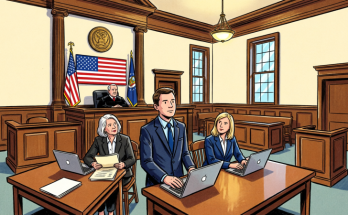
The day of the hearing, Jared wore a suit. He looked cleaner, like he’d learned to dress as a strategy. His lawyer smiled too much.
Claudia wasn’t there. Sarah’s mother had finally distanced herself from Claudia after the school incident and the courthouse hallway scream. She still didn’t apologize properly, but at least she stopped defending the indefensible.
Jared glanced at us when we entered, eyes sliding over Lily like she was property he couldn’t retrieve.
The judge was the same one from the plea deal. He looked older too, or maybe I was just better at seeing tiredness now.
When it was time, Lily stood.
She had a small bruise on her knee from a dance rehearsal, and her hair was braided back tight, like she was bracing for wind. Sarah squeezed her hand once, then let go so Lily could stand on her own.
Lily held her paper with both hands. Her voice shook at first. Then it steadied.
“Your Honor,” she began, “I’m Lily Carter.”
Jared’s lawyer shifted, uncomfortable.
Lily continued. “Jared hit me at a family dinner. He hit me so hard I fell off my chair and hit my head. I had blood on my face.”
Jared stared straight ahead, jaw clenched.
Lily swallowed. “After that, I thought it was my fault because I spilled milk. I thought being perfect would keep me safe. But it didn’t.”
Sarah’s eyes filled with tears.
Lily took a breath. “I don’t want contact with him,” she said. “I don’t want him near me. When I saw him at a store, he smiled like it was funny. It wasn’t.”
She lifted her chin. “I don’t need reconciliation. I need safety.”
The room was silent.
The judge looked at Jared. “Do you have anything to say?” he asked.
Jared’s lawyer started to stand, but the judge held up a hand. “I asked him,” the judge said.
Jared swallowed. He glanced at Lily, then at the judge. His voice came out strained. “I made a mistake,” he said.
A mistake. Like dropping a plate. Like a wrong turn.
Lily’s eyes didn’t change.
The judge leaned forward. “A mistake is forgetting to set an alarm,” he said flatly. “This was assault on a child.”
Jared’s face reddened, anger flickering. “I’ve done counseling,” he snapped. “I’m trying to move forward. They’re keeping me—”
The judge cut him off. “You are not the victim here.”
He turned back to Lily. “Thank you for speaking,” he said to her, and the respect in his voice made my chest tighten.
Then he ruled.
The protective order was extended. The distance remained. No contact. No modification. Jared’s request was denied.
When we walked out of the courthouse, Lily’s shoulders sagged like she’d been carrying a weight and finally set it down.
Sarah hugged her, careful and fierce. “You were incredible,” she whispered.
Lily shrugged, wiping at her eyes. “I just told the truth,” she said.
Outside, the sun felt brighter than it should have.
On the drive home, Lily stared out the window, quiet. Then she said, “Dad?”
“Yeah?”
“If someone hits someone,” she said slowly, “and people don’t stop it, they’re part of it.”
I gripped the steering wheel tighter. “Yes,” I said.
Lily nodded. “Okay,” she said, like she’d filed it away as a rule for life.
That evening, she taped a new note beside her old fridge rules, written in bold marker:
Truth is louder than fear.
Part 10
Two years later, Lily was fourteen.
Her freckles had faded a little. She had braces. She was taller than Sarah now. She danced competitively and argued with me about curfews and rolled her eyes like it was her job.
And she was, in ways that mattered, whole.
The scar of that dinner never disappeared completely. It lived in the way she hated sudden shouting, in the way she automatically scanned a room for exits, in the way she didn’t trust charming adults too quickly.
But it also lived in her strength. In her clarity. In her refusal to be small.
Sarah’s volunteer work turned into a paid role at the support center. She became the person who helped families navigate paperwork, court dates, safety planning. She didn’t talk about it at dinner parties. She didn’t need applause. She needed impact.
One evening, Sarah came home and said a woman had told her, “You make me feel like I’m not crazy.”
Sarah’s eyes were wet when she told me. “I used to think I was crazy,” she admitted. “For feeling hurt.”
I kissed her forehead. “You were trained to doubt yourself,” I said. “Now you’re training yourself not to.”
Ben remained in Lily’s life, slowly, carefully. He never asked for forgiveness like it was owed. He showed up. He apologized. He did better. Lily eventually started calling him “Uncle Ben” again without hesitation.
Claudia, on the other hand, faded out of our orbit completely. She tried once more to stir up family pressure, but it didn’t work. When people don’t get the reaction they want, they either change or they leave. Claudia left.
Jared was the last shadow.
We heard he moved to another county. He had a new girlfriend, a new job, a new story about how his “crazy ex-family” ruined him. People like him always find an audience somewhere.
Then, in the summer after Lily’s freshman year, an envelope arrived in the mail.
No return address.
Inside was a short letter in messy handwriting.
It was from Jared.
The protective order was still active, which meant he wasn’t supposed to contact us. But he’d mailed it anyway, gambling that paper could slip through cracks.
Sarah’s hands shook when she saw his name. “Do we open it?” she asked.
Lily was in the kitchen, pulling a tray of cookies out of the oven, wearing an apron that said DANCE FUEL. She glanced at the envelope, then at us.
“I want to,” Lily said.
Sarah hesitated, then handed it to her.
Lily opened it, read silently, then snorted.
“What does it say?” I asked, careful.
Lily read it out loud, voice flat and almost amused.
He wrote that he was “sorry things went too far.” That he hoped Lily “wasn’t still holding a grudge.” That he’d “grown a lot.” That he wanted to “clear the air.” He wrote, in the last line, that he forgave us for “making a big deal” out of it.
When Lily finished, she looked up.
For a moment, the kitchen was quiet except for the ticking clock and the smell of warm sugar.
Then Lily folded the letter neatly.
“He didn’t change,” she said.
Sarah’s eyes were wet. “No,” she whispered.
Lily walked to the trash can and dropped the letter in, like tossing out junk mail.
“He doesn’t get to forgive us,” Lily said, wiping her hands on her apron. “He doesn’t get to make himself the hero in the story where he hit a kid.”
I stared at my daughter, fourteen years old, standing in our kitchen like she owned her own life. Because she did.
“What do you want to do?” I asked.
Lily shrugged. “Nothing,” she said. “We keep living.”
I felt something loosen in my chest that I hadn’t realized was still tight.
That night, Lily went to dance practice. Sarah went to the center for a late shift. I stayed home and cleaned the kitchen, listening to the quiet hum of our safe house.
When Lily came home, sweaty and smiling, she tossed her bag down and said, “Dad, can you drive me to practice tomorrow too?”
“Of course,” I said.
She paused, then added, “Thanks for picking me up that day.”
My hands stilled over the dish towel.
I looked at her. “Always,” I said.
Lily nodded once, then headed upstairs, humming.
And that was the ending, clear and solid:
Jared didn’t get redemption. He didn’t get a family reunion. He didn’t get to rewrite what he did.
Claudia didn’t get control.
Instead, Lily grew into someone who could name violence for what it was and refuse to carry the shame that belonged to someone else.
Sarah became someone who stood up—every time.
And I became the kind of father I promised Lily I would be in the truck that night:
Nobody hurts you. Not ever again.
THE END