I slept badly that night, if what I did can even be called sleep. Every time I closed my eyes, I saw the living room. Khloe crying. My father turning away. Sophia stepping back from me. I woke before dawn with the old panic in my chest, disoriented for a second, as if I were nineteen again and parked behind a gas station with my duffel bag for a pillow.
The next morning, I heard voices outside.
I went to the front window and looked through the blinds.
James’s old truck was parked at the curb. My mother stood beside it in a coat she kept wrapped tightly around herself even in weather that wasn’t cold enough to need one. Her shoulders looked smaller than I remembered. Older. James stood near my walkway with both hands shoved into his pockets, staring at my front door as if willing it to open.
“Nathaniel!” my mother called. Her voice cracked on the second syllable. “Please, honey. Please open the door.”
I stayed where I was.
James stepped closer. “You don’t have to forgive us. Just talk to us. Five minutes.”
My hand actually twitched toward the lock.
For one dangerous second, I pictured opening the door, letting my mother throw her arms around me, letting James cry or explain or apologize, and something childish in me—some abandoned fragment I despised for surviving—wanted it.
Then memory hit so hard I had to brace myself against the wall.
Pack your things.
You will not disgrace this family under my roof.
I stepped back from the door.
My mother knocked softly. Then harder.
“Nathaniel, it wasn’t your fault,” she cried. “We know that now.”
Now.
James’s voice came through the wood, lower and steadier. “I know you hate me. You have every reason. But please don’t let this be the end without hearing us.”
The door stayed closed.
After a while I heard my mother weeping, the shuffle of shoes on the porch, then the truck starting up and pulling away.
I told myself that was enough. That they had tried, I had refused, and everyone could return to whatever version of their lives remained.
I should have known better.
That afternoon, James came to my construction site.
We were midway through a custom build on the north side of town, and the whole place vibrated with noise—compressors, nail guns, saws, shouted measurements. Dust hung in the sunlight like pale smoke. I was on the second level reviewing framing corrections with my foreman when one of the laborers looked toward the driveway and said, “Boss, somebody’s here for you.”
I glanced down and saw James standing in the middle of the site in jeans and a work jacket too clean for the environment, his face drawn tight with determination.
Everything seemed to stop at once. Tools quieted. Men looked up. The strange electricity of personal drama moving through a worksite is immediate; everyone senses it before they understand it.
I went down the stairs slowly.
“You shouldn’t be here,” I said.
He lifted both hands like I was a cornered animal.
“I know.”
“Then leave.”
“Nathaniel, please.”
My crew pretended not to watch. Which meant they were watching intensely.
“We were wrong,” James said, voice carrying in the sudden quiet. “I was wrong. I should have stood up for you. I should have pushed for the test. I should have come after you when you left. I should have told you when Dad died. I know that. I know all of it.”
Embarrassment and fury braided together so tightly in me I could taste metal.
“You had fifteen years,” I said.
His face flinched.
“I know.”
“No, you don’t.” My voice sharpened. “You do not know what fifteen years feels like when your whole family thinks you’re a monster. You do not know what it’s like to sleep in your truck at nineteen because your father threw you out. You do not know what it’s like to build a whole life with one hand while the other is still reaching for people who stopped loving you overnight.”
My foreman looked away.
James swallowed hard. “I was a coward.”
“Yes.”
“I regret it every day.”
“Good.”
The word hit him like a slap.
“I’m not saying that to be cruel,” I continued, though cruelty was definitely in it. “I’m saying it because regret is the smallest thing you owe me.”
He stood there, taking it, tears gathering in his eyes but not falling.
“Just one conversation,” he said.
I laughed in disbelief.
“One conversation? That’s what you want? One conversation now that reality has forced your hand? You had fifteen years to ask me for one conversation, James. Fifteen.”
I turned and walked back toward the structure.
He called after me once more, voice breaking.
“Danny—”
I spun around.
“Don’t use that name,” I said quietly. “You lost it.”
Then I kept walking until the noise of the site swallowed everything again.
That night, family gossip spread like rot.
Once the truth cracked open, everyone who had once benefited from silence suddenly discovered a love of outrage. Relatives who had looked the other way began calling Khloe a liar, a fraud, a disgrace. Some even claimed they had always had doubts. They had not. Or if they had, their doubts had never once mattered enough to protect me.
Meanwhile, her world collapsed by the hour.
Alex moved out. Word spread that he had packed a suitcase and left their house after shouting could be heard from the street. Max remained in the hospital, a child at the center of a storm he had done nothing to create. And that hurt in a way I hadn’t expected. However much I despised Khloe, however much part of me wanted to see consequences rain down on her until she understood the scale of what she had done, Max was innocent. He was just a sick boy whose whole life had been built on a lie he never asked for.
Late that evening, an email came through.
From Uncle Richard.
Khloe’s father.
I almost deleted it on sight. Curiosity stopped me.
Nathaniel,
I know you have no reason to hear from me. I know the damage done cannot be undone. But there is something you need to know. Your father left something for you in his will. I will not say more over email. If you come home, I will take you to see it. If you decide to leave again after that, no one will stop you.
Richard
I read it three times.
My father had left me something.
The man who had exiled me. The man who had never called. The man whose funeral I learned about from Facebook.
It sounded impossible. Manipulative, even. Some new tactic to draw me back into a family system that had no idea how to speak to me except through guilt and urgency.
But the sentence lodged in me.
Your father left something for you.
For the first time since James’s call, I felt something that wasn’t purely rage.
Confusion.
Maybe hope, though I hated myself for it.
Two days later, I drove back to the town I had sworn never to see again.
Crossing into it felt like stepping into a photograph left too long in the sun. Everything looked smaller than memory and meaner in a way memory had perhaps softened. The same gas station. The same diner with the missing letter on its sign. The same water tower rusting against the sky. The same cracked sidewalks where kids had once ridden bikes and old men still sat on folding chairs outside barber shops as if time itself had given up in this place years ago.
My phone buzzed repeatedly on the passenger seat. I ignored it.
I drove past my old high school without meaning to. The football field looked exactly the same. For a second I was hit by a strange, sharp image of myself at seventeen, standing in the parking lot after practice with Sophia stealing my hoodie and laughing when I pretended to be annoyed. It hurt so suddenly I had to grip the wheel harder.
At a stoplight near the old café downtown, I heard someone shout my name.
“Nathaniel?”
I looked over and saw Tom Harris and Caleb Reed crossing the street toward my truck.
We had once been friends. Not best friends, maybe, but close enough to share locker rooms, summer beers, and the dumb certainties of teenage loyalty. I had not spoken to either of them since the week the accusation spread.
Tom looked older, thicker around the middle. Caleb’s hairline had retreated, and he wore the slightly baffled expression of a man whose adult life had arrived without asking if he was ready. Both of them looked nervous.
“Man,” Tom said, stopping a few feet from the truck. “I can’t believe it’s you.”
“Apparently it is.”
Caleb shoved his hands into his pockets. “We heard you were back.”
I gave him a flat look. “Small towns are efficient that way.”
Tom winced.
“Listen,” he said, “I know this probably means nothing, but we’re sorry. Back then, we should’ve—”
“Believed me?”
He swallowed. “Yeah.”
“You didn’t.”
“No.” Shame moved visibly through his face. “We didn’t.”
I looked at them both and was struck not by anger first, but by distance. They were men now with wives, kids, mortgages, local reputations. The intervening years lay between us like another state line. Whatever apology they had come to offer belonged to a version of me that no longer stood in front of them.
“I’m glad your lives turned out well,” I said.
That wasn’t forgiveness. It was dismissal dressed politely.
I drove away before they could say more.
That evening I met Uncle Richard at a café on the edge of town.
He stood when I came in, and for a second I saw the resemblance to Khloe so clearly it made my chest tighten. But where her face had always held a kind of quick vanity, his looked worn through by something deeper. Guilt, probably. Grief too.
“Nathaniel,” he said softly. “Thank you for coming.”
I sat without taking his offered hand.
“Say what you need to say.”
He nodded once, accepting that.
For a while he only looked at me, as if assembling courage.
“Your father wasn’t the same man at the end,” he said finally.
I almost laughed. “That’s convenient.”
“I know how it sounds.”
“He threw me out.”
“Yes.”
“He never came after me.”
His eyes dropped. “No.”
“He died without speaking to me.”
Richard took a breath. “He tried.”
I went still.
“What?”
He looked up. “After the first few years, your father started asking questions. Quietly. Too late, yes. Much too late. But the certainty he had that night didn’t hold. He saw cracks in Khloe’s story. He noticed inconsistencies. He and your mother argued about it more than once. He wanted to find you.”
I stared at him.
“That’s not true.”
“It is.” His voice trembled. “He hired a private investigator last year. He found your company. Your address. He bought a plane ticket. He was going to come himself.”
My mouth went dry.
Richard reached into his coat pocket and slid a folded paper across the table.
An airline itinerary.
My father’s name. A departure date. A destination city less than twenty miles from where I lived.
I looked at it until the words blurred.
“He had a heart attack three days before the flight,” Richard said. “He died before he could go.”
Something in me split open then, not cleanly, but in a long tearing way I felt down through my ribs.
For fifteen years I had lived with one simple, brutal fact: my father believed the lie, chose it over me, and died satisfied with that choice.
Now suddenly the truth was messier. He had still failed me. Horribly. Irreparably, in some ways. But he had not remained unchanged. Doubt had reached him. Regret had reached him. Love, apparently, had remained stubborn enough to make him search.
The cruelty of that nearly undid me.
“He still didn’t know,” I said, and my voice sounded far away. “He died not knowing.”
Richard covered his own face briefly with one hand. “No,” he said. “He didn’t know. But he wanted peace. He wanted you home.”
I cried in that café like I had not cried in years—quietly, helplessly, furious at myself for needing to, furious at him for making me feel anything at all after what he had done.
Richard drove me straight from the café to the lawyer’s office.
The building was small, brick, unimpressive. The kind of place where lives are partitioned into documents without ceremony. Inside, a narrow man in glasses opened a file and slid papers toward me.
“Your father made these arrangements several years ago,” he said. “They were revised once, then finalized.”
I read the documents through a haze.
A bank account in my name. Three hundred thousand dollars.
A deed.
The lake house.
I knew it instantly from the description even before I saw the address. My grandfather’s old place, where we had spent summers when I was a boy. Where I had learned to fish badly and swim recklessly and run barefoot across warm planks on the dock while my father grilled burgers and my mother laughed from the porch and everything in the world still seemed possible.
He had left it to me.
My father, who had thrown me out like refuse, had left me the place that held some of the only uncomplicated childhood memories I had.
I sat there with the deed in my hand and felt grief sweep through me so fast and total it left me breathless.
“He wanted you to have a future,” Richard said quietly.
“He should have given me one when I was nineteen.”
Richard nodded, eyes full. “You’re right.”
That was the worst part of all of this. The apologies. The remorse. The agreement. If they had argued, denied, defended, some part of me would have found it easier. But being met now, over and over, with sorrow and acknowledgment did not lessen the damage. It only proved that the damage had been unnecessary.
That night, I sat in a bar on the outskirts of town with the deed folded in my jacket pocket and a glass of whiskey untouched in front of me.
Alex found me there.
He looked terrible. Hollow-eyed, unshaven, wearing the kind of expensive coat that somehow only emphasized the fact that his life had come apart too quickly for him to adapt.
He sat down without asking.
“So,” he said. “You’re Nathaniel.”
I glanced at him. “Apparently.”
He gave a short, exhausted laugh that died almost immediately.
“She lied to all of us,” he said. “I knew there were things she never told me, but this…” He shook his head. “Fifteen years. My whole marriage.”
I said nothing.
He looked at me hard. “Tell me exactly what happened.”
So I did.
Not elegantly. Not chronologically. I told him about the living room, the accusation, being thrown out, dropping out of school, the town turning on me, the years of work and silence. I told him what it costs a person to survive the kind of humiliation that becomes local folklore. I told him about my father’s funeral. About Facebook. About how his wife had built her adult life on top of my ruined one.
When I finished, Alex sat motionless for a long time.
Then he said, “You should sue her.”
I looked at him.
“You should destroy her in court,” he said flatly. “Publicly. Legally. Thoroughly. What she did isn’t just cruel. It’s actionable.”
Actionable.
It was such a lawyer word for something that had hollowed out fifteen years of a human life.
But the idea lodged in me.
For so long, all I had wanted was distance. Survival. Escape. A private life built far enough away that the original wound couldn’t keep reopening every time someone said my name.
Now I had the truth.
Now I had witnesses. DNA records. Medical evidence. A confession. A public collapse.
Maybe distance was no longer enough.
The next morning, I met with a lawyer.
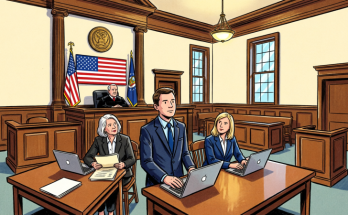
Richard Crowley was exactly what you’d want in a man preparing to turn your pain into a legal instrument: sharp-eyed, unsentimental, and quietly delighted by facts arranged in his favor. His office smelled like old books and coffee left too long on a warming plate. He listened without interrupting while I laid everything out……………………………………