When Vanessa posted her social media plea—heartbroken fiancée, cruel father-in-law—Kevin’s phone blew up with messages. Some friends offered sympathy. Others asked awkward questions. A few, the ones Vanessa had isolated him from, were blunt.
“Dude,” Matt texted. “Were you actually going to pay two million for a wedding?”
Kevin showed me the text, humiliated.
I said, “Matt’s blunt because he cares. He’s pulling you back into reality.”
And then, in a moment that made me almost grateful for the internet’s cruelty, Vanessa’s previous victims found her post and commented publicly.
Scammers depend on shadows. Social media is a spotlight.
Vanessa deleted the post, but the screenshots spread. In a single afternoon, her narrative collapsed.
That was the first time I saw Kevin smile again—not because it was funny, but because reality had finally punched through the fog.
When the Attorney General’s investigator, James Patterson, called, he said something that stuck with me.
“Richard,” he said, “we see fraud all the time. But we rarely see victims coordinate. We rarely see evidence organized this clean. Most people come to us with pieces. You gave us the whole puzzle.”
I told him, “That’s because I’ve spent my life watching fraudsters win when good people are too tired to fight.”
The federal case moved faster after the plea deals, but it still required something Kevin didn’t expect: facing his own embarrassment in front of strangers.
He had to provide a statement. He had to explain how he was targeted. He had to acknowledge the transfers he made. He had to say out loud that he believed her.
He hated that part.
But when he finished his victim statement, the prosecutor shook his hand and said, “You did the right thing coming forward.”
Kevin told me later, “No one has ever said that to me about being hurt. They usually just ask why I let it happen.”
“Victim-blaming is society’s way of pretending it could never happen to them,” I told him. “If they can call you stupid, they can reassure themselves they’re safe. It’s a lie.”
The restitution order looked impressive on paper: 1.42 million plus interest. But restitution doesn’t restore lost years. It doesn’t restore peace. It doesn’t restore trust in your own judgment.
It’s just a ledger entry that says, officially, someone took what wasn’t theirs.
Kevin didn’t want the money.
He wanted his confidence back.
The night after Vanessa’s allocution, Kevin came to my house and sat in the same chair where he’d confessed everything months earlier. He looked smaller, not physically, but emotionally, like someone who’d been through a storm and didn’t know what the rebuilt landscape would look like.
“I keep thinking about Mom,” he said.
His mother’s name wasn’t spoken often in our house. Grief had made it a fragile glass we didn’t want to touch.
“She would’ve hated Vanessa,” he whispered.
“She would’ve hated what Vanessa did,” I corrected gently.
He swallowed. “Would she hate me?”
I leaned back and stared at the bookshelf where Kevin’s childhood photos still sat in frames—him with missing teeth, him holding a science fair trophy, him wearing a suit for his graduation.
“No,” I said. “She would be angry. Hurt. But she wouldn’t hate you. She’d want you to learn. She’d want you to stop apologizing for other people’s crimes.”
Kevin’s eyes filled. He wiped them quickly, embarrassed.
“You don’t have to be embarrassed here,” I told him. “Not with me.”
He nodded, and for a moment, he looked like that ten-year-old kid again, relieved that his father wasn’t angry, relieved that the worst thing he feared—rejection—wasn’t coming.
The true victory of this whole case wasn’t Vanessa going to prison.
It was Kevin regaining his voice.
Months later, he invited me to dinner at his place. A small apartment in Uptown—not luxury, not flashy, just clean and comfortable. He cooked himself, something he hadn’t done in years. Pasta. A simple salad. A bottle of wine that wasn’t expensive but was chosen with care.
“This feels normal,” he said as we ate.
“Normal is underrated,” I replied.
He told me about therapy, about learning boundaries, about recognizing manipulation. He told me about the new woman he’d been seeing, Lauren, a teacher who laughed when he tried to impress her with expensive restaurants and said she preferred tacos on the patio.
“She asked me what I want,” he said. “Not what I can provide. Just… what I want.”
I felt something warm in my chest. “That’s a good sign.”
Kevin smiled softly. “I keep hearing your voice, you know. Prove it.”
I laughed. “It’s a useful phrase.”
“It saved me,” he said.
It did. But it also saved others. Because after the arrest, the Attorney General’s office issued a public advisory about wedding fraud schemes. They used our case as an example—without names. They warned people to verify vendors, to avoid paying deposits to third-party accounts, to document everything, to be wary of pressure tactics.
Marcus Webb emailed me later and said, “My sister is engaged. She read the advisory and realized her planner was sketchy. She saved herself fifty grand. Thank you.”
That’s what justice should do: not just punish, but prevent.
As for me, I returned to my quiet retirement. I restored old legal books. I consulted occasionally. I gardened in my backyard. I played chess with an old colleague on Thursdays.
But something had changed in me too.
Retirement had softened me. Grief had made me hungry for family. I’d ignored cracks because I wanted the structure to hold.
Now I paid attention again.
Not because I became paranoid, but because I remembered what attention is: love expressed as care.
One afternoon, months after sentencing, I received a letter from Kevin. Handwritten.
Dad,
I know you didn’t want me to apologize endlessly, but I need you to know something. When I slipped you that note under the table, I was terrified. Not just of Vanessa, but of being embarrassed. Of you looking at me like I was weak.
You didn’t.
You looked at me like I was your son.
You didn’t raise your voice. You didn’t make a scene. You didn’t humiliate me.
You said two words and took control. You gave me a way out without making me feel small.
I’m trying to learn to do that for myself now—take control without cruelty.
Thank you for being the kind of father who shows up, even when it’s uncomfortable.
Love,
Kevin
I read the letter twice, then placed it in the drawer where I kept the few items that mattered more than money. Kevin’s childhood drawings. His mother’s last birthday card. A photo of the three of us before grief rearranged the world.
Sometimes, retirement is comfortable. That’s true.
But comfort can lull you into ignoring threats.
That Sunday lunch reminded me that danger doesn’t always look dangerous. Sometimes it looks like a pretty woman in a designer dress asking for two million dollars with a smile.
And sometimes, the most powerful weapon you have isn’t anger or wealth or even authority.
Sometimes it’s two simple words that force reality back into the room.
Prove it.
The week between the empty office confrontation and the civil hearing was the most dangerous stretch, because it was the week Vanessa and Patricia realized they were cornered.
A cornered con artist doesn’t become kinder. She becomes creative.
Kevin told me later that the first shift happened the night after the meeting. Vanessa didn’t come home smiling. She didn’t come home angry either—not at first. She came home quiet, and quiet from a manipulator is rarely peace. It’s planning.
“She made dinner,” Kevin said, still sounding stunned when he recounted it. “Like… actually cooked. Candle on the table. Music. She sat close to me and asked about my day like nothing happened.”
“That’s called a reset,” I told him. “When intimidation fails, they try tenderness. If they can’t control you with fear, they control you with comfort.”
Vanessa didn’t mention the office. She didn’t mention the vendors. She didn’t mention my folder of evidence. She acted like the whole afternoon had been a misunderstanding that time could erase.
Then she moved to phase two: rewriting history.
“Maybe your dad’s just scared,” she told Kevin, according to him. “Some men get weird when their sons grow up. It’s normal. He wants to keep you close. He doesn’t want to share you.”
Kevin watched her mouth form those sentences and felt the strange sensation of stepping out of a fog. He told me he realized she was describing me without knowing me. She wasn’t talking about Richard Vernon Porter, the man who sat with him through his mother’s chemo appointments, who helped him learn to shave, who paid his college tuition without making it a performance. She was talking about a stereotype she could use.
She was trying to make him doubt me.
He didn’t bite.
“She got irritated when I didn’t agree,” Kevin said. “Not furious. Just… annoyed. Like I wasn’t cooperating.”
That annoyance is the truest tell. A loving partner might be confused. She might feel hurt. But annoyance is what a scammer feels when the customer won’t sign.
The next morning, Vanessa tried another tactic: shame.
She sent Kevin a photo of herself crying in the bathroom mirror—classic, performative vulnerability—and wrote: I don’t know how to fix this. Your dad hates me. I feel so alone.
Kevin showed me the text and said, “Part of me wanted to go comfort her. Like instinct.”
“Because you’re decent,” I said. “Decent people respond to tears. That’s why tears are useful to criminals.”
I told him, “When she cries, ask yourself: what does she want next?”
He did.
The answer came three hours later: Vanessa asked Kevin to wire a “refundable deposit” to secure the venue “just in case.”
She said if the date was held, the documentation would follow.
She said the planner’s reputation depended on trust.
She said she’d be humiliated if they lost the date because Kevin’s father “couldn’t mind his own business.”
Kevin looked at her and said, “No.”
Vanessa didn’t cry then. She snapped.
“What do you mean no?” she demanded.
Kevin told me his voice shook, but he held. “I mean no. We’re not wiring anyone anything. Not until we have real contracts.”
Vanessa’s eyes went cold.
“Then maybe you’re not ready to be married,” she said.
There it was again: the ultimatum.
Kevin didn’t argue. He didn’t plead. He simply said, “Then maybe I’m not.”
That sentence was the first boundary he’d set in months. He told me afterward it felt like stepping off a cliff and discovering there was solid ground.
Vanessa’s reaction was immediate.
She called Patricia.
Within an hour, Patricia arrived like reinforcements. She sat in Kevin’s living room and spoke in that southern charm voice that always sounded like sugar hiding poison.
“Kevin,” she said, “Vanessa is devastated. She’s never been treated this way. She chose you. She chose your family. And your father humiliated her.”
Kevin said, “My father asked for proof of a two-million-dollar budget.”
Patricia’s eyes narrowed. “Proof is what you ask from strangers. Not from family.”
Kevin replied, “Vanessa isn’t family yet.”
Patricia’s mouth tightened.
Vanessa began to cry—real tears this time, possibly, or at least well-timed ones. “I just wanted one day,” she sobbed. “One day where I felt like I mattered.”
Kevin felt his old instinct surge: fix it, make her happy. He told me he almost folded.
Then he remembered the recording of Vanessa calling him weak.
He remembered the empty office.
He remembered the word mark.
He didn’t fold.
He said, “If you matter, you can prove what you’re asking for.”
Patricia stood up. “Then you’re choosing your father over your fiancée.”
Kevin looked at her and said, “I’m choosing facts over manipulation.”
Patricia stared at him like she’d never been spoken to that way. Then she left, dragging Vanessa behind her.
That night, Kevin called me and said, “I think they’re going to do something.”
He was right.
The next day, I received an email from an unknown address with the subject line: PUBLIC RECORDS REQUEST.
Inside was a message that read like a threat dressed as bureaucracy: We are investigating allegations of misconduct and abuse of authority by former federal prosecutor Richard Vernon Porter. Please provide a statement regarding your history of coercive behavior and misuse of legal influence.
It was unsigned.
It was meant to scare me.
I laughed when I read it, not because it was funny, but because it was desperate and sloppy.
Vanessa and Patricia had realized they couldn’t win with charm. So they tried intimidation: create the illusion that I was the one under investigation.
I forwarded the email to Edward and to James Patterson.
Patterson replied within the hour: “They’re panicking. Keep everything. We can add attempted intimidation to the pattern.”
Then came the biggest mistake.
Vanessa filed the breach-of-promise suit.
Edward called it “the gift that keeps giving,” because the lawsuit forced Vanessa into a legal arena where evidence mattered more than narrative.
And in trying to control the story, she created records—texts, emails, filings—that made her pattern even clearer.
On the day of the civil hearing, before we entered the courthouse, Kevin received a call from Vanessa.
He put it on speaker without thinking. I motioned for him to keep it.
“Kevin,” Vanessa said, voice shaking. “Please. Just talk to me. I’m sorry. I didn’t mean any of it.”
Kevin stayed quiet.
“I’m being attacked,” she continued. “Your dad is trying to destroy me. I can’t handle this.”
Kevin said, “You called me weak.”
Silence.
Then Vanessa’s voice changed, sharp and furious. “You’re recording me, aren’t you?”
Kevin didn’t answer.
“You’re just like him,” she hissed. “Cold. Calculating. You think you’re better than me because you have money and a father who used to be important.”
Used to be important.
I couldn’t help myself. I leaned toward the phone and said, calmly, “I’m still important to the people you’re trying to rob.”
Vanessa’s breath hitched.
Then she hung up.
Edward looked at Kevin and said, “That call alone is worth its weight in gold. She just demonstrated consciousness of guilt. She knew to ask about recording because she knows she’s exposed.”
When Judge Sanchez dismissed Vanessa’s suit, I watched Kevin’s face. Relief, yes. But also grief. He wasn’t grieving Vanessa. He was grieving the version of his life he’d imagined—the wedding, the future, the illusion.
After the arrest warrants were served, Kevin didn’t cheer. He didn’t smile. He just stood still, like a man watching a building collapse after he’d finally admitted it was unsafe.
That’s something people don’t understand about justice. It doesn’t always feel like victory. Sometimes it feels like cleanup.
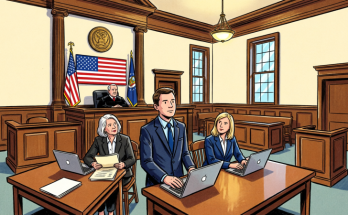
In federal court, when Vanessa and Patricia stood before Judge Chen in orange jumpsuits, the room smelled faintly of disinfectant and old paper. There were no chandeliers, no champagne, no cherry blossoms from Japan.
Just fluorescent light and the weight of consequence.
Kevin sat beside me in the gallery, hands clasped, staring forward. He didn’t look at Vanessa. He couldn’t.
When the prosecutor summarized the scheme—seven victims, $1.42 million, eight-year pattern—Kevin flinched as if each number was a small slap.
He whispered, “I was almost number eight.”
“Yes,” I said. “And because you spoke up, there won’t be a number eight.”
That’s the part Kevin eventually held onto: not his embarrassment, but his impact.
When the plea deal came through, the prosecutor asked if Kevin wanted to speak at sentencing.
He said no at first. He didn’t want to relive it publicly.
Then he changed his mind.
He stood in court, voice shaking, and said, “I loved her. And she used that. I don’t want sympathy. I want her to stop hurting people.”
It wasn’t eloquent. It was honest. And honesty, in a courtroom, is powerful.
After sentencing, when Vanessa looked back at the gallery, she didn’t see a weak man with daddy issues.
She saw a man who survived her.
And she saw the father who refused to be bullied.
Kevin told me later, “I thought you were going to explode at lunch. Like stand up and yell.”
“I wanted to,” I admitted. “But yelling would’ve given her what she wanted: a scene where she could play victim.”
“So you stayed calm.”
“I stayed lethal,” I corrected gently. “There’s a difference.”
Months later, the French Room invitation came again—this time from Kevin, who wanted to reclaim the memory.
“I want to go back,” he said. “Not because I like that place, but because I don’t want her to own it in my head.”
We went on a quiet Sunday. No Vanessa. No Patricia. No portfolio. Just father and son eating lunch and talking about normal things.
Halfway through, Kevin raised his glass of water and said, “To two words.”
I smiled. “Which two words?”
“Prove it,” he said. “The words that saved me.”
We clinked glasses. And for the first time in a long time, the French Room felt like just a room again—not a battleground.
As we left, Kevin slipped a note into my palm under the table, mimicking the movement from that first lunch.
I waited until we were outside to unfold it.
It said:
Dad, thank you. I’m okay.
This time, my smile was real.