He wiped both hands down his jeans.
“Then I saw his face and I felt sick.”
Nobody tells the truth about anger the way teenagers do when they are finally tired of pretending.
I said, “Anger isn’t the part that decides who you are.”
He looked away.
Owen whispered, “My mom’s gonna kill me.”
“No,” I said. “Your mom is going to be embarrassed and scared and probably angry. Those are different things.”
That afternoon, I called home.
Not as a punishment.
As a teacher who has gotten old enough to know that silence can rot a family faster than bad news.
Owen’s mother answered on the fourth ring.
Her voice had the brittle politeness of somebody waiting for judgment.
By the end of the call, she was crying.
Not loudly.
The way adults cry when they still think they need to apologize for it.
She told me her older son had moved back in after losing a warehouse job.
She told me the heat had been shut off for two days last month.
She told me someone from another agency had once shown up at their apartment after a school form triggered concerns, and since then she had treated every request for information like a lit match.
“I know that sounds stupid,” she said.
“No,” I said. “It sounds learned.”
That night I did not sleep well.
I kept seeing Owen with the card in his hand.
Marcus with fury and heartbreak all over his face.
Mrs. Chandler asking, How do you know who really needs it?
And the answer, ugly and simple, was this:
Sometimes you don’t.
Sometimes trust gets bruised.
Sometimes mercy gets taken too far.
Sometimes the thing that saves ten people gives an eleventh one the chance to make a bad choice.
The question is whether that is a reason to burn it all down.
On Monday, Denise Holloway came to observe.
That was the word she used.
Observe.
As if need were a science lab.
She sat in the back during second period with a legal pad.
Kids noticed, because of course they did.
The drawer stayed mostly untouched that class.
Shame is extremely sensitive to witnesses.
After the bell, Denise lingered.
“I saw students glance at it and then not approach,” I said.
She nodded.
“They may be uncomfortable because I’m unfamiliar.”
“That is one way to say it.”
She set down her pen.
“Your principal told me about the incident Friday.”
“There was no incident.”
“There was an attempted misuse of donated resources.”
“There was a hungry fourteen-year-old who made a bad choice.”
She exhaled softly.
“Mr. Bennett, this is exactly my point. Informal systems depend too heavily on emotion.”
I was tired enough to tell the truth.
“Formal systems depend too heavily on distance.”
She looked at me for a long time.
Then, to my surprise, she said, “My father got laid off when I was twelve.”
I said nothing.
“We needed help for about nine months,” she said. “Not forever. Just long enough for everything to feel humiliating.”
The room got quieter somehow.
“The church pantry asked my mother for pay stubs,” Denise said. “One volunteer looked at our car and suggested we sell it first. My mother never went back.”
I leaned against a desk.
“Then you know.”
“I do,” she said. “I also know what happened when nobody tracked anything. People with the loudest stories got help first. Families who never asked got missed. Donors got suspicious. Good intentions turned into chaos.”
There it was.
Her wound.
Not opposite mine.
Just shaped differently.
“I’m not trying to erase what you’ve built,” she said. “I’m trying to make sure it survives contact with reality.”
That landed harder than I expected.
Because she was not wrong about that either.
The hardest fights are the ones where both people are carrying a valid fear.
By Tuesday, snow had turned to freezing rain.
The buses were worse.
The hallway smelled like wet coats and tired bodies.
At 8:03, Marcus handed me an envelope.
“What’s this?”
“My mom.”
Inside was a letter.
No fancy stationery.
Just lined paper folded in thirds.
She wrote that Marcus told her about the district discussing “a bigger official version” of the drawer.
She wrote that she understood why adults liked forms.
She wrote that forms create records, and records create explanations, and explanations have a way of reaching places families never meant to open.
Then she wrote a line I have never forgotten.
Some people can survive being poor. What they cannot survive again is being inspected.
I read that sentence three times.
Then Marcus said, “She almost didn’t let me bring it because she doesn’t trust school people.”
I looked up.
“Why did she?”
He shrugged.
“She said you made me sound like myself again.”
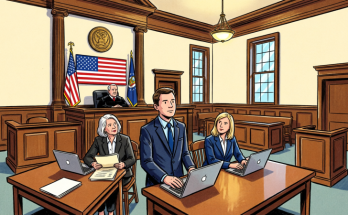
I had to look away.
Wednesday night was the school board meeting.
Not because of me officially.
Officially it was about “student support infrastructure and emergency resource access.”
That is how institutions describe human pain when they want it to fit on an agenda.
The room was packed.
Parents.
Staff.
A few students.
Mr. Ray in the back with his cane.
Denise at one table.
The principal beside her.
And me two seats down, wishing very deeply that history teachers were allowed to disappear into wall paint.
People spoke for three minutes each.
That was the rule.
Three minutes to summarize what shame, hunger, pride, fear, and mercy look like in a town where half the people think asking for help builds character and the other half know it mostly just builds silence.
A father in work boots said any program without accountability would be abused.
A grandmother said accountability is often just a nicer word for suspicion.
A counselor said students need predictable systems, not secret kindness dependent on one teacher’s paycheck.
She was right.
Then a woman from the back stood up.
I recognized her only when she turned.
Owen’s mother.
Her hands were shaking.
She unfolded a piece of paper and then did not read it.
“My son made a bad choice last week,” she said.
The room shifted.
She took a breath that looked painful.
“He tried to take something that wasn’t his because he got scared we were running out of food again. I’m not saying that to excuse him.”
Nobody moved.
“I’m saying it because I need the room to understand what fear does. Fear makes decent people sneak. Fear makes children lie. Fear makes mothers act proud when really they are just terrified someone will decide they are unfit.”
You could have heard a pin drop on carpet.
She swallowed hard.
“If there had been forms, my son would not have gone near that room. If there had been a sign-out sheet, he would have stayed hungry before putting our name on it. If there had been a bigger office and a committee and some cheerful slogan, he would have smiled and said we were fine.”
She looked down at her hands.
“Please build whatever program you need to build. Just don’t build it so carefully that the people drowning walk past it rather than be seen climbing in.”
Then she sat down.
Nobody clapped right away.
Not because they did not want to.
Because some truths make your hands feel inappropriate.
Then Mr. Ray stood.
He did not go to the microphone fast.
Everything with him looked like it had cost something.
“I clean your hallways,” he said. “So let’s skip pretending I use prettier words than the rest of you.”
A few strained laughs.
He leaned on the podium.
“You all keep talking like the choice is order or chaos.”
He glanced toward Denise.
“It ain’t. The choice is whether people have to trade their dignity for access.”
He pointed one thick finger at the floor.
“When I was sixteen, I left school because being poor in a public place every day wears a person down faster than labor does. I remember exactly which adults looked at me like I was a problem to process. I remember the two who didn’t.”
He lifted his chin.
“The ones who didn’t are the reason I kept any softness in me. That matters.”
Then, because he is Mr. Ray, he added, “And before anybody asks, yes, some folks will take advantage. Some always do. But I’ve cleaned up after this town for twenty-two years, and I can tell you right now the cost of a few extra crackers is cheaper than what bitterness does to a kid.”
That time people did clap.
Not wildly.
Just enough to sound like relief.
Then Denise spoke.
She did not defend herself.
That surprised me.
She said the district would move forward with a formal resource room because families needed consistent support not tied to one classroom.
Then she said something else.
“It will not require proof of need for basic hygiene items, school supplies, or weather gear.”
The room shifted.
She continued.
“Food access for take-home items will be offered without income verification. Family connections to broader services will remain available, but not mandatory for immediate essentials.”
I looked at her.
She did not look back.
“We are also exploring anonymous request slips and discreet pickup options,” she said.
Now the room was fully awake.
Some people frowned.
A man near the front muttered that this invited abuse.
A teacher behind me whispered thank God.
And there it was.
The divide, plain as winter light.
One side believes people must be screened before they are trusted.
The other believes trust might be the screening.
Neither side feels cruel from the inside.
That is what makes it real.
Then the board president asked if anyone else wished to speak.
Marcus stood up.
For one terrible second I thought, no.
Not because I doubted him.
Because I knew what courage costs at sixteen.
He walked to the microphone with that same hard set to his shoulders he used to wear like armor.
But his voice, when it came, was steady.
“I’m Marcus Reed,” he said. “I’m in Mr. Bennett’s second period.”
He looked at the board, then at the crowd, then down once like he was deciding whether to give them the whole truth.
He did.
“I know some of you are worried kids will lie. Some will. I almost don’t care.”
The room tensed.
“Because you know what else kids do?” he said. “We hide stuff. We hide not eating. We hide wearing the same clothes three days. We hide the smell when the laundry didn’t happen. We hide not having poster board or deodorant or lunch money or a ride home. We get really, really good at hiding.”
Nobody moved.
“So if your big fear is that one kid might get crackers they didn’t fully deserve, okay. But our big fear is that we’ll be looked at like we’re garbage while asking.”
His voice shook once.
Just once.
“And I’m telling you right now which one lasts longer.”
The silence after that was the kind that changes people, at least for a while.
The board voted twenty minutes later.
Formal resource room approved.
Pilot program.
No proof required for immediate basics.
Anonymous requests allowed.
Limited tracking for inventory, not student eligibility.
Family referral optional, not automatic.
It was not perfect.
But perfection is usually another word for delay.
As people stood up to leave, I felt both relieved and strangely bereaved.
The drawer had not been shut down.
But it had been translated.
Made legible.
That helps systems.
It sometimes hurts souls.
I was gathering my papers when Denise came over.
She looked more tired than polished now.
“That was Marcus?” she asked.
“Yes.”
She nodded.
“Your room taught him something.”
I almost said, No.
Life did.
His mother did.
Need did.
All my room taught him was that softness could survive public school if it kept its head down.
Instead I said, “He taught us something too.”
She looked toward the door where families were filing out into the cold.
Then she said, “We’re naming the resource room the Green Scarf Room.”
I stared at her.
She gave the smallest smile.
“Your principal told me about the note. For somebody waiting on the bus.”
I could not speak for a second.
Finally I said, “That was his grandmother’s scarf.”
“I know.”
I swallowed hard.
“Thank you.”
She nodded once.
Then she was gone.
The Green Scarf Room opened two weeks later in a small office near guidance.
There were shelves.
Bins.
Plain labels.
A mini fridge donated by somebody’s cousin.
A cabinet for detergent and soap.
A rack for coats.
A slot in the wall where students could leave anonymous requests.
It helped.
It genuinely did.
Kids who would never have walked into my room came there through counselors, coaches, nurses, and friends.
Families used it.
Teachers contributed.
Mr. Ray still brought hats.
Reese Chandler volunteered one Saturday and never told me whether her mother approved.
Owen stocked canned soup after school for community service hours he insisted should not count because he wanted to do it anyway.
And my bottom drawer?
I kept it.
No cash.
No drama.
Just the small, immediate things.
Soap.
Socks.
Pads.
Granola bars.
Baby wipes.
Pencils.
One place for the urgent need that arrives at 7:14 when a teenager cannot bear one more adult voice saying, Fill this out first.
Nobody told me to keep it.
Nobody told me to stop.
That is how some necessary things survive.
In the space between policy and mercy.
The week before winter break, Marcus came in early again.
He had a box in his arms.
He set it on my desk.
Inside were travel soaps, toothbrushes, instant oatmeal, and three pairs of children’s gloves.
“My mom got extra hours,” he said.
I looked at the box.
“That’s generous.”
He shrugged.
“She said standing up is easier once somebody showed you how.”
I smiled.
Then I noticed something else.
Folded carefully on top was another scarf.
Blue this time.
Store-bought.
Still soft.
“For the drawer?” I asked.
He shook his head.
“For the Green Scarf Room.”
He paused.
“In case some kid needs something warm but doesn’t want to take the fancy stuff.”
I laughed a little.
That boy understood dignity better than most adults with titles.
As he turned to go to his seat, I said, “Marcus.”
He looked back.
“You know people are going to remember that speech.”
He made a face.
“I hope not.”
“They will.”
He slung his backpack onto one shoulder.
“Then I hope they remember the right part.”
“What’s the right part?”
He thought for a second.
Then he said, “That needing help and abusing help aren’t the same thing. But people act like they are because it makes them feel safer.”
Then he sat down before I could tell him how true that was.
A few days later, I got one last note in the bottom drawer before break.
No name.
No handwriting I recognized.
Just blue ink on notebook paper.
It said, Thank you for keeping one place in this building where people don’t have to audition for kindness.
I carried that note home in my coat pocket.
It is still in my kitchen drawer now with the receipts and the old sticky notes and the first scarf note Marcus left me.
I am still three years from retirement.
Maybe less by the time you are reading this.
People ask whether the Green Scarf Room solved the problem.
No.
Of course not.
A room cannot solve wages that do not stretch.
Or rent that rises faster than mercy.
Or grandparents raising children on fixed checks.
Or mothers working two jobs and still bargaining with the electric company in whispers after midnight.
A room cannot solve a country that keeps turning basic needs into moral tests.
But it can do something smaller.
And smaller matters.
It can interrupt humiliation.
It can shorten the distance between need and relief.
It can give a tired teenager one clean shirt’s worth of hope.
I teach American history.
I have spent decades explaining movements, laws, speeches, marches, votes, failures, and promises.
Big things.
National things.
The kind of things textbooks can hold.
But the older I get, the more I think a country is measured by its smallest reflexes.
What does it do when a child needs soap?
What does it do when a family is one bad month from unraveling?
What does it do when trust is risky and paperwork is easier?
That is the real test.
Not what we say we value.
What we make people endure before we let them have it.
That winter, we built an official room and kept an unofficial drawer.
Some people thought that was wise.
Some thought it was reckless.
Some still think any help without proof is an invitation to be used.
Some think proof is too often just another name for public shame.
That argument is probably never ending.
Maybe it shouldn’t.
Maybe a country ought to keep wrestling with the difference between fairness and suspicion.
Maybe the comments section would tear itself apart over it.
Maybe dinner tables already do.
All I know is this.
The morning before break, I watched through my classroom window as students poured toward the buses in the kind of cold that makes every breath look fragile.
At the corner by the cracked sidewalk, a girl I didn’t know wrapped a green scarf around the neck of a smaller boy who had forgotten his coat zipped open.
She did it quickly.
No speech.
No audience.
He let her.
Then they kept walking.
That is how most real mercy happens.
Not with a banner.
Not with a grant.
Not with a perfect policy or a heroic soundtrack.
Just one person seeing the exact place another person is cold and deciding, for this minute at least, not to let them stay that way.
And if you want to know what I learned from Marcus, from Owen, from Ellie, from Tasha, from Mr. Ray, from Denise, from every tired parent who ever told the truth with their hands shaking, it is this:
People do not break only from having too little.
They break from being made to feel undeserving while they are trying to survive.
So yes, build the rooms.
Count the boxes.
Stock the shelves.
Make the systems better than they were.
But somewhere, in every school, every town, every workplace, every life, keep one bottom drawer.
Keep one place where help is still small enough to feel human.
Keep one place where a person can reach for what they need without first having to prove they are the right kind of struggling.
Because hunger is terrible.
Cold is terrible.
Exhaustion is terrible.
But shame?
Shame is the thing that teaches people to sit in pain two feet away from relief and call that dignity.
I think about that a lot now.
About the five dollars that vanished.
About the note left behind.
I’m sorry. I’ll put it back. Don’t stop.
Whoever wrote it never did put the money back.
At least not in cash.
What came back instead was bigger.
Harder.
Messier.
A whole town forced to look at what it asks from hurting people before allowing them one ordinary mercy.
That turned out to be worth more than five dollars.
Though I still wish the child who took it had never needed to.
Maybe that is the whole story.
Maybe America is still a room full of people arguing over whether trust should come before proof.
Maybe both sides think they are protecting something precious.
Maybe they are.
But the older I get, the simpler my own answer becomes.
When a kid opens a drawer for soap, you let him keep his dignity first.
Then you figure out the rest.