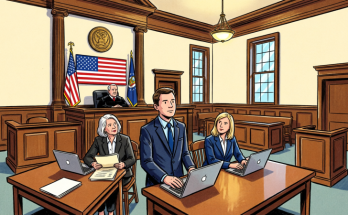
The morning the bank called, I almost let it ring out.
At seventy-two, I had earned the right to ignore numbers I didn’t recognize. Most of them were telemarketers, political surveys, or cheerful young people wanting to help me “optimize my retirement.” I had no interest in any of that. My mornings belonged to routine. I liked the kettle on at eight, the kitchen window cracked an inch to let in the Savannah air, and the first cup of coffee taken slowly enough to hear the neighborhood wake up around me.
So when my phone buzzed across the table and lit up with the number for the local branch of First Savannah Bank, I almost pressed decline.
Almost.
For forty years, I had kept my accounts there. First with Robert, then alone after he passed. I knew the tellers by face, if not always by name. They sent Christmas cards and asked after my garden. It felt rude not to answer.
“Mrs. Whitmore?” the voice said when I picked up.
“Yes?”
“This is Jason from First Savannah Bank. I’m sorry to bother you at home, but… would you be able to come in today? There’s something important we need to discuss.”
He wasn’t cheerful. That was the first thing I noticed.
Not cold, either. Just careful. The sort of careful you hear from doctors before they tell you test results or from preachers before they begin a funeral.
I sat a little straighter in my kitchen chair.
“Is something wrong with my account?”
There was the smallest pause, then: “I’d rather explain in person, ma’am.”
I looked out the window at the magnolia tree in the yard, its branches shifting lazily in the soft coastal air. The day was bright already, sunlight laying itself across the porch like a cat. On the counter sat my sugar jar, my reading glasses, and the little ceramic bowl where I dropped spare change. Everything looked so ordinary that his tone felt out of place, like thunder in a room with closed windows.
“All right,” I said. “I’ll be there within the hour.”
I drove myself down Bay Street in the old Buick Robert had adored more than was entirely sensible for a man his age. He used to polish it every Sunday morning, whistling under his breath while the sunlight caught the hood and flashed into the neighbor’s hedges. The car had outlasted him by eight years now. I kept it running partly because it was reliable and partly because letting it go felt too much like letting go of the last practical trace of his hands.
Savannah smelled faintly of river and heat even that early. Salt, old brick, live oaks, diesel from delivery trucks, and the warm sweetness of bakery bread drifting from somewhere nearby. Familiar scents. Good scents. A city that knew how to age without apologizing for it.
When I stepped into the bank, the air-conditioning hit me first, cool and dry and a touch too strong. Jason was already waiting near the customer service desk. Young, tidy, nervous. He had one of those earnest faces that still looked startled by conflict.
“Mrs. Whitmore,” he said, coming toward me quickly. “Thank you for coming in.”
He led me past the tellers and into a glass-walled office at the back. Closed the door behind us. Sat down, then stood again, then sat once more as if he couldn’t decide which posture best suited bad news.
“Jason,” I said gently, because I had spent thirty-two years teaching middle school and knew a frightened young man when I saw one. “You may as well tell me.”
He nodded, swallowed, and opened a folder.
“A man came in last week claiming to be your son. Daniel Whitmore.”
The words landed softly, but the effect was immediate. I felt something inside me sharpen.
Daniel.
My son.
It had been three weeks since I’d last heard his voice, though even that conversation had been less speaking than maneuvering. He had always called when he wanted something, and in recent years his wants had grown more polished, more carefully worded, but never less hungry.
Jason slid papers across the desk.
“He presented documents stating you were no longer capable of managing your own finances. He requested closure of your primary account and transfer of the assets into a new supervisory trust.”
For a moment, the room narrowed.

I heard the hum of the air conditioner, the muted trill of a desk phone outside the office, someone laughing softly near the tellers’ counter. It all seemed very far away.
“He said I was what?” I asked.
Jason’s face tightened.
“In early cognitive decline,” he said quietly. “The paperwork stated probable dementia.”
The word did not feel real. Not because I was too vain to imagine such a thing, but because the accusation had not come from medicine or observation or time. It had come from my son, folded into a plan.
I lowered my eyes to the documents.
There it was. My name written in a shaky imitation of my own hand. A medical note from a clinic in Atlanta I had never visited. A doctor whose name meant nothing to me. A notary stamp a little too smudged, a little too rushed. And at the bottom, neat and clean and typed with astonishing confidence: Daniel Whitmore.
I touched the edge of the page with one fingertip.
He had forged my name.
Not in a moment of desperation. Not with panic. This had taken coordination. Printing. Signing. Notarizing. Driving to the bank in daylight and looking a stranger in the eye while he explained that his mother was no longer entirely herself.
It is a strange thing, the way shock can make you more precise instead of less. I did not cry. I did not tremble. I felt almost painfully clear.
“You didn’t process any of it,” I said.
“No, ma’am.” Jason sat straighter, grateful perhaps for a question he could answer cleanly. “Something about it didn’t feel right. We’ve known you here a long time. I… I asked for verification. He became irritated. Left rather quickly after I said we’d need direct confirmation from you.”
I gave a small nod.
“Thank you.”
He exhaled, relieved.
“We’d like to put safeguards on the account immediately, if that’s all right. Restrict access, add identity verification, and revoke any possible secondary authority.”
“Yes,” I said. “All of it.”
He passed me the forms.
As I signed, my hand remained steady. I noticed that almost with surprise. The letters of my name curved the way they always had, deliberate and even. Not the trembling ghost-version Daniel had tried to counterfeit. Mine.
He hasn’t stolen my money yet, I thought as I signed the last line. But he has already tried to steal something more important.
When I finished, I slid the papers back.
Jason looked at me, perhaps expecting anger, perhaps tears.
Instead, I said, “He hasn’t stolen my money yet. But he already took something far more valuable.”
Jason didn’t ask what that was.
He didn’t need to.
When I got home, I set my purse on the kitchen counter and sat at the table without taking off my shoes.
The envelope from the bank lay before me. Cream paper. Harmless-looking. The sort of envelope that could just as easily contain a promotional brochure or a holiday calendar.
I stared at it for a long time.
The light through the lace curtains shifted slowly across the table. The kettle sat by the stove. A stack of unopened mail waited by the fruit bowl. The small vase of magnolias by the window had begun to droop at the edges. Every object in the kitchen seemed to belong to the life I had thought I still understood.
I opened the envelope again and spread the documents across the table.
There is something obscene about betrayal when it comes dressed in bureaucracy. Fraud has a terrible politeness to it. Typed lines, legal language, signatures, stamps. It pretends to be order while smuggling in harm.
The forged power of attorney said I was no longer fully able to manage my own affairs. It referenced episodes of confusion and forgetfulness. It included a recommendation that my son assume control of my finances “for the preservation of family assets.”
I read that phrase three times.
Family assets.
As though my life had become a category for him to administer.
As though my bank account were a field being harvested before I noticed.
I turned the page over and saw the notary’s seal again, the ink bled into the paper fibers. Rushed. Careless. That small imperfection was what had saved me, perhaps. That and Jason’s instinct. That and the fact that I had spent four decades walking into that bank with my head up and my signature unchanged.
At the bottom of the final page sat Daniel’s name.
Typed neatly. Confident. Almost elegant.
For one brief and terrible moment, I did not see the man who had done this.
I saw a little boy in a yellow raincoat standing in our front yard, crying because I had thrown away his broken toy truck.
He must have been four, maybe five. The truck had one wheel missing and a cracked plastic bed, beyond repair, but Daniel clutched at my skirt and sobbed as though I had burned down the house. He could not bear to lose anything that had once belonged to him, not even something already ruined.
Maybe that was what this was, in some twisted adult version. Not need. Not love. Not even greed in its most ordinary form. Possession. He had decided I was his to manage, his to claim early, his to reduce on paper before I became inconveniently alive.
I folded the documents carefully and slid them back into the envelope.
Then I called Jason again.
He answered on the second ring.
“Mrs. Whitmore?”
“I just wanted to confirm,” I said, “that my account is flagged. No access to anyone but me. No verbal requests. No family exceptions. Nothing.”
“Yes, ma’am,” he said immediately. “It’s all in place.”
“Good.”
I hung up, then sat in silence long enough to hear the house settling around me.
Robert had built these walls to last.
Not with his own hands—he was an insurance man, not a carpenter—but with the kind of practical devotion that makes a house feel like it’s braced from the inside. He fixed what broke. Repainted what faded. Oiled hinges before they squealed. He believed maintenance was a form of love.
I wondered then if he had ever imagined that the child we raised would one day try to hollow out the house from the inside and call it protection.
That night I slept badly.
Every time I closed my eyes, I saw Daniel’s name beneath my forged signature. I saw him standing in front of Jason, arranging his face into concern, claiming I was slipping, perhaps adding little details for credibility. Mom’s forgotten recipes. Repeated stories. Missing keys. The ordinary vulnerabilities of age repurposed as a weapon.
At dawn, I gave up and went to the kitchen.
I brewed coffee the way Robert liked it. Two scoops. No sugar. Strong enough, he used to say, to wake the dead and shame the lazy. The smell filled the kitchen, bitter and steadying. Outside, a mockingbird shouted from the magnolia tree like it owned the whole morning.
I carried my mug to the hallway cabinet and unlocked the bottom drawer.
Inside was a cardboard box of old financial records—checkbook registers, faded receipts, statements, envelopes marked in my neat teacher’s handwriting. I had always kept things. Not out of obsession. Out of habit. Teachers document. Wives budget. Mothers remember for families that are always forgetting what was given and what was asked.
I brought the box to the dining table and began sorting.
The first check I found written to Daniel was for seventy-five dollars. His high school football trip to Jacksonville. I could see the event as I held the old register in my hand—the pleading, the embarrassment, the way he had waited until the last minute because another boy had mocked him for maybe not being able to go. I had written the check while he stood in the doorway pretending not to care.
Then came college tuition. Apartment deposits. A car payment when he was twenty-six and “between opportunities.” Wedding expenses when he and Melissa decided they wanted the venue with the chandeliers instead of the affordable one with the garden. Medical bills after their first real fight, when he said therapy was too expensive and being a husband was already difficult enough. A second car “because Melissa needs something safer for the baby.” Credit card payoffs. Emergency root canals. Rent shortfalls. An air-conditioning repair in July because “the baby can’t sleep in this heat, Mom.”
Check after check.
Year after year.
My handwriting changing slightly over time, but the pattern staying exactly the same: his distress, my response. His shame, my money. His need, my silence.
I started writing the amounts in a notebook.
The numbers came together slowly, then all at once.
Seventy-five.
Three hundred.
Twelve thousand.
Eight thousand six hundred.
One thousand two hundred.
Thirty-five hundred.
Twenty.
Fifty.
Ten.
By the time I reached the final page, the total stood there on the paper in blue ink: $389,450.
I looked at it for a long time.
Not because I doubted the sum. Because I was finally seeing the shape of my own choices laid out without sentiment.
Three hundred eighty-nine thousand, four hundred and fifty dollars.
And that wasn’t counting the grocery runs, the holidays I paid for in subtle ways, the envelopes of cash pressed into Daniel’s hand “so he wouldn’t be embarrassed” when Melissa wanted something and he didn’t want to admit he was short.
It wasn’t counting the furniture I bought after his divorce because he said he couldn’t let Grace sleep on a blow-up mattress when she visited. It wasn’t counting the school clothes. The birthday gifts signed “Love, Dad and Melissa” that I quietly funded because Daniel’s pride always mattered more than my recognition.
I had given him nearly four hundred thousand dollars and still he had walked into my bank and tried to take more.
That realization did not ignite rage the way stories like this tend to suggest.
It created clarity.
A hard, clean, almost holy clarity.
This had never been about money alone.
It was about the arrangement beneath it. The unspoken contract where I provided and he received and no one ever named the imbalance because naming it would require Daniel to feel shame or me to stop confusing sacrifice with love.
For the first time in years, I felt something inside me shift permanently.
Not a breaking.
A straightening.
By noon, I had made a decision.
I was not going to call Daniel.
I was not going to confront him emotionally.
I was going to call someone who understood the legal vocabulary of consequences.
Caroline Hartman had been our family attorney for years. She had handled Robert’s will after his first heart attack, the deed transfer on this house, and the long quiet paperwork that follows a death when grief is still too raw to trust yourself with signatures. She was a woman in her sixties with silver hair, dry humor, and the sort of mind that made arrogant people underestimate her right up until she dismantled them.
When she answered the phone, she sounded exactly the same as she had ten years earlier.
“Helen,” she said. “It has been too long. What’s happened?”
“I need to change my will,” I said. “And revoke every power of attorney that has my son’s name on it.”
There was no pause. No unnecessary sympathy. Just immediate focus.
“Come by this afternoon,” she said. “I’ll clear my schedule.”
At her office, I told her everything.
The forged papers. The fake doctor’s note. The attempted account closure. The old checks. The total.
Caroline listened without interrupting, only once setting down her pen to fold her hands and ask, very quietly, “Do you want to press charges?”
Not yet, I told her.
That mattered. Not yet.
Because part of me still needed to distinguish between protection and destruction. I did not want revenge. I wanted barriers. I wanted the law standing where maternal pleading had failed me.
“We can revoke any prior instruments immediately,” Caroline said. “We’ll also update your estate documents. I assume you want to alter the inheritance structure.”
“Yes.”
She waited………………………………………………………………………………………………………………………………………………………………….