The two weeks of waiting felt like two eternal years.
Every morning I woke up with my heart in my throat, looking at the crib where my son, Raúlito, slept, so small and oblivious to the storm that was brewing over us.
The house that Don Raúl had defended tooth and nail now looked like a silent battlefield.
The nephews’ lawyers weren’t wasting any time.
Daily calls.
Certified letters slipped under the door.
Messages on the answering machine that began with “Mrs. Hernandez” and ended with veiled threats of “legal consequences”.
I responded with silence.
Not because I was afraid —although I was—.
But because I knew that every word I said would be used against me.
The neighborhood, however, did not remain silent.
Doña Carmen, the next-door neighbor who had watched Don Raúl fix his fence for thirty years, began to organize meetings in her doorway.
She brought coffee, cookies, and a folder full of old photos.
In them, Don Raúl could be seen with different neighbors: fixing roofs, bringing food to the sick, teaching children to paint doors.
Each photo had a date.
Each photo had a handwritten testimony.
“Raúl never asked for anything in return,” wrote Doña Carmen.
“He was the soul of this street,” added Don Miguel, the mechanic on the corner.
When the news reached the local newspapers, things exploded.
A young journalist, one of those who still believe in justice, published an article titled:
“Neighbors defend the widow of a man who gave everything for his community.”
It included statements.
Photos.
Even a short video that someone secretly recorded during one of the meetings.
I didn’t appear on camera.
I didn’t want to.
But my name was everywhere.
And with my name came Raúlito’s.
The nephews were furious.
They published statements saying that I was “an opportunist”.
That he had “seduced” a vulnerable old man.
That the marriage was invalid due to Don Raúl’s “mental incapacity”.
They uploaded photos of me taken with zoom from the street.
Photos where I was seen entering and leaving the house.
Photos where I looked pregnant.
All shrouded in poisonous legends.
“The young woman who took advantage of a sick old man.”
“The single mother who wants to keep the inheritance.”
I used to read the comments secretly.
Some defended me.
Most of them crushed me.
But what hurt the most were the doubts that were starting to creep into my own head.
What if they were right?
What if I had unwittingly taken advantage of her loneliness?
What if the love I thought I saw in their eyes was just gratitude?
Those nights I would sit in the rocking chair next to Raúlito’s crib and cry silently.
He stroked her little head while she slept.
And he whispered to her:
“Dad loved you. He truly loved you. And I will fight for you.”
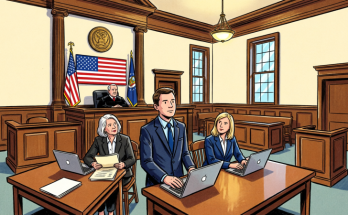
The hearing took place on a gray Tuesday.
The courthouse was full.
Neighbors occupied almost all the benches.
Some carried small banners that read:
“Justice for Don Raúl.”
“The house belongs to his son.”
The nephews arrived with three lawyers in expensive suits and leather briefcases.
I went in alone.
Well… not entirely alone.
Doña Carmen was walking to my right.
Don Miguel to my left.
And behind me, a row of familiar faces who had seen me grow up alongside Don Raúl.
The judge was a woman in her fifties, with a serious but fair expression.
He asked for silence.
And the session began.
The nephews presented their arguments first.
They spoke of “cognitive incapacity”.
From “psychological pressure”.
“Lack of free consent.”
They showed old medical certificates that said Don Raúl had “mild deterioration”.
But nothing serious.
Nothing that would invalidate a marriage.
Then it was my turn.
My lawyer —a nervous young man whom Doña Carmen had obtained through an NGO— stood up.
And he began to speak.
He showed the video that Don Raúl had recorded a week before he died.
The screen lit up.
And there he was.
Sitting in his favorite armchair.
Wearing his plaid shirt.
With her calm smile.
Looking directly at the camera.
“I, Raúl Hernández, in full possession of my faculties, declare that I married Elena because I wanted to. Because I love her.
Because she saved my life when I no longer believed it was worth living. This child on the way is my son.
My heir.
And this house… this house has always been for whoever takes care of it. Not for whoever sells it. Let no one doubt my will. Let no one doubt my love.”
The silence in the room was absolute.
I saw tears in many eyes.
I saw the nephews turn pale.
I saw the judge write something down with a serious expression.
Then came the parade of witnesses.
Doña Carmen spoke first.
She recounted how Don Raúl had paid for her husband’s operation when they had no money.
Don Miguel recounted how Don Raúl had lent him tools and taught him how to make furniture.
One after another, the stories piled up.
Like bricks building a wall.
When it was all over, the judge called for a recess.
He returned two hours later.
And he passed judgment.
“The will of Mr. Raúl Hernández is declared valid. The inheritance in favor of his son Raúl Hernández Ruiz and his mother Elena Ruiz is confirmed.
The property remains in their names in trust until the minor reaches the age of majority. The plaintiffs shall cover the court costs.”
Hammer blow.
Silence.
And then… applause.
Applause in a courtroom.
I never thought that was possible.
I left surrounded by hugs.
Of kisses.
From “I told you so” and “we did it.”
But the real moment came when I got back home.
I opened the door.
And there was the cradle.
And there was my son, waking up from his nap.
I picked him up.
I hugged him tightly.
And I whispered in his ear:
“This house is yours, my love. And no one… no one is going to take it away from you.”
That night I had dinner with the neighbors.
In Don Raúl’s courtyard.
With makeshift tables.
With soft music.
With laughter that filled the air.
And when everyone left, I was left alone on the porch.
Looking at the stars.
Thinking about him.
In the man who had given me a home.
A son.
A family.
A reason to fight.
I looked up at the sky.
And I said in a low voice:
“Thank you, Don Raúl. Thank you for choosing me.”
And somewhere, I think he smiled.
Because that house was no longer just walls and a roof.
It was love.
It was memory.
It was the future.
And I… I was finally home.
The days after the verdict were not calm, but they were different, as if the air that had previously weighed heavily on my shoulders was now blowing in my favor.
The nephews disappeared from the neighborhood as quickly as they had arrived, leaving behind only broken rumors and shifty glances.
Some neighbors confessed to me that they had received intimidating calls telling them not to appear at the trial, but none of them gave in.
That loyalty reminded me that Don Raúl’s true legacy was not the house, but the network of hands he himself had woven over the years.
I began to organize documents with a newfound calm, reviewing the trust that would protect Raúlito until he came of age.
The lawyer patiently explained each clause, making sure that no legal loopholes could be used against us in the future.
I listened attentively while holding my son, feeling that for the first time I was building something solid without fear of it being knocked down.
I decided to keep the house just as Don Raúl loved it, with the patio open to the neighbors and the long table ready for any unexpected conversation.
The afternoons were once again filled with voices, with children playing ball in front of the gate, with Doña Carmen bringing freshly baked bread.
The neighborhood seemed to breathe a sigh of relief, as if the sentence had closed a collective wound that no one wanted to admit was bleeding.
However, inside me there were still doubts that needed answers and scars that wouldn’t disappear with a blow from a sledgehammer.
I had spent months feeling judged, singled out, reduced to rumors that distorted my story and turned it into suspicion.
That’s why I made a decision that surprised even my closest neighbors.
I accepted the invitation from the journalist who had covered the case to tell my full version in a special report.
He wasn’t looking for fame or recognition.
I was looking for clarity.
I wanted my son, when he grew up and searched his name on the internet, to find something other than poisonous headlines.
On the day of the interview, I sat on the porch with Raúl in my arms, the same chair where Don Raúl used to read the newspaper every morning.
I talked about how we met, about the shared loneliness that transformed into sincere companionship, about the conscious decision to get married.
I spoke of the fear I felt when her health worsened, and of the love I saw in her eyes even on the most difficult days.
The journalist listened without interrupting, taking notes and letting the silence speak as well.
When the article was published, it was not a scandal or an attack, but a human portrait that showed nuance and dignity.
Many of the comments changed their tone.
Some even issued public apologies for having believed in incomplete versions.
I didn’t need those apologies to move on, but they showed that the truth, when told calmly, can open cracks in prejudice.
Over time, I decided to turn part of the backyard into a small community garden in honor of Don Raúl.
He always said that shared land unites more than any contract signed before a notary.
I invited the neighbors to plant tomatoes, herbs, and flowers, which we then shared among everyone.
Raúlito grew up surrounded by those hands that defended him even before he could speak.
He learned to walk among rows of lettuce and the laughter of adults who called him “the heir to the heart”.
Every anniversary of the verdict we organize a simple meal in the courtyard, not to celebrate a legal victory, but to remember that justice can also have a human face.
Sometimes, when the sun sets and the sky turns orange, I sit on the same porch and look at the living room window where Don Raúl used to greet the neighborhood.
I don’t feel sadness, but a deep gratitude for the time we shared and for the strength I found when everything seemed lost.
I understood that love is not measured by age or the opinions of others, but by the willingness to care and be cared for without calculation.
I also understood that dignity is defended not only in courts, but in the way you choose to live after the storm.
Raúlito already babbles new words every day, and when he says “mama” I feel that all the noise of the past loses importance.
The house remains the same brick and wood structure, but now it is filled with a certainty that no one can dispute.
It is a home built on memory, on proofs of love that were engraved beyond any document.
And when someone new walks by and asks who lives there, the neighbors answer without hesitation.
“Elena, the wife Don Raúl chose, lives there, along with their son, the future of this house.”
I smile every time I hear that phrase, because what others might say no longer hurts me.
I have learned that true legacy is not inherited in silence nor defended with hatred, but with consistency and courage.
And as my son grows up under this roof, I know that the battle I fought wasn’t just for a property.
It was for the right to have our story told truthfully.
The end.