Part 7
The first time my mother tried to crawl back in, she didn’t use anger.
She used urgency.
It was a Thursday afternoon, late spring, the kind of day Chicago pretends it isn’t capable of—sunlight bouncing off glass buildings, the air not trying to kill you. I was leaving a workshop at a community college when my phone rang from a blocked number.
I almost ignored it. Then something in me, that old trained reflex, nudged my thumb.
“Hello?”
Kayla, my mother said, like she was stepping into a room she still owned.
My stomach tightened automatically, but my voice stayed neutral. “What do you want?”
A pause. Then a breath that sounded practiced. “I’m in the hospital.”
There it was. The emergency button she’d installed in my brain decades ago.
“Where?” I asked, because I’m not made of stone. Because there are levels of boundary, and I was still learning which ones were walls and which ones were doors.
“Northwestern,” she said. “I’m having chest pain.”
My hands went cold. My therapist would’ve called it an activation. My body didn’t care about context. It recognized the category: Mom in danger.
“Are you alone?” I asked.
Another pause, smaller. “Savannah can’t help,” she said quickly. “You know she can’t.”
Savannah was still inside the system, still in custody, still a legal mess with a public defender and a resentful silence. My mother’s words weren’t grief. They were calculation. She was running down her options list and landing on the one that used to be automatic: me.
I closed my eyes. “Have you told the nurse you have no emergency contact?”
“What kind of question is that?” she snapped, the mask cracking. “I’m your mother.”
The sunlight suddenly felt too bright. I stepped aside near a pillar, letting a line of students flow around me.
“Kimberly,” I said, using her first name the way I’d learned to do when I needed distance, “I can’t be your emergency contact.”
Her inhale went sharp. “You’re really going to do this now?”
“I can call you an Uber,” I said calmly. “I can call the hospital and ask for a social worker to check in. But I am not taking responsibility for your life.”
Her voice turned pleading, syrupy. “Kayla, I’m scared.”
It was the closest thing to vulnerability she’d offered in years, and it hit like a punch because it almost sounded real.
I swallowed. “Then accept help from the people whose job it is to help,” I said.
“You think strangers care about me?” she spat. “You think they’ll treat me like I deserve?”
I almost laughed, not out of cruelty, but out of the sheer familiarity. Deserve. My mother used that word like a ticket she could redeem for service.
“I don’t know what you deserve,” I said. “I know what I can do without losing myself.”
Silence on her end. Then, very quietly, “So you’re abandoning me.”
I felt the old guilt try to rise, the familiar script she’d always used to turn my boundaries into crimes. But guilt is only effective when it lands on a person still willing to carry it.
“I’m not abandoning you,” I said. “I’m not rescuing you.”
Her voice snapped back into anger, relieved to have solid ground again. “After everything I did for you—”
I cut in, gentle but firm. “You didn’t do everything for me. You did what was required, and then you took what wasn’t yours.”
She went silent.
I could hear hospital noise faintly behind her: distant announcements, a rolling cart, someone laughing. Not the soundtrack of a dramatic medical crisis.
My eyes narrowed. “Are you actually in the hospital?” I asked.
Her breath hitched, then she surged into offense. “How dare you—”
That was my answer.
I exhaled slowly. “I’m going to hang up now,” I said. “If you’re in danger, call 911. If you’re lonely, call a friend. If you’re looking for access to me, that door is closed.”
“Kayla—” she started, but I ended the call.
My hands were shaking when I lowered the phone.
Not because I’d done something wrong.
Because for the first time, I’d stepped over the tripwire and the explosion didn’t happen the way my nervous system had always promised it would.
I didn’t collapse. The sky didn’t fall. My mother didn’t suddenly become kinder because I saved her.
Life kept moving.
I got in my car and sat for a minute with both hands on the steering wheel, breathing in a slow rhythm I’d learned in therapy.
Then my phone buzzed.
A text from Vanessa: FYI, your mom called my office. Left a message. Sounded like she wanted you to withdraw your statement in Savannah’s case. I didn’t respond.
My chest tightened, then loosened.
It wasn’t a hospital call.
It was leverage.
She wasn’t sick. She was threatened.
I stared out at the street, watching people cross at the light, normal and unburdened by my family’s drama. Then I opened my notes app and did something I’d started doing after the voicemail incident: I documented.
Date. Time. Content. Source number blocked. Claimed medical emergency. Refused practical help. Shifted to guilt language. Likely manipulation attempt.
It felt almost absurd to audit a phone call.
But that was the point. Audits make patterns visible.
And once patterns are visible, they lose power.
That night, I told my therapist what happened. She listened, then asked, “What did you feel when you hung up?”
I thought for a moment.
“Grief,” I admitted. “Not for her. For the version of her I keep hoping exists.”
My therapist nodded. “And what else?”
I surprised myself with the answer.
“Pride,” I said quietly. “Because I didn’t abandon myself.”
When I got home, I made dinner and ate it on my couch with the window cracked open. The city noise drifted in. A car horn. A dog barking. Someone laughing on the sidewalk.
Ordinary life.
I checked my credit monitoring app before bed, a habit now, and saw nothing new. No alerts. No accounts opened. No fresh damage.
I slept.
In the morning, there was one more voicemail from my mother, left at 2:11 a.m.
This time she didn’t pretend to be in danger.
She just sounded furious.
You’ll regret this.
I listened once, deleted it, and went to work.
Part 8
If my mother couldn’t get me back through guilt, she tried through reputation.
The first whisper reached me through a workshop attendee, a middle-aged man who stayed after class while others packed up their pamphlets.
“My cousin said something weird,” he told me, shifting awkwardly. “She said you, uh… you got your sister arrested on purpose. Like you set her up.”
I blinked once. “Did she say how?”
He shrugged helplessly. “Just… family drama stuff. You know how people talk.”
I did know. I’d lived inside talk my whole life.
That night, I searched my name online, something I avoided because it always felt like staring into a distorted mirror. Most results were bland: LinkedIn, workshops, a couple local articles about Perimeter Chicago. But buried on the third page of results was a blog post with my name in the title, written like a moral warning.
It claimed I was exploiting “vulnerable families” for money. It implied my nonprofit was a scam. It suggested I’d manipulated legal processes to “punish” my mother and sister.
It didn’t have evidence.
It didn’t need it.
The kind of people who believe those stories don’t require proof. They require a villain.
I forwarded the link to Sarah Jenkins and Vanessa.
Sarah replied first: Domain registered two weeks ago. Privacy shield. Hosting tied to a cheap provider. Amateur attempt.
Vanessa replied a minute later: Defamation. We can pursue takedown and possibly damages if we identify the source.
I stared at the post, then at the comments below it—small but nasty. People who’d never met me calling me cold, greedy, evil. It shouldn’t have mattered.
But it did, because this wasn’t just about my feelings. It was about credibility. And credibility was oxygen for Perimeter Chicago.
The next morning, I called an emergency meeting: Sarah, our IT lead, and Vanessa.
“We treat this like any threat,” I said, voice steady. “We don’t spiral. We assess.”
IT pulled logs. Sarah traced money. Vanessa drafted a cease-and-desist. Within hours, we had enough to form a hypothesis.
The blog wasn’t organic.
It was seeded.
The first shares came from a cluster of accounts created within days of each other, all posting in the same cadence. The same kind of language. Like someone had written a script and handed it out.
A smear campaign doesn’t need sophistication when the target is emotionally exposed. It just needs volume.
And volume was something my mother understood.
Sarah leaned back in her chair. “Want to know the funniest part?” she said.
“What?” I asked.
“The donation button on that blog,” Sarah said. “It’s linked to a payment account. Whoever built it is trying to profit off the outrage.”
My jaw tightened. “They’re monetizing the lie.”
“Yep,” Sarah said. “Which means we can subpoena payment records. People get sloppy when money is involved.”
I thought of my mother’s voice on the voicemail: We’re moving on without you.
She hadn’t moved on. She’d just changed tactics.
Vanessa’s eyes were hard. “If it’s her, do you want to pursue it?” she asked.
I didn’t answer immediately. Not because I was unsure, but because I felt the old familiar pull: the desire to keep things quiet, to avoid rocking the boat, to keep the peace.
Peace for who?
I looked at the team in front of me—people who weren’t related to me, but who showed up reliably, who didn’t demand pieces of me as payment for love.
“We pursue,” I said. “Not for revenge. For protection.”
Vanessa nodded once, satisfied.
Sarah moved fast. Within days, we had the payment processor’s compliance contact. Vanessa sent formal legal requests. Our IT lead reported the blog for impersonation and misinformation through every channel available.
Two weeks later, the privacy shield cracked.
The payment account was registered to Kimberly’s email.
Not the one she used publicly, but the one she’d used for utility portals back when I still paid her bills.
The one I’d updated those accounts to.
I stared at the evidence and felt something in me go very still.
She hadn’t learned.
She hadn’t grown.
She’d simply found a new way to try to extract value from me: if she couldn’t take my money directly, she’d try to sabotage the systems I built without her.
Vanessa filed.
The blog vanished within forty-eight hours after the payment processor received the fraud complaint. The hosting company pulled it. The domain went dark.
Kimberly sent me a message from a new number the day after it disappeared.
You really want to destroy me.
I read it once and didn’t respond.
Because the truth was simple:
She kept trying to destroy me first.
All I did was stop being easy.
That night, Megan—one of my program partners who’d become a friend—met me for dinner. She listened as I explained the smear, the evidence, the takedown.
When I finished, she asked, “Do you feel like you have to win against her?”
I thought for a moment. “No,” I said. “I feel like I have to keep her from touching my life.”
Megan nodded. “That’s not winning,” she said. “That’s surviving.”
When I got home, I checked my locks, my accounts, my monitoring alerts, and then I did something new.
I turned my phone off.
I didn’t need to stay hypervigilant forever.
A secure system doesn’t require panic. It requires maintenance.
My mother could keep trying to breach the perimeter.
But the perimeter held.
And this time, it wasn’t held up by my exhaustion.
Part 9
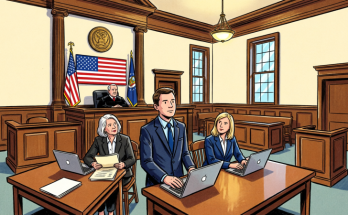
Savannah’s sentencing happened on a rainy Monday that turned the city into a smear of gray. I didn’t attend in person. I watched the livestream from Vanessa’s office, hands wrapped around a paper cup of coffee that tasted like burnt patience.
Savannah stood at the podium in jail-issued clothing, her hair pulled back tight. She looked smaller than she ever allowed herself to look when she was playing business owner. But when she spoke, I recognized the same impulse: control the narrative.
“I made mistakes,” Savannah said, voice trembling in a way that might have been real or might have been performance. “I never meant to hurt anyone.”
Never meant to hurt anyone. Like harm is an accident that floats in from nowhere.
The judge asked, “Did you forge your sister’s signature on multiple financial documents?”
Savannah hesitated too long. “Yes,” she said finally.
“Did you obtain a life insurance policy in her name naming yourself as beneficiary?”
Savannah’s mouth tightened. “Yes.”
The courtroom went quiet.
The judge looked at her the way judges look at people who confuse personal entitlement with legal permission. “Do you understand what that implies?” he asked.
Savannah stared down. “I… I wasn’t thinking,” she whispered.
The judge’s voice stayed calm. “That’s the problem,” he said. “You were thinking. You were just thinking only about yourself.”
Vanessa leaned toward me, murmuring, “Good judge.”
The sentence wasn’t the maximum, but it was real. Prison time. Probation afterward. Restitution orders. Mandatory financial counseling that Savannah would probably hate more than incarceration because it required humility.
When the livestream ended, Vanessa paused it and looked at me. “Do you want to submit a final statement for the record?” she asked.
I’d already submitted one. But she meant something else: closure.
I stared at the dark screen. “I don’t need to speak again,” I said.
Vanessa nodded. “That’s allowed.”
Later that week, I got a letter from Savannah. It arrived through Vanessa, who screened my mail now like she was protecting a VIP, which was both ridiculous and deeply comforting.
The letter was longer than her previous ones. The handwriting was shaky.
Kayla, I’m writing because I don’t know what else to do. I keep thinking about the condo and the salon and how I thought it was all mine. Like you were just… there. Like you couldn’t say no. I thought Mom was right, that you’d always come back because you need us. Now I realize you didn’t need us. We needed you.
I paused, the words landing heavier than I expected.
Savannah continued:
I want to blame Mom, but I also know I made choices. I made a lot of them. I’m sorry. Not because I got caught. Because I finally see what I did.
I didn’t know if I believed the finally. But I did believe the sentence that followed.
I don’t know who I am if I’m not taking from you.
That one felt real because it was ugly.
I sat with the letter for a long time, then did something I never used to do: I let myself feel sad without turning it into action.
Sadness didn’t require a fix. It required space.
I wrote Savannah a response, short and plain.
I hope you use your time to figure out who you are without using people. I am not available to rebuild a relationship right now. Do not contact me directly. If you need resources, ask Vanessa.
I sent it through Vanessa.
Boundaries aren’t cruel. They’re clear.
A month later, my mother tried one last angle.
She sent a voicemail—new number, familiar cadence—claiming Savannah was “suicidal” and that it would be “on my conscience” if something happened.
My stomach dropped for half a second before my brain caught up.
Because I’d been trained to interpret my mother’s voice as truth.
Now I knew it was leverage until proven otherwise.
I didn’t call my mother.
I called the prison mental health unit directly and reported the message, providing Savannah’s inmate ID and requesting a wellness check.
I forwarded the voicemail to Vanessa.
Within an hour, I got confirmation: Savannah was evaluated, stable, and placed on additional monitoring as a precaution.
Vanessa texted me: You handled that perfectly.
Perfectly. The word felt strange. I wasn’t trying to be perfect. I was trying to be safe.
That night, I stood in my kitchen and watched rain streak down the window, thinking about how different my life looked now.
Before, any crisis meant my mother got access.
Now, crisis meant procedure.
Not because I was cold.
Because procedure protects everyone, including the person being manipulated.
My mother wanted me to run back into the burning building.
I called the fire department instead.
And the building didn’t get to claim me anymore.
Part 10
The real bankruptcy wasn’t the condo.
It wasn’t the salon liquidation.
It wasn’t even Kimberly’s dwindling bank account after she ran out of people to guilt.
The real bankruptcy was emotional.
It was the moment my mother realized her old currency didn’t spend.
Because my guilt—my constant, automatic guilt—had been her main asset.
And I’d devalued it.
It happened quietly, not in a courtroom, not in a dramatic confrontation, but in an email she sent six months after Savannah’s sentencing.
Subject line: Final.
The body was three lines.
I hope you’re happy. I hope your new life is worth what you did to us. Don’t contact me again.
I stared at it for a long time, then laughed softly, once, because it was almost funny.
She was still trying to kick me out.
As if she hadn’t already done that via voicemail years ago.
As if I hadn’t built a whole life outside her perimeter.
I didn’t respond.
I archived it under a folder called Closed.
Not as a joke. As an instruction to myself.
That summer, Perimeter Chicago got a grant from a local foundation. Not huge, but enough to expand our workshops into high schools and community colleges. We started teaching kids the basics: how credit works, what identity theft looks like, how to recognize financial grooming even when it comes wrapped in affection.
I watched sixteen-year-olds learn to freeze their credit and felt something in my chest ease. If I’d known at sixteen what I knew now, my mother’s grip would’ve loosened years earlier.
After one workshop, a teenage girl stayed behind and said, “My mom uses my paycheck for rent. If I don’t give it, she says I don’t love her.”
I looked at her and felt the old story tug.
Then I said, “Love isn’t measured in transfers.”
The girl nodded slowly like she was trying the sentence on for size.
That’s what I wanted: sentences people could live inside.
My life filled up in other ways too.
I made friends I didn’t have to fund. I dated a man named Elliot who worked in public health and didn’t flinch when I told him my family story. He didn’t try to fix it. He just said, “That’s not love,” and made me pasta like it was the most normal thing in the world to feed someone who’d been starving for years.
On a crisp October night, Elliot and I walked along the river, city lights glittering, and he asked, “Do you ever miss them?”
I thought about it honestly.
“I miss the idea,” I said. “Not the reality.”
He nodded like he understood, and for the first time, I felt no shame in admitting it.
One year after the voicemail anniversary, I hosted a small dinner in my new place. Not a celebration, exactly. More like a marker.
Vanessa came. Sarah came. Megan came. Elliot came. People who weren’t related to me but showed up anyway.
Someone brought cheap wine. Someone brought brownies. We ate crowded around my small dining table, laughing about dumb things, and at one point Vanessa raised her glass and said, “To Kayla, who finally stopped paying for the privilege of being mistreated.”
Everyone laughed, and I felt my eyes sting, but I didn’t look away.
Because this time, the emotion didn’t feel like weakness.
It felt like being seen.
After dinner, when everyone left and the apartment quieted, I stood alone in my kitchen and listened.
Not to an old voicemail.
Not to my mother’s voice…….