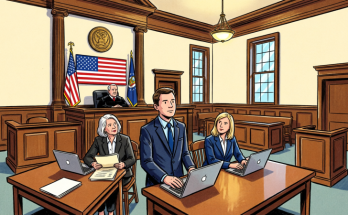
Kimberly stepped forward, hands up as if she could physically push the truth back into my apartment. “Kayla, she’s your sister,” she cried. “Do you want her to go to prison?”
I looked at her, and something in me finally snapped cleanly in half—not rage, not heartbreak, but illusion.
My mother wasn’t here to apologize. She was here to negotiate damage control.
She wasn’t protecting me.
She was protecting the person she loved more at the expense of the person she used most.
I reached for the manila envelope on my entryway table and held it out.
Kimberly snatched it like it was a lifeline, then froze as she flipped through the pages.
Loan applications with my Social Security number.
The insurance policy.
Screenshots of Savannah’s texts demanding money.
Vanessa’s summary of the case.
Kimberly’s hands shook. She looked up at me with tears spilling. “You’re doing this to us,” she whispered, like I was the criminal.
“No,” I said softly. “You did it. You just didn’t think I’d stop you.”
Her face twisted. “We’re going to lose the condo,” she choked out. “The lender sent a final notice. If you don’t sign refinance papers today—”
I shook my head once. “I’m not signing anything.”
Kimberly’s voice went sharp. “Then you’re throwing me out on the street!”
I held her gaze. “You kicked me out via voicemail,” I said. “Remember?”
She flinched like the words hit her physically.
Then I delivered the piece she wasn’t ready for.
“Yesterday,” I said, “I sold my fifty percent interest in the condo to a firm that specializes in distressed equity and contested assets.”
Kimberly blinked. “You—what?”
“They’ve already filed a partition action,” I said evenly. “They’re forcing a sale. Their representatives will serve you within forty-eight hours.”
The tears stopped mid-fall. Terror replaced them, clean and cold.
Kimberly whispered, “You’re a monster.”
I tilted my head slightly. “You’re the one who taught me access is conditional,” I said. “You’re the one who taught me love comes with a price.”
I stepped back and gestured to the hall. “You should pack,” I said. “Whatever you can carry.”
Kimberly stared at me as if she couldn’t process a world where I didn’t collapse under her voice.
Then she turned and stumbled down the hallway.
I closed my door. I locked it.
And for the first time in my life, the silence that followed didn’t feel like abandonment.
It felt like beginning.
Part 4
Savannah was arrested three days later.
Not in the dramatic way she would’ve imagined—no cinematic chase, no screaming confession. Just two officers walking into the Blessed Salon during a weekday rush, asking for her by name while high-end clients sat under foils and pretended not to listen.
Savannah had built her brand on being untouchable. Glossy mirrors, gold-leaf accents, imported espresso, Instagram quotes about manifesting abundance.
Handcuffs don’t care about branding.
Kimberly called me from an unknown number the moment it happened. I didn’t answer. Vanessa texted me instead: She’s in custody. Processing now.
My stomach tightened anyway, not with regret, but with the strange disorientation of seeing a consequence finally land after years of threats that never materialized.
Vanessa handled everything like the professional she was—coordinating with detectives, submitting documents, ensuring my statements were precise. She reminded me, more than once, that I didn’t have to do emotional labor for people who’d harmed me.
“Let the system do what it’s built to do,” she said.
The system did.
Savannah was charged with identity theft, multiple counts of loan fraud, and first-degree insurance fraud. The insurance piece carried real weight. Judges don’t love crimes that treat death like a business plan.
Without my credit line propping it up, the salon collapsed fast. Vendors demanded payment upfront. The landlord refused to negotiate. A predatory lender filed suit for default. Within a month, Blessed Salon was in bankruptcy proceedings, its fixtures listed like inventory: mirrors, chairs, the espresso machine, all of it reduced to numbers in a liquidation spreadsheet.
Kimberly tried to blame me publicly.
She posted a tearful video on Facebook about betrayal, about how she’d “lost everything because one daughter turned cold.” She framed Savannah as a misguided girl who made “some paperwork mistakes” and framed herself as an innocent mother caught in the crossfire.
The comments filled with sympathy from people who didn’t know her the way I did.
I didn’t respond.
I didn’t correct the record online. Vanessa advised against it anyway. “Courtroom, not comment section,” she said. “Let evidence speak.”
The condo fell next.
The distressed equity firm I sold to moved efficiently. They didn’t care about family drama. They cared about asset recovery. They filed motions. They set hearings. They forced timelines.
Kimberly’s high-rise building didn’t allow pity to replace payment. Condo fees piled up. Late notices stacked. The lender started foreclosure steps when Kimberly couldn’t cover the mortgage alone.
She asked for help from the same extended family that had spammed my phone with guilt texts.
They offered prayers and vague encouragement and absolutely no money.
Because moral judgment is cheap. Rent is not.
The forced sale happened in less than six months. The condo went for less than it would’ve if we’d listed it properly, because distressed sales don’t attract dreamers. They attract opportunists.
Kimberly walked away with nothing but a moving truck and a rage she couldn’t deposit anywhere.
She ended up in a small rental on the outskirts of the city, the kind of place she used to sneer at when she drove past. No lake view. No doorman. No marble lobby. Just a mailbox that jammed in winter and neighbors who didn’t care who she used to pretend to be.
The irony didn’t feel satisfying the way revenge stories promise.
It felt… inevitable.
Because the lifestyle she’d built wasn’t a life.
It was a consumption pattern funded by my compliance.
Without my compliance, there was nothing underneath it.
Savannah sat in county jail while her case moved. She tried to contact me through a cousin. Then through Kimberly. Then, finally, through a letter.
It arrived in my mailbox in sloppy handwriting.
Kayla, I’m sorry. Mom says you’re doing this because you hate us. I don’t think you hate us. I think you don’t understand how hard it is. I only did what I did because I needed to. Please call Vanessa and fix it.
It wasn’t an apology.
It was a request for rescue.
Savannah still believed I existed to fix her messes.
I held the letter for a long time, then handed it to Vanessa without responding.
At Savannah’s first hearing, Kimberly sat behind her, crying loudly enough to draw looks. She wanted attention. She wanted the room to witness her suffering.
Savannah looked smaller at the defense table, hair pulled back, no makeup, no filters. But when her eyes flicked around the room, they weren’t searching for me with remorse.
They were searching for me with expectation.
Like I’d appear, sigh dramatically, and pay the cost to make it all go away.
I didn’t appear.
Vanessa stood in the aisle afterward and told me, “You’re doing the right thing.”
The words should’ve comforted me. Instead they made me realize how long I’d lived without anyone saying that.
In the months after the condo sale, I had to learn something harder than cutting off money.
I had to learn how to exist without being a pillar.
Because when your entire identity has been built around being needed, freedom can feel like emptiness at first.
I started therapy. Not because I was falling apart, but because I didn’t want to rebuild my life on the same wiring that got me exploited.
My therapist asked, early on, “When did you start believing love had to be earned through sacrifice?”
I laughed once, bitter. “I don’t remember a time I didn’t believe it.”
We worked through it anyway, slowly, like rewiring a house.
I began sleeping through the night without my phone buzzing in my hand. I bought groceries without calculating how many transfers I’d have to make later. I took a weekend trip to Milwaukee just because I wanted to see the lake from a different angle.
Every small choice felt like reclaiming a piece of myself.
And then, because I apparently couldn’t exist without building something, I did what William would’ve called patching a hole.
I started a consulting group.
Small at first. Just me and a couple of colleagues who understood the rise of digital identity exploitation inside families. We helped people freeze their credit. We taught them how to recognize financial grooming. We worked with elderly clients whose own children had “borrowed” their identities.
We didn’t shame victims. We gave them procedures. Tools. Boundaries.
We turned survival into a system.
The first workshop I taught was in a community center with folding chairs and bad coffee. Only twelve people showed up. Half of them looked exhausted, like the word family had been used as a weapon against them too.
I told them, “Setting a boundary isn’t war. It’s truth.”
A woman in the front row started crying quietly.
Afterward she hugged me and whispered, “Thank you for saying it out loud.”
That was the moment I realized the best form of justice wasn’t watching my family collapse.
It was using the wreckage to build a warning sign for other people.
Part 5
Savannah took a plea deal.
Her attorney tried to argue she was overwhelmed, misled, pressured. He implied I was a cold sister who refused to understand “family dynamics.” He tried to make fraud sound like a misunderstanding.
The prosecutor didn’t buy it.
Neither did the judge.
In court, Savannah stood and read a statement that sounded like something Kimberly had coached: vague regret, careful wording, lots of passive voice. Mistakes were made. Lines were blurred. She never once said, I forged your signature because I wanted to profit from your death.
She avoided that sentence the way people avoid looking directly at the sun.
Savannah was sentenced to prison time, not decades, but enough to cost her the years she’d treated like disposable. She would also owe restitution for the fraudulent loans, though everyone in the courtroom knew restitution is often a fantasy when the money is already gone.
Kimberly sobbed in the gallery and glared at me whenever she thought I might be there.
I wasn’t.
I had submitted my victim impact statement through Vanessa, written in the same language I used at work: clear, factual, surgical.
I stated the financial damages. The reputational risk. The emotional impact. I described the life insurance policy as what it was: a hedge against my existence.
I didn’t call Savannah evil. I didn’t need to. The evidence did that work.
Kimberly tried to contact me after sentencing. She left voicemails from new numbers, each one a different performance: rage, grief, bargaining, spiritual manipulation.
God will judge you, Kayla.
You’ve ruined your sister’s life.
You were always selfish.
Then, finally, a softer one.
I miss you.
That one almost caught me, not because I believed her, but because the little girl inside me still wanted a mother who could miss her without needing something.
My therapist helped me name what I was grieving.
Not Kimberly.
The mother I kept hoping would show up.
Once I named that, it was easier to let go.
Meanwhile, my consulting group grew. Word spread quietly, the way practical help spreads. We partnered with local nonprofits, then banks, then a few employers who wanted to offer identity security workshops as part of benefits.
I hired two people: a former fraud investigator and an IT specialist who’d helped build secure systems for hospitals. We built a process for victims of family-based financial exploitation: documentation checklists, reporting steps, credit repair support, legal referrals.
We never promised easy healing. We promised structure.
Structure is what kept people from drowning.
One night, about a year after the voicemail, I opened my phone and found the recording still saved. Thirty-one seconds. My mother’s voice, the moment she tried to erase me.
I listened once, then set the phone down.
The sound didn’t hurt the same way anymore.
It sounded smaller now, like a woman trying to control a world that had moved beyond her reach.
I realized that voicemail had done something she never intended.
It had broken the spell.
It forced me to see, in one clean cut, what I’d been refusing to admit: I wasn’t loved for who I was. I was valued for what I provided.
Once I saw that, I couldn’t unsee it.
Two years after Savannah’s arrest, Kimberly tried one last move.
She filed a civil claim against me, alleging I’d “intentionally inflicted emotional distress” by triggering Savannah’s prosecution and forcing the condo sale.
Vanessa laughed when she read it, not because it was funny, but because it was so predictable.
“She’s still trying to make consequences your fault,” Vanessa said.
We responded with a motion to dismiss and attached, as exhibits, Kimberly’s own voicemail and the court records from Savannah’s fraud case.
The claim vanished quickly.
Kimberly didn’t have the money to keep fighting, and the court wasn’t interested in rewarding someone for enabling felony fraud.
After that, the silence became real.
No calls.
No new numbers.
No distant relatives texting me Bible verses.
Just my life, finally belonging to me.
On a crisp fall morning, I walked along the lakefront alone, hands in my coat pockets, watching waves slap against the concrete like the city was reminding itself it was still here. The wind smelled like cold water and metal.
I thought about the condo I used to fund, the one my mother had used as a stage set.
I didn’t miss it.
I missed the years I’d spent believing I had to buy my place in someone’s life.
But I didn’t miss the role.
I stopped at a bench and watched joggers pass, couples walking dogs, tourists taking photos. Ordinary life. Unbothered by my family’s drama.
And that’s when it hit me: my peace didn’t need witnesses.
I didn’t need my mother to understand.
I didn’t need Savannah to apologize correctly.
I didn’t need extended family to validate my choice.
I just needed to keep choosing myself, day after day, until it wasn’t a choice anymore.
Until it was normal.
Part 6
Three years after the voicemail, I bought my own place.
Not lakefront luxury. Not a status symbol. A two-bedroom condo in a brick building with creaky stairs and neighbors who said hello without needing anything. It had sunlight in the morning and a small extra room I turned into an office, not because I wanted to work nonstop, but because I finally had a space that was mine, protected by my own decisions.
On move-in day, Vanessa showed up with a bottle of cheap champagne and two plastic cups.
“This is the part where you celebrate,” she said, handing me a cup.
I laughed. “I don’t know how.”
“You learn,” she said.
I took a sip and felt the bubbles sting my tongue. It tasted like new habits.
My consulting group expanded into a nonprofit initiative we called Perimeter Chicago, a name that made my coworkers smile because they knew my obsession with security metaphors. We focused on financial and digital safety education, especially for people who’d been exploited by someone they trusted.
Trust-based fraud is the cruelest kind because it doesn’t just steal money. It steals your ability to believe your own instincts.
We helped seniors whose kids emptied their accounts “to manage things.” We helped young adults whose partners opened credit cards in their names. We helped people who were told, for years, that saying no was selfish.
We taught them that boundaries weren’t cruelty.
Boundaries were survival.
Occasionally, someone would ask about my background, and I’d give a short version: family issues, identity theft, learned the hard way. I didn’t tell them I’d audited my own mother into bankruptcy.
Not because I was ashamed.
Because the point wasn’t my revenge story.
The point was the system that let exploitation hide inside the word family.
One evening, a woman stayed after a workshop and said, “My mom keeps telling me I owe her because she raised me.”
I looked at her tired eyes and said, “Raising you wasn’t a loan. It was her responsibility.”
The woman started crying, quietly, like she’d been waiting years to hear someone say it.
In those moments, I felt William’s influence even though he wasn’t part of this story. I felt the same principle: systems fail, so you patch holes. You become what you needed.
Savannah wrote me again from prison.
This time the letter was shorter.
Kayla, I’m sorry. I know you won’t believe me. I don’t blame you. I thought you’d always fix things. I didn’t realize I was destroying you.
It wasn’t perfect. It wasn’t enough to rebuild trust. But it was the first time she’d written something that sounded like awareness instead of demand.
I sat with it for a while, then filed it away.
Forgiveness, for me, wasn’t letting her back in.
It was letting go of the fantasy that she’d ever become someone safe.
Kimberly didn’t write.
I heard about her through fragments—an aunt mentioning she’d moved again, a cousin saying she was working retail now, complaining about customers the way she used to complain about me. She apparently told people she had “no idea” why her daughters abandoned her.
The story stayed the same, because if she changed it, she’d have to change herself.
One night, after a long day, I found myself scrolling my phone and landing on the saved voicemail. Still there, like a scar you keep touching to make sure it’s real.
I played it.
You’re out. Don’t come back. We’re moving on without you.
I listened without flinching.
Then I did something simple and irreversible.
I deleted it.
Not because I wanted to erase what happened.
Because I didn’t need it as proof anymore.
The proof was everywhere: in my peaceful apartment, in my clean credit report, in the clients who left workshops standing taller, in the fact that my life no longer revolved around anticipating my mother’s next demand.
Deleting the voicemail wasn’t forgiveness for her.
It was freedom for me.
I went to bed that night without checking my phone twice. I slept through until morning. When I woke up, the city light spilled across my bedroom wall, and for a second I just lay there, breathing, feeling the quiet.
It wasn’t the terrifying quiet of being unwanted.
It was the quiet of a perimeter finally secure.
I made coffee and stood by my window watching people hurry down the sidewalk, each of them carrying their own stories like invisible bags.
I thought about the younger version of me who believed love meant being useful.
Then I thought about the woman I was now—someone who understood love isn’t proven by what you give away until there’s nothing left.
Love is proven by what people respect in you.
Your time. Your safety. Your boundaries. Your humanity.
My mother kicked me out via voicemail because she thought it would break me into obedience.
Instead, it broke the lock.
And once the lock broke, I walked out of the debt trap she’d built around my life and into something I’d never known how to claim before.
A life where I was not a resource.
A life where I was simply Kayla.
And for the first time, that was more than enough…….