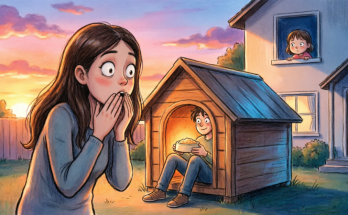
Mrs. Greene said it the way people say things when they don’t realize they’re pulling a thread.
It was a clear Massachusetts morning, the kind that smelled faintly of fallen leaves and cold sunshine. Early fall had arrived quietly, brushing the edges of lawns and sidewalks with gold. In neighborhoods like ours—rows of neat houses with trimmed hedges and flags on porches—people liked to believe nothing truly bad happened.
Everything looked orderly.
Predictable.
Safe.
Mrs. Greene stood at the mailbox beside mine, squinting at a coupon flyer like it had personally offended her.
Her little white terrier sniffed around the base of my hydrangeas, snorting softly as if investigating a crime scene.
“Oh,” she said suddenly, almost absentmindedly, “I saw Lily walking home yesterday.”
I blinked, smiling automatically.
“From school?”
Mrs. Greene shrugged, casual.
“Looked like it. Around… oh, maybe eleven? Or noon. I remember because I was bringing the recycling out and thought, Is there a half day?”
Her tone stayed light. Harmless.
But something inside my chest tightened as if it had heard danger before my mind wanted to name it.
Lily was thirteen.
Middle school.
There were no half days scheduled that Wednesday. I had checked the school calendar just two days earlier while planning a dentist appointment.
And even if there had been, Lily would’ve told me.
She told me everything.
At least that was the story I had always believed.
“That’s strange,” I said, forcing a small laugh that sounded normal enough for Mrs. Greene. “Maybe she had a nurse appointment.”
“Could be!” Mrs. Greene said cheerfully. “Kids and their schedules these days. Anyway, tell her I said hi.”
She waved and shuffled back toward her porch, the little terrier trotting behind her like a furry assistant.
I stayed by the mailbox longer than necessary.
The metal door hung open in my hand, unmoving.
My thoughts drifted to Lily’s face.
Open.
Soft.
Earnest.
The way she still leaned into hugs even though she was technically old enough to pretend she didn’t need them anymore.
The way she blushed when teachers praised her in class.
The way she said “Mom, it’s fine” with calm maturity that made adults compliment me.
“You’ve raised such a good kid,” they always said.
Since the divorce, it had been just the two of us.
For years.
Our routines were small but steady—Saturday pancakes, evening walks, shared grocery lists on the fridge.
In a town where neighbors waved from porches and PTA meetings served lemon bars, safety felt like a default setting.
I had trusted that feeling.
Trusted her.
Trusted our quiet life.
And now one casual sentence had shifted the floor just enough to make me notice the tilt.
When Lily came home that afternoon, I watched her more closely than usual.
Not suspiciously.
At least that’s what I told myself.
Just attentively.
The way a mother watches for a fever or a limp.
The way you look for tiny changes that might mean nothing—or everything.
She walked through the front door and kicked off her sneakers.
“Hey, Mom!” she called.
Her voice sounded normal.
Her face looked normal too—until I noticed the faint shadow under her eyes.
A tiredness that didn’t look like stayed up too late reading.
Something heavier.
“How was school?” I asked lightly.
“Fine,” Lily said easily, heading to the kitchen.
She opened the fridge and stared inside for a second like she couldn’t decide what she wanted.
“We had that math quiz today. I think I did good.”
“Anything else?” I asked.
She poured herself a glass of water and drank it fast.
Too fast.
Like someone who had been thirsty for a while.
“Not really,” she said. “Just school stuff.”
Her shoulders were slightly hunched.
Not dramatically.
Just enough to suggest she was holding something in.
“Mrs. Greene saw you walking home yesterday,” I said casually, like the thought had just occurred to me.
Lily didn’t freeze.
That’s what scared me.
She didn’t flinch.
She didn’t stumble.
She simply turned and smiled.
Soft.
Practiced.
Almost too smooth.
“Oh,” she said with a light laugh. “Yeah. I had to come home for something. I forgot my science project, remember? Ms. Patel said I could grab it.”
My stomach tightened.
Because it made sense.
Just enough sense to be believable.
“Oh,” I said slowly. “I didn’t know she allowed that.”
Lily shrugged.
“She did. It’s fine.”
There it was again.
That phrase she used whenever she wanted a conversation to end.
It’s fine.
I looked into her eyes, searching.
“Are you okay?” I asked gently.
Her smile stayed in place, but her gaze slipped away for half a second.
“I’m okay,” she said. “Why wouldn’t I be?”
I forced a small laugh.
“Just checking.”
She came over and kissed my cheek, quick and affectionate.
“I’m good, Mom,” she whispered. “Promise.”
That night I couldn’t sleep.
The house made its quiet nighttime noises.
Floorboards settling.
The refrigerator humming.
A car passing distantly outside.
My mind replayed small details I had ignored before.
Lily eating quickly lately.
The quietness at dinner.
The tired eyes.
The forced smiles.
I thought about something else too.
For years I had told myself:
Lily is my anchor.
Lily is steady.
Lily is safe.
But anchors can also be heavy.
And sometimes children carry weight silently because they believe that’s what love looks like.
At 2 a.m., I stood outside Lily’s bedroom door.
The hallway was dim except for the thin stripe of warm light glowing under her door from her nightlight.
I rested my hand on the wood.
Not opening it.
Just listening.
Silence.
And something inside me whispered a truth I didn’t want to say out loud:
If Lily was skipping school, it wasn’t because she was reckless.
It was because she thought she had to.
The next morning, I played my role.
Breakfast.
Lunch packed.
Casual conversation.
Lily answered easily, like she had rehearsed every line.
We left the house together.
At the corner, she waved and walked toward the bus stop.
I drove away.
Two streets down, I pulled over.
My hands trembled slightly on the steering wheel.
Then I circled back.
I parked a block away and walked home through the backyard gate.
My heart pounded so loudly it felt like the whole street could hear it.
Inside, the house was silent.
Too silent.
I slipped off my shoes and moved quietly down the hallway.
Lily’s bedroom door stood slightly open.
Her bed was perfectly made.
Her backpack was gone.
Everything looked normal.
But instinct is rarely loud.
It doesn’t scream.
It insists.
I knelt down and looked under the bed.
Dust bunnies.
A missing sock.
An old shoebox of childhood treasures.
And enough empty space for a grown woman to hide if she was desperate enough.
I swallowed.
Then I did something I wasn’t proud of.
But I did it anyway.
I lowered myself to the floor and slid under the bed.
The carpet smelled faintly of detergent.
The darkness felt strangely childish—like playing hide-and-seek.
Except my heart was not playing.
Minutes passed.
The clock on Lily’s dresser ticked steadily.
Then the front door opened.
Footsteps entered.
More than one set.
My pulse spiked.
Then Lily’s voice.
Soft.
Familiar.
“Okay,” she whispered. “Quick. Come in.”
Children’s voices followed.
Whispered.
Shaky.
“Is your mom home?” one asked nervously.
“No,” Lily whispered quickly. “She’s at work. It’s okay. You can stay until lunch.”
From beneath the bed, my world tilted.
Backpacks dropped.
Chairs shifted.
And then a trembling voice said:
“He called me stupid. In front of everyone.”
Another voice added quietly, “She took my lunch and threw it away.”
A third voice whispered, “If I tell my parents they’ll say I’m being dramatic.”
Lily spoke gently.
“You’re not stupid,” she said. “None of you are. You’re just stuck around mean people.”
Someone sniffled.
“Here,” Lily added softly. “Sit. Drink water. You can breathe here.”
Tears filled my eyes.
She hadn’t been skipping school for herself.
She had been creating a refuge.
Inside my home.
For children who felt like they had nowhere else to go.
And then Lily said something that broke my heart completely.
“I didn’t tell my mom,” she whispered, guilt in her voice, “because she fought so hard for me before.”
A child asked softly, “When?”
“Fourth grade,” Lily said. “When those girls were mean.”
My chest tightened.
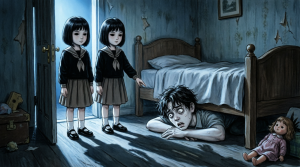
I remembered that year.
The meetings.
The emails.
The exhaustion.
“She was so tired,” Lily continued quietly. “I don’t want to make her tired again.”
Under the bed, tears slid silently down my cheeks.
Not betrayal.
Pride.
And heartbreak.
Because my daughter had been carrying something she never should have had to carry.
And I had mistaken that burden for maturity.
I took a slow breath.
Then another.
And I made a decision.
I would not let her carry this alone.
The meeting at my dining table ended close to midnight.
Coffee mugs sat empty, papers were scattered across the wood, and the air felt different—heavier with truth but lighter with purpose.
Parents who had arrived defensive and uncertain were leaving with something else entirely.
Resolve.
Ben’s father, Mark Sullivan, stood near the door rubbing his temples.
“I feel like an idiot,” he muttered. “My kid’s been begging to stay home for months and I kept saying he needed to toughen up.”
“No parent sees everything,” I said quietly.
He nodded, though the guilt stayed in his eyes.
Across the table, Kayla’s mother, Denise Carter, looked at Lily with watery eyes.
“I owe you an apology,” she said softly. “My daughter tried to tell me something was wrong. I thought she was exaggerating.”
Lily shifted uncomfortably in her chair.
“You don’t have to apologize to me,” she said. “Just… believe her.”
Denise reached across the table and squeezed Kayla’s hand.
“I do now.”
The children were sitting together on the living room rug, their voices low but relaxed in a way I hadn’t heard before. They weren’t whispering from fear anymore.
They were whispering from relief.
That mattered.
Before the last family left, we made one final agreement.
Tomorrow morning, we would go to the school together.
No emails.
No quiet complaints.
We would show up in person.
United.
The School Office
The front office of Ridgewood Middle School smelled faintly like printer ink and lemon cleaner.
It was just after 8:30 a.m. when we walked in.
Six parents.
Five kids.
And Lily, standing slightly behind me with a folder pressed to her chest.
The receptionist looked up from her desk and blinked.
“Good morning—can I help you?”
Mark spoke first.
“We need to speak with Principal Raymond.”
Her smile tightened.
“Do you have an appointment?”
“No,” he said calmly. “But we’re not leaving without one.”
The receptionist hesitated.
There’s a certain tone adults use when they realize a situation isn’t routine. The friendly mask slips just slightly.
She picked up the phone.
“Mr. Raymond? There are… several parents here asking to speak with you.”
Pause.
“Yes, I think you should come down.”
Five minutes later, Principal Daniel Raymond stepped into the office.
Tall, neatly dressed, professional smile.
The kind of man who had probably diffused hundreds of small parent complaints with practiced patience.
But this wasn’t one parent.
He looked at the group and blinked.
“Well,” he said lightly, “this is quite a crowd. What seems to be the issue?”
I stepped forward.
“My name is Sarah Whitaker,” I said. “This is my daughter Lily. These are families of students in your school.”
Raymond nodded politely.
“And?”
Lily handed me the folder.
I placed it on the counter.
Inside were:
Written notes of incidents
Screenshots of student messages
Names, dates, and times
And one short video clip.
Raymond’s smile faded slightly.
“What exactly is this?” he asked.
“Documentation,” Mark said.
Raymond opened the folder slowly.
The office went quiet except for the rustling of paper.
As he read, the professional calm in his expression started cracking.
He looked up.
“These are serious accusations.”
“They’re not accusations,” Denise said. “They’re experiences.”
Raymond exhaled slowly.
“We take student concerns very seriously.”
Lily spoke then.
Her voice was calm, but it carried.
“We told people already.”
Raymond looked at her.
“Who?”
“The counselor,” she said.
“And teachers.”
“And nothing happened.”
The words hung in the air.
Raymond’s jaw tightened.
“I’ll need time to review this.”
Mark crossed his arms.
“We’re not asking for time,” he said.
“We’re asking for action.”
The Investigation
Things moved faster than I expected.
When multiple parents submit documentation together, schools can’t easily ignore it.
Within two days, the district superintendent’s office contacted us.
Within five days, formal interviews began.
Students were pulled into private rooms with outside investigators.
Parents were asked detailed questions.
Teachers were questioned.
The video clip Lily had recorded—Mr. Haskins calling a student “worthless”—spread through the administrative chain like wildfire.
By the end of the second week, rumors were circulating through the school halls.
Kids whispered about it.
Teachers looked tense.
Students watched adults differently.
Something had shifted.
Authority was no longer unquestioned.
And Lily…
Lily was quieter than usual during those days.
Not withdrawn.
Just thoughtful.
One evening she sat beside me on the couch while I folded laundry.
“Mom?”
“Yeah?”
“What if everyone hates me?”
The question made my hands stop.
“Why would they?”
“Because I started this.”
I turned to face her.
“You didn’t start it,” I said gently.
“You revealed it.”
“That’s different.”
She looked down.
“But people don’t always like the person who reveals things.”
That was true.
Painfully true.
I thought about whistleblowers.
Truth tellers.
The ones who step forward and suddenly become targets.
“You might be right,” I admitted.
Her shoulders sagged.
“But,” I continued, “that doesn’t make you wrong.”
Lily looked up slowly.
“You did something brave,” I said. “Brave people don’t always get applause.”
“Sometimes they get resistance.”
She leaned her head on my shoulder.
“That sounds hard.”
“It is.”
“But you won’t be alone.”
The School Announcement
Two weeks later, an email went out to every parent in the district.
Subject line:
Important Update Regarding Ridgewood Middle School Staff Conduct
The message was long and carefully worded.
It mentioned:
A “personnel investigation”
“Concerns regarding professional conduct”
“Administrative leave pending review”
But the names were clear.
Mr. David Haskins – placed on immediate leave.
Ms. Linda Brill – reassigned pending retraining.
Mandatory staff training sessions were scheduled.
New reporting procedures were introduced.
The school counselor rotation would change.
It was written like a policy update.
But everyone knew what it meant.
The kids had been heard.
The First Day Back
The real test came Monday morning.
The first day everything was public.
Lily stood in the kitchen staring at her backpack.
“Are you okay?” I asked.
“Maybe.”
That wasn’t confidence.
But it wasn’t fear either.
It was uncertainty.
Which was honest.
“I can drive you today,” I offered.
She nodded.
The ride to school was quiet.
When we pulled into the parking lot, students were already gathering outside…………………………………………..