Part 6
The note was short, written on lined paper torn from a notebook.
You owe us. Family is everything. We made you.
I handed it to Diana when I saw her later that week.
Diana held the note with two fingers like it was sticky. “She followed you to the property?”
“Yes,” I said. “She found me at the community center.”
Diana’s eyes sharpened. “That’s a violation if the restraining order includes proximity.”
“It does,” I confirmed. “Two hundred yards.”
“Then we document,” Diana said, already pulling out her phone. “We don’t argue. We don’t negotiate. We document.”
This was something I’d learned only recently: people like my parents thrived in chaos. They wanted emotional mess, because mess made it easier to manipulate.
Documentation was antiseptic. It killed the drama.
Still, as calm as I tried to be, the encounter rattled something loose inside me. That night, I found myself wandering through my own house, touching doorknobs, checking locks, peering through blinds like I expected their Mercedes to appear.
At 2:00 a.m., I sat at my kitchen table with Aunt Helen’s old recipe box open in front of me.
It didn’t matter that I wasn’t hungry. The box wasn’t about food.
It was about grounding.
Inside, among the index cards, there was a folded letter in Aunt Helen’s handwriting. I’d seen it before but never opened it all the way, afraid it would feel like a goodbye.
Now, with my nerves buzzing and my mind spinning, I unfolded it carefully.
Natalie,
If you’re reading this, you probably need a reminder of something you already know: you are not what they said you were.
Some families treat love like a prize. Earn it. Perform for it. Bleed for it. That isn’t love. That is control.
I left you this house not because you needed rescuing, but because you understand what a home is supposed to be. You showed up. You listened. You saw me when others looked past me.
You do not owe anyone your peace.
I sat very still, tears hot in my eyes.
Aunt Helen, even gone, was still doing what my parents never did: telling me the truth in a way that made me stronger, not smaller.
I wiped my face, folded the letter, and slid it back into the box.
Then I opened my laptop and did something I’d been avoiding for months: I searched my name and my parents’ names on public records.
I wasn’t looking for gossip. I was looking for risk.
What I found made my stomach drop.
Dad had opened a new LLC.
Different name, same pattern.
He was trying to build credit. Trying to buy something on paper, even if it was built on nothing.
The filings were fresh—only a few weeks old. And the address listed?
A P.O. box in my neighborhood.
I called Diana immediately.
“This is typical,” she said after I emailed her the screenshot. “He’s trying to reposition himself. People like him can’t stand being powerless. He’ll try to regain leverage.”
“Over me?”
“Over anyone,” Diana said. “But yes, especially you. Because you’re the proof that he lost.”
My skin prickled. “What do we do?”
Diana’s voice was firm. “We stay ahead. We reinforce the restraining order. We alert the transitional house staff. We increase security. And we make sure you stop thinking you’re the one causing this.”
I exhaled slowly. “Sometimes it feels like I’m still twelve.”
“Of course it does,” Diana said. “That’s when the conditioning started.”
I stared at the dark screen, my reflection faint.
“What if they show up again?” I asked.
“Then we let the system work,” Diana replied. “And if they escalate, we respond. Not emotionally. Legally.”
After we hung up, I walked to my front door and checked the deadbolt.
Then I opened my phone and sent Marisol a message: Please schedule a staff refresher on safety protocols. And add my parents’ photos to the front desk binder.
A pause.
Then Marisol replied: Already done.
It was a small thing, but it made my shoulders drop.
For the first time, I wasn’t alone in defending my boundaries.
Part 7
The escalation came in May.
It didn’t start with a break-in this time.
It started with a lie.
Sienna called me one afternoon, voice tight. “Natalie, we have an issue.”
I closed my laptop. “What happened?”
“There’s a rumor spreading,” she said. “Someone posted online that the house is a scam. That women here are being exploited. That donations are being misused.”
Cold washed through me. “Who posted it?”
Sienna sighed. “Anonymous account. But the language—” she hesitated. “It sounds like your mother.”
I opened my browser, fingers already moving.
The post was on a neighborhood forum, accompanied by an old photo of my parents’ house from before we renovated it. The caption was written like a warning:
Beware of this so-called shelter. The owner stole the house from her own parents. She has a history of mental instability. Who knows what she’s doing with vulnerable women and children? Don’t donate. Don’t trust.
My hands shook—not with fear, but with anger so clean it felt like clarity.
They couldn’t get the house back, so they were trying to poison it.
Sienna continued, “A local reporter reached out for comment.”
“Don’t respond yet,” I said.
“Okay,” Sienna said quickly. “What do you want to do?”
I stared at the screen and thought of every time my parents had threatened my reputation. Every time they’d implied I was crazy when I disagreed with them. Every time they’d tried to make me doubt my reality.
And I realized something: my parents didn’t just want my property.
They wanted my narrative.
They wanted to own the story of me.
Not anymore.
“Call Diana,” I said. “And schedule an emergency board meeting tonight. We’re going to address this head-on.”
That evening, we gathered around the big table in the dining room—the table that had once hosted my parents’ performative dinner parties. Now it was covered in laptops, notebooks, and coffee cups.
Sienna looked tired but determined. Marisol had a folder of printouts. Diana arrived with a legal pad, expression cold.
Faith was there too. Not because she had to be, but because she insisted.
“This place saved me,” Faith said, jaw set. “I’m not letting anyone smear it.”
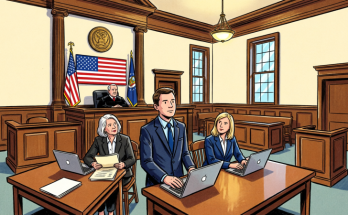
Diana tapped the anonymous post with her pen. “This is defamation,” she said. “And it’s also likely harassment given the restraining order.”
“But it’s anonymous,” Marisol said.
Diana nodded. “It’s harder, not impossible. We can subpoena platform records if needed. But first—” she turned to me. “Do you want to go public?”
I breathed in slowly.
In my family, going public meant shame. It meant consequences. It meant Mom’s hissed warning: Don’t embarrass us.
But maybe embarrassment wasn’t the enemy.
Maybe silence was.
“Yes,” I said.
Sienna looked relieved. “Okay. Then we tell the truth.”
The next day, we released a statement. No drama. No insults. Just facts.
We explained the mission of the transitional housing program, outlined financial transparency, and invited community members to tour the facility in a controlled, safe way.
And then—because Diana advised it—we included one more thing: a public record link confirming ownership through Stonebrook Holdings, and documentation that the prior owners had been foreclosed upon.
We didn’t name my parents.
But anyone who wanted to connect the dots could.
The neighborhood response was immediate.
Some people apologized for believing the post. Others admitted they’d always found my parents “a little intense.” A few, predictably, doubled down on moralizing about family loyalty.
But then something happened I didn’t expect.
Women began commenting—women I didn’t know, women who lived in big houses and small apartments and everything in between.
They wrote about parents who demanded money, parents who used guilt like a leash, parents who treated children like investments.
One comment hit me like a bell:
Sometimes the bravest thing you can do is stop letting someone hurt you just because they share your last name.
Faith took my phone and read the comments, eyes bright. “See?” she said softly. “You’re not alone.”
My throat tightened. “I know.”
But knowing in your head and knowing in your bones were different.
That week, donations increased. Volunteers signed up. The reporter ran a story—careful, respectful—about the house’s mission, highlighting survivors’ privacy and focusing on community impact.
The anonymous post got buried under truth.
And my parents?
They didn’t stop.
But they lost their power to control the story.
Part 8
On a humid Saturday in June, I got a call from an unknown number.
I almost ignored it, but something made me answer.
A man’s voice came through, cautious. “Is this Natalie Cross?”
“Yes,” I said.
“My name is Officer Delgado,” he said. “I’m calling about your parents.”
My stomach dropped. “What happened?”
“We responded to a disturbance,” he said. “Your father was arrested.”
I closed my eyes briefly. “For what?”
“Attempted assault,” Delgado said. “He got into an altercation at his workplace. He’s in custody.”
I exhaled slowly. “Do you need something from me?”
“No,” Delgado said. “But he requested to call you.”
I almost laughed at the audacity.
“He can request,” I said. “That doesn’t mean I’ll answer.”
Delgado hesitated. “Your mother also asked for your contact information. She’s claiming you’re responsible for their situation.”
I felt the familiar urge to defend myself, to explain, to prove I wasn’t cruel.
Then I remembered Aunt Helen’s words: You do not owe anyone your peace.
“I’m not responsible for their choices,” I said.
Delgado paused. “Understood. I needed to confirm. Also—there’s something else. Your father mentioned an LLC. Said you stole his house through some corporate trick.”
I let out a slow breath. “The bank foreclosed,” I said. “I purchased legally through an LLC. There’s documentation.”
Delgado’s tone stayed neutral. “That’s what it looks like. I’m just collecting information.”
“Send me an email,” I said. “I’ll forward the records.”
After the call, I sat at my kitchen table, hands clasped.
I didn’t feel triumphant. I didn’t feel guilty.
I felt tired.
Because there was a kind of exhaustion that came from watching someone repeatedly choose self-destruction and insist it was your fault.
That evening, Kevin showed up at my house.
Not announced. Not invited. Just standing on my porch like he belonged there, hands shoved into the pockets of his expensive jacket.
I opened the door but didn’t step aside.
“What are you doing here?” I asked.
He looked uncomfortable. “I didn’t know where else to go.”
“You have my number,” I said.
Kevin’s jaw tightened. “Dad’s in jail again.”
“I heard,” I replied.
Kevin’s eyes flickered. “He’s… not doing well.”
I leaned against the doorframe. “Kevin, what do you want?”
He swallowed. “I want you to help.”
There it was again. The same pattern. The same expectation.
I waited.
Kevin rubbed his face like he was exhausted. “Rebecca threatened to leave if my parents move in. Angela won’t take them. I can’t keep paying for motels. It’s ruining me.”
I stared at him. “So you came to me.”
His eyes flashed with frustration. “You have money, Natalie. You always had money.”
I laughed once, bitter. “I always had money?”
He flinched.
“You didn’t even know what I did for a living until last year,” I said. “You didn’t know because you didn’t care.”
Kevin’s face softened, guilt surfacing. “That’s not fair.”
“It is fair,” I said quietly. “It’s reality.”
He exhaled sharply. “Fine. You’re right. We ignored you. They treated you like garbage. I know.”
The admission startled me.
Kevin continued, voice cracking slightly. “But they’re still our parents.”
I studied him. This was the first time he’d ever looked at me like a person instead of a problem.
“I’m not asking you to abandon them,” I said. “I’m asking you to stop trying to hand them to me like I’m the family dumpster.”
Kevin’s face tightened, but he didn’t argue.
I added, “There are assisted living options. There are income-based housing programs. There are social workers who can help. But if you want my involvement, it’s going to be on my terms.”
Kevin stared. “What terms?”
“No money directly,” I said. “No moving in. No access to my home. Everything goes through third parties and formal programs. And they stay away from me and the transitional house.”
Kevin looked like he wanted to protest.
Then he sagged, defeated. “Okay,” he said.
I didn’t offer him a hug. I didn’t invite him inside.
But I did something else.
I handed him a printed list of resources—housing assistance, legal aid, employment services, addiction counseling, financial literacy programs.
Because my goal was never to destroy them.
My goal was to stop them from destroying me.
Kevin stared at the list. “You had this ready.”
“I’ve been ready for years,” I said.
He nodded slowly, and for the first time in my life, he looked at me with something like respect.
“Nat,” he said softly. “I’m sorry.”
I believed he meant it.
Not fully. Not perfectly.
But enough to matter.
When he left, the porch light cast his shadow long on the walkway.
And I realized something: endings weren’t always fireworks.
Sometimes endings were a closed door, a clear boundary, and a quiet decision to keep choosing yourself………………………..
Click Here to continuous Read Full Ending Story👉:“Parents brought a realtor to sell my house. Called me a loser. They didn’t know I owned it. Now I’m taking theirs.”__PART3 (ENDING)