He screamed while they pinned him.
“I’ll kill you! I’ll come back and kill you!”
The police arrived before sunrise.
He was arrested in the room where he had intended to finish what his family started in the kitchen.
Attempted murder.
That charge changed the whole shape of everything.
Susan and Robert came barreling into the hospital half an hour later—Susan in a wheelchair, wailing, Robert begging, both stopped by police and security in the corridor outside my room.
Susan called me every name she could summon.
Robert fell to his knees and pleaded for forgiveness “for the sake of the marriage.”
I looked at them from my wheelchair, my neck bandaged, my leg throbbing, and felt… nothing soft.
Not triumph. Not even hatred, fully.
Just finality.
“When my leg was broken,” I told them, “you ate dinner.”
Robert wept.
Susan stared.
I turned away.
The law moved faster after that.
Maybe not fast enough for justice in the abstract, but fast enough for my life.
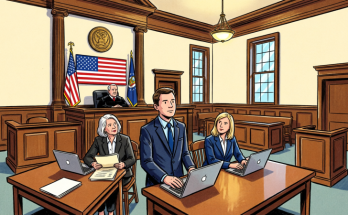
Jake was held. Charges multiplied: attempted murder, felony assault, false imprisonment, terroristic threats, financial misconduct. Susan was indicted for assault and defamation, then released pending trial because of age and medical status. Robert faced charges tied to concealment, intimidation, and complicity. Their defamation suit collapsed under the weight of their own crimes. Divorce proceedings accelerated. Asset freezes expanded.
The house—paid largely with my money—was awarded to me.
So was compensation.
But courts can divide property more easily than they divide time.
No judge could restore the years.
No ruling could give me back the baby or the ease with which I used to enter a room or the part of my mind that once believed love and safety naturally belonged together.
I was transferred to a secure rehabilitation center after the knife attack.
My parents came the day I arrived.
My mother took one look at the bandage on my neck and started crying. My father sat beside my bed and held my hand so carefully it undid me in a way violence never had.
“I’m sorry,” I whispered again.
He squeezed my hand. “For what?”
“For not listening.”
He looked at me for a long moment. “You don’t owe us remorse for being deceived by cruel people.”
My mother wiped her face and said, with textbook practicality through tears, “Next time we dislike a man, you are required to trust us immediately.”
I laughed so hard I cried.
Healing is not cinematic.
It is boring, humiliating, repetitive.
It is learning to pivot from bed to chair without crying.
It is physical therapy and scar cream and waking from nightmares with your heart trying to claw through your ribs.
It is flinching when a nurse enters too quietly.
It is hearing the hiss of a radiator and remembering the kitchen floor.
It is wanting revenge on Monday and oblivion on Tuesday and peace on Wednesday and none of those things by Thursday because you are too tired to want anything except sleep.
I got stronger anyway.
Crutches came before confidence.
Confidence came before steadiness.
Steadiness came before grace.
I no longer followed every article, but David kept me informed.
Jake took a plea once the attempted murder charge and recovered recordings made denial impossible. Seven years.
Susan’s fake fragility eventually collided with real illness. Whether from rage or stress or the natural collapse of a body fed on malice, she suffered a second stroke that left her partially paralyzed for real. She avoided prison time through a mix of medical leniency and plea negotiations, but she did not avoid public ruin, financial judgment, or the slow humiliation of dependence.
Robert lost the house, the money, and whatever reputation he had once banked on. The court found malicious concealment of assets. Collections and enforcement followed.
The day my divorce was finalized, I expected to feel fireworks.
Instead I felt a small, clean silence.
Not joy.
Space.
A month later I moved into a modest apartment my parents had rented temporarily in a quiet neighborhood lined with sycamores, as if the universe had decided subtle symbolism was unavoidable. Sun pooled across the wood floors every morning. I bought two mugs, three plates, one yellow blanket, and a basil plant I nearly killed twice before learning how often it wanted water.
My mother shipped soup. My father assembled bookshelves. Maria texted me memes about terrible hospital coffee. Dr. Chen sent exactly one message through David: Walk slowly. Heal thoroughly.
I began consulting again, part-time at first.
I started therapy with a woman who had the unnerving habit of asking questions that sliced straight through whatever answer I was trying to hide behind.
“Do you miss him?” she asked once.
I thought about it honestly.
“I miss the version of myself who believed him,” I said.
That, it turned out, was closer to the truth.
Late that autumn, when the trees outside my apartment had gone gold and copper and bare, Robert called.
I almost didn’t answer.
His voice was so altered by grief and exhaustion I barely recognized it.
“Jake was sentenced,” he said. “Seven years.”
I said nothing.
“Susan… she had another stroke. It’s real this time. We have to leave the house in two days.”
Still I said nothing.
Then came the apology.
Thin. Trembling. Too late.
When he finished, I stood at my window looking out at the streetlights coming on one by one and said the only honest thing left.
“You can keep it.”
He cried.
I ended the call.
Afterward I stood there for a long time, phone still in my hand, listening to the quiet inside my apartment.
There would be no scene where I forgave them and felt magically cleansed.
No moment where the past rearranged itself into a lesson neat enough to frame.
What happened had happened.
The bone had broken.
The marriage had rotted.
The family I married into had shown itself to be a machine built from cruelty, entitlement, cowardice, and habit.
And I—slowly, painfully, imperfectly—had torn myself out of it.
Winter came.
My limp lessened.
The scar on my neck faded from angry pink to a pale silver thread.
By February I could walk short distances without crutches. By March I drove again for the first time, white-knuckled and sweating, then cried in a grocery store parking lot because I had done something ordinary and survived it.
Spring returned almost rudely, as it always does, indifferent to whether anyone feels ready.
The sycamore outside my apartment leafed out in tender green.
One Saturday morning I carried coffee to the window and caught my reflection in the glass: thinner than before, yes; scarred, yes; but unmistakably alive.
Not the girl who had married Jake.
Not the woman who had lain on a kitchen floor waiting to be chosen over convenience.
Not even the furious patient plotting in a hospital bed.
Someone else.
Someone built from all of them and answerable to none.
I touched the faint line at my neck, then the healed ridge beneath the skin over my shin.
Broken bones, my therapist had said once, often heal stronger at the fracture site.
Not unbreakable.
Just different.
More honest about where the damage occurred.
I thought about that as sunlight climbed the walls of my apartment and the city outside went on with its ordinary noise—buses sighing, dogs barking, somebody somewhere dropping a pan and swearing at it.
Ordinary life.
I had once imagined survival would feel like vengeance.
But in the end, vengeance was only the bridge.
What waited on the other side was smaller, quieter, and infinitely more radical.
Peace.
Not all at once. Not forever. Not without scars.
But real.
And after everything the Millers had taken, that felt like the one thing they would never again be allowed to touch.
THE END.