“Now, Clara… tell your husband to explain why he used my name in the exact same network I investigated before I disappeared.”
The room fell breathlessly silent. Mark looked at the badge as if it were a snake. I looked at it, too. The photo was of my dad, yes, but a different man. Younger. Black mustache. Straight back. Hard eyes. Underneath it read: Arthur M. Evans. Federal Bureau of Investigation. Financial Crimes Unit.
I felt the kitchen spinning. “Dad… what is this?” He didn’t take his eyes off Mark. “A life I hid so you could have a normal one.”
Mark let out a fake laugh. “This is ridiculous. An old man with an expired badge proves nothing.” The FBI agent opened her folder. “We’re not just here for a badge, Mr. Mark Osborne. We are here for audio recordings, forged documents, and a prior report regarding an elder fraud ring.”
Mark swallowed hard. I saw it. For the first time since I met him, I saw fear on his face. Not anger. Fear.
“Clara,” he said, his voice shifting. “Honey, this is a misunderstanding. Your dad is confused. I kept those papers to protect him.” I laughed. A short, broken laugh. “Protect him by putting him in a nursing home against his will?” “It wasn’t a nursing home. It was an assisted living facility.”
My dad rested a hand on the table. “A place where they drug old people, extort their signatures, and then declare them incompetent.”
One of the men in suits, the younger one, placed some photographs on the table. I recognized Mark in them, walking out of a notary’s office. In another, he was talking to Mr. Ansel, a neighbor who always offered to “help” retirees with paperwork. In another, my husband was carrying my father’s yellow folder under his arm.
“This can’t be,” I whispered. The agent looked at me gently. “Mrs. Evans, we need you to tell us if you authorized any power of attorney in your husband’s name.” “No.” “Do you recognize this signature?” She showed me a paper. It was my name. Clara Evans. The handwriting looked like mine, but it was too slanted. Too perfect. As if someone had practiced it many times. “It’s forged.”
Mark took a step toward me. “Think carefully about what you’re going to say.” My dad hit the table with his palm. Not hard, but enough. “Do not threaten her in my house.”
Mark turned around with rage. “This house isn’t yours!” Arthur barely smiled. “Not yet. But it isn’t yours either, boy.”
The silence that followed chilled me. “What does he mean?” I asked. My dad closed his eyes for a second. “The house you live in has a lien on it that Mark tried to transfer using your signature. If we didn’t stop him today, in three weeks you’d be out on the street. You, me, and everything you thought was safe.”
I felt my legs give way. The living room. The kitchen. The guest room. The plants I watered every Sunday. The wall where my mom’s photo hung. Everything had been on the verge of disappearing while I was working double shifts at the hospital. Mark didn’t just want to get rid of my dad. He wanted to empty me out, too.
The agent made a gesture. “Mr. Mark Osborne, you need to come with us.” He threw his hands up. “You don’t have a warrant.” “We have an urgent subpoena and probable cause for making threats, as well as allegedly forged documents found on the premises with the authorization of the complainant.” “What complainant?”
My dad held up the black pen. “Me.”
Mark let out a loud laugh. “You? With what strength? With what mind? You fell in the hallway yesterday.” Arthur took a step toward him. Without a cane. Slowly. Trembling, yes. But standing. “I fell because you took away my cane. Not because I lost my memory.”
Mark tried to leave through the hallway. One of the men stopped him. There were no punches. No movie scene. Just the dry squeak of his shoes skidding against the floor and his heavy breathing. My husband, the man who thought he owned everything, was trapped between the table where he humiliated my father and the door he had so often watched me walk out of, defeated.
“Clara,” he said. “Tell them to leave.”
I looked at him. I remembered the medicine in the trash. The snapped cane. My dad barefoot in the yard. My wrist bruised by his hand. And then I understood that I wasn’t losing a marriage. I was breaking out of a cage.
“No.” The word was small. But it made my whole life shake.
They took him away minutes later. Mark wouldn’t stop talking. He said he had connections, that his cousin knew someone at the Bureau, that my dad was senile, that I was a manipulated wife. Until the agent told him: “You can explain all of that to the District Attorney.”
When the door closed, the house felt strangely alive. As if the walls had been holding their breath for years.
I sat down in a chair. My dad was still standing, but his body could no longer support so much dignity. I ran to help him. This time, he didn’t refuse my hand. “Dad… who are you?” He let out a tired laugh. “Your dad, sweetie. That doesn’t change.” “You lied to me my whole life.” “I hid a part of it from you. Lying to you was letting you believe Mark was a good man.”
That hurt. I looked down. “Did you know?” Arthur didn’t answer right away. We walked to his room. I pulled up a chair next to the bed and checked his blood pressure like I did with my patients, but my hands were shaking worse than on any shift.
“I started suspecting when he threw out my meds,” he said. “Not out of cruelty. You could see his cruelty from a mile away. I suspected because he knew exactly which ones would destabilize me if I missed them. Insulin, blood pressure, blood thinners. It wasn’t anger. It was calculated.”
I covered my mouth. “He wanted to make you sick.” “He wanted to make me seem incompetent.”
The words hit like ice. Mark wasn’t improvising. He had been preparing everything.
My dad pulled another envelope from under the mattress. “Before I came to live with you, I was getting calls. Men asking about my house in Ohio, about my pension, about my health. I thought they were debt collectors. Then I recognized a name on a document Mark left on the nightstand.” “What name?” “Golden Age Wellness Network.” I frowned. “The nonprofit that helps senior citizens?” “So they claim. They used it as a front. They offered to help with paperwork, relocations, nursing homes, loans. Then they would obtain power of attorney, sell the houses, and drain the pensions.”
I felt nauseous. As a nurse, I had seen elderly people arrive alone in the ER with bruises that their families explained away as falls. I had seen impatient children, greedy nephews, daughters-in-law who asked first about the bank card and then about the diagnosis. But I never imagined my house was part of that same darkness.
“And you investigated them?” My dad looked out the window. Outside, an ice cream truck drove by, playing a long, sad tune. The afternoon smelled like rain and fresh coffee from the corner diner. The city carried on as if nothing had happened, that immense New York City that swallows the screams behind its doors.
“Twelve years ago,” he said. “Before I retired. The ring started in Ohio with corrupt notaries and brokers. Then it moved to Pennsylvania, Albany, and the city. I was close to proving it. Too close.” “What happened?” “Your mom got sick. I asked for leave to take care of her. When I came back, my file was gone. Two witnesses recanted. One was killed in a hit-and-run on the Interstate. They told me to retire and stop making trouble.” “And you accepted that?” He looked at me. “Your mother was dying. You were studying nursing. I chose to stay alive for you two.”
Rage mixed with tenderness inside me. “But you kept holding onto the evidence.” “Old men aren’t good for running, Clara. But we’re good for remembering.”
I cried. I couldn’t help it. He stroked my hair like when I was a little girl and I was afraid of being left alone after my mom died. “Forgive me for not seeing it sooner,” I said. “No one sees the house burning if the fire starts under the floorboards.”
We didn’t sleep that night. The FBI agent returned with a warrant to secure documents. They searched Mark’s drawer, his computer, a flash drive hidden behind the router, and a box of fake stamps in the closet. They found copies of senior citizens’ IDs, pension receipts, certificates, deeds, photos of modest houses in neighborhoods where no one would imagine a white-collar crime.
One folder had my name on it. Another, my dad’s. And another, much thicker, read: Pending Relocations.
Inside was a list of people. My hands shook as I read it. Mrs. Miller, the neighbor from apartment 302, who had gone away “with a niece” after selling her condo. Mr. Jones, the man who sold newspapers near Penn Station and disappeared when he got sick. Mrs. Carter, one of my patients at the hospital, who cried because her children told her to sign “so she wouldn’t be a burden.”
They weren’t isolated cases. They were a network. And Mark was part of it.
At dawn, the house smelled of burnt coffee and old fear. My dad was at the table with a mug of black coffee. I had bought him a temporary cane at the 24-hour pharmacy, ugly and metallic, but he held it like a sword. “I’m going with you to give a statement,” I said. “No.” “You’re not leaving me out of this again.”
Arthur sighed. “I don’t want to put you at risk.” “I’m already at risk. I slept with him.” That sentence left us both speechless. Then he nodded.
We went to the FBI field office with a neighbor, Mary, who offered to drive us. In the car, my dad looked at the city through the window. We drove down Broadway, with its packed buses, its hot dog stands, its dusty trees, and people running as if everyone were late to save something.
In the precinct, there were tired families, hard chairs, and a coffee machine that tasted of resignation. My dad gave his statement for hours. He didn’t look like a sick old man. He looked like an open archive. He gave names. Dates. Money trails. Law firms. Clinics. Nursing homes. He talked about how they chose the elderly: widowed, sick, owners of homes without a mortgage, absent sons, or daughters too busy to check the paperwork. Every word was a stone pulled from a well.
When it was my turn to testify, I told them everything. The cane. The medicine. The backyard. The threats. The forged signature. The shame. Because I declared that too: that I had been ashamed to admit my husband was abusing my father. That I had told myself Mark was just stressed, that it was his personality, that he didn’t know how to live with sick people.
The agent didn’t judge me. She just said: “A lot of women are taught to endure it until the damage is already down on paper.”
On the way out, my dad stopped in front of a deli. “I want a Reuben sandwich.” I looked at him, surprised. “Right now?” “After testifying against a criminal syndicate, a man gets hungry.”
We bought two Reuben sandwiches at a small shop. They had corned beef, Swiss cheese, sauerkraut, and Russian dressing. My dad took a bite of his with a relish that broke my heart. “Your mom and I used to eat these when we went to downtown Columbus,” he said. “We would walk down the historic streets and she always said the brickwork made even the walls look like they were dressed in their Sunday best.” He smiled. I hadn’t seen my dad smile like that in years. Not as a sick man. As a man. As Arthur.
The following days were a storm. Mark was released on bail at first. He couldn’t come near us, but he called from unknown numbers. He left me messages: “You’re going to regret this.” “Your dad is using you.” “That house is mine, too.”
I didn’t answer. I saved everything. My dad taught me how to make folders. Date. Time. Screenshot. Backup. “Memory needs order, too,” he’d say.
I changed the locks. I notified the hospital. I asked my coworkers for support. Lucy, an ER nurse, showed up with a bag of groceries and said: “No one falls alone around here, Clara. We’re on duty.”
And they were. For weeks, there was always someone dropping by the house: Mary with pastries, Lucy with soup, my cousin Steven with tools, even Mr. Chuck from the hardware store, who made my dad a sturdy wooden cane and carved his initials into it. AME. My dad touched it with his fingers, his eyes growing damp. “This one can scratch the floor,” I said. He let out a loud laugh.
It wasn’t all relief. One night, Mark showed up. It was raining hard. The water beat against the windows and the yard smelled of wet earth. I was checking my dad’s blood sugar when I heard a bang at the back door. My body recognized the fear before my head did.
Arthur turned off the TV. “Clara, into the bedroom.” “No.” “Don’t argue.”
But it was too late. Mark smashed the kitchen window with a rock. He climbed in, soaked, his eyes red and a wrench in his hand. “You ruined my life,” he said.
I dialed 911 with the phone hidden in my scrub pocket. “You sold it out yourself.” He stepped forward. “Where are the papers?”
My dad stood up. “In a safe place.” Mark pointed the tool at him. “Miserable old man. I should have sent you to Albany when I had the chance.” “You should have learned to forge better,” my dad replied.
I wanted to scream at him not to provoke him, but I realized something: Arthur was keeping him talking. I was buying seconds. The line was still open.
“Clara,” Mark said, “come with me. I can still forgive you.” I looked at the man who had snapped a cane and hidden medication. At the man who wanted to steal a house from an old man and a life from his wife. At the man who confused forgiveness with possession. “I don’t want your forgiveness.”
His face changed. He lunged at me. My dad swung his cane and struck his wrist. The wrench clattered to the floor. Mark shoved Arthur against the table. I screamed. My dad doubled over, but he didn’t fall. Then we heard sirens.
Mark tried to run toward the back door, but Mary appeared on the other side of the yard with two neighbors. “Over here!” she yelled.
The police rushed in minutes later. This time, they did take him away in handcuffs. This time, he didn’t talk about connections. He just looked at me with hatred. And I, finally, didn’t look away.
The case grew. Not because we were important, but because there were too many names. The FBI raided an assisted living facility in Albany where they found seniors with withheld documents. Notary offices were investigated. Accounts were frozen. More families came forward, more daughters, more neighbors, more caregivers who had seen something but didn’t know what to call it.
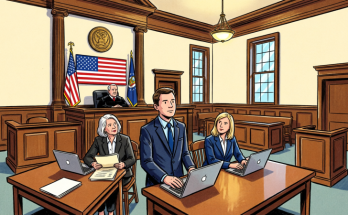
My dad testified before a judge. I went with him. He walked slowly, with his new cane, a white shirt, and a straw hat. Some looked at him like a frail old man. I knew they were seeing it wrong. That man had lost strength in his knees, but not in the truth.
Mark tried to say he was just following orders. That he was just a broker. That I knew about it. That my dad was being manipulated. Then they played the audio from the black pen. His voice filled the courtroom: “Sign here, Arthur. It’s so Clara doesn’t get into trouble. If you don’t sign, I’ll kick her out too. No one believes old people when they become a burden.”
The judge looked up. Mark sank into his chair. My dad didn’t smile. Neither did I. There was no victory in hearing a monster repeat what we already knew. There was just justice, starting late.
Months later, I went back to Ohio with my dad. Not to live. To close up the house Mark had tried to steal from us. We found it dusty, with dried rose bushes and a rusted gate. Inside, it smelled of old wood, dampness, and memories kept without permission. My dad walked to the backyard where my mother used to keep pots of basil. He sat in the shade. “This is where I taught you to ride a bike,” he said. “I fell three times.” “Four. The last time, you said a swear word.”
I laughed. Then I cried. In a box in the closet, we found letters from my mom. Handwritten recipes for pot roast. Photos of us in front of the Town Hall, with its tall towers and the clear sky behind it. A napkin embroidered with my initials.
My dad picked up a photo and kissed it. “Your mom would have wanted you to fight.” “It took me a long time.” “But you fought.”
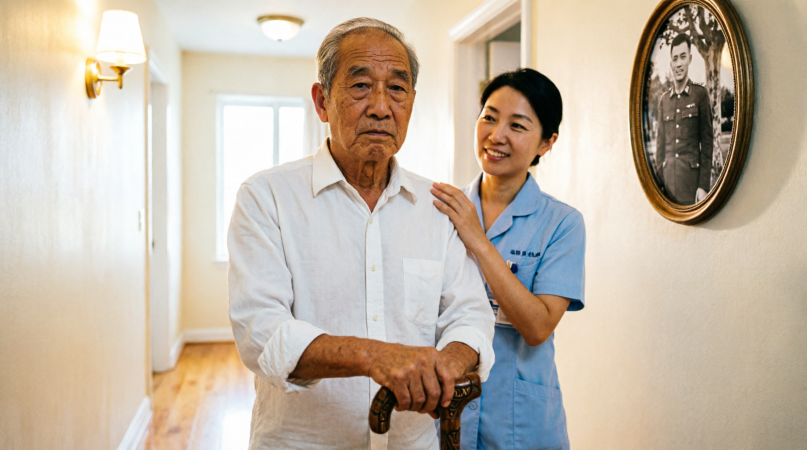
We sold the house months later, not out of necessity, but because my dad didn’t want stairs or ghosts anymore. With the money, we modified my house: grab bars in the bathroom, a ramp at the entrance, warm lighting in the hallway, a proper room for him, not a “guest room.” His room. I put his meds in a large, labeled pill organizer. No one ever messed with them again.
One afternoon, while I was watering the plants, my dad came out to the yard with his new cane. “Clara.” “What’s up?” “I want to buy a recliner.” I laughed. “To watch TV?” “To watch TV and be a burden in comfort.”
I felt a lump in my throat. “You are not a burden.” He looked at me. “Say it without crying.” “You are not a burden, Dad.” I said it through tears, but I said it.
The divorce took a long time. Legal processes take a long time. Wounds do, too. Mark was indicted for fraud, forgery, and domestic violence, among other things I barely understood. The network didn’t fall completely, because large networks always leave hidden threads. But several people got their documents back. Some families found their elderly relatives. Others only found explanations.
I kept working as a nurse. But I wasn’t the same. When I saw an elderly person arrive full of fear, I asked more questions. When a relative answered for them without letting them speak, I would crouch down to the patient’s eye level and say: “Sir, ma’am, what is it that you want?” Some cried. Others squeezed my hand. My dad said that was my true inheritance. Not the house. Not the papers. The question.
A year later, for his seventy-first birthday, we had a cookout at home. My coworkers came, Mary, Mr. Chuck, some neighbors, and even the FBI agent—without her badge this time—carrying a vanilla sheet cake. My dad wanted pot roast, mashed potatoes, and warm rolls. I played soft music, because he liked classic jazz. On the wall, I hung a photo of my mom and another of him when he was young, with his old badge—not to show off, but to remember that people have histories that don’t fit into their illnesses.
Before cutting the cake, Arthur raised his glass of water. “To my daughter,” he said. “Who finally learned that caring for someone doesn’t mean asking for permission.” Everyone applauded. I shook my head. “And to my dad,” I said. “Who finally understood that he didn’t have to disappear to protect me.” He looked down. Then he smiled.
That night, when everyone had left, I washed the dishes while my dad watched television in his new recliner. The house smelled of pot roast, soap, and coffee. Outside, life went on with its cars, its dogs, its food delivery drivers.
“Clara,” he called out. “Yes, Dad?” “Do you mind if I leave my cane out in the hallway?” I looked at the wooden cane leaning against the wall. The same one Mark would have called a tripping hazard. The same one that now tapped every morning as proof that my dad was still here.
“Leave it wherever you want,” I told him. “This is your house, too.”
Arthur closed his eyes, at peace. I turned off the kitchen light. And I understood that the night Mark snapped the cane, he didn’t destroy my father’s dignity. He only broke the final lie that kept me from seeing the true invalid in that house. It wasn’t the man who needed support to walk. It was the man who didn’t know how to love without dominating. And that man, finally, no longer slept in my bed.