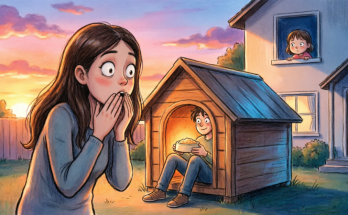
The woman cried when she saw me awake and said, “Lucy… don’t sign anything. That man is not your husband. He is the son of the doctor who made you disappear.”
Matthew stared at the screen as if he had just seen a dead woman rise. Eleanor took a step back. I was still on the gurney, the pen between my fingers, my throat tight, my body shaking on the inside.
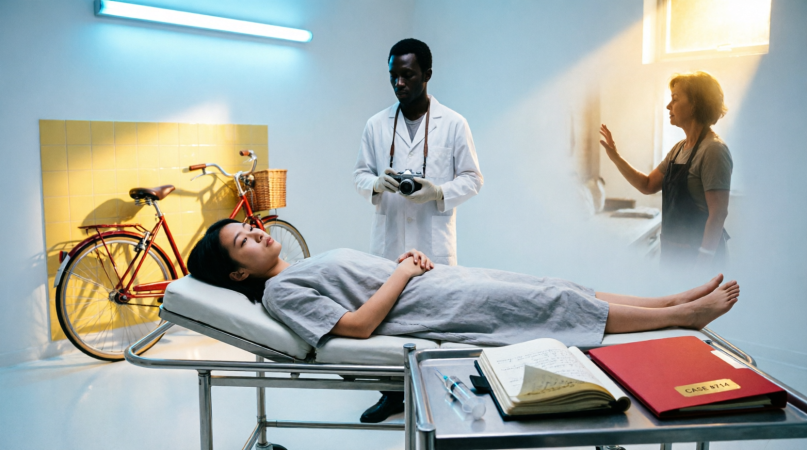
The woman on the screen spoke again. “Lucy, listen to me. Your name is Lucy Armstrong Davis. You were born on April 18, 1997. You have a scar behind your left knee because you fell off a red bicycle in Brooklyn. Your dad’s name was Julian. I am your mother.”
Matthew reacted. He grabbed the monitor remote and hurled it against the wall. The screen shattered, but the audio kept coming through in pieces. “Don’t sign… no…”
Matthew approached me, his face twisted. He was no longer the elegant doctor. He was a man exposed. “How did you do that?”
I didn’t answer. Not out of bravery. Because if I opened my mouth, I was going to scream, and if I screamed, he might inject me before I could move.
Eleanor went to the safe. “Matthew, finish this now. Give her the dose.” He pulled a syringe from a metal drawer. The liquid was clear. Worse than any poison, because it had no color. I looked at the needle and realized something terrible: for two years, this room had been my grave, only I woke up every morning without remembering it.
Matthew leaned over my arm. “I warned you, Valerie. When a mind resists, you cut deeper.”
At that exact moment, my cell phone rang. Not the one on the nightstand. Not the one Matthew checked every night. The other one. The one I had hidden inside a bag of rice in the kitchen after finding the camera in the smoke detector.
Matthew lifted his head. “What was that?”
The ringing continued. Three times. Then a recorded voice activated. It was Anna, my classmate from my master’s program. “Val, I’m listening to everything. The police are outside. Don’t hang up.”
Eleanor went pale. Matthew ran toward the secret door.
I stopped pretending. I kicked my leg up and knocked over the tray holding the syringe. The metal clattered to the floor. The needle rolled under the gurney.
Matthew spun toward me and grabbed me by the throat. “You bitch.” His fingers squeezed. I saw black spots. I saw flashes of light.
Suddenly, I saw a yellow kitchen. A woman singing while cutting a papaya. A man fixing a red bicycle in a courtyard filled with potted plants. Me, a little girl, laughing.
Lucy. My name didn’t arrive as a word. It arrived like a door being kicked open.
I stabbed the pen into his hand. Matthew screamed and let go of me. I tumbled off the gurney, clumsy, dizzy, my legs weak from years of drugs. I crawled toward the table and grabbed the red folder.
Eleanor tried to take it from me. “That doesn’t belong to you.” I looked her in the eye. “Yes, it does.” It didn’t sound like my voice. It sounded like someone who had just returned from a very deep place.
Eleanor slapped me. My face burned, but I didn’t let go of the folder.
Then we heard pounding on the front door of the house. “NYPD Detectives! Open up!”
Matthew cursed. He quickly stripped off his lab coat and opened another panel next to the medical refrigerator. There was an exit. Of course there was. Monsters always build exits before they build graves.
“Mom, let’s go.” Eleanor grabbed the bag of documents. But before following him, she leaned close to me. She spoke almost directly into my ear. “Your mother should have stayed dead.”
I bit her. I didn’t think. I bit her hand with all the rage I didn’t remember having.
Eleanor shrieked. Matthew pulled her into the passageway. The door closed behind them.
I was left in the white room, barefoot, my face hot, my throat bruised, clutching the red folder to my chest.
The pounding returned. Louder. “Valerie Reed! Lucy Armstrong! Are you in there?”
Hearing the two names together broke me. “Here!” I screamed. “I’m here!”
The closet door gave way minutes later. Two officers rushed in, followed by a woman in a detective’s vest, and Anna right behind her, crying, holding my cell phone in her hand. Anna hugged me so hard my bones ached. “I told you I never liked that bastard.” I laughed. It was a horrible laugh, mixed with tears. But it was mine.
The detective crouched in front of me. “I’m Captain April Montes. We need to get you out of here and secure the house. Can you walk?” “Don’t let them get away,” I said. “There’s a passageway.”
The captain didn’t waste time. Two officers entered the panel. Others searched the cabinets. I watched them pry open drawers Matthew had always kept locked. There were vials with torn-off labels. USB drives. Files. Videos sorted by date. My stolen life, archived like a science experiment.
On a shelf, they found a wooden box. Inside were rings. IDs. Student IDs. A library card with a photo of me as a teenager. Lucy Armstrong. Brooklyn Tech High School.
I saw that ID and doubled over. It wasn’t just a name. It was an entire life waiting for me in a box.
They took me to the living room while the crime scene investigators went in. The house looked different with the main lights on. The perfect dining room. The neatly aligned neurology textbooks. The wedding photos where I smiled with empty eyes.
It was all a stage. A house built to convince the world I was fine.
On the couch, Anna wrapped a blanket around me. “I knew something was wrong,” she said. “Every time we talked about your thesis, you forgot what you had written yourself. Once you told me, ‘If I’m not me tomorrow, look for me in the smoke.’ I thought it was a metaphor.”
Smoke. That word cracked open another fissure in my mind. Fire. Sirens. Broken glass. My mother screaming for me to run. A man in a lab coat covering my mouth. Me in a van, looking out the window as a clinic burned behind us.
“The clinic,” I whispered. Captain Montes approached. “Which clinic?” “I don’t know the name. It had green tiles. It smelled like rain and alcohol. My mom was there.”
Anna squeezed my hand. “The woman on the video call said her name is Ines Davis. She’s at a safe house. She contacted us three days ago.” I looked at her. “Three days ago?” Anna swallowed hard. “She sent me emails. Photos of you as a kid. I thought it was a scam. Then she asked me to ask you about the red bicycle. When I brought it up, you started crying and didn’t remember why. That’s when I knew.”
I didn’t remember that conversation. Matthew had erased even my attempts to save myself. But he couldn’t erase Anna. He couldn’t erase my mother’s fear. He couldn’t erase all the copies.
An officer emerged from the secret hallway. “Captain, the tunnel leads to the parking garage of the building behind this one. We found blood, but they’re gone.” Montes clenched her jaw. “Lock down the exits. Notify the traffic cameras.”
She asked me if I recognized anyone else in the files. I opened the red folder with clumsy hands. Inside was my original birth certificate. Photos of my father. Newspaper clippings about a missing minor from 2014. And a handwritten note by Matthew.
“Lucy displays fragmented episodic memory. The Valerie identity is maintained through pharmacological and narrative reinforcement. High risk if she hears maternal voice.”
Narrative reinforcement. That’s what he called his lies. That my mother died of cancer. That I had no family. That he met me in a hospital after an accident. That I married him because he took care of me. That my anxiety was just ingratitude. That my doubts were an illness.
On another page was a list of properties. A house in Brooklyn. A plot of land in upstate New York. Accounts. Stocks. The pending inheritance. My inheritance. The one they had hoped to steal from me once I reached a certain legal milestone.
The name of Matthew’s father appeared several times. Dr. Arthur Carter. Neuropsychiatrist. Deceased in 2015. Owner of the clinic where, according to the folder, they treated “patients with no family network.”
I felt nauseous. “Matthew’s father kidnapped me.” Montes nodded with grim seriousness. “And Matthew continued the control when his father died. We need your statement, but first, you’re going to the hospital.” “No.” Everyone looked at me. “First, I want to see her.”
Anna understood before anyone else. “Your mom.”
There was no way they were letting me go that night. They took me to the ER with a police escort. They checked my blood. My blood pressure. My bruises. My throat.
A young doctor spoke to me very carefully, as if my body were a room after a fire. “You have an accumulation of sedatives, signs of repeated needle punctures, and weight loss. But you are conscious. That’s what matters.”
What mattered to me was on a phone.
At six in the morning, Captain Montes walked in with a tablet. The woman with the scars appeared on the screen. She wasn’t old. She was a woman aged by pain. She had marks on her neck and one eye that drooped slightly, but when she smiled, something inside me recognized her before my memory did.
“Lucy.” I covered my mouth. “Mom.”
She wept silently. I did too. For a few seconds, we said nothing, because there are no words big enough to cross a twelve-year gap.
“I thought you were dead,” I said. “They wanted you to believe that.” “Matthew told me my mom died when I was five.” My mother closed her eyes. “He robbed you even of your grief.”
She told me just a little, because I couldn’t handle much more. She said my father had discovered irregularities at Dr. Carter’s clinic. She said patients were being used for memory trials—vulnerable people, women without families, young people with falsified records. My father gathered evidence. Before he could hand it over, he died in a car crash that was never properly investigated.
My mother continued his work. That’s why they called her to the clinic. That’s why she took me with her that afternoon. That’s why they burned the archives.
She survived but spent months hospitalized under a different name, held incommunicado, hidden by a nurse who also disappeared later on. “By the time I could look for you,” she said, “you were someone else. Valerie Reed. Wife of Dr. Matthew Carter. I couldn’t get close without them hiding you away again.” “Why now?” My mother held up a folder. “Because I found the notary who forged the first power of attorney. And because I found out that tomorrow, they wanted to make you sign the final transfer.”
Tomorrow. One more day and I would have legally vanished. Not in a van. Not in a clinic. In a chair, with a pen, under a name they invented for me.
The police found Matthew’s SUV at noon, abandoned near the FDR Drive. There were clothes, a suitcase, and bloodstains. Not his. Eleanor’s. The bite had left its mark.
That afternoon, they raided Matthew’s office in a medical tower in Manhattan. They found more files, some belonging to women who had never been reported missing because, officially, they were married, institutionalized, or “undergoing treatment.” That’s what I learned with horror: they don’t always erase you with visible violence. Sometimes, they erase you with paperwork.
Three days later, they caught Eleanor in New Jersey, trying to pay cash for forged documents. Matthew wasn’t with her.
When Captain Montes gave me the news, I was sitting next to my mother in her hospital room. It was the first time I had touched her hand. Her skin was rough. Real. “Where is he?” I asked. Montes placed a photo on the table. A man in a baseball cap, walking through Penn Station. “We believe he’s trying to leave the country.”
My mother stiffened. “He doesn’t run without finishing.” I knew it, too. Matthew hadn’t lost control. He had merely postponed it.
That night, while everyone was sleeping, I found a folded note inside my thesis book. It wasn’t there before. The handwriting was Matthew’s. “You can take back your name, Lucy. But I have your memories.” Beneath it was an address. Brooklyn. My childhood home.
I called Montes. I didn’t call out of bravery. I called because I finally understood that trying to do everything alone was exactly what Matthew wanted.
We went at dawn. The street smelled of fresh pastries and wet pavement. The house was boarded up, with overgrown bougainvilleas over the gate and peeling paint. My mother stayed in the SUV, surrounded by agents, her hands clutched against her chest.
I went in wearing a bulletproof vest. Absurd. A part of me still felt like a student, a wife, a confused woman. Another part walked like Lucy, the little girl who had survived without knowing it.
Inside, everything was covered in white sheets. Dust danced in the morning light. In the living room, there was an old TV, a table, and a rusted red bicycle. I saw it and broke down. I remembered my dad laughing. I remembered his hands stained with grease. I remembered him calling me “Firefly” because I used to run around the yard at dusk.
Then I heard a slow clapping. Matthew stepped out from the hallway. His hair was a mess, his shirt stained, his hand bandaged. He didn’t have a gun. He had a voice recorder. “Welcome home.”
The agents aimed their weapons at him. “Get on the ground!” Matthew smiled. “If you shoot, she will never know where the last copy is.”
Montes took a step forward. “What copy?” He looked only at me. “Your memory, Lucy. The sessions. What your father discovered. What your mother screamed in the fire. It’s all right here.” He held up the recorder.
I took a step forward. “That is not my memory.” Matthew blinked. “Of course it is. You are what you remember.” I shook my head. “No. I am also what was done to me, and what I chose to do afterward.”
His smile cracked a little. “Without me, you wouldn’t exist.” “Without you, I would have lived.”
Matthew gripped the recorder tighter. For the first time, I saw fear in his eyes. Not fear of prison. Fear of becoming irrelevant. Fear that his experiment would stand up and no longer ask him for permission to breathe.
He lunged toward the window. An agent tackled him. The recorder fell and popped open. There was no tape inside. There was a tiny memory card.
Montes picked it up with gloves. Matthew screamed my fake name. “Valerie!” I didn’t turn around. He screamed the other one. “Lucy!” I didn’t turn for that one, either. Because I no longer needed to obey either of them to know who I was.
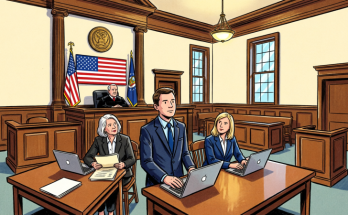
The trial took months. I testified three times. My mother testified twice. Anna handed over emails, audio recordings, and the live broadcast from that night. The notary talked to reduce her sentence. Eleanor tried to blame her son, then her dead husband, then me. She claimed I was unstable.
The judge asked for order when I laughed out loud. It wasn’t a happy laugh. It was the laugh of a woman who was called crazy because she started seeing the bars of her cage.
Matthew never lowered his gaze. Even in handcuffs, he kept correcting the expert witnesses, using long medical terms, pretending his horror was just science. But when they played the audio from the white room, his voice sounded small. “I’ve spent two years killing Valerie every night.” That was the end of the doctor. Only the criminal remained.
Reclaiming my life wasn’t like in the movies. I didn’t just open my eyes and remember everything. Some days I woke up wondering what year it was. Other days I missed Matthew, and then I would throw up out of guilt for missing him, until my therapist explained that the body gets used to the cage, too.
I returned to Columbia University months later. I walked across the campus with my mother on one arm and Anna on the other. In front of the Low Memorial Library, I looked up at the stone columns as if someone had glued shattered time back onto an enormous wall. I was that, too. Pieces. But holding together.
A year later, I defended my thesis. It wasn’t about memory, like Matthew wanted. It was about identity, psychological violence, and the mechanisms by which a victim learns to doubt herself.
My mother sat in the front row. Anna was crying before I even started.
When I finished, a professor asked me under what name I wanted my degree registered. I looked at the form. Valerie Reed was a lie. But she was also the woman who pretended to swallow a pill. The one who hid a phone in a bag of rice. The one who opened her eyes on the gurney.
Lucy Armstrong was my origin. The girl with the red bicycle. The daughter who came back.
I took the pen. I wrote: Lucy Valerie Armstrong Davis.
Afterward, we went to the house in Brooklyn. My mother opened up the house little by little. Not to live there immediately. So it would stop being a museum of pain. We planted new bougainvilleas in the courtyard. We painted the kitchen yellow. I hung the red bicycle on the wall, not as a sad memory, but as proof.
One afternoon, I found a box containing a photo of me at fifteen. Wearing the same uniform I had seen in Eleanor’s bag of documents. On the back, my father had written: “For whenever you doubt yourself: you were always a light.”
I sat on the floor and cried until my mother came looking for me. She didn’t say, “It’s all over now.” Because it wasn’t. Not entirely. She just hugged me and said: “You’re here.” And that, at least, was true.
Matthew had repeated to me for two years to trust him. Now I trust other things. My own breathing when something doesn’t feel right. Friends who insist on checking in. Mothers who survive fires. The notes you leave for yourself when you don’t yet have the strength to escape.
Sometimes, at night, I wake up at 2:47 a.m. I look at the door. I expect to see gloves, a camera, a black notebook. But there is only my room, my books, and a glass of water I poured for myself.
Then I turn on the light. I grab a pen. I write my full name once. Lucy Valerie Armstrong Davis.
And I go back to sleep—not because someone drugged me. But because, finally, my memory belongs to no one but me.