The notary placed the envelope in front of me and said, “Before we proceed with the child assault case, we need to clarify why this family hid for six years what legally belongs to Mateo…”
The notary opened the envelope with a calmness louder than any scream.
Inside were three sheets of paper, a small key, and a photograph of Julián holding newborn Mateo in front of the beauty salon where I used to work.
The moment Valeria saw it, she grabbed her throat as if the image itself had tightened around her neck from the inside.
My mother tried to snatch the package away, but the police officer stepped forward and blocked her path.
“Mrs. Teresa, do not touch anything,” he said in such a calm voice that it sounded worse than a threat.
The notary adjusted his glasses and read aloud that before the accident, Julián had secretly purchased the mortgage debt on the house and placed it in a trust under Mateo’s name.
I felt the room sway, because for six years I had swept floors, cooked meals, and paid bills believing they were doing me a favor by letting me sleep in the coldest room in the house.
The notary continued, explaining that Julián had allowed my mother to live on the property only if she protected the child and did not dispose of his assets.
The moment he said the word “protected,” the social worker glanced at my son’s swollen cheek as he slept.
My mother pressed her lips together, but for the first time she couldn’t find a cruel phrase to hide behind.
“That’s a lie,” Valeria said, though her voice trembled and her eyes kept drifting toward the USB drive in my hand.
Then I remembered Julián’s note and asked permission to play the memory stick on the television.
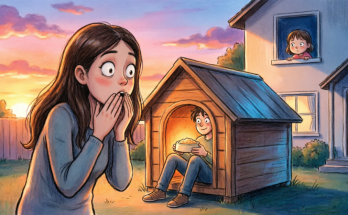
No one moved, not even Damián, who stared at the little red toy car lying on the floor as though it had suddenly become too hot to touch.
On the screen appeared Julián, thin from sleepless nights at the garage, wearing his blue shirt and smiling in that way that shattered my chest.
He said my name with a tenderness that made me feel again the touch of his grease-stained hands caressing my belly while Mateo still kicked inside me.
Then he explained that he had discovered my mother and Valeria visiting a loan shark to ask how they could take away any compensation I might receive if he died.
My brother-in-law lowered his gaze, and in that moment I knew he had heard things too and chosen silence.
Julián explained that he decided to buy the overdue debt on the house because Teresa was about to lose it, and because he knew I could never bear to see her out on the street.
But he also admitted he did not trust her, which was why he had protected everything so carefully that once Mateo turned seven—or if any abuse was ever proven—the administration of the property would immediately pass to me.
When the video showed my mother signing a receipt accepting those conditions in exchange for keeping a roof over her head, she let out a tiny, miserable sound, like a trapped animal.
The room exploded without noise; an explosion of collapsing faces, swallowed truths, and birthday cake turning to ash in people’s mouths.
Valeria tried to claim she knew nothing, but inside the folder were monthly transfers Julián had set aside for Mateo that had never reached my hands.
Every deposit had been withdrawn the very same day into a joint account belonging to my mother and sister.
I felt sick—not because of the money, but because of all the times Mateo had asked for chocolate milk and I told him we couldn’t afford it.
I remembered his torn sneakers, his lunches split in half, and the nights I spent sewing uniforms while Valeria bought expensive handbags.
“We managed the money,” my mother stammered, lifting her chin as if she still had authority over the air itself.
“You stole it,” I replied, and even I was startled by my own voice because it came out clean—without fear, without asking permission.
The social worker photographed Mateo’s bruised cheek, the medical report, and every injury listed in the hospital file.
The police officer asked everyone for identification, and the notary handed me the small key, explaining that it opened a safety deposit box containing original documents, deeds, and another recording.
Damián slowly stood and walked toward my sleeping son, but Valeria grabbed his arm desperately.
“Don’t go near that child,” she ordered, unknowingly repeating the same phrase she had spat out all her life.
Damián pulled away and began to cry—not a tantrum, but a new kind of shame he didn’t know where to put.
“I didn’t know it belonged to his dad,” he said, staring at the little red car, and his child’s voice pierced the room deeper than any accusation.
Valeria tried to silence him, but he kept talking, confessing that his mother used to tell him Mateo didn’t deserve nice things because we were only temporary guests.
My sister turned pale, and my mother glared at her furiously because the favorite child had just shattered the performance from the inside.
I picked up the toy car, wiped a mole stain off the wheel with my sleeve, and placed it gently on Mateo’s chest.
My son stirred in his sleep and hugged the toy with the heartbreaking trust of children who still love even after being hurt.
It was then, watching his tiny hand close around it, that I stopped feeling pity for my mother.
Pity had always been her favorite rope to keep me tied down, but that night it snapped like an old frayed cord.
“I want it stated in the report that my son and I are leaving this house, but no one will ever drive us away from what belongs to us again,” I said, and the notary wrote every word as if laying new bricks beneath my feet.
My mother let out a broken laugh and said I wouldn’t survive a week alone, that a woman with a sick child and no husband always came crawling back.
Before, those words would have crushed me. But now I held a medical report in my hand, and Julián’s name stood on every paper like an invisible pillar.
The social worker asked to speak with me privately, and there in the kitchen where I had been humiliated so many times, she explained the temporary protection measures.
She said Mateo could not remain under the same roof as his abusers, and that the complaint would allow a restraining order while the investigation continued.
I nodded while staring at the refrigerator covered in travel magnets from trips we had never been invited on.
In one corner still hung one of Damián’s drawings framed with golden tape, while Mateo’s drawings had always ended up in the trash because, according to my mother, they were “in the way.”
I pulled from my purse the only drawing I had saved, folded into quarters, where my son had painted his father as a sun above a red car.
The social worker looked at it, her eyes filling with tears, but she said nothing, because some tendernesses need silence in order not to break.
When we returned to the living room, my brother-in-law was no longer defending anyone.
He sat there with his hands clasped together, sweat staining his Sunday shirt, finally understanding that his comfort, too, had blood along its edges.
Valeria begged him to do something, to call his lawyer, not to allow such humiliation.
He looked at her as if seeing her clearly for the first time and asked how many times she had watched Mateo locked inside the laundry room.
My sister opened her mouth, but no words came out, and that silence answered for her.
The police officer announced that my mother would have to accompany him to give a statement regarding the assault, and that Valeria would also have to answer for the alleged embezzlement and abuse.
Teresa straightened herself with the pride of women who mistake cruelty for authority.
“I did the best I could for all of you,” she said, looking at me as though I were the ungrateful one instead of the daughter she had left starving for love.
And for the first time in my life, I did not argue with her version of events.
I simply stepped close enough so she could hear me without everyone else breathing around us.
“No, Mom. You did what you wanted. And starting today, you’re going to learn that a child is not corrected with fear, and a daughter is not kept with chains.”
Her eyes filled with tears, but her crying no longer unlocked my guilt.
They took her to the patrol car without handcuffs, but under the weight of everyone’s stares—which sometimes weigh more than metal.
The neighbors peeked through their curtains, and I remembered all the times I lowered my head so no one would ask why my mother screamed my name like an insult.
Valeria tried to follow her, but the social worker told her to stay, and my sister collapsed onto the couch where Mateo had been sleeping minutes earlier.
That couch, which had always been Damián’s throne, now sat empty like a discarded crown.
Damián carefully took the little red car from Mateo’s chest, kissed the plastic roof, and placed it back where it belonged.
“I’m sorry,” he whispered, and although I wasn’t ready to forgive anyone, I understood that he too was a child built from lies.
I didn’t hug him, but I didn’t push him away either, because justice should not become the same stone they had thrown at us.
My brother-in-law offered to take us to a hotel, perhaps out of guilt or fear, but I refused his help.
I opened Julián’s box once more and found, behind the papers, a set of keys to a small shop in the Santa María neighborhood.
There was a note where he said he dreamed of seeing me cut hair in my own beauty salon, with a yellow sign and a blue chair where Mateo could do his homework.
I cried until my throat hurt, but I cried standing up, not on my knees.
That same dawn we left with two suitcases, my son’s backpack, and the little red car tucked away like a relic.
Mateo woke in the taxi, confused by the city lights and by my jacket wrapped around his shoulders.
In a tiny voice that pierced me like a needle, Mateo asked if Grandma was ever going to hit him again.
I held him tightly and promised that no one would ever touch him again without the whole world finding out.
I didn’t promise him everything would be easy, because wounded children deserve gentle truths, not fairy tales.
I told him we would have a home where his drawings would hang on the walls, where his toys would never become spoils, and where his name would always be spoken in full.
Mateo closed his eyes and, for the first time in months, fell asleep without clenching his fists.
The next morning, when I opened the shop in Santa María, the dust sparkled in the sunlight as though Julián had been waiting there all that time.
Before lifting the metal shutter, I called the District Attorney’s Office, confirmed the appointment, and understood that justice does not begin with revenge, but with refusing to disappear again.
Using a pencil, I wrote on the metal shutter: “Mateo & Clara Beauty Salon,” and beside it I drew a little red car.
In the weeks that followed, I gave statements, cried, signed papers, took Mateo to therapy, and learned that healing is exhausting too—but never humiliating.
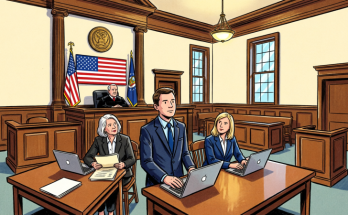
The judge upheld the protection order, and my mother, who had always worn her surname like a shield, now had to explain every bruise in front of strangers.
Valeria returned part of the money, and my brother-in-law handed over messages where she and Teresa mocked my double shifts and Mateo’s worn-out shoes.
Damián sent a letter with a new blue toy car, and I kept it without opening the door to the past.
I didn’t show it to Mateo to force forgiveness on him; I saved it for the day his heart would be bigger than the wound.
On the first day at his new school, Mateo asked to carry the red car in his backpack—not to show it off, but to feel that his father was walking beside him.
That afternoon he drew three people beneath a yellow sign and wrote “my family” in crooked letters, and that was when I understood that Julián had not left us a house or money.
He had left us a way out.