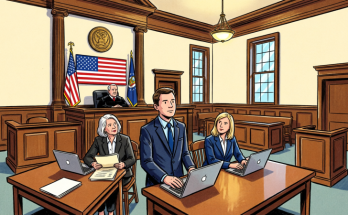
Vance hired Richard Keller, a defense attorney known for representing physicians in malpractice and licensing actions. Keller’s strategy was exactly what any experienced litigator would have predicted. Attack the complainant’s credibility. Argue that emergency medicine required rapid decisions under imperfect conditions. Suggest that the patient’s presentation was ambiguous. Claim the outcome would have been the same regardless of timing. Reframe prejudice as “clinical instinct.” Dress bias in the language of professional discretion and hope the board preferred ambiguity to conflict.
Before the hearing could begin, the story leaked.
A local investigative reporter named Christine Dalton got hold of the case. I never learned exactly who tipped her off—perhaps a nurse tired of watching Mercy General bury complaints, perhaps someone in administration angry that this one would not settle quietly—but by the time she called me, she had already done the sort of work good investigative journalists do when institutions count on fatigue and silence. She had spoken to former patients. She had reviewed court filings, settlement traces, and complaint histories. She had found families willing to tell stories they had once been paid not to discuss directly.
Her article ran in the city’s major newspaper under the headline: Pattern of Neglect: How One ER Doctor’s Bias Put Patients at Risk.
It was a devastating piece of journalism. Ethan’s case anchored the article, but it did not stand alone. Christine detailed other patients Vance had dismissed as drug seekers or hypochondriacs who later turned out to have serious medical emergencies. A young woman with a pulmonary embolism. A teenage boy with a perforated ulcer. A laborer with a bowel obstruction. A college athlete whose severe testicular pain was waved off and who nearly lost a testicle to torsion because the initial exam had been cursory and contemptuous. The article connected the complaints, the quiet settlements, the administrative inertia, and the broader issue of bias in emergency medicine. It asked the question hospitals hate most because it cannot be answered with a press release: how many people had to be harmed before anyone decided a pattern was a pattern?
The public reaction was immediate and fierce. Patient advocacy groups demanded action. Mercy General’s patient relations office was flooded with calls and emails from former patients who had their own stories about Vance. Some had never filed complaints because they assumed no one would believe them. Others had complained and been brushed aside with apologies crafted by risk management departments whose job was to preserve institutional stability rather than moral truth. Social media picked up the story. Radio hosts discussed it. Health policy outlets amplified it. National organizations concerned with implicit bias in medicine cited it as a glaring, painfully familiar example of how stereotype becomes harm when no one checks power in real time.
Mercy General, suddenly facing a public relations nightmare it could not bury under paperwork, announced it was conducting a comprehensive review of emergency department protocols and had terminated Leonard Vance’s employment effective immediately. That was satisfying in the short term, but I knew better than most how limited such victories can be. Losing one hospital appointment does not stop a physician from applying somewhere else. A quiet resignation can become a fresh start in another state if the licensing record remains clean. One institution’s exit package can become another’s hiring oversight. Termination was not justice. It was triage. The real question was whether the board would do what hospitals so often refuse to do: create consequences that followed a physician beyond the reach of one administrator’s embarrassment.
The hearing was scheduled for a cold morning in November, four months after Ethan’s ruptured appendix. The boardroom looked exactly like every boardroom where professional fates are decided: fluorescent lighting, too little warmth, long tables arranged to imply impartiality while radiating dread. Five physicians and two public members sat on the panel, appointed by the governor to review misconduct cases. Their faces gave nothing away at first. Reporters occupied the back row. Lawyers arranged binders. Court staff shuffled papers. Ethan sat beside Jeffrey, wearing a suit he hated and trying to look older than the damage had made him feel.
He testified first.
He was nervous, and anyone with eyes could see it. His hands were clasped too tightly. His voice shook on the first few answers. But then he settled into the truth. He described waking up in pain just after midnight, the worsening stabbing sensation in the lower right side of his abdomen, the vomiting, the fever, the decision to go to Mercy General because it was the closest hospital, the wait, the brief exam, the doctor’s questions about drugs, the skepticism, the humiliation. He described the growing panic of being in severe pain while a physician looked at him as though he were wasting everyone’s time.
“He looked at me like I was trash,” Ethan said quietly. “Like I wasn’t worth listening to. I kept trying to explain that something was really wrong, but it felt like he had already decided who I was before I ever opened my mouth.”
Keller cross-examined him the way men like Keller always do when the facts are bad: by trying to create fog. Was it possible Ethan had not described his symptoms clearly? Could he have minimized the onset? Had he specifically requested pain medication? Had he perhaps become agitated or confrontational? Was it possible his own anxiety had affected how he perceived the interaction? Ethan held steady. No, he had described the symptoms repeatedly. Yes, he had asked for pain relief after hours in severe pain, but he had not requested narcotics by name. No, he had not become confrontational. Yes, he had become frightened because he was being told the worst pain of his life was fake. The simple consistency of his answers made Keller’s insinuations feel grubby.
Then the nurses testified. Carol Brennan was magnificent. She did not sound emotional. She sounded competent, which in a hearing like that is far more dangerous to the defense. She described Ethan’s appearance, vital signs, level of distress, protective positioning, and the concerns she raised with Vance. She explained how often abdominal catastrophes begin in exactly the sort of presentation Ethan had. She described Vance’s dismissive response without embellishment and, by doing so, made it sound even worse.
“In twenty-six years as an emergency nurse,” she said, “I have learned to distinguish between manipulation and genuine distress. Mr. Mills appeared genuinely ill. His vital signs were concerning. His pain behavior was consistent with acute abdominal pathology. I raised those concerns. Dr. Vance did not act on them.”
David Kim’s notes backed her up. So did the third nurse’s testimony. The pattern inside that one shift became impossible to ignore: multiple staff members saw the seriousness. One physician overruled them all based on his own prejudgment.
Then Kowalski testified, and he was devastating in the way surgeons often are when forced to become witnesses. He walked the board methodically through the operative findings, the pathology, the timing, the distinction between uncomplicated appendicitis and perforated appendicitis, the consequences of delay, the evidence supporting recent rupture, and the increased morbidity caused by perforation. He explained that timely diagnosis likely would have allowed laparoscopic removal prior to rupture, avoiding generalized contamination, drains, prolonged hospitalization, and broader risk of infection.
“In my professional opinion,” he said, “the delay in diagnosis and treatment directly caused the rupture and the subsequent complications, including peritonitis, need for more extensive surgical management, prolonged IV antibiotics, and prolonged recovery.”
When Torres presented his investigative findings, the hearing stopped feeling like a single case and became what it truly was: an indictment of a pattern. He summarized the eighteen cases over five years. He described demographic skew. He cited charting deficiencies, unsupported assumptions, and repeated instances in which objective findings were minimized or ignored. He noted the recurrent use of language such as drug-seeking, exaggerating, and anxious in cases where later diagnoses established real pathology. He also highlighted that Vance’s notes often lacked the depth expected when a physician chooses not to pursue workup for potentially serious presentations. Thin documentation is often the signature of a decision made too early.
Then Leonard Vance took the stand.
He looked angry before he even sat down, which was a mistake. Boards tend to be more forgiving of contrition than contempt, and he radiated the latter. Under questioning by his own attorney, he sounded controlled. He had relied on his fifteen years of emergency medicine experience. He had used his best clinical judgment under the circumstances. Not every abdominal pain patient warranted imaging. Emergency medicine required rapid triage and risk stratification. Hindsight bias could make any adverse outcome look obvious after the fact.
All predictable. All rehearsed.
Then the board’s attorney began cross-examination.
“Dr. Vance,” she said, “your physical exam note describes mild tenderness on palpation. Three nurses documented severe distress and difficulty lying flat due to pain. How do you explain the discrepancy?”
Vance shifted. “Patients often exaggerate. Part of clinical judgment is distinguishing subjective complaints from objective findings.”
“So your position is that the nurses were mistaken?”
“My position is that I relied on my own exam.”
“An exam nursing documentation suggests lasted approximately ninety seconds. Is that accurate?”
“I performed an adequate examination.”
“Did you assess rebound tenderness?”
“I don’t recall specifically.”
“Did you assess for guarding?”
“I don’t recall.”
“Rigidity?”
“I don’t recall the exact components of the exam.”
“Did you document them?”
“No.”
“Why not?”
“I documented what I considered clinically relevant.”
She let the silence hang for a moment. “You documented that the patient appeared to be exhibiting drug-seeking behavior. What specific behaviors led you to that conclusion?”
“He requested pain medication.”
“According to the nursing notes, he requested relief for severe pain after approximately three hours in the emergency department. He did not request narcotics specifically. Is asking for pain relief after hours of acute abdominal pain, in itself, evidence of drug-seeking behavior?”
“In my experience, genuine medical emergencies present differently.”
“Differently how?”
He hesitated, and everyone in the room felt it. “The patient’s demeanor. His appearance. His communication style. It suggested someone focused on obtaining drugs rather than treatment.”
“Could you be more specific about his appearance?”
Another pause. Too long. Fatal. “He had tattoos,” Vance said finally. “Piercings. An unconventional appearance.”
“And in your medical training,” the attorney asked, her voice calm enough to be lethal, “were you taught that tattoos and piercings are contraindications for serious medical illness?”
The room went perfectly still.
“No,” Vance said.
“Were you taught that tattoos and piercings are predictive of malingering?”
“No.”
“Were you taught that they diminish the likelihood of appendicitis?”
“No.”
“Then why did they matter?”
He flushed. “Emergency physicians develop instincts.”
“Instincts based on appearance rather than clinical presentation?”
“That’s not what I said.”
“But that is what you did, isn’t it, Dr. Vance? You saw a young man whose appearance activated an assumption in your mind, and you treated the assumption instead of the patient.”
He denied it, of course. But by then denial sounded like theater. The problem with bias is not merely that it exists; it is that, once exposed under proper scrutiny, it often reveals itself in places where the person exhibiting it never bothered to build a stronger lie.
The board deliberated for two hours. Two hours during which the room emptied, refilled, emptied again. Two hours during which reporters refreshed phones, lawyers whispered, and I sat beside Ethan feeling the old, bright anger settle into something harder and colder. When the board members returned, the chairman, Dr. William Foster, adjusted his glasses, looked down at the written decision, and began to read.
“After careful review of the evidence, testimony, and investigative findings, this board finds that Dr. Leonard Vance violated multiple standards of medical practice in his treatment of Mr. Ethan Mills. Specifically, Dr. Vance failed to perform an adequate physical examination, failed to order appropriate diagnostic testing despite clear clinical indicators, allowed personal bias to influence medical decision-making, and demonstrated a pattern of similar conduct in other cases. These violations constitute serious professional misconduct that endangered patient safety.”
He looked directly at Vance.
“Dr. Vance, it is the decision of this board to revoke your medical license effective immediately. You are prohibited from practicing medicine in this state. In addition, we are forwarding our findings to the National Practitioner Data Bank so that this information is available to other state medical boards should you seek licensure elsewhere.”
Vance’s face went white. Keller rose immediately, objecting, asking for reconsideration, arguing proportionality, procedure, and professional ruin. Foster cut him off with the practiced finality of someone who knew both the law and the moment.
“The decision is final. This hearing is adjourned.”
I watched Leonard Vance gather his papers with visibly shaking hands. The smugness I had first seen in Room Four was gone. So was the institutional insulation that had protected him for years. His career was finished, his name would follow him, and most importantly, he would not be able to stand in another emergency department in that state and decide from across the room which patient looked believable enough to deserve competent care.
Outside the hearing room, Christine Dalton was waiting with a camera crew. Microphones appeared. Lights came on.
“Dr. Mills,” she said, “how do you feel about the board’s decision?”
I looked at the lens because sometimes you are no longer speaking to a reporter. You are speaking to the families who have not yet been hurt.
“I think justice was served in this case,” I said. “But I also think it should not have taken my son nearly dying to force the system to act. Dr. Vance had a documented pattern of negligent care. The hospital knew there were complaints. The board had seen concerns before. But nothing meaningful happened until one case became too visible to ignore. The question we should all be asking is how many patients were harmed because institutions chose to protect a doctor instead of protecting the public.”
The story ran that night on every local station and was picked up nationally by outlets focused on health policy and medical ethics. Commentators discussed implicit bias, diagnostic error, hospital liability, and the structural ways healthcare systems bury patterns until someone with enough expertise, privilege, or resources forces the truth into daylight. That last part haunted me most because it was true. Ethan survived in part because he had me. A father who recognized the symptoms. A father with titles, colleagues, authority, access, and the willingness to weaponize all of it. What about the patients who had none of that? The people discharged into parking lots with worsening symptoms and no chief of surgery driving through the dark toward them? What protection did the system offer them besides whatever luck they could improvise?
Three months after the board hearing, Mercy General settled our lawsuit for $1.8 million. The number made headlines, but the money mattered less to me than what came with it. The hospital agreed to implement new emergency department assessment protocols for abdominal pain and other high-risk presentations. They established mandatory bias training for all clinical staff. They created a patient advocate position specifically tasked with addressing complaints of inadequate care in real time rather than after discharge. Two administrators involved in burying prior complaints were quietly terminated. Six other patients harmed by Vance filed their own lawsuits and complaints. Mercy General settled those too. Some reforms arrived because the hospital had grown a conscience, but more arrived because scandal had finally made decency cheaper than denial.
Ethan made a full recovery, though “full” is a deceptive word. Physically, he healed. The incision scar faded from angry red to pale silver. The drains came out. The IV antibiotics ended. The abdominal tenderness resolved. He returned to class, finished his master’s degree, and later went to work for the EPA doing environmental impact assessments for development projects. He still wore his hair long. He still had the tattoos and piercings. He still looked exactly like himself, which I considered a kind of victory. But there were things the body did not record and the chart did not close. He became anxious about doctors. He flinched when people in authority sounded dismissive. He learned, in his early twenties, that pain can be real and still denied by the person paid to relieve it. That lesson leaves residue.
He also learned to advocate for himself in a way no son should have to. He learned to ask, “What is your differential diagnosis?” He learned to say, “Please document that you are declining to order testing.” He learned to walk out if a physician refused to listen and to seek another opinion before embarrassment could cost him safety. There was pride in that, yes, but also grief. A medical system that teaches patients defensive strategy before trust has already failed.
One year after the incident, I was invited to speak at a national conference on medical ethics. I stood in front of an auditorium full of physicians, residents, medical students, administrators, and policy experts and told Ethan’s story from the beginning. I told them about the 3:47 a.m. phone call. I told them about the drive, the chart note, the Tylenol, the rupture, the question about tattoos. I showed them the timeline slide by slide: onset, arrival, dismissal, rising fever, ignored nursing concerns, delayed imaging, perforation, surgery. I walked them through the standard-of-care failures with clinical precision because sentiment alone does not reform professional culture. Then I told them the part that mattered most.
“Every patient deserves to be assessed based on symptoms, findings, and evidence,” I said, standing under white conference lights in a room so quiet I could hear my own breathing. “Not appearance. Not class markers. Not accent. Not race. Not whether the physician feels comfortable with them in the first thirty seconds. When doctors allow assumptions to substitute for examination, we stop practicing medicine and start distributing care according to prejudice. And when institutions protect those physicians because they are profitable, convenient, or difficult to replace, the institution becomes part of the harm.”
The talk was recorded. Within months it was being used in medical schools as a case study in implicit bias and standard-of-care violations. I received hundreds of emails from patients describing their own experiences of being dismissed, mocked, undertreated, or sent home when something serious was wrong. Some were heartbreaking in their familiarity. A Black woman whose postpartum pain was brushed off until she became septic. A teenager with endometriosis told for years that she was dramatic. A veteran with a bowel obstruction labeled drug-seeking because he had track marks from old injuries and looked “rough.” The specifics varied. The structure did not.
Eventually Ethan and I turned our anger into something with a name. We started a patient advocacy organization aimed at helping people navigate complaints against negligent providers and understand what steps were available when medicine failed them. We worked with attorneys, former board investigators, nurses, patient-rights groups, and ethics scholars. We created guides on obtaining medical records, documenting timelines, filing with licensing boards, distinguishing bad outcomes from negligence, and identifying when bias may have shaped care. We spoke at universities. We consulted with families. We tried to build, in some small corner of the world, the support network I knew so many patients lacked.
As for Leonard Vance, he tried twice to get his license reinstated. Both times the board denied the petition. Last I heard, he was working as a consultant for a medical malpractice insurance company, reviewing claims and helping them decide which cases to contest. The irony was not subtle. A man whose care had injured patients was now helping insurers assess harm from negligent care. But medicine and law are both full of people who land on their feet unless someone nails those feet to a record that follows them.
Two years after that phone call, I was again sitting in my office at St. Catherine’s before dawn, reviewing a surgical schedule with the city still dark outside my window, when my phone rang. For one irrational second, my chest tightened exactly as it had the night Ethan called from Mercy General. Trauma teaches the body before the mind can object. But when I looked down, it was just Ethan. Calling to tell me, with obvious excitement he was pretending to play cool, that he had received a grant for one of his research projects. We talked for twenty minutes. About his work. About river restoration. About bureaucratic stupidity at the EPA. About his plans for the future. At the end of the call, just before hanging up, he said something that brought the old pressure back into my throat.
“Dad,” he said, “I never thanked you properly.”
“For what?”
“For believing me. For fighting for me. For making sure what happened to me didn’t happen to anyone else, at least not from him.”
I leaned back in my chair and looked out over the city beginning to wake under the first weak wash of morning light. “You don’t need to thank me,” I said. “That’s what fathers do.”
But after the line clicked dead, I sat there a long time thinking about all the patients who did not have someone to fight for them. The ones who were dismissed, ignored, stereotyped, inadequately treated, or quietly harmed because they lacked status, language, knowledge, money, or simply a parent who knew the difference between nuisance pain and an acute abdomen. Ethan had survived because I had the expertise and position to force accountability. That was not justice. That was privilege deployed in the service of justice after the fact. Real justice would be a system that protected patients before they needed a powerful advocate—one that believed suffering when it appeared in bodies the profession had been trained, overtly or not, to distrust.
We were not there yet. We still are not. But every complaint filed, every board that acts, every nurse who charts the truth, every administrator forced to answer for silence, every protocol rewritten, every young doctor taught that bias is not intuition and assumption is not clinical judgment—each of those things moves the line. Ethan’s near-death experience exposed one corrupt physician and forced one hospital to confront what it had protected. That mattered. It was not enough, but it mattered. And for as long as I remained a surgeon, a father, and a man who had once driven through the dark toward an emergency room where his son was being told his pain was imaginary, I knew I would keep fighting for the day when no patient’s survival depended on who happened to answer the phone at 3:47 in the morning.