My father smirked across the courtroom and said, “You don’t even have the money to hire a lawyer,” loud enough for strangers to laugh
“You don’t even have the money to hire a lawyer.”
My father’s voice carried across the courtroom sharp and amused, like he had just delivered a line everyone else was too polite not to appreciate. A few people did laugh. Not loudly. Not enough to be called cruel in retrospect. Just enough.
I stood at the respondent’s table with both hands resting lightly on the wood, fingers still in a way that had nothing to do with calm and everything to do with training. I did not look at him. I did not give him the satisfaction of watching me absorb the blow. Across the aisle, he leaned back in his chair as if he owned the room, one arm draped over the side, ankle crossed over his knee, that same easy posture he had used my entire life when he wanted everyone around him to understand that he was the one who knew how things worked.
“She thinks she can walk in here by herself,” he added, shaking his head. “No counsel, no case. Just a uniform and attitude.”
There was a murmur behind me. Curious, low, almost embarrassed on behalf of the room.
Then the judge spoke.
“Mr. Carter,” he said, his voice even and unhurried, “that will be enough.”
My father smirked, but he sat back.
The judge turned his attention to me. “Ms. Carter,” he said, pausing just long enough for the room to resettle around the sound of my name, “you understand you have the right to representation.”
“Yes, Your Honor.”
“And you are choosing to proceed on your own.”
“Yes, sir.”
He studied me for a moment longer than most people ever did. Not in judgment. In recognition. That was the unsettling part. He had already read something in the file, or in me, or in the arrangement of the morning, that the rest of the room had not caught up to yet.
Then he nodded once.
“Very well,” he said. “For the record, she won’t be needing one.”
That was when everything changed.
I didn’t react. Not outwardly. But across the aisle, my father’s attorney froze so completely that even the shift in the room seemed to pause to notice it. He had been flipping through a folder with the casual confidence of a man who expected a straightforward hearing and a forgettable morning. Now his fingers stopped mid-page. His eyes dropped to something in the file, then flicked up to me, then back down again. His expression tightened, then thinned, then cracked just slightly around the edges.
“Wait,” he murmured under his breath.
My father leaned toward him. “What is it?”
The lawyer didn’t answer immediately. He kept staring at the page as if he could will it to contain something else.
Then, quieter, almost to himself, he said, “Oh my God.”
I kept my eyes forward. But I felt it—the shift. The pressure drop before a storm.
The Portsmouth County Courthouse smelled exactly the way buildings like that always do when they have held too many lives in too small a space for too many years: old wood polish, paper, dust warmed by vents, the faint metallic scent of old radiators, and something else beneath all of it, something like patience worn thin. It was colder inside than outside. Or maybe rooms like that simply feel colder because of what people bring into them.
I had arrived forty minutes early. Sat alone on the wooden bench near the back. Watched clerks move in measured lines. Watched attorneys greet one another with the easy familiarity of people who inhabit the same weather system every day. A bailiff had nodded once when I came in. His eyes lingered for half a second on the ribbons over my left pocket. Recognition, perhaps. Or habit. Either way, he didn’t say anything. I preferred it that way.
I had not come to be thanked.
I had come because I had to.
Two weeks earlier I had been in my backyard trying to fix a broken fence panel Knox had pushed through. He was an old shepherd, mostly gray around the muzzle now, slower than he used to be, but still prone to occasional bursts of conviction over squirrels, shadows, or things only he could see. The boards were warped. The nails bent. My right knee had been aching in that deep familiar way it did when weather shifted or memory got too close. After a certain point, it becomes difficult to tell which is which.
That was when the envelope arrived.
Thick. Official. White paper too expensive for good news.
Portsmouth County Civil Court.
I didn’t open it immediately. I already knew who it was from before I saw the return line. Some things announce themselves through weight alone.
I wiped my hands on my jeans and leaned back against the fence post. Knox came over and put his head against my thigh, all the old unspoken loyalty of him settling there without ceremony.
“I guess it’s time,” I said.
He did not answer. He never needed to.
Inside, the letter was brief and clinical in the way only documents written by one person’s lawyer and designed to unsettle another can be. Petitioner: Daniel Carter. Respondent: Emily Carter.
My father was suing me.
Not for money exactly. That would have been simpler. Easier to explain and therefore easier to resist. He was suing for control. Authority over the Carter family estate. Exclusive management rights over the property and all associated assets. The petition said he was acting to preserve family legacy, operational continuity, and the public integrity of the Carter name. It alleged abandonment. Irresponsibility. Prolonged absence. Failure to discharge familial obligations.
And then there was the phrase that made me laugh once, sharply, before I could stop myself.
Conduct unbecoming.
I read that line twice. Then once more, because absurdity sometimes needs repetition to settle into recognition.
“Conduct unbecoming,” I said aloud.
Knox lifted his head.
“It’s fine,” I told him. “We’ve been called worse.”
I folded the letter carefully. Not because it deserved care. Because I did.
That night I didn’t sleep.
I sat at the kitchen table with a mug of coffee that went cold before I remembered to drink it. The house was quiet in the way only solitary houses are—fridge humming, boards settling, one window rattling slightly when the wind changed direction. I thought about calling someone. A lawyer. A friend. An old colleague. Anyone.
But every number I considered came with the same price.
Explanation.
And I was tired of explaining myself.
So I didn’t call anyone.
Instead, sometime after midnight, I stood up, walked into the bedroom, and opened the old footlocker at the end of the bed. The hinges complained softly. Inside, everything was exactly where I had left it. The dress uniform folded in tissue paper. Medals wrapped. Files sealed in careful order. A leather case with two worn corners. An old compass in a velvet pouch. Documents I never expected to need in a civilian courtroom in a county seat town I’d once spent my entire adolescence trying to leave.
I ran my fingers over the folded fabric of the uniform, feeling the texture of something so ordinary-looking that people often forget how much life can be sewn into plain cloth.
People always imagine it feels heavy.
It doesn’t.
Not in your hands.
Only when you carry it.
I closed the footlocker and knew, without quite deciding in words, that if this was going to happen, it was going to happen on truth alone.
The drive to the courthouse took forty-five minutes. Long enough for doubt to do what doubt always does when it senses an opening.
You should have hired someone.
You’re not ready for this.
He’s going to win.
You’ve spent too long learning how to hold a line in storms that make sense. This is family. Family is never clean.
I let the thoughts come. Then let them go.
Training teaches you that, too. Not to wrestle every thought to the ground. To acknowledge it. Name it. Keep moving anyway.
The morning was overcast, the kind of flat gray sky that makes roads, rooftops, and distance all seem made from the same material. Even the courthouse looked smaller under it, as though the weather had pressed it down.
I parked near the steps and sat there for a moment with both hands on the wheel.
In. Out.
In. Out.
Then I got out of the car and walked inside.
And now here I was. Standing across from the man who had spent most of my life deciding what I was worth based on who was watching.
My father looked older than the last time I had seen him. Grayer. More lined around the mouth. But not softer. Never softer. Softness, in his mind, had always been a luxury people indulged only when they didn’t have to keep a family name polished.
He adjusted his cuff links while his attorney leaned toward him and whispered something urgent enough to alter his posture but not, apparently, urgent enough to break through his own certainty.
“What is it?” my father asked.
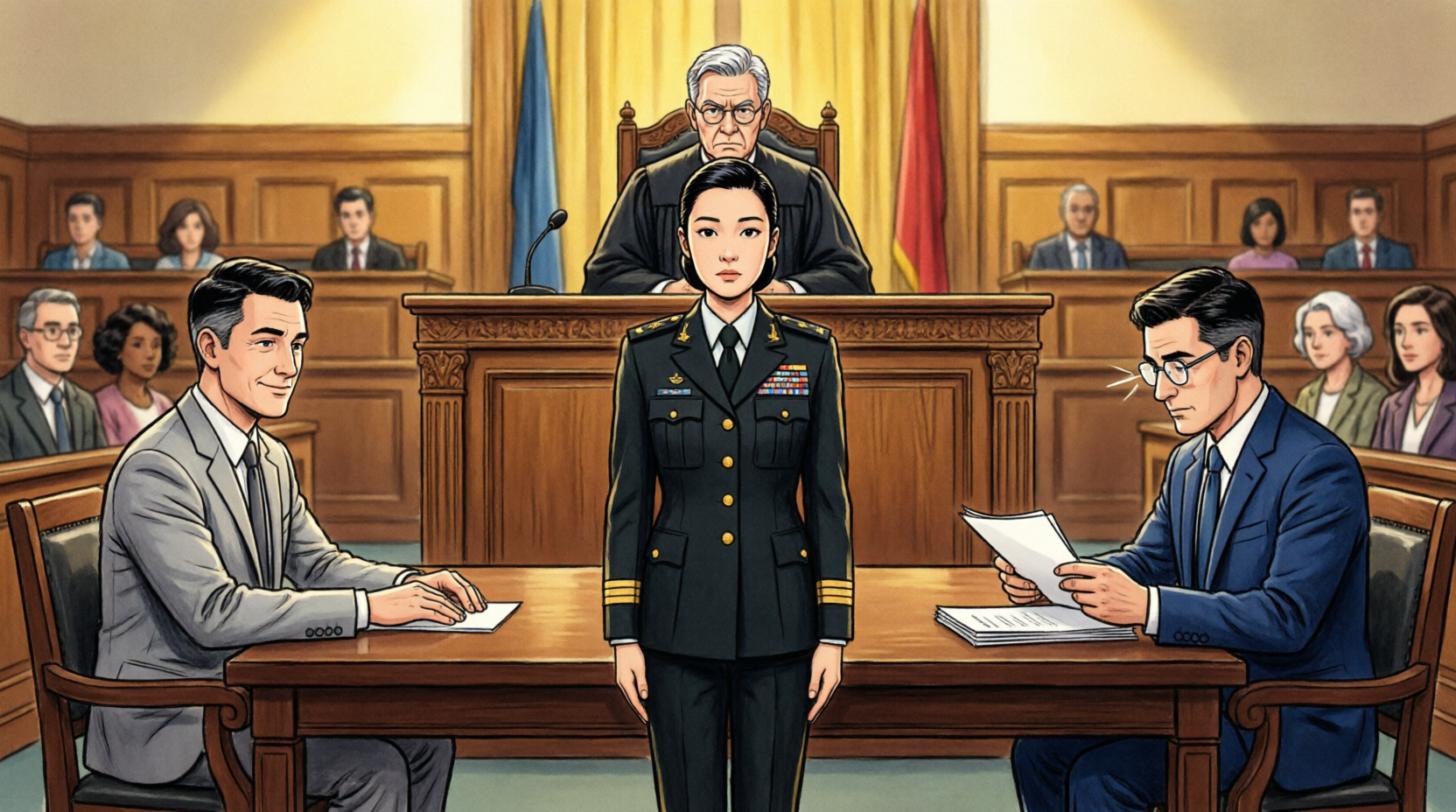
The lawyer shook his head too quickly. “Nothing. Just something I need to verify.”
But his voice had changed. Confidence replaced with something tighter.
My father didn’t notice. He rarely noticed things like that. He was very good at reading the reactions that affirmed him and very bad at reading the ones that warned him.
The judge tapped his pen lightly against the bench.
“Counsel,” he said, “are you prepared to proceed?”
The lawyer blinked, straightened, and said, “Yes, Your Honor.”
But his eyes flicked to me again. Just for a second.
He was trying to place a face he should have recognized sooner.
I met his gaze. Held it. Did not smile. Did not look away.
And for the first time since I walked into that courtroom, he looked uncertain.
Somewhere behind me someone whispered, “Why is she alone?”
I didn’t turn around.
Because the answer was simple.
I wasn’t alone.
I just wasn’t standing next to anyone.
And there is a difference.
One my father had never understood.
My father always believed that a life could be measured from the outside. Not by what it carried, but by what other people could see. Clean fence. Straight handshake. Good lawn. Reputation that got to a room before you did and made sure people stood up when you entered it. He did not teach that to me directly. He didn’t need to. Children learn what matters by watching what gets praised and what gets ignored.
When I was twelve, I won a regional science competition.
It wasn’t glamorous. No cameras. No newspaper. Just a trifold display board, a small plaque, a certificate, and a man in a navy suit who shook my hand and smelled like aftershave and courthouse coffee. I held the plaque in the back seat of my father’s car the whole way home, turning it slightly in the sunlight that came through the window and watching the letters catch.
I didn’t say much. I was waiting.
That evening Mr. Donnelly came by. Retired. Faded baseball cap. Loud voice. The kind of man who began every conversation as if he were walking into the second half of one already in progress.
“How are the kids doing?” he asked from the porch.
My father leaned against the railing with a mug of coffee and smiled the way men smile when they’re about to say something they’ve said many times before.
“Good,” he said. “My son’s got a real shot at varsity this year.”
I stood in the doorway.
Still holding the plaque.
He didn’t lie. That was the thing. He just didn’t mention me.
That was the first time I understood something I would never again be able to unlearn.
You do not always disappear because someone pushes you out.
Sometimes they just never turn their head in your direction.
My brother Aaron was easier for him to narrate. Football. Size. Ease in groups. The kind of boy men like my father know how to praise without effort because they were built to recognize him immediately as one of their own. Aaron wasn’t cruel. That would have almost made things simpler. He simply existed in the current that ran naturally through the house while I learned early how to step around it.
The first person in my family who really saw me was my grandfather.
He was quieter than my father, which in my family counted as a form of mystery. He had a small orchard on the back acreage of the family property and a habit of going out at dawn with a tin mug of coffee and not returning until the day had fully started. He let me follow him when I was little, though he never pretended it was some grand invitation.
“If you’re coming, come,” he would say. “If you’re talking, keep it useful.”
It became our version of affection.
He gave me the compass when I was thirteen. Brass, scratched, heavier than it looked. We were walking the fence line after a storm had taken down two posts and a stretch of wire.
“You ever get turned around,” he said, putting it in my palm, “don’t ask the loudest person where north is. Ask something that stays honest.”
I opened the lid. Watched the needle settle.
“Always know where you are,” he said. “Even if no one else does.”
That sentence followed me farther than he ever knew.
When I told my father I was enlisting, he had that same expression on his face he’d worn when I won the science plaque and he chose not to mention it. Not anger. Something colder. Disapproval sharpened by embarrassment.
“We don’t do that,” he said.
I was twenty-one. Old enough to sign my own papers. Young enough to still want him to ask why.
“Do what?” I asked.
“Run off like that,” he said. “Join something that puts you in the spotlight for the wrong reasons.”
“The wrong reasons?”
He nodded. “People talk.”
There it was again. People. Not you could get hurt. Not I’m worried. Not are you sure. Just people.
I remember standing in the kitchen with the enlistment papers folded in my hand and realizing with a kind of cold clarity that he wasn’t afraid of losing me. He was afraid of explaining me.
“I’m not doing this for people,” I said.
“That,” he replied, “is exactly the problem.”
We did not yell. That wasn’t our style. Our arguments were quieter than that. More precise. Like cuts instead of blows.
“You had options,” he said. “College. Work. A normal life.”
“I am choosing a life.”
“A reckless one.”
“A meaningful one.”
He shook his head. “No. You’re choosing attention.”
That stayed with me for years. Not because it hurt in the dramatic sense. Because it told me exactly how he was translating me. Through image. Through audience. Through the belief that any life he didn’t understand had to be a performance for someone else.
The day I left for training, he didn’t come to the airport.
My mother did. She stood in the terminal with her hands clasped too tightly in front of her, wearing the green jacket she always wore when she was worried because it gave her pockets for her hands.
“You can still change your mind,” she said softly.
I smiled because I did not want her to cry before I boarded.
“I won’t.”
She nodded, then hugged me longer than she ever had before.
“Call when you can.”
“I will.”
And I meant it.
At first.
Training was harder than anything I had imagined, but not for the reasons most people think. The physical part is what civilians ask about because it’s easiest to picture. The running, the carrying, the drills, the endless correction until your body learns to obey faster than thought. That part hurts, then changes you, then becomes the least interesting thing about the experience.
The hardest part is the quiet.
The moments between movement, when the body finally stills and the mind is left alone with everything it brought from home.
There were nights I sat on the edge of a bunk under dim light and wrote letters I never sent.
Dear Dad, I made it through today.
Dear Dad, you were wrong.
Dear Dad, I wish you had asked me why.
I folded those letters carefully and tucked them away, somewhere between pride and silence.
Years passed.
Deployments came and went. Duties shifted. Skills deepened. I learned how to move through chaos without letting it take permanent residence in me. How to make decisions when there wasn’t enough information and not lose myself to second-guessing afterward. How to carry responsibility without waiting for recognition to prove it was real.
Recognition wasn’t something I expected anymore. Not from him. Not from anyone.
The first time I deployed overseas, my mother cried over the phone and tried not to let me hear it. My father did not get on the line. The second time, she asked fewer questions because she had already learned I could not answer most of them honestly. The third time, I stopped calling as much. Not out of anger. Distance. Distance becomes efficient when you realize the effort of crossing it always seems to belong to one person.
When my grandfather died, I didn’t make it home in time.
I was halfway across the world standing on a flight line that smelled like dust and aviation fuel, listening to a message come through over static.
“He’s gone.”
That was it. No ceremony. No warm voice. Just the sentence.
I stood there for a long time after it ended, not moving, not speaking, while planes taxied somewhere beyond the dark and men around me continued doing whatever the hour required of them. Later that night I opened my footlocker and took out the compass.
Always know where you are.
I held it in my palm and watched the needle steady itself.
Steady. Certain. Unlike everything else.
When I came home years later, the house felt smaller than I remembered. Not physically. Emotionally. My father greeted me at the door with a nod.
“You’re back,” he said.
“I am.”
No hug. No hand on my shoulder. No pause long enough for the space between us to acknowledge itself.
He stepped aside to let me in.
We sat at the kitchen table across from one another like strangers with administrative business to discuss.
“You didn’t have to stay away that long,” he said.
I looked at him.
“I didn’t stay away,” I replied. “I stopped going where I wasn’t wanted.”
His jaw tightened. “That’s not fair.”
“It’s accurate.”
He glanced at the uniform folded over the back of my chair.
“You still wearing that?”
“Yes.”
He nodded once, slowly.
“People notice.”
Of course they do.
That had never been the point. Just not the point he meant.
The years after that were quieter. We didn’t fight much. We didn’t talk much either. A phone call on a holiday. A short visit if I was passing through. Enough to say the line hadn’t broken completely. Not enough to repair anything. Repair requires two people willing to admit something tore. My father was not built for that kind of admission.
So when the court papers arrived, I was not surprised.
Disappointed, maybe. Tired. But not surprised.
Because this was exactly how he handled things he did not understand.
Structure. Authority. Formality. If something did not fit the image, you reshaped it. Or removed it.
And I had stopped fitting a long time ago.
The legal heart of it was simple enough, at least on paper.
My grandfather had left the family homestead and acreage in a trust split between my father and me. He had done it quietly, with the particular stubbornness old men sometimes reserve for the one decision they do not want argued about after they’re gone. The family assumed, I think, that I would sign over my portion eventually or at least stop involving myself enough that the practical control would settle entirely into my father’s hands.
Instead I kept paying what needed paying.
Property taxes. Insurance lapses when they weren’t covered. The emergency repair on the west outbuilding roof after a storm opened it up. Small maintenance bills. The cost of keeping something standing even when the people living nearest it were too proud to admit it wasn’t maintaining itself out of loyalty.
I did it because it mattered to my grandfather.
And because if I didn’t, the place would have gone the way of everything else men like my father publicly love and privately neglect: admired from the road while quietly decaying at the foundation.
I did not announce the payments. I did not call him each time and request gratitude. I sent the money, kept the records, and moved on.
Apparently he had decided that my refusal to sign over full control, combined with my physical absence, amounted to abandonment. Apparently he believed a judge would agree.
What he did not know—and what I suspect his attorney only realized when he finally looked closely at my response—was that every assertion in his petition left a trail behind it. And I had spent a lifetime learning how to follow trails without making noise about it.
That was why I did not hire a lawyer.
That was the part people understood least.
Not the uniform. Not the silence. Not even the fact that I hadn’t spoken to my father in months before he filed. It was the decision to stand there without counsel.
The clerk had asked twice when I filed my response.
“You’re sure about this, ma’am?”
She wasn’t rude. Just careful. The way people get when they think you may be making a mistake with consequences that won’t fit neatly back into the day once it’s made.
“Yes.”
“These cases can get complicated,” she said, lowering her voice. “Especially when it’s family.”
“I know.”
“You’ll be going up against retained counsel.”
“I know.”
She hesitated, then leaned in slightly. “You could still ask for a continuance and get legal aid to review, or—”
“No,” I said, not unkindly. “I won’t need one.”
She studied me for a second, not judging, just trying to understand. Then she stamped the filing.
“Good luck,” she said.
I thanked her, though luck had nothing to do with it.
Back home, Knox watched me move around the kitchen the way he always did when something in the air changed. Quiet, patient, old enough to know that human agitation often comes with more movement and fewer explanations.
“You think this is a bad idea?” I asked him.
His tail thumped once.
Neutral. That was fair.
I spread the papers out on the table again even though I already knew every line in them. Tax receipts. Transfer records. Trust language. Statements from the county. Proof of payment. Notes from the veterans relief fund director verifying anonymous contributions. Certified copies of service commendations I had only included because my father’s petition made my character part of his argument and my life part of his accusation.
Everything clean. Everything documented.
Not because I enjoy paper. Because paper has fewer moods than people do.
The truth was, I could have afforded counsel. Not the flashy kind my father hired, but someone competent. I had savings. Years of them. Quiet, deliberate savings built the way people build escape hatches when they have learned not to assume anyone will catch them if they fall.
But hiring a lawyer meant translation. It meant giving my life to someone else in bullet points and letting them argue it back to me in strategy language. It meant letting another person decide which parts of me were useful to the case and which parts were emotional excess.
This was not a technical problem.
It was not about legal cleverness.
It was about truth.
And truth does not need a better vocabulary than its own.
The morning before the hearing I woke before dawn. Not because I was nervous. Because sleep had stopped being useful around three.
The sky outside was still black. The house suspended in that pre-morning silence that makes everything feel temporarily unclaimed. I made coffee. Sat at the table. Opened the footlocker again.
I had not planned to wear the uniform.
That decision arrived in the night, not as drama, just as inevitability. As if some quieter part of me had already made it and was waiting for the rest to catch up.
I lifted it out carefully. Smoothed the fabric with both hands. The ribbons aligned. The seams pressed. Nothing flamboyant. Nothing theatrical. Just honest.
Knox padded in and sat beside me, leaning one warm flank against my shin.
“You remember this?”
He didn’t answer. He stayed. That was enough.
Putting it on felt familiar in a way civilian clothing never entirely had again. Not comforting, exactly. More like stepping into a framework that had held under pressure before and would hold again.
When I looked in the mirror, I did not see someone impressive.
I saw someone accountable.
There is a difference.
I packed the folder last, slid it into the worn leather case, and just before I left I reached back into the footlocker for one more thing.
The compass.
I opened it in my palm and watched the needle steady.
Always know where you are.
I slipped it into my pocket. Not for luck. For memory.
Now, standing in the courtroom, my father’s lawyer finished his opening and sat down with visibly diminished confidence.
“Your witness,” the judge said, though in truth what followed was less witness testimony than unraveling.
My father rose when invited to add his own statement because of course he did. He had never liked letting another man speak entirely on his behalf when the room was listening.
“She walked away,” he said, facing the judge but aiming the sentence at me. “That’s the simplest way to say it.”
His voice held no anger. That would have been easier to meet. Anger acknowledges importance. This was disappointment sharpened into certainty.
“She left this family, this community, everything we built. And for what?” He gestured toward me without really looking. “For something none of us asked for.”
A small shift rippled through the gallery. Interest, not sympathy.
He turned then and looked at me directly.
“You don’t get to disappear for years and walk back in like nothing happened.”
“I didn’t disappear,” I said quietly.
He scoffed. “You might as well have.”
The judge lifted one hand. “Mr. Carter, keep your comments focused.”
My father nodded without much compliance and continued anyway.
“People notice. They talk. They ask why my daughter isn’t here, why she chose that life instead of staying and doing something respectable, something normal. And now she stands here”—his voice rose slightly—“with no lawyer, no real defense, and expects this court to believe she’s acting in the best interests of this family.”
The silence after that was heavy because it carried all the years behind it. The years of being narrated without being consulted.
The judge turned to me.
“Ms. Carter, you may respond.”
I stood. Slowly. Not because I needed more time. Because there was no reason to hurry.
“I didn’t abandon my family,” I said. My voice did not carry the way my father’s had, but it didn’t need to. “I served my country. And I kept my distance because I was made to understand that my presence was unwelcome.”
A small ripple moved through the room.
“That’s not what I said,” my father snapped.
I turned my head slightly toward him.
“You said people would talk,” I replied. “You said I made you look bad.”
“That is not the same thing.”
“It is when you say it enough times.”
The judge watched both of us without interruption, letting the truth choose its own pace.
“Ms. Carter,” he said, “address the claims regarding your absence and lack of involvement with family property.”
“Yes, sir.”
I opened the leather case and took out the folder. Not dramatically. Simply. Deliberately. I handed it to the clerk, who passed it up to the bench.
“These are records of financial contributions, maintenance payments, and tax receipts related to the Carter property,” I said. “Along with trust correspondence and county documentation.”
The judge began to read.
He did not skim. That was one of the first things I respected about him.
No one spoke.
The room held itself still around the turning pages.
“These payments,” he said after a moment, tapping one page lightly, “have been consistent.”
“Yes, sir.”
“And they originate from an account under your name.”
“Yes, sir.”
My father gave a short, disbelieving laugh. “Anyone can send money. That doesn’t mean she’s present.”
The judge did not look up.
“Mr. Carter,” he said, “you’ll wait.”
That shut him down more effectively than any anger would have.
The judge turned another page. Then another. Records have a calming brutality about them. They don’t defend themselves. They simply continue existing whether anyone likes what they show or not.
“Ms. Carter,” he said finally, “you have maintained financial responsibility for the family property despite not residing here.”
“Yes, sir.”
“Why?”
There it was. The simplest question in the room.
I thought for one second and answered the only way worth answering.
“Because it mattered to my grandfather. And because no one else was doing it.”
My father scoffed again. “Always the martyr.”
I looked at him.
“You never asked,” I said.
That landed harder than everything before it.
He opened his mouth. Closed it. For the first time that morning, he had no immediate line.
The judge set the folder down and folded his hands.
“Mr. Carter,” he said, “you have made repeated assertions about your daughter’s conduct and its impact on your family’s reputation.”
“That’s correct.”
“And you are confident that you are fully aware of that conduct.”
My father straightened instinctively. “Yes.”
The judge held his gaze a fraction longer than necessary.
“Very well,” he said. “We’ll explore that.”
Across the aisle, my father’s attorney shifted in his seat. Not because he knew exactly what was coming, but because he had begun to suspect there was more of it than he had been told.
The judge reached for the thin file with the red tab.
I knew what was in it. Or at least enough of it to understand what would happen once it opened.
It had taken me a full day to decide whether to include those documents with my response. Not because I was ashamed of them. Because they had never been for display. Service records, commendations, discharge paperwork, the documentation tying my disability pension to the same account from which the property tax payments had been made. Verification from the veterans relief fund director confirming years of anonymous donations. Not grand sums. Just steady ones.
I had included them because my father made my character part of the petition.
If he wanted to put my life on trial, he could at least do it with the correct file in front of him.
“My God,” his attorney had whispered when he saw that file earlier.
Now I understood exactly which exhibit had gotten him there.
The judge opened it.
“Mr. Carter,” he said, “you’ve stated that your daughter’s absence and conduct have brought embarrassment to your family.”
“Yes.”
“And that she has not contributed meaningfully to this family or community.”
“Yes.”
“Are you familiar with your daughter’s service record?”
My father waved one hand dismissively. “I know she enlisted. That’s enough.”
The judge looked at him.
“Is it?”
Something in the room changed again. Not louder. Tighter.
“Ms. Carter,” the judge said, “I’m going to place several items on the record. If anything is inaccurate, you may correct me.”
“Yes, sir.”
He looked back down at the file.
“According to certified Department of Defense records submitted with the response, Ms. Carter served as the logistics lead in a multi-agency evacuation operation during Hurricane Elias. The operation involved forty-seven civilians trapped in a flood zone after communications failed and access roads were compromised. She coordinated ground extraction and air support routing under those conditions.”
He turned one page.
“No civilian fatalities.”
The room went completely still.
Not quiet. Still.
My father blinked at him. “What?”
The judge did not react to the disbelief.
“Ms. Carter received formal commendation for that operation.”
“That’s not possible,” my father said. He looked at me for the first time not as an adversary but as an unknown. “She never told us anything like that.”
“That does not negate the fact that it occurred,” the judge said.
My father turned toward his attorney so sharply the chair squeaked.
“Is that real?”
The lawyer swallowed.
“Yes.”
My father looked from him to the judge to me and back again, as if he were trying to align three realities that no longer shared a shape.
The judge continued.
“For the past eight years, property taxes associated with the Carter estate have been paid in full and on time.”
“I’ve maintained—” my father began.
“They were not paid by you,” the judge said.
Silence.
“They were paid by Ms. Carter, first through active-duty salary disbursements and later through disability pension income following medical separation.”
My father’s mouth opened and then closed again.
“No,” he said. “That’s not—”
“It is,” the judge replied.
I felt the familiar tightening in my chest. Not fear. Not even discomfort, exactly. Only the strange weight of something private becoming public because someone else made privacy impossible.
“You’re telling me,” my father said slowly, voice roughening now, “she’s been paying for that property all this time?”
“Yes.”
“And no one told me.”
The judge regarded him.
“Did you ask?”
That question landed with a force none of the formal language had matched.
My father did not answer because there was no answer that could stand upright in the light.
“In addition,” the judge said, “county records and sworn verification from the Veterans Relief Fund establish that Ms. Carter has made recurring anonymous contributions over the last six years. Those funds were used to provide emergency housing assistance, utility relief, and transitional support for local veterans and their families, including several recipients within this county.”
A few heads in the gallery turned more fully now.
Recognition. Surprise. Some species of shame by association.
“The anonymity,” the judge added, “was lifted only because the financial source of the property payments became relevant to this petition.”
My father looked at me again. Really looked. Not at the uniform, or the distance, or the role he had assigned me in his version of the story. At me.
“You did that?” he asked.
The question held no accusation now. Only uncertainty.
I met his eyes.
“I didn’t think it mattered who did it.”
That was true. It had never occurred to me that one day it might matter because he would force it to.
The judge closed the red-tabbed file with controlled care, as if he understood how much quieter the room had become because of it.
“Mr. Carter,” he said, “you have argued that your daughter has brought embarrassment to your family and community.”
My father did not respond.
“At this time,” the judge continued, “the evidence before the court suggests the opposite.”
The words did not echo. They didn’t need to.
My father’s attorney leaned forward, voice tight. “Your Honor, we would request a brief recess to review—”
“Denied,” the judge said calmly. “We are well past that.”
The attorney sat back. Not dramatically. Just in the posture of a man whose strategy has collapsed faster than he can conceal.
My father’s hands were clenched on the table. Knuckles pale.
I remembered those hands. Steady. Capable. Certain. Hands that knew how to repair engines, sign checks, shake the right shoulders, point out flaws across a room. Now they looked as uncertain as the rest of him.
“I didn’t know,” he said.
Not to the judge. Not to his lawyer.
To himself.
And inside me something moved. Not satisfaction. Not relief. Something more difficult than both.
Because this was never about winning.
It was about being seen accurately, if only once.
“You didn’t ask,” I said again, softer now.
The judge let the silence stretch. He was wise enough to understand that the legal argument had ended several minutes earlier and something else had taken its place.
“Mr. Carter,” he said finally, “can you explain to this court how your daughter’s actions constitute embarrassment?”
My father did not answer.
He couldn’t.
Because the story he had built did not fit the facts anymore, and for perhaps the first time in his adult life, he did not have a way to force the facts back into place.
I stood there with both hands relaxed at my sides, breathing evenly, and felt the room change around us. Not toward me. Not away from him. Just clearer.
The truth had not raised its voice.
It had not argued.
It had not defended itself with drama or outrage.
It had simply arrived.
And once it did, there was no room left for anything else.
The courtroom never returned to normal after that.
It couldn’t.
People were still sitting in the same seats. The judge was still behind the bench. The fluorescent lights still hummed softly. The same gray walls held the same stale air. But the story everyone had walked in believing had broken in the middle, and once a story breaks, no one is quite sure where to rest their attention.
My father sat staring at nothing for several long seconds.
“I didn’t know,” he said again. Quieter this time.
The judge folded his hands.
“That,” he said, not unkindly, “has become clear.”
My father’s attorney cleared his throat softly. “Your Honor, while we acknowledge the additional information now before the court, the core issue remains—”
“The core issue,” the judge said, interrupting him with no increase in volume, “is that your client has made claims of abandonment, reputational harm, and non-contribution which are not supported by evidence.”
The attorney stopped because there was nothing intelligent to say against that.
My father finally lifted his head and looked at me fully.
His eyes were different now. Not angry. Not even defensive. Just uncertain. Like he was seeing a stranger. Or perhaps realizing that I had always been one to him and only now understanding the cost of that.
“Why didn’t you tell me?” he asked.
There it was.
The question he should have asked years ago.
The question that might have changed everything, or maybe nothing, but would at least have made the silences honest.
I held his gaze.
“You never asked.”
I did not say it harshly. I did not need to. Truth does not require force once the room is ready for it.
He leaned back as if the answer had physically moved him.
“I thought…” he started.
Then stopped.
Because whatever he had thought was no longer the center of anything that mattered.
The judge picked up his pen again and tapped it once against the bench.
A small sound. But it brought structure back into the room.
“Before I issue a ruling,” he said, “I want to be clear about what this court has established.”
He looked briefly at his notes, then back up.
“Ms. Carter has maintained consistent financial responsibility for the Carter family property. She has demonstrated ongoing contribution to the local community through verified charitable action. And she has served this country with distinction, including service that directly benefited members of this very community.”
He let each line settle before continuing.
“There is no evidence before this court that her conduct has caused harm to the Carter family reputation.”
A pause.
“In fact, the evidence suggests the opposite.”
My father closed his eyes for just a second. Long enough for some private realization to move through him. Short enough that most of the room probably missed it.
The judge straightened.
“This court does not find sufficient grounds to transfer sole authority over the Carter family assets to the petitioner. Existing ownership and management rights will remain as currently documented.”
There it was.
Clean. Clear. Final.
He lifted the gavel, then paused once more. Not for effect. For thought.
“Mr. Carter,” he said, looking directly at my father, “sometimes what reflects poorly on a family is not what its members do.”
My father opened his eyes and met the judge’s gaze.
“It’s what we choose not to see.”
The gavel came down.
Not loud. But decisive.
The sound didn’t ring so much as settle. Like the rest of the morning had.
People began to move then. Chairs scraping. Folders closing. Voices returning in careful murmurs. The hearing was over. Legally, at least.
But law was not the center of the room anymore.
I didn’t move right away.
Neither did my father.
We sat there across from each other in the aftermath of everything that had just been said. There was no triumph in it for me. No dramatic sense of vindication. Just clarity, and the strange fatigue that clarity sometimes brings when you’ve carried the opposite for too long.
My father looked down at his hands.
Still clenched.
Then, slowly, deliberately, he opened them. As if letting go of something he had been holding so long he no longer knew its shape.
“I was wrong,” he said.
The words were quiet enough to be nearly swallowed by the room, but I heard them.
They were not an apology. Not fully. They did not undo anything. They did not repair the years or explain the silences or return to me the versions of myself he had never bothered to learn. But they were real.
And for my father, real was not nothing.
I nodded once.
Not forgiveness. Not acceptance. Just acknowledgement.
He looked up again. Searching, perhaps, for permission. For instruction. For some script I had no desire to provide.
“You didn’t embarrass me,” he said, voice rougher now. “I did that myself.”
I said nothing.
There are moments when words only clutter what has already arrived cleanly.
Around us the room continued to empty. His lawyer gathered papers without looking at either of us. The clerk moved files from one stack to another with the practiced indifference of someone who has seen entire families restructured by noon and still has lunch at one. Life resumed around the edges exactly as it always does.
My father stood slowly, like a man uncertain whether his legs would remember the work of carrying him out.
He looked at me once more, then nodded. Small. Deliberate.
And then he turned and walked toward the exit.
Not with the same certainty he had brought in with him. Not broken either. Just changed.
I watched him go because for the first time I genuinely did not know what came next.
When I finally stood, the room felt different. Lighter, perhaps. Or maybe I was simply carrying less of his version of me than when I walked in.
I gathered the folder, slid it back into the leather case, and as I moved toward the door I slipped a hand into my pocket and touched the edge of the compass.
Still there.
Still steady.
Still pointing somewhere certain.
For years I had lived with the idea that being misunderstood was simply one of the costs of a certain kind of life. That some people would never see you clearly and there was no point exhausting yourself trying to adjust their angle of vision. Perhaps that is true.
But standing there in the quiet aftermath of that hearing, I realized something else.
You do not have to change what people see.
You only have to stop standing inside the version of yourself they created.
Once you do that, truth has a way of finding its own direction.
I didn’t leave the courthouse immediately.
Most people did. They always do. Once the ruling lands and the drama thins out of the air, there is nothing left for spectators to consume. But I stayed for a while in the hallway outside the courtroom, not because I needed to, exactly, but because I had no clear sense yet of where to carry myself next.
The hallway was quieter than before. Not empty. Settled. Sunlight came in through the tall windows and cast long pale bars across the floor. Dust moved slowly in it like time had decided to become briefly visible.
I stood near the window with one hand against the cool glass and let myself feel what was there.
Not victory.
Not relief.
Something softer than either.
Release.
A man in a worn veterans’ cap walked past, then stopped. He looked at me for a second, eyes settling on the ribbons above my pocket.
“Thank you for your service,” he said.
Simple. Direct. No performance around it.
I nodded.
“Thank you for yours.”
He smiled once and kept walking.
That was it. No questions. No expectation. Just recognition without extraction.
Outside, the air had changed. It always does after something like that. Cooler. Cleaner. Like the world has quietly reset itself while you were inside.
I went down the courthouse steps slowly, my knee reminding me that some things do not reset at all. They simply learn to ache more politely.
My car was where I had left it. Of course it was. Some things don’t move unless you do.
I stood beside it with the keys in my hand, not quite ready to get in.
That’s the part no one tells you about. What happens after. After the confrontation. After the truth is said aloud. After the moment you thought might rearrange your entire life passes and the world beyond the courthouse goes on pretending it was just another morning.
I drove without much plan. Let the roads choose.
The town looked exactly as it always had. Same diner. Same hardware store. Same sidewalks worn in the same patterns. Same people carrying paper bags and coffee cups and the small invisible burdens of a normal Tuesday. Nothing appeared transformed. And maybe for them, nothing was.
I passed the old diner my father used to take us to on Sundays and slowed without meaning to. The sign was still faded red. The same booth by the window was occupied by two men in work jackets talking with their hands. I did not stop.
Some places have already given you everything they were ever going to give.
By the time I got home the light had begun to soften toward evening.
Knox was waiting at the door, tail moving once, twice, slow but steady.
“Well,” I said quietly as I set down my keys, “that’s done.”
He leaned into my leg.
Solid. Present. Uncomplicated.
I scratched behind his ear.
“You probably would’ve handled it better.”
He huffed softly. Disagreement, maybe. Or old-dog fatigue.
I took off the uniform jacket and laid it carefully over the back of a chair. It looked exactly the same as it had that morning. Pressed. Ordered. Still.
But it felt different.
Not lighter.
Just quieter.
That night I slept.
Really slept.
Not the kind where your body goes still but the mind keeps pacing. The kind where something inside you finally understands it no longer has to brace.
The next morning arrived without urgency. Sunlight through the blinds. Knox circling his bowl with the impatience of old dogs who may have lost half their speed but none of their certainty that breakfast is overdue. I poured his food, made coffee, stood at the sink looking out into the yard.
The fence still needed fixing.
The boards were still warped. The nails still bent.
Some things do not change overnight. They require time, effort, hands willing to work without spectacle.
The phone rang around nine.
I almost let it go. Then I picked it up.
“Emily.”
My mother’s voice. Soft. Careful. As if volume itself might make the conversation harder.
“Yes.”
A pause.
“We heard.”
“I figured.”
Another pause.
“He didn’t know,” she said quietly.
I closed my eyes for a moment.
“I know.”
Silence, but not uncomfortable. Just full.
“He’s been sitting on the porch all morning,” she said. “Hasn’t said much.”
“That sounds right.”
“I don’t think he knows what to do with it.”
“Most people don’t.”
We didn’t stay on the phone long. We didn’t need to. Some conversations do not require duration. Only honesty.
That afternoon I drove out to the old family property.
The one at the center of everything.
It looked the same as it always had from the road. Weathered. Steady. The porch still slanting a little to the left because my grandfather had always said he’d fix it after harvest and then never quite got around to it. The shed roof repaired. The fence line mostly holding. The back acreage turning gold with the late season.
I walked the perimeter slowly, checking boards, corner posts, the places where weather had started small work on the edges. Under the porch rail, the initials were still there. Carved decades ago with a pocketknife and adolescent solemnity.
E.C.
A.C.
Mine and Aaron’s.
Faded, but not gone.
I ran my thumb over them.
“You kept it in good shape.”
The voice came from behind me.
I didn’t turn immediately. I knew who it was.
“I tried,” I said.
My father stepped up beside me. Not too close. Not far either. Just there.
We stood in silence for a while looking at the same property, maybe seeing entirely different things in it. He had always seen inheritance as continuation of image. I had always seen it as responsibility.
“I watched that clip,” he said finally.
“What clip?”
“The evacuation.” He kept his eyes on the field. “News segment. It’s still online.”
Of course it was.
“I didn’t know,” he said again.
I nodded once. “I know.”
He put his hands in his jacket pockets. Shifted his weight.
“I always thought…” He stopped. Started again. “I thought if you weren’t here, it meant you didn’t care.”
I turned and looked at him.
“It meant I didn’t feel welcome.”…..