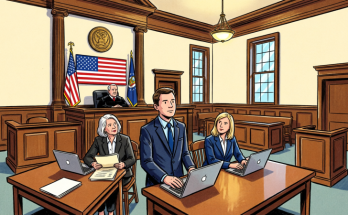
At 7:15 on a Wednesday morning, River North looked polished enough to sell the illusion that order was permanent.
The sky outside my windows was the color of brushed steel. The buildings across the street rose clean and vertical, every pane of glass reflecting some colder, more expensive version of the city. A plow scraped somewhere below. A siren sounded far off and then dissolved into the winter air. In my kitchen, the espresso machine gave one last civilized hiss, and I wrapped both hands around my mug before carrying it to the living room.
My condo was quiet in the way only a hard-earned place can be quiet. Not empty. Not lonely. Controlled. The heat was low because I liked the contrast of warm coffee against cool air. The marble counters were clear. The throw blanket on the sofa was folded into a perfect rectangle. The dining table was free of clutter except for a bowl of green apples that nobody ever ate. Everything in that space had been chosen, paid for, and protected by me.
That mattered.
People who had been given safety all their lives thought of peace as a pleasant background setting, something that came naturally with square footage and good insulation. They had no idea peace could be built plank by plank, invoice by invoice, denial by denial. Mine had taken years. Mine had interest rates attached.
The buzzer rang.
I frowned and glanced at the time on the microwave display. Nobody visited me unannounced. My friends texted from the elevator. Delivery drivers left things with the front desk. For one absurd second, I wondered if someone in the building had died and the board had chosen that exact moment to circulate another sanctimonious email about noise levels and decorum.
Then the buzzer rang again, sharp and insistent.
I set the coffee down, crossed the foyer, and pressed the intercom button. “Yes?”
“Delivery for Alexis Carter.”
The voice was flat, formal, and impatient. Not a florist. Not a neighbor. Not anything I would have invited upstairs.
I buzzed him in anyway.
When I opened the door a minute later, the man standing there wore a dark coat, a knit cap, and the expression of someone who had spent years placing bad news directly into other people’s hands. He asked my name without looking at me, checked it against a clipboard, and held out a thick envelope.
“Need your signature.”
I signed.
He gave me the envelope, turned, and left before the elevator doors had fully reopened. Efficient. Detached. The courier class of catastrophe.
I shut the door and stood in the foyer, one hand still on the lock, staring at my own name typed across the front in block letters. The paper had weight to it, the kind of weight legal trouble likes to announce itself with. Not a letter. Not a misunderstanding. An event.
I tore it open with one finger and pulled out the stack.
The header hit me first.
Petition for Filial Responsibility Support.
For a moment I didn’t understand what I was reading. The words were English. The structure was legal. My mind processed every character and still rejected the meaning. Then my eyes dropped to the names of the petitioners
Gary Carter.
Susan Carter.
My parents were suing me.
Not asking. Not pleading. Not attempting some grotesque, manipulative family conversation before escalating matters. Suing. They were petitioning for monthly financial support on the grounds that they were destitute and that, as their adult daughter with “substantial resources,” I had a duty to maintain them.
The room went soundless.
I did not gasp. I did not drop the papers. Nothing dramatic happened, which was almost disappointing, because some part of me believed that if a betrayal was large enough, the body should perform accordingly. Knees buckling. Pulse roaring. Coffee shattering on marble.
Instead I went cold.
There is a point in a crisis where emotion is a luxury item. I had spent most of my career in risk analysis learning to recognize that point. Panic uses resources. It burns time, clarity, judgment. It fogs the numbers. I had no interest in spending any of my morning on inefficiency.
So I carried the documents to my dining table, sat down in the nearest chair, and began reading as if I were reviewing a hostile acquisition.
The complaint was grotesque in a way that almost deserved admiration. According to their filing, my parents had provided me with “the necessities of life” throughout my childhood—food, shelter, clothing, education—and had done so with the “reasonable expectation” that I would support them in later years. They claimed there had been a verbal understanding. An implied contract. A moral and material arrangement under which they invested in me, and I, in turn, would ensure their comfort in old age.
They were trying to invoice me for being raised.
Worse, they were alleging that my refusal to liquidate my assets—including, specifically, my residence—constituted bad faith and a breach of that alleged understanding. The filing mentioned the “availability of home equity” in language so dry and sterile it took me a second to register what they were actually saying.
They wanted me to sell my condo.
They wanted my home.
Because my sister’s divorce was costing them a fortune.
I leaned back slowly and looked around my living room. The early light lay pale and rectangular across the hardwood. The white walls reflected it back with surgical precision. The city beyond the glass kept moving, entirely indifferent to the fact that the people who had brought me into the world had just formally requested that I dismantle the only stable thing I had ever built so they could preserve the illusion of my sister’s life.
I picked up my coffee again. It had already cooled a little.
Then I opened my laptop.
My parents had always been terrible with technology. Not in the quaint, lovable way older people sometimes are. In the lazy way. In the entitled way. Passwords were beneath them. Two-factor authentication was an insult. Software updates were a conspiracy designed to inconvenience serious people. Years earlier, when Gary nearly locked himself out of his tax portal during a mild rage episode over a forgotten PIN, I had set up a shared family cloud account and become the administrator simply because I was the one in the room who could read instructions without taking it personally.
They forgot I still had access.
Or maybe they never remembered in the first place. I had never occupied enough of their imagination for them to keep track of what I controlled.
I logged in on the first try.
There they were: scanned statements, tax returns, insurance forms, trust documents, business records, mortgage paperwork, PDFs of old contracts, entire years of badly organized digital life stacked in folders with names like IMPORTANT!!! and taxes_final_final_REAL. Gary liked to preserve the evidence of his incompetence with exclamation points.
I didn’t browse.
I downloaded.
Every tax return from the past five years. Every bank statement. Every credit card bill. Every transfer confirmation. Every insurance document. Every screenshot of wire instructions Gary had uploaded because he was terrified of deleting anything and too arrogant to label it clearly. The files stacked themselves into neat progress bars while Chicago brightened outside my windows.
When the download finished, I changed the passwords.
One after another.
Cloud access. Shared email backups. Drive recovery options. The financial folder permissions. I removed their devices from the trusted list, revoked external sessions, and updated the recovery phone number to mine. If they were going to drag me into court with fabricated poverty, they were not going to do it while having uninterrupted access to the digital records of their spending habits.
Only then did I close the laptop and stand.
I walked to the wall between the windows and pressed my palm against the cool plaster.
My mother had once described my condo as “chic but a little severe,” which was her way of saying it didn’t look like her. There were no ornate mirrors, no pointless velvet chairs, no decorative trays designed to hold nothing. The place was all angles and quiet materials—oak, stone, steel, linen. It looked like what it was: a space designed by a woman who had spent too many years in rooms where every object carried judgment.
To my parents, this place was a number.
An asset.
Available equity.
Something that could be leveraged, refinanced, sold, repurposed, absorbed into the family machine.
To me, it was made of all the things I had swallowed.
It was made of the winters I walked to work instead of taking the bus because six dollars a day multiplied into something meaningful if you respected arithmetic. It was made of the years I ate rice, beans, eggs, and frozen vegetables so often I could build a week’s meals in my sleep. It was made of every wedding I attended with a dress I had altered myself, every happy hour I skipped, every impulse I strangled before it could become a charge on a credit card.
It was made of a girl at sixteen watching her younger sister get a nose job for her birthday because the family doctor had produced a note about a “deviated septum,” while that same girl was handed a fountain pen and told not to roll her eyes because practical gifts built character.
It was made of college acceptances opened alone at the kitchen island because Susan was out with Gabriella shopping for pageant gowns and Gary had to “entertain a client,” which later turned out to mean golf.
It was made of all the times I heard, “You understand, Alexis,” in tones of relieved expectation, as if my understanding were some domestic utility that switched on automatically whenever the family needed a sacrifice that could be reframed as maturity.
My sister got investments.
I got lessons.
When Gabriella wanted acting classes, voice coaching, extensions, a personal trainer, a photographer, a stylist, another set of whitening trays, another round of laser treatments, another trip because “networking is essential in her field,” money appeared. Credit was found. Rationalizations bloomed overnight like mold.
When I needed textbooks, I was told to compare used prices.
When I got a scholarship, the celebration lasted exactly one dinner. Then Gary toasted my independence as though the financial burden I had removed from his shoulders was a touching gift from daughter to father.
I had learned young that there were two kinds of children in my house. There were mirrors, and there were tools.
Gabriella was the mirror. She reflected back everything my parents liked to think of themselves as—beautiful, envied, socially fluent, destined for rooms with chandeliers and a waiter standing by. She was the daughter my mother dressed emotionally before she was even old enough to zip her own dresses. She was the face Gary liked to bring to dinners because wealthy men smiled at her and wealthy women asked questions with a fascination sharpened by competitiveness.
I was the tool.
Reliable. Useful. Not especially decorative.
The first time I noticed the distinction clearly, I was ten years old. I had won second place at a district science fair with a project on water filtration, a board full of diagrams and careful notes written in my neatest block print. I remember holding the ribbon in the parking lot after the ceremony, still warm with the excitement of having done something exact and good. My mother hugged me with one arm while checking her watch.
“We have to go,” she said. “Gabriella’s dance rehearsal starts in forty minutes.”
I was still carrying the display board when I climbed into the back seat. My father didn’t ask what the project had been about. He only said, “Second is excellent,” in the tone people use when they don’t want to discuss why it wasn’t first.
That night, my ribbon ended up in a junk drawer beneath old batteries and expired coupons.
I remembered that drawer years later when I signed the closing papers on this condo.
I was twenty-eight, sitting in a conference room with too much fake art on the walls and a pen that cost less than the one I’d received at sixteen. I had put down more than anyone thought I could. The broker smiled. The attorney slid papers toward me. My hand shook once before I steadied it. Not because I was afraid of the debt. Debt I understood. Debt could be managed. Debt could be forecast.
What made my hand shake was the thought that a door in the world was about to open and the key would be mine.
Not my parents’. Not my sister’s. Not some future husband’s. Mine.
Now they wanted it back.
I removed my hand from the wall and returned to the table.
On the laptop screen, the downloaded folders sat in neat rows like ammunition.
They wanted to have a war over resources. Fine.
But wars are won by whoever understands supply lines, vulnerabilities, and timing. And if my parents were foolish enough to believe that years of neglect had left me soft, then they had confused silence with weakness—a common error among people who only recognize power when it arrives wearing their own face.
I spent the rest of the morning reviewing the complaint, flagging inconsistencies, making notes, and forwarding the filing to a law firm a managing director at work had once described, with visible admiration, as “discreetly savage.” By noon I had retained Martin Reynolds, whose website photograph showed a silver tie, a good haircut, and the kind of smile sharks would recognize as kin.
He called me fourteen minutes after I signed the engagement letter.
“I’ve read the filing,” he said without preamble. His voice was clipped, warm, and dangerous. “My first impression is that your parents are either desperate, delusional, or operating under the mistaken belief that guilt is a substitute for legal merit.”
“They’ve built an entire family culture on that assumption,” I said.
A soft sound at the other end—almost a laugh. “Good. Humor under pressure is useful. I’ll file the initial response this afternoon and a motion to dismiss. In the meantime, I want everything you have that touches their actual financial condition.”
“I already have it.”
That got his attention. “How already?”
“I had administrative access to the family cloud. They forgot.”
A beat of silence. Then, “Ms. Carter, I think I’m going to enjoy working with you.”
By the time darkness came down over the city, the first wave of shock had hardened into purpose. I ordered Thai food, ate half of it standing at the counter, and spent two hours building a preliminary map of my parents’ finances from the documents I had downloaded. Lease obligations. Credit balances. Property taxes. Insurance premiums. Business income. Declared assets. Transfers.
The numbers looked wrong in the way numbers only do when vanity has been playing with them.
I slept badly and woke before dawn.
The next evening I drove to Naperville because my parents had insisted on a “settlement conversation” before lawyers “made things ugly.” As if ugliness were a threshold we had not already crossed. As if the process server had been delivering a brunch invitation.
The highway west was a ribbon of black ice and reflected headlights. Chicago dropped away behind me in fragments—bridges, towers, the dark shine of the river—and the suburbs rose up in stages, wealth flattening itself into land. Strip malls. Planned developments. Churches with floodlit signs. Gas stations bright as operating rooms.
My parents lived in a sprawling colonial set back from the road behind tasteful landscaping and a circular drive. The house was all symmetry and expensive pretense: brick facade, white trim, shuttered windows that had probably never been opened. Two leased luxury cars sat in the driveway, both polished within an inch of their dignity. A wreath still hung on the front door, long after the season when wreaths were defensible.
From the outside it looked like stability.
From the outside, a lot of things had.
I sat in my car for a moment with the engine running, watching light pool gold behind the curtains. I could already picture the room they would put me in, the arrangement of bodies, the temperature of the air, the performance they had prepared. My family had always preferred emotional coercion in well-upholstered settings. It made them feel civilized.
Then I killed the engine, took my purse, and went inside.
Susan opened the door before I rang.
Her face was arranged into concern the way other women apply foundation—carefully, with a practiced hand and an awareness of where the light would strike. She wore a cream cashmere cardigan, pearl earrings, and a scent that cost too much to ever smell accidental.
“Alexis,” she said, as though this were a hospital vigil and not an ambush. “Thank God. Come in.”
The foyer was lit softly, warmly, strategically. A mirror the size of a billboard reflected my coat, my boots, my expression. For one vivid second I saw myself there at thirteen, holding grocery bags while Susan adjusted Gabriella’s shawl before a school fundraiser. Same mirror. Same house. Same invisible labor.
I walked past her into the living room.
The stage was set exactly as expected.
Gary stood near the bar cart pouring scotch into crystal tumblers, his posture relaxed in the theatrical way of men who believe money entitles them to control the emotional weather of a room. He had gone grayer in the last year, but he still wore authority like a custom suit. Every movement implied that the universe had always intended to consult him before making decisions.
Gabriella was curled on the white sofa in cream loungewear so soft it looked imaginary. Her eyes were red-rimmed in the careful, glossy way that required both makeup skill and an audience. A silk handkerchief was clenched in one hand. Her phone lay faceup beside her, within easy reach, like an oxygen line.
When she saw me, she inhaled sharply and pressed the handkerchief to her mouth.
“Alexis,” she whispered. “Oh my God. I’m so glad you came.”
I said nothing.
Gary gestured toward an armchair set slightly apart from the sofa, not close enough for solidarity, not far enough for escape. The seat of the designated witness. The reluctant accomplice.
“Sit down,” he said. “Let’s not make this harder than it needs to be.”
I sat. I placed my purse on my lap. Not because I was nervous. Because shields should be where you can reach them.
Susan folded herself into the chair opposite mine and clasped her hands. “We know the legal filing upset you,” she began, her tone smooth with patronizing sympathy. “The attorneys advised that we create urgency. Otherwise you tend to withdraw.”
I almost admired the phrasing. My refusal to surrender my life on command had become a behavioral flaw requiring management.
Gary handed a tumbler to Susan, took the other for himself, and remained standing. “This is a liquidity issue,” he said. “Nothing more. Your sister’s situation has become… unexpectedly expensive.”
Gabriella let out a small broken sound, as though the word expensive had struck her physically.
My mother shot her a look full of maternal anguish, then turned back to me. “Blake is being vicious. He’s enforcing every clause in that prenuptial agreement. He’s trying to leave her with nothing. We cannot let her face that kind of humiliation.”
Humiliation.
Not instability. Not fear. Not betrayal. Humiliation. The public-facing consequence. The optics of suffering.
I looked at my sister. She stared down at her lap with the concentration of someone monitoring how grief was landing from the best angle.
“And the lawsuit?” I asked. My voice sounded strange in that room, too flat to be manipulated. “Was that also about avoiding humiliation?”
Susan’s expression tightened, but only for a second. “It was about making you understand the gravity of the situation.”
Gary took over, as he always did when matters needed translation into commerce. “You have equity. We need liquidity. This is not emotional. It’s strategic. You sell the condo, free up the capital, we stabilize the family position, and when the divorce settles, you are made whole. With interest, if that’s what you need to hear.”
I stared at him.
There are moments in life when understanding arrives not as a gradual illumination but as a blade. Clean. Immediate. Dividing what you thought you knew from what had always been true.
That was one of those moments.
I had spent years thinking I was the disappointing daughter because I lacked glamour. Because I did not glitter. Because I never made a room turn its head and recalculate itself around me. I had believed, on some childish level I had never fully exorcised, that if I were somehow softer, prettier, louder, easier to display, they might love me in the language they reserved for Gabriella.
But sitting in that armchair while my father talked about home equity as if my life were an underperforming division, I finally saw the structure clearly.
They had never wanted me to shine.
They had wanted me to hold.
That was different.
Gabriella was the family’s speculative investment—high risk, high visibility, dependent on external validation and expensive upkeep. I was the conservative instrument. Stable. Unexciting. Meant to appreciate quietly in the background until the day the other asset collapsed and needed covering.
They had not praised my thrift because they respected discipline.
They had cultivated it.
They had not pushed me toward finance because they believed in my gifts.
They had pushed me toward solvency.
All those years of “You’re the practical one” and “You understand money better than your sister” and “It’s good you don’t need as much” rearranged themselves into their proper shape. It had never been a compliment. It was conditioning.
I wasn’t their daughter in that room.
I was their reserve fund.
My throat tightened once, then cleared.
“And what happens to me?” I asked.
Susan blinked as if the question were oddly selfish. “What do you mean?”
“I mean after I sell my home. After I liquidate the only asset I built without any help from this family. Where do I live while you repair the damage Gabriella has done?”
Gabriella finally looked up. Her face crumpled with offended pain. “I didn’t do this on purpose.”
“No?” I said. “The divorce filed itself?”
“Alexis,” Susan snapped. “This is not the time.”
That was another family rule. The truth was always badly timed if it inconvenienced the preferred narrative.
Gary swirled the scotch in his glass and tried another tone, one he used with employees who had forgotten he signed their bonuses. “Nobody is asking you to be homeless. Don’t be dramatic. You can rent for a while. You’re single. You have flexibility.”
Single. Flexible. Portable. The family spreadsheet had columns for everything.
A memory flashed so suddenly it made the room double for an instant: me at twenty-two, home from graduate school for Christmas, opening a gift from my parents and finding a structured leather planner embossed with my initials. Gabriella, seventeen then, had shrieked over diamond studs, a weekend in New York, and a consultation for another cosmetic “correction” that the adults discussed in lowered voices as if calling vanity medicine could make it tax deductible. When I smiled politely and thanked them for the planner, Gary had clapped me on the shoulder.
“You’re easy,” he’d said. “That’s one of your best qualities.”
Easy.
Meaning cheap.
Meaning self-contained.
Meaning less.
I looked now at the three of them arranged under the recessed lights like a still life of entitlement and ruin, and something inside me that had spent years trying to negotiate for crumbs simply stopped.
“I’m not selling,” I said.
The air changed.
Susan’s mouth flattened. Gary’s shoulders squared. Gabriella started crying harder, the performance switching instantly from tragic to accusatory.
“You are unbelievably selfish,” my mother hissed. “Do you know what your sister is going through?”
I stood up.
“No,” I said. “But I know what I’ve gone through. And none of you noticed because I was useful.”
Gary set his drink down with controlled force. “Sit back down.”
I picked up my purse.
He stepped toward me, not quite aggressive, but with the old paternal assumption that a command from him still had gravity. “We are your parents. We fed you, clothed you, educated you. We made sacrifices.”
The words might have worked once. At nineteen. At twenty-three. At twenty-six, after a brutal quarter at work when I was too tired to defend myself properly and still stupid enough to crave their approval.
Not anymore.
“You raised your child,” I said. “That was not a line of credit.”
Susan’s eyes widened, partly with outrage, partly because somewhere beneath the outrage she recognized the sentence for what it was: an exit.
“After everything we’ve done for you?” she whispered.
I looked at her carefully. This woman who could cry on command at charity luncheons. This woman who had once told me, while pinning Gabriella into a pageant dress, “Some girls are made for admiration, Alexis. Other girls are made for substance. Be grateful you’re one of the second kind.” As if substance were a consolation prize handed to daughters who failed to delight.
“You didn’t do things for me,” I said quietly. “You did just enough that I would survive and still feel obligated.”
Gabriella made a choking sound. “How can you say that? We’re family.”
There are people who use the word family the way arsonists use gasoline. Liberally. Strategically. Believing the destruction afterward proves passion.
I gave her the kind of smile that contains no heat at all.
“No,” I said. “We’re related. That’s not the same thing.”
Then I walked out.
I didn’t slam the door. Slamming is reactive, and I was done giving them reactions they could use as evidence of my instability. I closed it gently behind me and crossed the front walk while Susan called my name from somewhere inside the house, her voice already rising into public tragedy.
The cold hit me like clean water.
I got into my car, locked the doors, and sat there for a second with both hands on the steering wheel while my phone began vibrating in the cup holder. Once. Twice. Three times. A cluster of texts. A call. Another call. My mother. Then Gabriella. Then my father.
I put the device on Do Not Disturb, backed out of the driveway, and drove east toward the city with my jaw set so hard I could feel my pulse in the roots of my teeth.
Traffic thinned as I reached the expressway. The lights of downtown appeared eventually in the distance, a geometry I trusted more than blood. By the time I crossed the river, I had made up my mind about what came next.
No more half-measures.
No more defensive crouch.
If they wanted to drag me into a formal dispute, then I would stop treating this like a family crisis and treat it like what it was: hostile litigation initiated by unstable actors with poor records, weak leverage, and a dangerous underestimation of their opponent.
Reynolds took my call at 9:12 that night.
“I want to know everything,” I said. “Not just enough to defeat the complaint. Everything they’re hiding.”
There was a pause. Paper shifting. I pictured him leaning back in his office chair, pleased.
“Now we’re talking,” he said.
For the next three nights, my dining table became a command center.
I worked my regular hours, returned home, changed into soft clothes, made coffee or tea depending on how close I was to midnight, and then opened the files. There is a point at which documents stop feeling inert and begin to breathe. Patterns emerge. Omissions glow. A transfer that looked harmless on Tuesday becomes suspicious on Wednesday once you’ve found the second copy of the same amount under a different label.
I chased money through my parents’ lives the way a tracker follows blood through snow.
At first the findings were merely ugly. Leases on cars they had no business driving. Revolving credit balances with interest rates that bordered on predatory. Five-star vacations disguised in Gary’s business accounts as “client hospitality.” Country club charges labeled as networking. Spa invoices. Boutique hotel stays. Concierge medical subscriptions. Cosmetic dermatology charges large enough to finance a graduate semester.
I found recurring payments to a stylist in Los Angeles whose invoices referenced “campaign prep.” I found retainers for photographers. Social media consultants. A monthly package from a company that specialized in “reputation enhancement,” which turned out, after ten seconds of searching, to mean follower inflation and comment management for people desperate to appear wanted by strangers.
Every line item was a sentence in the same language: maintain appearances at all cost.
Sometimes I would stop and stare at a charge and feel my childhood rushing back through it.
A two-thousand-dollar invoice for “image coaching” landed me, without warning, in the memory of being fourteen and told I could not go on a class trip because the cost was “frivolous.” The same month, Gabriella had been sent to a weekend workshop in Orlando with a woman who taught teenagers how to “command a room.” Susan had called it an investment in poise.
A charge for a med spa in Scottsdale conjured up my freshman year of college, when I had called home in tears because one of my molars had cracked and my insurance wouldn’t cover all the dental work. Gary had sighed into the phone and said, “You’ll have to figure out the difference. You’re an adult now.” Three weeks later, Gabriella posted photos from Arizona with a caption about “wellness and resetting energy.”
If resentment were all I had found, it would have been painful but unhelpful. Courts do not award damages for being the invisible child. There is no line item for emotional neglect, no neat declarative number you can circle in red and submit as exhibit A.
But numbers can still tell the story if you are patient.
On the second night, sometime after one in the morning, I found the first transfer out of my grandmother’s trust.
The account was one I knew by sight because I had helped scan some of the original paperwork after Grandma Lenora died. She had not been rich, not by Naperville standards. She had been the kind of woman who bought butter on sale, saved rubber bands in a coffee tin, and mailed birthday cards with exactly the right amount of cash folded inside. She had lived in a brick bungalow on the south side for forty years and maintained the astonishing belief that education should be paid for before wallpaper.
When she died, the family spoke of her with reverence so polished it almost sounded sincere. Gary and Susan were named trustees of a modest education fund meant to be divided among the grandchildren for tuition, books, certifications, whatever made a future more stable. I remember sitting at their kitchen table after the funeral, helping sort documents while Susan sniffled into a tissue and said, “Your grandmother always believed in the practical things.”
At the time, I had thought she meant me.
Now, watching the account history on my laptop, I realized practical things were exactly what my parents had chosen to cannibalize.
The first transfer was small enough to escape casual notice. Twelve thousand to an LLC I didn’t recognize. Then another. Eight thousand. Twenty-five. Fifteen. Over the course of months, then years, the withdrawals grew larger and more frequent, always routed through a shell company with a bland, professional name: GB Social Strategies.
GB.
Gabriella Blake, after her marriage.
Or Gabriella Brand, if you wanted to be more honest about the product being sold.
My pulse slowed.
When fury gets cold enough, it stops shaking.
I opened a new spreadsheet and began tracing every transfer from the trust to the shell company, then from the shell company outward. Payment processors. Travel agencies. Luxury rentals. Agencies specializing in brand partnerships. A boutique firm that, after another search, turned out to offer “engagement acceleration” packages to influencers with aspirations larger than their audiences.
Bot farms.
They had stolen from a dead woman’s education fund to buy my sister followers.
The absurdity of it would have been funny if it hadn’t been so vile. All those years of pious speeches about family legacy and sacrifice, and under the hood they were draining Grandma Lenora’s careful little nest egg into spray tans, staged vacations, photographers, media coaching, and the digital illusion of relevance.
There were other expenses too. A lease payment on a Porsche registered through the shell company. Deposits to a luxury apartment service in Los Angeles and then Miami. Payments to a fertility and hormone concierge I could not place at first. Designer invoices disguised as “campaign wardrobe.” Dozens of restaurant charges in cities Gabriella claimed she had visited for “collaborations.”
By 3:00 a.m. I had a chart.
By 4:00 a.m. I had motive.
They weren’t destitute because life had treated them unfairly. They were bankrupt because they had built an ecosystem of delusion and funded it with stolen money until the numbers could no longer be bullied into silence. And when the system began to collapse, they came looking for the one asset they had always assumed would still be there: me.
I sat back in my chair and stared at the screen until the numbers blurred. Outside, wind worried the edges of the windows. Somewhere below, a garbage truck groaned through the alley. Chicago at four in the morning has a stripped quality, a feeling that the city is showing you its bones because the crowds are finally gone.
I understood that feeling.
The next day at work I performed competence like religion. I attended meetings, reviewed risk memos, answered emails, and presented a market exposure summary to people who would never guess that by night I was disassembling the financial corpse of my family. Nobody noticed anything off except my assistant, Mara, who set a second coffee beside me without asking and said, “You look like you’re planning a murder, but in an organized way.”
“I’m doing due diligence,” I replied.
She nodded once, accepting that answer with the grace of a woman who respected boundaries and had probably seen worse in private equity.
That night, Reynolds came to my condo.
He arrived in a charcoal coat with snow on the shoulders, accepted the whiskey I offered without making a production of it, and stood at my dining table studying the printouts I had spread across the glass. He did not interrupt while I walked him through the account histories, the trust depletion, the routing through the shell company, the pattern of personal expenditures disguised as brand development.
When I finished, he looked up slowly.
“Your parents,” he said, “are considerably more ambitious in their bad judgment than I initially understood.”
“That’s a polite way to say criminal.”
“It’s a lawyerly way to say prosecutable, depending on the documents and who wants to press the issue.”
I folded my arms. “Can we use it?”
“We can use the existence of financial resources and misappropriated funds to undermine the destitution claim immediately.” He tapped one of the pages. “If this shell company and the trust records are cleanly tied to your sister, we can do more than undermine. We can detonate.”
I should have felt triumphant. Instead I felt something more severe than pleasure and more stable than rage.
Certainty.
“They came for my home because the well ran dry,” I said.
Reynolds met my eyes. “Yes.”
“And if I hadn’t had access to this?”
“They would have tried to grind you down with guilt until settlement looked cheaper than resistance.”
Of course they would. That was the family method. Apply pressure until compliance could be reframed as peacekeeping.
He gathered the pages into a neat stack. “I’ll have my team formalize this into a forensic summary. Keep everything backed up in three places. Do not communicate with your parents except through me.”
“They’re already blocked.”
He almost smiled. “Ms. Carter, I continue to enjoy working with you.”
After he left, I stood alone in the kitchen and looked at the city lights reflected in the dark window over the sink. My own face hovered there too, faint and serious. I tried to remember the last time I had allowed myself to admit, without qualification, that my parents might actually be bad people.
Not flawed. Not self-absorbed. Not emotionally immature in the soft language well-adjusted people use when they cannot tolerate the simpler truth.
Bad.
Bad in the way people become when image outranks conscience for long enough. Bad in the way systems become when they feed on the least defended member and call that member strong for surviving it.
I thought of a Christmas dinner five years earlier, before Gabriella’s wedding, when she had gotten drunk and laughed across the table, “If anything ever goes wrong, Alexis will fix it. She always lands on her feet.” Everyone had smiled. Susan had squeezed my arm affectionately. Gary had said, “That’s because she’s built for real life.”
At the time, I’d laughed too, because sometimes the easiest way to survive a sentence is to pretend it contains praise.
Now I heard it properly.
If anything ever goes wrong, Alexis will pay.
Three days later, Reynolds called me just after lunch.
His voice, usually ironed flat by confidence, had an edge to it.
“I have discovery documents from Blake’s legal team,” he said. “We need to talk.”
I closed the door to my office. “Did they find the trust?”
“No. Something else. Possibly better for leverage. Definitely worse for humanity.”
I sat down. “Go on.”
Paper rustled.
“Blake isn’t just enforcing the prenup on financial grounds. He’s invoking the morality clause.”
I frowned. “I thought those existed mostly to threaten people at the drafting stage.”
“They do. They also exist for moments exactly like this.” Another brief pause. “Gabriella is pregnant.”
I leaned back in my chair and stared at the ceiling. That alone would not have shocked me. Plenty of marriages absorb a pregnancy badly timed against a divorce.
But Reynolds was still talking.
“The paternity test produced in discovery excludes Blake.”
My hand tightened around the phone.
For one suspended second I could feel my own mind assembling the answer before he gave it to me. Sometimes intuition is only pattern recognition moving faster than language.
“Who?” I asked.
“It’s Logan.”
The room seemed to tilt slightly.
Blake’s younger brother.
Logan with the expensive rehab cycles and the damaged-smile charisma that made women over forty want to fix him and women under thirty want to be chosen by him. Logan who had shown up at family dinners smelling faintly of cigarettes and money, making half-ironic jokes while Blake carried entire conversations to compensate for his younger brother’s deficits. Logan who, now that I thought about it, had always watched Gabriella with the kind of slow, assessing attention that should have set off alarms in any room governed by functioning adults.
Only my family had never governed anything by function. Only optics.
I closed my eyes.
Not because I was overwhelmed. Because clarity, once again, had arrived like a blade.
This was not just a divorce. This was a scandal.
Not the romantic, glossy kind that can be managed with a tasteful statement about privacy and healing. Not an affair with a nameless trainer or a one-time mistake in Cabo. This was betrayal folded into family structure. A rich husband’s younger brother. A pregnancy. A morality clause. A name that could split dinner tables, law firms, and social circles straight down the center.
No wonder Blake was being ruthless.
No wonder my parents were in a panic large enough to file a lawsuit against me.
They did not need money simply to fund legal fees. They needed containment. Silence. Relocation. Damage control. They needed to keep Gabriella insulated, hidden, managed, and expensive until the blast radius could be calculated. They needed the kind of money that allows families like theirs to convert disgrace into a private inconvenience.
And they had decided my home would pay for it.
I opened my eyes and looked out through the glass wall of my office toward the river, moving dark and slow between buildings.
“Did my parents know?” I asked.
“I can’t prove when they knew,” Reynolds said. “But based on the timeline of transfers and the filing date? I would bet heavily that this lawsuit was part of a coordinated liquidity grab. Which, for your purposes, matters less than the fact that they misrepresented the cause of their alleged insolvency.”
I almost laughed then. Not because anything was funny. Because the scale of their self-justification was breathtaking. They had looked at this affair, this pregnancy, this imploding marriage, this theft from the family trust, and decided that the morally sensible solution was to strip me for parts.
I felt fury move through me like cold metal being drawn into place.
“Send me everything,” I said.
“I already did.”
When the email hit my inbox, I opened the paternity report and read it once, thoroughly. Then I read the relevant prenup clause. Then I read the correspondence between counsel outlining Blake’s intent to pursue full enforcement on grounds of infidelity, fraud, and reputational damage.
The language was ruthless.
For the first time since the buzzer had rung in my foyer, I felt something close to peace.
Because now I understood the full architecture of the war.
My parents had not sued me because they believed in filial obligation. They sued me because they were trapped in a financial house fire of their own making and needed one last intact wall to rip down for lumber. Their claim of poverty was not just false. It was tactical camouflage. They wanted a judge to see aging parents and an ungrateful daughter, not trustees who had drained a dead woman’s legacy while scrambling to smother a scandal big enough to destroy the one child they had built their identity around.
I printed the paternity report and placed it beside the forensic summary on my dining table that night.
Two files.
Two truths.
One family.
I slept for four hours and woke rested.
The deposition was scheduled for the following Tuesday in a law office downtown.
The room they put us in was windowless and over-conditioned, a box of lemon polish, stale coffee, and expensive carpet. There was a long mahogany table in the center, a carafe of water at one end, legal pads arranged with military neatness, and a painting on the wall abstract enough to imply sophistication without risking offense. It was exactly the kind of room in which people lied about money while insisting they were discussing principles.
I arrived with Reynolds ten minutes early.
He wore navy. I wore charcoal. Armor can take many forms.
Across from us sat my parents and their attorney, a broad-shouldered man with a flesh-colored tie and the look of someone who had made a career out of turning sentiment into billing hours. Gary had dressed himself in softened respectability: subdued suit, no flashy watch, shoulders slightly rounded to suggest strain. Susan wore gray and pearls, her makeup understated in the calculated way that costs more than glamour. Gabriella was not there, which made sense. Her presence would have complicated the poverty narrative with contouring.
The court reporter arranged her machine. The attorney cleared his throat. Reynolds uncapped a pen and said nothing.
Proceedings began.
My parents’ lawyer opened with a speech so sanctimonious I could practically hear the soft-focus violin track beneath it. He spoke about sacrifice. About generational duty. About the sacred reciprocal nature of family care. He spoke of parents who had given everything to raise two daughters and now found themselves abandoned by one of them in a moment of vulnerability. He described my success as though it were a communal investment paying dividends I selfishly refused to distribute.
He used the phrase moral obligation twice.
Gary nodded during the right parts. Susan dabbed the corner of one eye with a tissue so discreetly it might have been choreographed. At one point, the lawyer said, “Ms. Carter benefited for nearly two decades from the petitioners’ love, labor, and resources,” and my mother actually lowered her gaze as if burdened by the nobility of having once purchased me winter boots.
I sat with my hands folded and let them perform.
There is a particular pleasure in watching people commit fully to a strategy built on information you already know is false. It turns their confidence into a countdown.
Eventually the lawyer turned to me.
“Ms. Carter,” he said, smiling with what he probably considered paternal warmth, “would you agree that your parents provided for you throughout your childhood?”
“Yes,” I said.
“Food, shelter, education?”
“Yes.”
“And would you agree that they did so at significant cost to themselves?”
I looked at him.
This was the whole trick. Reduce parenthood to overhead, then insinuate the child owes reimbursement. Speak nonsense in a formal room and hope the furniture makes it sound legitimate.
“They were my parents,” I said. “Those were not elective charitable contributions.”
His smile thinned. “Let me rephrase. Did your parents make sacrifices to give you opportunities?”
I thought of scholarships. Used textbooks. Work-study. Internships. Walking in the snow to save bus fare. Filling out FAFSA forms alone while Gabriella rehearsed an acceptance speech for an event she had not yet won.
“They made choices,” I said.
Out of the corner of my eye, I saw Reynolds’s mouth flicker.
The lawyer pivoted. “Is it true that you own a residence in River North with substantial equity?”
“Yes.”
“Is it also true that you live there alone?”
“Yes.”
“And yet your parents, who are in financial distress, have asked for temporary assistance and you have refused.”
I let the silence stretch until it became uncomfortable.
“Yes,” I said.
He sat back as though that answer helped him. It probably would have, if the room contained only morality and no records.
Gary was questioned next. He described fixed income pressures, market conditions, unexpected obligations, the burden of supporting family through crisis. He portrayed the trust depletion as a series of informal loans later subsumed into household support. He called the shell company a media management structure tied to legitimate entrepreneurial activity. He spoke with the smooth certainty of a man who had spent his life mistaking explanation for exoneration.
Susan followed. Her testimony was all pain and implication. She cried at the right moments. She said things like, “No mother ever imagines it will come to this,” and “We only wanted Alexis to understand how severe matters had become.” She described the lawsuit as a regrettable necessity. She called me brilliant, distant, difficult to reach emotionally. She said, voice trembling, “Alexis has always been so independent. We thought perhaps formal action might be the only thing to make her engage.”
Formal action.
A legal attack on my home, reframed as outreach.
By the time they finished, the room was full of their story. Aging parents. Ungrateful daughter. Financial hardship. Misunderstandings. Family pain.
Their lawyer looked pleased.
Reynolds did not immediately respond. He closed his notebook, aligned it with the edge of the table, and turned to me.
That was all the signal I needed.
I opened my bag and removed the first envelope.
It was plain manila, heavy with copies. I slid it across the polished table until it stopped directly in front of Gary.
He frowned.
“What is this?” his attorney asked.
“A forensic accounting summary,” I said. “Prepared from financial records maintained in the family cloud and supplemented by public registration data and supporting statements. It covers the last five years.”
No one moved at first. Then Gary reached for the envelope with fingers that were suddenly less steady than the rest of him. His attorney took it from him and pulled out the document.
I watched the man’s face change page by page.
Professional caution. Irritation. Concentration. Surprise. Then something very close to fear.
“The summary,” I said evenly, “details three hundred forty-two transactions originating from the Lenora Carter Education Trust and related accounts. It traces those funds into GB Social Strategies LLC, a shell company registered to Gabriella Carter Blake, and then outward into personal expenditures unrelated to education, trust administration, or any legitimate business purpose.”
Gary’s color collapsed.
Susan’s head snapped toward him, then toward me.
I continued.
“It also includes lease payments for two luxury vehicles, including the Porsche registered through the LLC. Travel disbursements for Cabo, Miami, Palm Beach, and Scottsdale. Payments to social media management firms later identified as follower inflation services. Personal styling, cosmetic procedures, hospitality, and miscellaneous expenses categorized as ‘brand development.’”
The attorney was turning pages faster now. He stopped on the transfer chart and said, too quickly, “This would require authentication.”
“It will be authenticated,” Reynolds said mildly. “That will not be difficult.”
I looked at my father.
“You are not destitute, Gary,” I said. “You are insolvent because you stole from Grandma’s estate to finance Gabriella’s image.”
For a moment the only sound in the room was the faint clicking of the court reporter’s machine.
Susan made a noise I had never heard from her before. Not crying. Not speech. More like an animal’s first recognition of the trap.
“That’s not true,” she said, but the words came out thin.
I turned to her.
“On March 11th, twenty-eight thousand dollars left the trust and landed in the shell company. Four days later, fourteen thousand of that went to a firm specializing in audience growth packages. Two weeks after that, there was a seven-thousand-dollar payment to a luxury clinic in Scottsdale. On April 3rd, another transfer covered a lease deposit for the Porsche. Do you want me to keep going?”
She stared at me.
I had spent years imagining what it might feel like to finally have their full attention. I used to think it would heal something. It did not. It simply revealed how much damage had accumulated in the absence of it.
Gary found his voice first. “Those were temporary—”
“Misappropriations,” Reynolds said.
“Loans,” Gary snapped.
“From a trust fund for grandchildren’s education,” I said. “To your favorite daughter’s vanity project.”
The attorney looked at his clients with growing disgust, which pleased me more than it should have.
But I wasn’t finished.
I reached into my bag again and removed the second envelope.
This one I placed in front of Susan.
Her eyes dropped to it and stayed there. She already knew, then. Or knew enough to fear the shape of the paper.
“What is that?” the attorney asked sharply.
“This,” I said, “is the discovery document that explains the urgency behind the petition.”
No one answered.
I could feel the room leaning toward me.
“It includes the paternity results from Gabriella Blake’s divorce proceeding.”
Susan’s hand hovered over the envelope but did not touch it.
I looked directly at her.
“The child she is carrying is not Blake’s.”
The sentence hung in the conditioned air like a blade suspended by invisible wires.
The attorney went still.
Gary’s eyes closed once.
Susan whispered, “Don’t.”
I almost respected that. Not denial. Not outrage. A plea for the executioner to spare her the public naming of what she had already privately suffered.
But mercy requires history, and ours did not qualify.
“It belongs to Logan,” I said.
No one breathed.
Even the court reporter’s fingers hesitated for a fraction of a second before resuming.
If I live to be ninety, I will remember their faces in that moment.
Gary, not shocked—confirming what he had hoped could remain compartmentalized. Susan, transfixed by the moment private disgrace became shared air. Their attorney, calculating at breathtaking speed how far away from them he could ethically move without appearing to flee. Reynolds, utterly still, a man standing beside a demolition charge with excellent posture.
I folded my hands on the table.
“You did not sue me because you were hungry,” I said. “You sued me because you needed money fast. For the divorce. For the scandal. For the fallout. For whatever relocation, legal management, private medical care, or silence you planned to purchase before this detonated in your social circle. You intended to liquidate my home to protect Gabriella from the consequences of choices you helped finance.”
Susan burst into tears.
Not the elegant tears she kept for public sympathy. These were ugly, involuntary, wet from the center. Her shoulders shook. The tissue shredded in her hand. Mascara, applied conservatively for credibility, began to bleed anyway.
“We had to protect her,” she sobbed. “She’s your sister. She made a mistake.”
I looked at her and felt nothing that resembled the softness she was begging from me.
“She made a pattern,” I said.
“She’s vulnerable,” Susan cried.
“So was I,” I said. “You just found that less interesting.”
Gary slammed his palm against the table. “Enough.”
The word cracked through the room, but it was the crack of something already broken.
He turned to Reynolds. “This has nothing to do with the petition.”
Reynolds steepled his fingers. “On the contrary, it goes directly to motive, credibility, and the fraudulent presentation of financial distress. That is before we even reach potential exposure on the trust issue.”
Their attorney spoke for the first time in nearly a minute, and his voice was clipped with barely concealed fury. “Mr. and Mrs. Carter, did you disclose any of this to me?”
Neither answered.
That silence was answer enough.
He sat back, removed his glasses, and polished them with a care that read as self-control. “I see.”
Susan turned to me in open desperation. “Alexis, please. Please. If this gets out, it will destroy her.”
I thought of being twelve years old with a fever, lying on the upstairs landing because I didn’t want to be alone in my room while everyone downstairs got Gabriella ready for a teen pageant. I remember my skin burning, my head heavy, and Susan sweeping past me in a cloud of perfume and panic because the curls were falling and the makeup artist was late. She had touched my forehead once with the back of her hand and said, “You’ll be fine. Don’t make tonight about you.”
I had been fine. Children like me usually are. We learn quickly that unattended pain still has to survive.
Now she wanted me to save her favorite daughter from the consequences of being insufficiently supervised by morality and overfunded by fraud.
“No,” I said.
The word landed softly. Finality often does.
Gary leaned forward. “Think very carefully about what you are doing.”
I met his gaze.
For years my father’s stare had been enough to make me revise myself in real time. Speak less. Soften. Explain. Apologize for existing with inconvenient limits. That power depends on the target still wanting something from the person wielding it.
I wanted nothing.
“I have thought carefully,” I said. “More carefully than any of you have ever thought about me.”
Then I pushed a prepared document across the table toward their attorney.
Reynolds had drafted it the night before.
A dismissal with prejudice. Withdrawal of claims. Mutual non-disparagement, narrowly drawn. A no-contact provision. Confidentiality tied to compliance. Not kindness. Containment.
“If the petition is dismissed in full within seventy-two hours,” I said, “and the no-contact terms are executed, these documents remain outside the public record unless required by law. If you continue, I will attach the forensic summary to every appropriate filing and cooperate fully with any inquiry into the trust. Blake’s legal team can have a copy too, if they don’t already.”
Susan made a broken sound.
Gary looked at the document, then at me, and I watched the exact second he understood there was no pressure point left to press. No daughter to shame. No child to command. No soft tissue in me connected to his approval.
He had always believed I would choose peace over justice because he had spent my life making peace expensive and justice lonely.
He had forgotten that loneliness becomes less frightening once you discover you were alone in the family long before you admitted it.
His voice, when it came, was low and strange. “You would do this to us.”
I almost answered with a laugh, but contempt is cleaner when spoken plainly.
“No,” I said. “You did this to yourselves. I’m just refusing to underwrite it.”
Susan was openly weeping now. “We loved you.”
I stood.
The chair legs made a small sound against the carpet.
It is possible to outgrow an entire history in one movement.
“No,” I said. “You loved having someone in reserve. You loved the daughter who could absorb loss and still function. You loved the insurance policy. But you made a tactical mistake.”
They looked at me—both of them, really looked—and for the first time in my life I could see that they did not recognize me.
Good.
“You sacrificed the wrong daughter.”
Then I picked up my bag, nodded once to Reynolds, and walked out.
No one stopped me.
The hallway outside the conference room felt like another climate system altogether. Cooler. Clearer. The office lights glowed over quiet carpet and framed degrees. Somewhere farther down the corridor, a copier hummed. A receptionist laughed softly at something on the phone. The ordinary machinery of professional life continued, indifferent to the fact that in one sealed room a family had just completed its conversion into evidence.
I kept walking until I reached the elevator bank.
Only then did I exhale.
The end