The kitchen still smelled faintly of sandalwood. It was the expensive, custom-blended cologne my husband, Joel, had sprayed on his neck just forty-five minutes before his heart unexpectedly, violently stopped beating on a mundane Thursday morning.
I was thirty-four years old. I had been a widow for exactly eleven days.
I stood frozen by the marble island, clutching a ceramic mug of coffee that had gone ice-cold two hours ago. My eyes were swollen, my chest tight with a suffocating, heavy grief that made it difficult to draw a full breath. I was wearing a pair of Joel’s old sweatpants and a faded t-shirt, completely unmoored in the sudden, silent void of my own home.
But the silence in the house had been shattered.
I watched, entirely numb, as my brother-in-law, Spencer, walked through my living room holding a metal tape measure. He was thirty-two, a perpetually unemployed parasite who lived off his family’s wealth. He was humming a tuneless, upbeat melody, aggressively pulling the metal tape across my hardwood floors, calculating square footage and taking cell phone pictures of my antique furniture. He looked less like a grieving brother and more like a gleeful eviction officer surveying a foreclosed property.
Standing opposite me at the kitchen island was Carla Fredel. My mother-in-law.
Carla was a woman composed entirely of sharp angles, expensive Botox, and a sociopathic, predatory greed. She was dressed in a sharp, tailored gray power blazer, her hair flawlessly blown out. She hadn’t shed a single tear at her oldest son’s funeral. She hadn’t hugged me. And today, she hadn’t even bothered to ask how her three-year-old granddaughter, Maya, was coping with the sudden loss of her father.
She was not here to mourn. She was here to execute a hostile takeover.
“Joel’s law firm was built entirely on my initial capital, Miriam,” Carla stated. Her voice wasn’t laced with sorrow; it sounded like grinding gravel—cold, abrasive, and unyielding. “The three-hundred-thousand-dollar downpayment on this house? That was mine. The firm’s foundation, the client list, the prestige of the Fredel name—all mine.”
I stared at her, my throat raw. “Carla, Joel just died. The funeral was four days ago. Why are you doing this right now?”
Carla didn’t flinch. She picked up a silver spoon and meticulously aligned it with the edge of a placemat.
“Because grief does not pause commerce,” Carla snapped, her dark eyes locking onto mine with chilling intensity. “I am a businesswoman. I am here to reclaim my dividends. I am here to secure my son’s legacy before you mismanage it.”
She reached into her designer leather tote bag and pulled out a thick, aggressively drafted legal folder, dropping it onto the marble island with a heavy thwack.
“Here is the reality of your situation, Miriam,” Carla said, leaning forward, resting her manicured hands on the granite. “You are a stay-at-home mother with a degree in art history. You have absolutely no capacity to manage a high-stakes corporate law firm that generates over six hundred and twenty thousand dollars in annual revenue. You cannot afford the upkeep on a two-million-dollar estate.”
She tapped the folder with a sharp, acrylic nail.
“You will sign the ‘Assumption of Estate’ paperwork. You will formally relinquish all claims to the house, the law firm, and the primary estate bank accounts to me. In exchange, I won’t drag you through a humiliating, years-long probate battle that will drain whatever meager savings you have left.”
I looked down at the folder. Then, I looked toward the hallway leading to the bedrooms. “And Maya?” I whispered, my voice trembling. “She is his daughter. She is your blood.”
Carla scoffed, a short, ugly sound of profound disgust. She waved her hand dismissively toward the hallway.
“You can keep the girl,” Carla said, her tone dripping with absolute, horrifying apathy. “I have already raised my children. I have no interest in taking on your burdens. But the assets? The real wealth? That is returning to the source.”
I stared at the woman who had just casually, brutally reduced a newly orphaned, three-year-old child to a “burden” and a financial liability.
My friends, the few who knew the reality of my cold, controlling marriage to Joel, had begged me to hire a shark of an attorney. They told me to fight Carla tooth and nail for every single cent of the estate to ensure Maya’s future. They told me I was entitled to half the firm and the house.
But my friends didn’t know what I knew.
They didn’t know what I had found hidden in the false bottom of Joel’s heavy mahogany desk drawer three nights ago, while I was frantically searching for his life insurance policy.
As Spencer callously stretched his metal tape measure across the doorframe of the nursery, entirely ignoring my sleeping child inside, I didn’t scream. I didn’t cry. I didn’t throw the heavy ceramic mug at Carla’s perfectly styled head and demand she get out of my house.
I simply took a slow, deliberate sip of my cold, bitter coffee.
The suffocating, agonizing grief in my chest instantly froze into jagged, brilliant shards of absolute, calculating rage. I looked at the legal folder on the counter, realizing that Carla wasn’t handing me an eviction notice. She was handing me the blueprint for her own total annihilation.
“Okay, Carla,” I whispered, my voice completely dead. “Have your lawyer set up the meeting.”
Chapter 2: The Gold Mine
Two days later. The conference room of Carla’s high-priced downtown legal counsel was a masterclass in intimidation.
The room was perched on the fortieth floor, encased in floor-to-ceiling glass that offered a dizzying, arrogant view of the city skyline. The air was thick with the smell of heavy legal paper, polished mahogany, and Carla’s cloying, expensive floral perfume.
I sat on one side of the massive, gleaming table. I had intentionally dressed for the part they expected me to play. I wore a simple, slightly wrinkled black cardigan, minimal makeup, and kept my eyes downcast, projecting the image of a broken, exhausted, and utterly defeated widow who simply wanted to escape the trauma.
Opposite me, Carla sat like a conquering monarch. She was draped in dark silk and heavy gold jewelry, her posture rigid and triumphant. Beside her sat her attorney, Richard Vance—a sharp-eyed, ruthless corporate shark in a bespoke suit who was currently eyeing me with a mixture of professional suspicion and mild pity.
“Let us review the terms of the settlement,” Richard said, his deep voice breaking the tense silence as he slid a thick, blue-backed document across the polished wood toward me.
“I have read it,” I said softly, keeping my voice small, allowing a perfectly calibrated tremble to enter my tone. “I will relinquish all claims to the marital home, Joel’s law firm, and all primary estate bank accounts.”
Carla smiled. It was a vicious, predatory stretching of her lips.
“In exchange,” I continued, looking up and meeting Richard’s sharp gaze, “I want only two things. First, full, uncontested, sole legal and physical custody of my daughter, Maya. Second, an ironclad, permanent injunction signed by Carla, stating she will never, under any circumstances, contest Joel’s will, pursue grandparents’ rights, or attempt to claim any further assets outside of this specific estate transfer.”
Richard Vance frowned. His pen, which had been poised over his notepad, suddenly hovered in the air. The shark smelled blood in the water.
He looked at the contract, then at me, his eyes narrowing as his razor-sharp legal instincts flared violently. He leaned back in his leather chair, the leather creaking loudly in the quiet room.
“Carla, wait a moment,” Richard whispered urgently, leaning closer to his client, turning slightly away from me. “Let’s pause. We need to delay this signing for at least two weeks.”
“Delay?” Carla snapped, her head whipping around to glare at her lawyer. “Absolutely not. She is agreeing to the terms. We have her on the ropes. Why would we delay?”
“Because people do not just hand over a highly profitable, established corporate law firm with a stated annual revenue of six hundred and twenty thousand dollars without a fight,” Richard hissed, his voice tight with genuine concern. “They do not hand over a two-million-dollar house without demanding an equity buyout. It’s too easy, Carla. It’s suspiciously clean. I need time to bring in a forensic accountant to audit the firm’s ledgers and check the property for hidden liabilities. We need to know exactly what you are assuming.”
For a fraction of a second, the fate of the entire trap hung in the balance. If Richard audited the firm, he would find the bomb. He would pull Carla out of the blast radius, and I would be left to face the fallout of Joel’s actions alone.
But I didn’t panic. I knew my mother-in-law better than her lawyer did. I knew her fatal flaw.
Carla scoffed. It was a loud, arrogant, profoundly dismissive sound. Her eyes were completely glazed over, blinded by massive, flashing dollar signs and her own staggering, narcissistic hubris. She believed I was surrendering because I was weak, and she was terrified that if she gave me two weeks, I would realize the “true value” of the estate and hire my own lawyer to fight her for it.
“Don’t be ridiculous, Richard,” Carla barked, waving a hand in his face. “I have seen the revenue reports Joel showed me at Christmas! The firm is thriving. The client list is a gold mine. I am the primary investor, and I am not letting this ungrateful, uneducated girl walk out of this room and change her mind!”
“Carla, as your legal counsel, I strongly advise against signing an ‘Assumption of Estate’ without a full financial disclosure,” Richard pleaded, his professional composure cracking. “You are legally assuming total personal liability for whatever is in that portfolio.”
“I am assuming my son’s legacy!” Carla hissed venomously. She snatched the heavy, gold-plated Montblanc pen from Richard’s hand. She turned to me, her face twisting into a mask of pure, victorious, pitying contempt. “You always were a coward, Miriam. Too weak to handle real power.”
I didn’t blink. I simply pushed the signature page across the table toward her.
Carla pressed the gold pen to the thick, watermarked paper. Her signature glided across the dotted line with a theatrical, triumphant, aggressive flair.
Every single stroke of ink legally, permanently, and irrevocably bound her to a catastrophic nightmare she couldn’t possibly imagine. While Carla smiled at her perceived victory, I sat perfectly still, my hands folded neatly in my lap, silently counting down the seconds until the heavy oak doors of the conference room would close behind me forever.
Chapter 3: The Suicide Note
The notary public stepped forward, quietly stamping his heavy seal onto the final page of the contract. It was done. The estate of Joel Fredel, in its entirety, now legally belonged to his mother.
I stood up from the heavy leather chair, picking up my simple black purse. I smoothed the front of my cardigan, entirely dropping the posture of the defeated, broken widow. I stood tall, my spine perfectly straight, looking down at the woman who had just stolen my home.
Carla slammed the folder shut, pulling it protectively toward her chest. She looked up at me, her eyes gleaming with absolute, toxic supremacy.
“I hope you learn to stand on your own, Miriam,” Carla spat, her voice echoing off the glass walls of the conference room, dripping with malicious satisfaction. “Without a Fredel around to constantly prop you up.”
I didn’t answer her. I didn’t defend myself. I simply offered her a faint, chillingly polite smile that did not reach my eyes.
“Goodbye, Carla,” I said softly.
I turned my back on her, walked out of the glass doors, stepped into the waiting elevator, and descended forty floors to the lobby.
I pushed through the heavy revolving doors of the building and stepped out into the crisp, biting air of late March. The city was bustling with lunchtime traffic, but I felt entirely, wonderfully isolated in a bubble of absolute, unshakeable peace.
A black town car was idling at the curb. The driver opened the rear door for me. I slid into the luxurious leather interior, gave him the address to my temporary hotel, and let out a long, deep, shuddering breath.
I opened my black purse. Resting safely inside, tucked into a plain white envelope, was a bank statement that Carla’s shark of a lawyer hadn’t known to look for.
It was a statement for a private, highly secure bank account containing exactly 1.5 million dollars.
It was a payout from a massive, ironclad life insurance policy that Joel had taken out seven years ago, shortly after we were married. But the beauty of the policy was its structure: I was the sole, direct beneficiary. Because it was a direct payout to a named individual, the 1.5 million dollars completely bypassed the probate process. It was legally entirely separate from Joel’s “estate.” It was tax-free, untouchable by creditors, and absolutely, unconditionally mine. Carla could never touch a single cent of it.
I didn’t need a Fredel to prop me up. I had a 1.5 million dollar golden parachute.
As the town car smoothly merged into the heavy city traffic, my mind drifted back three nights ago, to the agonizing moment I had found the hidden compartment in Joel’s heavy mahogany desk.
I hadn’t just found old tax returns or a forgotten savings bond.
I had found a thick, handwritten letter, sealed in a manila envelope addressed simply to “Miriam.”
It was a suicide note.
Joel hadn’t died of a random, tragic heart attack. He had intentionally, methodically overdosed on a massive, lethal combination of unprescribed beta-blockers and amphetamines that triggered massive cardiac arrest. He had disguised his suicide as a sudden medical emergency to ensure the life insurance policy would pay out to me, sparing his daughter from poverty.
But the letter wasn’t just an apology. It was a terrifying, detailed map through a catastrophic financial minefield.
Joel hadn’t just died; he was roughly seventy-two hours away from being arrested by the federal government.
The $620,000 annual revenue that Carla had so proudly boasted about seeing on a spreadsheet? It was an absolute, fabricated facade. Joel was a horrific, degenerate gambling addict who had lost millions on offshore sports betting and disastrous crypto investments. To cover his massive losses and maintain our wealthy lifestyle, he had been committing staggering, systematic wire fraud.
He had embezzled over three million dollars directly from his clients’ escrow and trust accounts.
The law firm wasn’t a gold mine; it was a criminal shell company currently hemorrhaging cash, drowning in stolen funds that a team of federal auditors was actively preparing to investigate.
The two-million-dollar house? Joel had secretly taken out three massive, high-interest liens against the equity using forged signatures, borrowing from highly dangerous, shadow-market private lenders who were preparing to initiate immediate, aggressive foreclosure proceedings by the end of the month.
And finally, the IRS had already flagged his accounts for years of intentional, multi-million-dollar tax evasion.
I stared out the tinted window of the town car, watching the city skyline blur past.
Carla thought she had outsmarted a naive housewife. She thought she had bullied her way into a fortune. But by aggressively demanding to bypass the standard probate process, and by legally signing the “Assumption of Estate” contract against her lawyer’s frantic advice, Carla hadn’t just inherited a business and a house.
Under the law, by assuming the estate in its entirety to avoid a lengthy court battle, she had legally assumed total, personal liability for every single cent of the debt attached to those assets.
Carla Fredel was no longer just the grieving, arrogant mother of a dead lawyer.
She was now the sole, legal owner of three million dollars in embezzled trust funds, multiple fraudulent mortgages, and a mountain of federal felonies.
Chapter 4: The Ticking Bomb
As my town car merged onto the highway, carrying me and my daughter toward a beautiful, debt-free new life entirely disconnected from the toxic Fredel bloodline, the heavy, arrogant silence of the fortieth-floor conference room I had just left was about to be violently shattered.
Back in the glass-walled room, Carla was pouring herself a celebratory glass of sparkling water from the silver carafe on the table. She smoothed the silk of her blouse, a look of profound, victorious satisfaction radiating from her face.
“I secured my son’s legacy, Richard,” Carla sniffed haughtily, taking a sip of water. “I knew she would fold. She always was a weak, pathetic little thing. Now, I want you to initiate the transfer of the firm’s primary operating accounts into my name by tomorrow morning.”
Richard Vance did not look victorious. He looked deeply, fundamentally disturbed.
He had not packed away his briefcase. Instead, he had pulled the thick, heavy ledger of Joel’s estate portfolio toward him—the portfolio Carla had demanded he draft the assumption paperwork for without a formal audit.
Richard’s seasoned eyes scanned the preliminary numbers provided by Joel’s bank, looking for the catch. He knew Miriam had surrendered too easily. He knew there was a reason she hadn’t fought for a multi-million dollar estate.
He flipped past the primary checking account balances. He flipped past the inflated, self-reported revenue projections Carla had relied on. He reached the final pages of the ledger—the automated, preliminary liability disclosures pulled from the credit bureaus, buried deep in the back of the file.
Richard stopped reading.
The color drained entirely from his face, leaving his skin the pallor of a corpse. His eyes widened in sheer, unadulterated horror as he stared at the staggering, catastrophic numbers printed in stark black ink.
He let out a strangled, terrified shout, a sound that completely shattered the quiet professionalism of the conference room.
He dropped the heavy file onto the mahogany table as if it were covered in anthrax.
“Carla…” Richard gasped, his voice barely a raspy whisper, his hands beginning to shake violently. “What… what have you done?”
Carla frowned, lowering her glass of water, annoyed by his sudden lack of composure. “What are you talking about? I secured the assets.”
Richard shot up from his leather chair. He didn’t look like a high-powered corporate shark anymore; he looked like a man watching an airplane crash into a mountain.
“You didn’t secure assets!” Richard roared, his voice cracking with panic, pointing a shaking finger at the ledger. “You secured a federal indictment! You arrogant, stupid woman! Look at these disclosures!”
Carla’s smug expression faltered. She slowly put the glass down. “What disclosures?”
“The revenue reports you showed me were completely fabricated!” Richard yelled, grabbing the file and shoving it across the table toward her. “Joel’s firm is a hollow shell! He has three active, massive liens filed against the primary operating accounts by a third-party bonding agency. He didn’t just mismanage funds, Carla—he embezzled from his clients’ escrow accounts! The firm is over three million dollars in the red!”
“That’s impossible!” Carla shrieked, her voice pitching into a hysterical wail. She scrambled forward, grabbing the ledger, her eyes frantically scanning the pages, unable to comprehend the astronomical negative balances.
“It gets worse!” Richard continued, hyperventilating, realizing his own firm might be dragged into a malpractice investigation for facilitating this transfer. “The two-million-dollar house you just assumed? It has three hidden, high-interest mortgages filed against it by a shadow-market private lender. It is in active, pre-foreclosure status as of Tuesday. And the IRS… my god, Carla, there is an active, pending flag from the IRS Criminal Investigation Division for massive tax evasion!”
Carla’s hands began to shake so violently she dropped the ledger. Her sparkling water glass was knocked off the table, shattering loudly against the floor, sending glass and water everywhere.
“No! No, no, no!” Carla screamed, clutching her chest, a horrific, choking sound of absolute panic escaping her throat as the reality of her complete financial annihilation set in. “This is a mistake! Cancel the contract, Richard! Call her back! Tear it up!”
She lunged across the table, desperately grabbing for the ‘Assumption of Estate’ contract she had triumphantly signed just ten minutes prior.
Richard stepped back, snatching his briefcase off the table, his eyes filled with a mixture of profound pity and absolute, self-preserving terror.
“It’s too late, Carla,” Richard said, his voice dropping to a dead, hollow whisper. “It’s signed. The notary stamped it. The digital copy was automatically filed with the probate court the second the seal hit the paper. You legally bypassed the protection of probate to assume the estate in its entirety.”
Carla fell to her knees amidst the shattered glass on the floor, weeping hysterically, grasping at the legs of the mahogany table as the walls of her wealthy, entitled life violently collapsed around her.
“You didn’t inherit an empire, Carla,” Richard stated coldly, backing away toward the glass doors, preparing to completely sever his firm’s ties with the radioactive woman crying on the floor. “You inherited a prison sentence. And my retainer does not cover federal criminal defense.”
Chapter 5: The Fallout
Six months later, the universe had aggressively, flawlessly balanced the scales.
The contrast between the smoldering, catastrophic ruins of Carla Fredel’s life and the soaring, peaceful reality of my own was absolute.
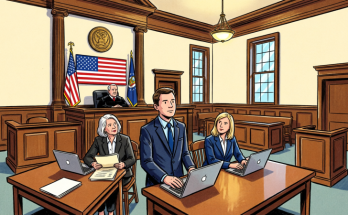
In a bleak, fluorescent-lit, wood-paneled federal bankruptcy court in downtown Chicago, the final act of Carla’s destruction played out.
She sat at the defendant’s table, looking aged by twenty years. The sharp, tailored power suits and heavy gold jewelry were gone. She wore a cheap, faded blouse, her hair unstyled, her face hollowed out by six months of relentless, suffocating terror. She was a broken, destitute woman.
The federal government and the defrauded clients of Joel’s law firm had descended upon the estate like a pack of starving wolves. Because Carla had legally assumed the estate, bypassing the protections of standard probate to aggressively seize the assets, she was held personally, civilly liable for the massive shortfall.
The judge banged his gavel, his voice echoing loudly in the sterile room.
“Carla Fredel,” the judge intoned severely, looking down at the weeping woman. “Due to your legal assumption of the liabilities of Joel Fredel’s estate, and the staggering, multi-million dollar deficit resulting from his embezzlement and tax evasion, this court orders the immediate, total liquidation of your personal assets to satisfy the defrauded creditors.”
Carla sobbed loudly, a wretched, pathetic sound of total defeat, burying her face in her trembling hands.
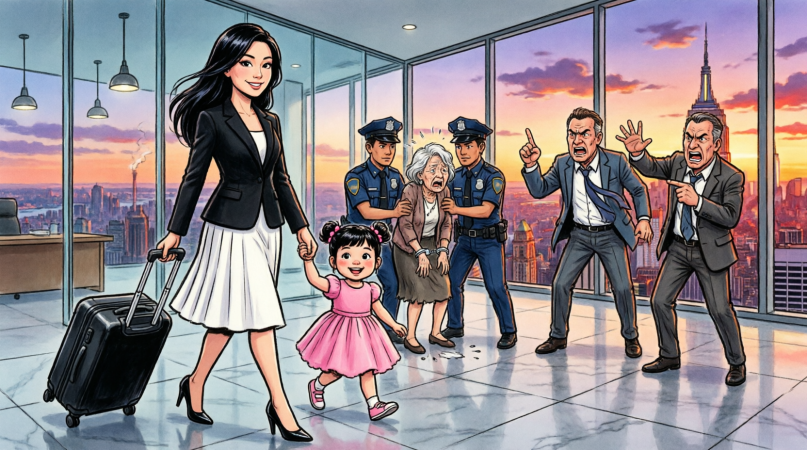
The court seized everything. They seized the massive, sprawling estate she had lived in for thirty years. They liquidated her retirement accounts, her stock portfolios, and her luxury cars. They stripped her of her wealth, her social standing, and her pride. Her other son, Spencer, the arrogant parasite who had measured my doors with a tape measure, was left entirely homeless, forced to sleep on a friend’s couch in a cramped apartment, realizing his mother’s bank account was permanently empty.
They had tried to steal my life, and in doing so, they had eagerly strapped themselves to an anchor and thrown themselves into the abyss.
Miles away, bathed in the brilliant, warm sunlight of a clear autumn morning, a completely different reality was unfolding.
I was sitting on the sprawling, cedar-wood deck of a beautiful, brand-new, four-bedroom home. It was located in a quiet, picturesque coastal town in North Carolina, thousands of miles away from the toxic, suffocating gravity of the Fredel family.
I had purchased the house outright, in cash, using a portion of the 1.5 million dollar life insurance policy. There was no mortgage. There were no hidden liens. There was only absolute, unshakeable security.
I was wearing comfortable jeans and a soft sweater, sipping a mug of hot chamomile tea. The air smelled of salt and pine trees.
Out on the lush, green grass of the expansive, fenced-in backyard, my three-year-old daughter, Maya, was running happily. She was laughing loudly, her dark curls bouncing as she chased a bright yellow butterfly across the lawn.
I watched her, feeling an immense, empowering weightlessness in my chest.
There was no tension in the air. There were no aggressive phone calls from federal auditors. There were no dangerous creditors knocking on my door. The poison of Joel’s lies and his family’s staggering greed had been surgically, permanently extracted from our lives before it could ever touch my daughter.
I took a slow sip of my tea, feeling the warm sun on my face.
I was completely, blissfully unbothered by the fact that earlier that morning, a pathetic, multi-page, tear-stained letter from Carla had arrived in the mail. It was sent from a cheap, roadside motel on the outskirts of Chicago, begging me for financial help, pleading for access to her granddaughter, and desperately asking for a “loan” from the insurance money she had finally learned about.
It was a letter I had immediately, without a single second of hesitation, dropped unopened directly into the heavy-duty paper shredder in my home office.
Chapter 6: The Ashes of an Empire
Two years later.
It was a bright, brilliantly warm Saturday afternoon in late May. The sky over the coastline was an endless, vibrant expanse of azure blue, completely free of clouds.
I was thirty-six years old, and my life was a masterpiece of peace and quiet triumph. I had used a portion of the remaining insurance funds to open a small, highly successful boutique art gallery in the charming downtown district of our coastal city, finally utilizing the degree Carla had so viciously mocked. My gallery featured local artists and had become a staple of the community. I was thriving, respected, and entirely unbothered by the ghosts of my past.
I was standing on the wide, wrap-around porch of my home, a cold glass of lemonade in my hand. The ocean breeze was gentle, rustling the leaves of the large oak trees bordering the property.
Out in the yard, Maya, now a vibrant, highly intelligent five-year-old, was standing in front of a small wooden easel. She was wearing a paint-splattered smock, furiously mixing bright colors on her palette, her face scrunched in deep concentration as she painted a picture of the ocean.
I leaned against the wooden railing of the porch, watching her paint.
Sometimes, in the quiet moments of the evening, I still remembered the heavy, suffocating smell of legal paper and expensive perfume in that high-rise conference room. I remembered the sharp, arrogant sound of Carla’s voice, and the cruel, victorious sneer on her face as she snatched the gold pen to sign the contract that sealed her doom.
They had thought I was weak. Carla had believed that my silence, my tears, and my rapid surrender were signs of a pathetic, uneducated woman who was too cowardly to fight for her own home. She thought I was fleeing because I was broken.
She didn’t realize the fundamental truth of survival.
She didn’t realize that when you find yourself standing inside a burning building, the absolute strongest, most intelligent thing you can possibly do is hold the door wide open for the arsonist, step outside into the cool air, and calmly walk away while they burn to ash in the fire they set.
I took a deep, refreshing breath of the clean, salty ocean air. I looked at the beautiful, safe, impenetrable fortress I had built for my daughter, entirely free of debt, entirely free of lies, and entirely free of the toxic, parasitic Fredel bloodline.
“You told me to learn to stand on my own, Carla,” I whispered to the warm, gentle breeze, my voice steady, confident, and echoing with absolute certainty. A fierce, radiant, and deeply peaceful smile illuminated my face. “I did.”
I lowered my glass of lemonade, watching my daughter proudly hold up her painting of a bright, golden sun rising over the blue water.
“And I built an empire on the ashes of yours,” I finished softly.
As the late afternoon sun began to dip toward the horizon, casting a warm, golden, cinematic glow over my beautiful, unshakeable sanctuary, I turned and walked back inside my home, leaving the dark, miserable ghosts of my abusers permanently locked outside in the cold, endless dark.