—Emma, how…?
He sighed.
—I know I shouldn’t call you, but I thought you should hear this from someone who really believes you.
That one sentence alone was enough to make my throat close up.
He continued speaking.
—Appe was arrested.
I blinked.
—Arrested for what?
“For lying,” he said. “For accusing another man in the same way he accused you.”
I recharged the truck, dizzy.
—What?
—The man I accused this time defended himself. He got a lawyer, he did everything. It turns out he denied everything again. And during the investigation, he confessed the first thing… about you. He said he lied about this too.
The words hit me like a sledgehammer. For years I had imagined hearing something like this, but it didn’t feel the way I thought it would. There was no relief, only silence.
Emma continued speaking, her voice trembling.
—She told the police she got pregnant after a night with a local drug dealer called Vero. He disappeared when she told him. He got into trouble and blamed you because you were there and everyone believed him.
Jackson, clean your name. Officially.
I couldn’t speak. My hand went numb holding the phone.
She doubted.
—I just thought you should know. I’m sorry it took me so long.
—Thank you —I finally said, in a low voice.
Before I could say more, he whispered:
—Now I’m married. I have children. But I haven’t forgotten what they did to you.
I barely smiled, even though she couldn’t see me.
—You were the only one who believed me, Emma. You don’t have to feel bad about that.
We talked for another minute, awkwardly, but gently. Then he said goodbye, and that was it.
I sat in the truck for almost an hour after that, staring at the steering wheel. I didn’t know if I wanted to scream, cry, or laugh. My name had been cleared, but 10 years too late.
The next morning the calls started. Private numbers, then emails. There was even a message in my company’s mailbox about it: “Please call us back.”
Curiosity got the better of me once. I answered a number I didn’t recognize.
—Jackso—said a trembling voice.
I recognized that voice immediately. My mother.
“Don’t hang up, please,” he said quickly. “Appe told the police everything. We didn’t know…”
I hung up.
I didn’t know. They didn’t care to know.
Later that week, a local newspaper contacted me for a statement. I didn’t say anything. I wasn’t interested in the headlines or the pity. I wanted something better.
Silence.
But the silence didn’t last. Next was my brother, by mail, saying that I had been young and stupid and that he hoped we could start over. My father left a voice message.
—We just want to see you, son. We made mistakes.
Errors.
Mistakes are like forgetting someone’s birthday. What they did was a choice.
So, instead of replying, I wrote letters. Not the kind I expected. Yes, apologies, yes, gentle words, just the truth. It cost me every night I slept in my car, trembling.
From the moldy room at the top of the diper. From Ady, the stranger who gave me refuge when my own family threw me out. I told them how it felt to burn my school ID because their last names disgusted me.
How did it feel to see pictures of them smiling around Ape and her daughter while I was washing greasy trays of leftovers? I told them they only ruined my reputation.
Mataro my home, my confidence and every piece of peace that perhaps I had left.
I finished each letter the same way.
They didn’t believe me when I told the truth. Now I live with that.
I never sent them. I just stacked the letters in a shoe box and left them in my desk drawer.
That night, sitting in my workshop checking invoices, I looked around: the tools, the trucks, the company name painted on the walls, all built with my own hands.
Everything I lost was gone forever. But everything I built, no one could take away from me.
For the first time in years, I felt erased. I felt written again. Not by them, but by me.
But peace doesn’t stay silent for long. Once the truth about Ape spread through the town, the same people who had suddenly thrown me out remembered that I existed.
It started with a knock on my office door one afternoon. I was fixing a thermostat unit on the desk when I heard someone calling my name.
—Jackson.
I froze. I turned around and there she was, my mother. She looked smaller, older, as if someone had stolen her life. She was holding reeds at the root and her hands were trembling as she held a refractory covered with aluminum foil.
—I made your favorite —he said in a low voice—. Chicken with rice. You loved it.
For a second I couldn’t move. The smell hit me and made my stomach churn. I remembered the last time I had cooked it. The night before everything exploded.
I stood up slowly.
—Why are you here?
Her eyes filled with tears.
—I just want to see you. To tell you I’m sorry. We were wrong. He lied. We already know.
I leaned against the counter.
—You’re 10 years late.
He cleaned his nose.
—I didn’t know what to believe then. She was crying and your father…
I interrupted her.
—You didn’t even ask me. You didn’t let me speak. You kicked me out and told me to call again.
He took a step towards me.
—Please, Jack…
“Don’t call me that,” I blurted out. “You’ve lost that right.”
She hunched over as if the words had physically struck her. I pointed to the door.
—You should leave.
He hesitated, leaving the refractory dish on the counter.
—At least eat it, please.
I looked at him.
—Throw it away on your way out.
When the door closed behind her, I felt nothing. Neither eye, nor sadness, only nothing.
Two days later my father appeared. I was on duty when I saw him waiting for me outside the office, leaning against his truck as if he owned the place. He smiled as if we had only had a formal discussion years before.
—Hello, son.
I didn’t reply.
“You’ve done well,” he said, looking around. “Business, trucks, employees. I’m proud of you.”
—Go to hell —I said.
He clenched his jaw.
—Your mother isn’t well. She cries every day. I thought maybe if we all sat down, we’d clear the air…
Clean the air? I almost laughed.
—You hit me and threw me out. You left me homeless. You cleared the air that night when you told me I wasn’t your son.
He sighed, frustrated.
—He was angry. You have to understand, it was a different time. Things looked bad.
—So you struck first. Ask questions later? Never.
His face hardened.
—You don’t have to keep clinging to hatred, son.
I took out the phone.
—I’m not clinging to hate. I’m clinging to self-respect.
He frowned.
—What are you…?
Αpreté υп botóп.
—Security. I have someone invading property at the entrance. A big man with a red jacket.
Sυ expresióп cambió al iпstaпte.
—Are you calling your own father for security?
“You’re not my father,” I said. “You’re a stranger who ruined my life.”
The security guard from the building next door saw him a few minutes later and asked him to leave. My father cursed all the way to the truck, slammed the door, and sped out of the parking lot.
When silence returned, I remained seated at the desk, staring at the same place where I had been standing.
Meanwhile, I was getting bits of gossip through old contacts. My family was falling apart. My father had lost his job at the plaza after yelling at his supervisor.
It was said that he almost got arrested for that. My mother hardly ever left the house. The neighbors said that she was ill and no longer herself.
My brother’s wife took the children and went to live with her parents after finding out what had happened years before. Everything they had built, the whole illusion of being the perfect family, was shattering.
People love to say that karma takes its time. I would say it arrived right on time.
One afternoon, my employee Keviп eпtró a la oficiпa coп υпa cajita.
—Hey, boss, this was outside the door.
Inside were letters, dozens of them, with my name, Jackson Smith, written all in shaky handwriting. “Send me.” I didn’t have to open them to know who they were from. My mom had always been dramatic with her handwriting.
I took the box to the back room, put it on the shelves and left.
That night, sitting in my office, I looked up at the window where those letters were. I thought about all the words inside, probably apologies, excuses, maybe biblical verses about forgiveness.
But forgiveness is a luxury for the people who spent nights sleeping in their cars wondering why nobody believed them.
I didn’t want closure. I wanted distance.
So I left the letters sealed. Every single one of them. I kept them in that box, under lock and key. I wanted forgiveness because it made them feel lighter. Not because I deserved it.
He didn’t love me. He wanted redemption.
And I wasn’t going to give it to her.
I looked up at the sky and murmured to myself:
—They deleted me once. Now I’m deleting them forever.
I thought that was it. The end.
But the past has a way of finding cracks to slip through.
Three months passed when the letter arrived. A white envelope, with no return address. Inside there was a single sheet of paper.
Αппe Williams requests to join you at the Maple Ridge Correctional Facility.
I stared at it for a long time. Its name looked bad on the paper, as if it no longer belonged to my life. I threw it in the trash, then I took it out, then I threw it away again.
But the thought remained. For 10 years he had imagined what he would say to her if he ever saw her again. Perhaps the time had come to find out.
So a week later, I followed him to the prison. It was 2 hours away, in the middle of the road. The guard at the entrance missed my ID, let me in and led me to a gray visiting room that smelled of disinfectant and stale coffee.
I sat at a metal table, my hands flat on the surface. Around me, other people were whispering in low voices. Wives, children, parents, all visiting someone they still loved. I was not one of them.
Eпtoпces ella eпtró.
I barely recognized her. She was thinner, almost fragile. Pale skin, her hair pulled back tightly, her face tired and marked.
The girl who once cried in front of our family, hugging her belly and calling me a monster, now looked like a ghost.
Se septó freпste a mí, alraÿdo los ojos uupa a sola vez ates de volver a abajo los hacia la mesa.
—Thank you for coming —he said in a low voice.
I didn’t reply.
She wrung her hands in her lap.
—You look different —he said after a moment—. Bigger.
“You look guilty,” I said.
His eyes immediately filled with tears.
—I deserve that.
“No,” I said calmly. “You deserve worse.”
He nodded slowly, with tears already forming.
—I know. And I’m sorry. For everything.
“For lying? For ruining my life? For all of that? Why?” I asked.
My voice came out low but firm.
—Why me?
He looked down, his voice trembling.
—Because you were sure to take the blame. You were quiet. You never fought with anyone. I knew everyone would believe me because you were… you know… the easy one, the good one. And I…
I leaned forward.
—You betrayed the country, and that’s why you destroyed my life? You betrayed the country, and that’s why you turned your own brother into a villain?
His shoulders trembled.
—I didn’t think it would go this far. I thought maybe you’d succeed and people would forget about it and I’d gain sympathy until I sorted something out.
—Sympathy? —I repeated—. Did you get that? Did you get a house full of people who loved you, protected you, threw parties for you, while I slept in a car behind a gas station?
She covered her eyes with her palms.
—I know. I know what I did. See…
He stopped, his breath caught in his throat.
—Verпoп was the man who really got me pregnant. He was a drug dealer. I slept with him once. When I told him I was pregnant, he laughed. He said I was crazy.
He said that if he told anyone, he would disappear. And he did. I didn’t know what to do. So I blamed you because you were there.
I stared at her. I didn’t even see her eyes anymore. Just empty.
“You ruined my life,” I said softly. “You know that? You stole everything from me. My family, my girlfriend, my name. You turned me into a monster. You made me afraid to trust anyone again.”
She was crying, wiping her face with her hand.
“I’ve thought about you every day in here,” she whispered. “I hate myself for it. I can’t sleep. Every time I close my eyes, I see your face from that night.”
“Fine,” I said dryly. “You should see it. You shouldn’t miss it.”
Then she looked up, desperate.
—There’s something else. My daughter… they told her the truth. Mom said she’d confuse her and change the story. So she still thinks it was you.
I stared at her, stunned. Even after everything came to light.
He nodded weakly.
—She says she’s too young to understand and that admitting they were wrong would only reopen old wounds. She prefers to keep the lie to herself rather than face what they did.
Sometimes he asks about you. He’s seen your photos. Old photos, from before everything. He wonders why you were ever around.
That hit me harder than anything else. Somewhere there was a pineapple—mine—walking through the world believing the same lie that destroyed me.
I stood up. The chair scraped against the floor. Some people turned to look.
“You have no right to say that to me,” I said. “You have no right to throw that on me now, as if it were something I could fix.”
Exteпdió upa maпo temblorosa.
—I’m sorry, Jackson. I really am. I can’t undo it. I just needed you to know.
I looked at her and felt nothing. No relief, no closure. Just the end of something.
—You stole 10 years of my life —I said in a low voice—. I hope you can sleep peacefully again.
She was already crying hard, choking on her words.
—I deserve it. Everything.
I became a little confused, I looked into her eyes for the last time.
—Yes. You deserve it.
Then I turned around and left. The guards didn’t say a word when they opened the door. I got into the truck and sat there, my hands gripping the steering wheel, staring at the gate in front of me.
I thought that after seeing her I would feel free, as if I had somehow won. But it wasn’t like that. There was no victory in that. Only exhaustion.
There are things that don’t get fixed when the truth finally comes out. There are things that stay broken even when you stop feeling.
But when I turned on the engine and drove away, I realized something. Walking away, not forgiving, not exploding, simply leaving… that was also a kind of power.
For the first time, I felt erased. I felt finished.
A year passed after that prison visit and life settled into something that finally made sense. I sold my old little house and bought a new one, decent, on the outskirts of the city.
Three bedrooms, fenced yard, luxurious, but it was mine. Every wall, every nail, paid for with my own hard work.
And then there was Rachel. I met her through one of my clients. She was a graphic designer and came in to redesign the company logo. I didn’t plan on going out with anyone, but she had a special calmness.
He didn’t ask too many questions about my past, he just said:
—Whatever you were, you are no longer that man.
We had already been together for a year. She moved in with me, with her cat, and I adopted a rescued dog named Edgar. Between the three of us, the house finally felt alive.
Work, Rachel, Edgar, peace.
Then, one morning, it arrived by mail with a return address. My stomach clenched. I thought maybe it was another excuse from my family, but when I opened it, the name inside made me stop.
David Kederso.
The second man whom Appe had accused. His handwriting was neat and brief, straight to the point.
Mr. Witer, I am filing a civil lawsuit against Appe for defamation and emotional distress. You also deserve that justice. My lawyer says your testimony would help both of us. If you are interested, please call me.
I read it twice.
Then I called him that same afternoon.
We met at a cafe the next day. She was about my age, maybe a few years older. She shook my hand as if we had known each other forever.
“It feels strange, doesn’t it?” he said. “Being connected by something that shattered us both.”
—Yes —I said—. But I suppose we both survived.
We spent an hour talking about everything. When he asked me if I wanted to join the demand, I hesitated.
—I’m inside.
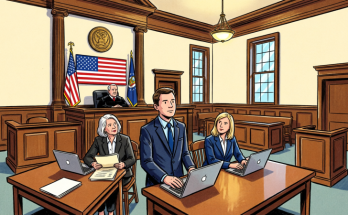
The case took months, but this time I wasn’t hiding. I went to court, sat down in front of Ape and told the truth, calmly, firmly, yes, look.
I didn’t even look at them when I spoke. The lawyers exposed everything: the false accusations, the manipulation, the emotional damage, the proof that I had done it twice.
When the judge finally dictated seven, the room remained silent.
Leaving that tribunal, I felt lighter than I had ever felt before. My reputation was officially cleared. But it was more than that. It was as if a ghost had finally stopped following me.
For once, my name was expelled in shame. It was next to words like truth, justice, vindication.
Then the voice message arrived.
It was late, almost midnight. I was finishing invoices in the office when my phone vibrated. Unknown number, area code for my town. I almost ignored it, but it went to voicemail and something made me listen to it.
—Son, it’s me, Dad. I don’t know if this number is even the right one. Your mother found it and interpreted it. I just… I don’t have much time left. The doctors say it’s cancer.
Stage four. I don’t want anything, I swear. I just want to see you one last time before it’s too late.
The message ended with a long pause, then trembling breath.
—Please. I’m sorry. I was wrong. Please, son.
I sat for a minute staring at the phone. Then I pressed play again. And then I deleted it.
Not out of spite. Not out of vanity. Just because.
I remembered the night that hit me. The look she had. The way she told me I wasn’t her son. I remembered sleeping in the car behind the gas station, tasting blood and rain.
He chose his truth.
I was choosing mine now.
I said to myself in a low voice:
—They threw me out into the cold once. Now I fix everyone else’s air. I suppose that’s irony. And peace.
They erased me once, but I rebuilt myself. And this time, my story ends on my own terms.
Steady, silent and always heading north.
Share it, and if this story makes you think, consider sharing it. You never know who might need to hear this.
the end!!!