My Brother Punched Me And Cut Me Off For 9 Years Because His Wife Called Me Trash. Yesterday, They Showed Up At My Oceanfront Mansion Saying, “We’re Moving In.” I Just Smiled And Locked The Gate…
Part 1
The air in Caleb’s backyard smelled like charcoal, spilled beer, citronella candles, and that sweet sticky glaze people put on ribs when they want credit for cooking without actually tasting the meat. It was late August in Charleston, the kind of Sunday evening where your shirt glued itself to your lower back and the cicadas sounded like they had a union contract. Everybody I had grown up orbiting was there. Cousins on folding chairs. Uncles balancing paper plates on their knees. My aunt laughing too hard at something she hadn’t heard clearly. A football game muttering from a TV mounted near the patio.
I stood near the edge of the yard with a sweating plastic cup in my hand, making the kind of small talk that feels like chewing cardboard.
I hadn’t wanted to come.
That was the truth.
But every year I came anyway, because some stubborn, humiliating part of me still believed in one more try. One more cookout. One more Christmas. One more chance for my family to look at me and see a person instead of the extra chair in the garage.
My brother’s wife, Venus, floated through the party like she had arranged the weather. She was one of those women who never raised her voice enough to sound rude, which only made her meaner. Her blond hair didn’t move in the humidity. Her lipstick stayed perfect even while she drank. She had a soft hand on every shoulder and a hard opinion about every life in the room.
She stopped beside me and put her manicured fingers on my upper arm like she was blessing a child.
“Kale, sweetie,” she said, loud enough for three conversations to bend in our direction. “Still between jobs?”
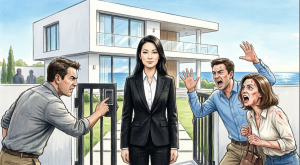
A couple of people smiled into their cups. Not because it was funny. Because family gatherings train people to laugh when the alpha female flicks the knife.
“I’m freelancing,” I said. “It’s flexible.”
“Flexible,” she repeated, stretching the word until it snapped. “That’s such a pretty way to say unstable.”
My jaw tightened. I kept my face still.
I had done enough odd jobs by then to make a patchwork living—website copy, handyman work, some remote admin stuff for a real estate office, a little design work for a guy who sold fishing gear online. It wasn’t glamorous, but I paid my rent. I helped people. I showed up. The problem was, in my family, if your success didn’t make noise, it didn’t count.
Venus tipped her head and gave me that smile she saved for bloodletting.
“It must be nice,” she went on, “having all that free time. Some of us work for what we have.”
That stung because three months earlier I had lent Caleb four grand when he was behind on the mortgage. He had hugged me in the driveway and promised he’d pay me back before summer. Venus had stood on the porch pretending not to watch.
Caleb was at the grill now, beer bottle in hand, one of the tongs hanging useless from his fingers. He heard her. I know he did. He just took a swallow and looked down at the coals like they were more complicated than they were.
“I’m doing fine,” I said.
Venus gave a soft little laugh. “That’s exactly what people say when they’re not.”
I looked around the yard, waiting for somebody—anybody—to say, All right, that’s enough. My Aunt May stared at the pickle tray. My Uncle Brent wiped sauce off his knuckles. One of my cousins suddenly got very interested in the cooler.
Nobody moved.
That was the shape of my family. Not always cruel. Just cowardly enough to let the cruelest person in the room set the tone.
Then Caleb spoke.
“She’s got a point, man.”
I turned toward him.
He was leaning back against the grill table, shoulders loose, cheeks pink from drinking, eyes already mean in that lazy way they got when he wanted to be cruel without admitting he had chosen it.
“You show up for free food,” he said, “free beer, a little attention. Then you disappear the rest of the year. That’s your whole move.”
I stared at him. For a second I honestly thought I had misheard.
“I’m the one who drove Dad to rehab after his stroke appointments,” I said. “I’m the one who spent two weekends helping you rebuild this deck.”
Caleb shrugged. “Nobody asked you to keep score.”
Venus stepped closer to him, shoulder brushing his chest. It was subtle, but I saw it. The tiny handoff. The way she fed him the line and then let him swing.
“That martyr thing you do,” she said. “It’s exhausting.”
I heard the word martyr and actually laughed once under my breath, because if I didn’t laugh I was going to say something I couldn’t take back.
Mom was sitting on the porch swing by the sliding door. She hadn’t said much all night. In her lap sat Dad’s old pocket watch, the silver one with the cracked crystal. He had carried it every Sunday to church and every weekday to work until the chain wore thin. After his stroke, Mom kept it in her dresser like a relic. I had no idea why she had it out now.
She looked at me, then away.
That hurt more than Venus.
“You think you’re better than us,” Caleb said.
The backyard went quiet around the edges. Not all at once, just enough that I could hear the pool filter running and a dog barking two houses over.
“I never said that.”
“You don’t have to.” His voice sharpened. “You wear it on your face. Like we’re all beneath you because your life didn’t turn out the way you wanted.”
I could feel heat climbing my neck. “My life didn’t turn out because I spent half of it cleaning up after other people.”
That landed.
Venus’s eyes flashed. Caleb took one step toward me.
“There it is,” he said softly. “That thing. That smug little thing you do.”
I set my cup down on the patio table because my hand had started to shake.
“Is this really what you think of me?”
He looked me dead in the face. No hesitation. No flinch.
“Trash like you doesn’t belong in my life.”
Then he punched me.
He was always stronger than me. Older by four years, thicker through the shoulders, faster with his temper. His fist caught my jaw so hard my teeth clacked together and bright white light burst across my vision. The plastic cup flew out of my hand. I stumbled backward and hit the ground on one hip, then one elbow. Gravel bit into my palm.
For one strange second the whole world narrowed to three things: blood in my mouth, the taste of cheap beer, and the sound of the cicadas still screaming like nothing had happened.
Nobody ran to me.
Nobody even cursed.
I pushed myself up halfway and spat pink into the grass.
My brother stood over me breathing through his nose, chest rising and falling, not looking sorry at all.
Then Mom got up.
She moved slowly, like her knees hurt, which they did. She came off the porch with the pocket watch in her hand and stopped in front of me. I thought maybe—stupidly, suddenly—that this was the moment she was going to turn and tell Caleb he had crossed a line he could never uncross.
Instead, she placed the watch in my bloody palm.
No speech. No apology. No “come inside.” No “I’m sorry.”
Just the watch.
Then she turned around and walked back to the porch.
It did not feel like comfort.
It felt like a woman handing me the last thing she had the courage to give.
I stood up slowly. My jaw throbbed. My ears rang. Somebody near the fence muttered my name, but nobody came closer. Venus had one hand at her throat like she was shocked by what had happened, which was almost funny. Caleb was already looking past me, already acting like the event had ended the moment his fist landed.
I didn’t say another word.
I walked through the side gate, around the house, and into the street with blood drying on my chin.
It wasn’t just that I left the backyard.
It was that I understood, finally and all at once, that there was no version of me this family was waiting to welcome. I had been auditioning for a role that didn’t exist.
I slept in my truck that night behind a twenty-four-hour CVS under a buzzing white light that made everything look sick. Around two in the morning, with the air conditioner clicking weakly and my jaw swollen like I had a golf ball under the skin, I opened the pocket watch.
The crystal was cracked. The minute hand was stuck between two numbers.
Inside the lid, under years of tarnish, my father’s engraving caught the light.
Build where they can’t reach.
I read it three times, blood drying at the corner of my mouth, and something cold and sharp settled in my chest.
I still didn’t know where I was going.
I just knew I wasn’t going back.
And when dawn finally washed the parking lot in that thin, ugly gray, I turned the key, put the truck in drive, and left Charleston with my father’s broken watch in my lap and one question I couldn’t stop hearing in my head:
If they had already decided who I was, who the hell was I going to become without them?
Part 2
Houston wasn’t a dream. It was a Craigslist ad, a bad apartment, and a city big enough to disappear in.
I picked it because the rent was cheap, the warehouse job started fast, and nobody there knew my last name. That mattered more than I wanted to admit. In Charleston, every room came preloaded with memory. In Houston, I could be the guy in steel-toe boots who kept to himself and clocked in on time. That felt almost holy.
My apartment was a studio over a laundromat with one narrow window facing a brick wall. The place smelled like hot dust, detergent, and old fryer grease from the taqueria downstairs. If I wanted to open the fridge all the way, I had to move the trash can. When it rained hard, water crawled down the inside of the window frame and pooled on the sill. I bought a used mattress, two forks, one frying pan, and a lamp with a crooked shade from a thrift store. At night, the neon sign from the liquor store across the alley flashed red through my blinds and painted the room like a low-budget crime scene.
It was miserable.
It was also mine.
The warehouse paid enough to survive if I took every extra shift. I loaded pallets, scanned shipments, hauled inventory in heat that felt personal. By noon the metal racks inside the building gave off the same trapped warmth as an oven. My shirt would be soaked through by ten. The air tasted like cardboard and diesel. Guys twice my size complained less than I did and laughed louder. I learned quickly that nobody cared why you were quiet as long as you didn’t slow the line down.
That helped.
Pain is easier to carry when there’s no audience.
For the first year, I kept my head so low I’m not sure anybody at work knew more than my first name. My neighbor, an older woman named Mrs. Alvarez who watered her plants in curlers and house slippers, would sometimes stop me on the stairs.
“You got family here?” she asked once.
“No.”
“You should eat more.”
That was the whole conversation.
She became, weirdly, one of the kindest people in my life.
The second year, the ache of what happened in Charleston stopped feeling like fresh injury and started feeling like scar tissue. That sounds better than it was. Scars are still damage. They’re just damage the body has learned to wear. Holidays were the worst. Every Thanksgiving the grocery store put out those displays with canned cranberries and boxed stuffing, and I’d stand there too long pretending to compare labels while my throat tightened for no useful reason. Christmas lights on strangers’ balconies could ruin an entire evening.
I didn’t call home.
Nobody called me.
On my thirty-fourth birthday, I passed out in the loading yard.
It was August again, hot enough that the asphalt shivered. I had been hauling inventory all afternoon, my vision going a little weird around the edges, but I kept pushing because overtime meant another hundred bucks and another hundred bucks meant rent without the panic math. The next thing I remember is fluorescent lighting, a paper bracelet around my wrist, and an ER nurse asking me if someone was coming to get me.
I said yes automatically.
Then I lay there staring at the ceiling tiles while the lie sat on my chest like wet sand.
Nobody came.
When they discharged me around midnight, the air outside the hospital felt thick and damp. My head still buzzed. I had a plastic bag with a prescription I never filled and a folded sheet with a therapy referral I shoved in my back pocket so hard it tore at the crease. I walked home alone under streetlights that made the puddles look like oil.
That walk did something to me.
Not dramatic. Not movie-worthy. No speech. No revelation.
Just this: I stopped believing that time, by itself, would repair anything.
A year later, on a night when the laundromat dryers thumped below my floor and the red liquor-store sign kept strobing across the walls, I wrote Caleb a letter.
I didn’t write to accuse him. That surprises people when I tell it now, but it’s true. I was still young enough in my damage to think tenderness might fix what brutality broke. I wrote that I missed him. I wrote that I didn’t know what story he was telling himself about me, but I wanted a chance to talk without the rest of the family watching. I wrote that I hoped he was okay. I even apologized for things I wasn’t sure were wrong, because that’s what the hurt do when they still want back in. They bargain against their own dignity.
I mailed it the next morning.
Three weeks later, an envelope came.
The return address was Charleston. My stomach dropped so hard I had to sit down on the edge of my bed before I opened it. I remember my hands shaking. I remember the smell of rain through the cracked window. I remember thinking, before I saw the first line, Maybe this is the beginning.
It wasn’t Caleb’s handwriting.
It was Venus.
The letter inside was typed.
That detail still gets me. Not handwritten in anger. Not sloppy. Typed. Edited. Deliberate.
Kale, your inability to take accountability for the pain you’ve caused this family is exhausting.
I kept reading because pain makes fools of all of us.
She called me emotionally draining. She called me unreliable. She said Caleb had moved on and I needed to respect his boundaries. She said I wasn’t cut off, I was simply unwilling to accept consequences. The most venomous people always do love the language of self-help. It lets them sound reasonable while they rearrange reality.
There was no signature from my brother.
Not even a scribbled first name.
At the bottom, in smaller type, was this:
Please do not contact this household again.
I sat there with the page in my lap and the neon from across the alley sliding red over the paper in slow pulses. That was the moment I understood the letter had never reached him. She had intercepted it. Or worse—she had shown him, and he had let her answer.
I wanted to believe the first version.
I think because the second would have broken something permanent.
I tore the letter up on my balcony. Tiny white pieces, drifting into the grocery store parking lot behind my building, landing among shopping carts and candy wrappers and old receipt paper. Then I went back inside, opened the cheapest laptop I had ever owned, and typed “learn coding free” into the search bar.
It wasn’t courage.
It was refusal.
Refusal to keep bleeding into a room that had already decided I was the stain.
So I built a new life the way men in bad apartments build anything: awkwardly, privately, and after work. I watched videos on JavaScript and Python while the AC wheezed like it had asthma. I failed little exercises over and over until my frustration turned almost clean. Loops didn’t care about my childhood. Syntax errors didn’t care who punched me at a cookout. Code was rude but fair. If I got it wrong, it told me. If I learned, it rewarded me. There was relief in that.
For two years I slept four hours a night and lived on eggs, coffee, protein bars, and spite.
Then one Saturday morning, while the warehouse was short-staffed and my boss was walking the floor with his usual permanent headache, I showed him a little scheduling tool I had built to manage outbound inventory runs.
He squinted at the screen.
“You make this?”
“Yeah.”
He looked at me for a long second, then scratched the side of his beard.
“My brother-in-law works at a logistics software company,” he said. “You got anything cleaner than these work boots?”
I stared at him, heart knocking once against my ribs.
He shrugged. “Wear a collar if you own one. Be in his office Monday at nine.”
All weekend I kept hearing the same sentence on repeat, like it had come out of the watch itself instead of that gruff man in steel-toe boots.
Monday at nine.
For the first time in years, my fear and my hope showed up together.
And I honestly didn’t know which one was going to kill me first.
Part 3
The first office job I ever got smelled like burnt coffee, dry carpet, and printer toner.
I remember that because the moment I walked into that logistics software firm in my thrift-store blazer and Walmart dress shoes, I knew I didn’t belong there yet. Belonging has a smell. So does not belonging. Everybody in that place moved like they had calendars full of things that mattered. They had badge lanyards, ergonomic chairs, conversations about APIs and client churn and market fit. I had a stiff collar sawing at my neck and sweat collecting between my shoulder blades.
The guy who interviewed me—Rick, the owner’s brother-in-law—looked like he hadn’t slept in months. He had a coffee stain on his cuff and one of those exhausted faces that could pass for rude if you didn’t know better.
He opened my little warehouse app on a conference-room monitor and clicked through it in silence.
I watched my future wobble on every page load.
Finally he leaned back and said, “You’re rough.”
I nodded.
“But you built a useful thing from a real problem,” he added. “I can teach polish.”
That sentence changed my life.
He hired me as a junior developer for less money than I wanted and more money than I had ever made. I didn’t care. I would have taken the job if they’d paid me in soup and Wi-Fi. The first month I stayed late almost every night because I was terrified somebody would notice I was just a warehouse guy who had snuck in through a side door. I wrote bad code. I asked dumb questions. I filled notebooks. I fixed bugs no one wanted because bug fixes were where the humiliation lived, and I was already fluent in humiliation.
A strange thing happened: I got good.
Not overnight. Not in a montage. Slowly. Ugly at first.
I learned how to read people in meetings the same way I had once learned how to read a room at family dinners—who was posturing, who was actually solving, who needed praise before they could hear criticism, who was bluffing. Pain turned out to be weirdly transferable. The same part of me that had survived being underestimated knew how to notice what other people missed.
Six months in, Rick pulled me aside near the breakroom and said, “Clients like you.”
That startled me enough that I laughed.
“I’m serious,” he said. “You don’t talk like you swallowed a TED Talk.”
By then I had traded the studio apartment for a one-bedroom with real light and a balcony that faced a grocery store parking lot instead of a brick wall. Luxury is relative. I bought a desk, a second fork, and a used bookshelf. I paid off my last payday loan. On weekends, when I wasn’t studying, I walked through neighborhoods with trees big enough to cast full shade and imagined what it might feel like to have a life that wasn’t one emergency away from collapse.
Then Austin happened.
The company sent me to a tech conference because one of the senior guys got food poisoning and I was the cheapest available replacement who could explain the product without sweating too much. The convention center was full of polished booths, branded tote bags, startup founders in sneakers that cost more than my rent, and those little bowls of wrapped candy no one actually wants but everybody takes. I wandered around feeling like I’d slipped into the wrong wedding.
Then somebody behind me said, “Kyle Tyrell?”
I turned and saw Dante Marshall.
In high school, Dante had been the kind of smart that made teachers talk softer. He sat two rows behind me in computer lab and once paid me twenty dollars to finish an assignment he had forgotten about because he’d been busy flirting with a girl from debate club. He had an easy grin, sharp suits, and the kind of confidence that looked natural but probably cost him something at one point.
He hugged me like we were still eighteen.
We got coffee at a stand near the back of the hall where the espresso machine hissed loud enough to cover the startup buzz. He had gone into venture capital after a couple of successful exits. He said words like runway and seed round and deployment strategy like they belonged in his mouth. I told him, in the plainest possible version, how I had gone from warehouse shifts to junior dev work. I left out Charleston. I left out the punch. I left out the part where half my ambition was revenge wearing business casual.
He watched me over the rim of his cup.
“Back then,” he said, “I always figured you were either going to build something serious or disappear on purpose.”
“That a compliment?”
“From me? Yeah.”
He told me he was scouting for an early-stage company in AI logistics. Their models were good, he said, but most of the team had never touched a loading dock or dealt with human chaos. They needed somebody who understood both code and real-world mess.
I laughed. “Real-world mess I got.”
He didn’t smile back. “I know.”
That stopped me.
There are moments when people see the wound under the shirt without you pointing to it. Dante had that look in his face. Not pity. Recognition. A kind of professional respect for damage that had been converted into function.
“I’ve got MIT guys lined up,” he said. “MBAs. Nice decks. Perfect hair. But most of them have never had to remake themselves from scratch.”
The noise of the conference dropped away a little.
“I don’t need perfect,” he said. “I need somebody who can build under pressure and won’t fold when the room gets ugly.”
I don’t know if he meant it exactly the way I heard it, but what I heard was this: the worst thing that ever happened to you did not make you less useful. It made you dangerous in a good way.
I joined the startup four months later.
From there, my life moved faster than my feelings could keep up. We worked out of a cramped office with exposed ductwork, whiteboards full of half-legible ideas, and the permanent scent of takeout containers. I slept on a couch there twice during the first funding crunch. I learned fundraising. Hiring. Product roadmaps. The difference between a sharp investor and a smooth liar. We made mistakes. We recovered. We got one big client, then three, then ten. At thirty-nine, I was a CEO in the kind of sentence that would have made people back home either laugh or ask what I was worth before they congratulated me.
By forty-two, I had sold enough of my equity to breathe.
By forty-three, I had bought the oceanfront house.
Not flashy by billionaire standards, but to me it looked impossible—glass walls, weathered wood, long balconies facing the Pacific, the kind of place where mornings came in blue and silver. I moved in with my father’s watch on the bedside table and a quiet I had earned.
Then a podcaster named Chloe Jacobs asked me a question I should have dodged.
Her studio smelled like vanilla coffee and ring-light heat. The interview was supposed to be about resilience, grit, founder mythology—the usual American worship service for people who survive just visibly enough to be marketable. Then she tilted her head and asked, “Do you ever wish your family had been part of your success?”
I should have smiled and given her something polite.
Instead I said, “Family isn’t who raised you. It’s who respected you.”
The clip went everywhere.
By morning, my inbox looked like somebody had kicked an anthill. Messages from strangers. Requests from media. People quoting me back to myself on mugs and reels and slideshows. My PR team loved it. I hated how exposed it made me feel. Success always looks cleaner from a distance.
That night, while the ocean hissed against the rocks below my deck and my kitchen still smelled faintly like garlic from dinner, my phone buzzed with a number I didn’t know.
The message was short.
Your brother’s not doing so well lately.
No signature.
No warmth.
Just that.
I knew it was Mom before I finished reading it.
I stood there with my phone in one hand and the watch in the other, looking out at water dark as ink, and felt the old life shift somewhere below the floorboards.
Nine years of silence.
Then one sentence.
I didn’t answer right away.
I had spent almost a decade building walls they couldn’t reach.
So why did it feel, all at once, like somebody had found the gate?
Part 4
The Pacific outside my bedroom window didn’t care about my family.
That was one of the reasons I loved it.
Every morning the ocean did the same thing: rolled in, broke against the rocks, pulled back, and returned without apology. It didn’t text cryptic warnings. It didn’t store up grievances for public use. It didn’t pretend silence was kindness. If it wanted to be loud, it was loud. If it wanted to be cold, it was cold. There was comfort in that kind of honesty.
For three days I left Mom’s message unanswered.
Not because I didn’t see it. Because I saw it too clearly.
Your brother’s not doing so well lately.
That sentence came with hooks buried inside it. Was she worried? Guilty? Fishing? Setting the table for some request she didn’t want to make outright? My mother had never been skilled with directness. She moved through conflict the way some people move through thorn bushes—sideways, slowly, hoping they could avoid being cut by pretending the thorns weren’t there.
On the fourth day I sent back four words.
What happened to him.
No question mark. I didn’t want it looking softer than it was.
She didn’t answer.
That night I barely slept. The house was too quiet. In an apartment, silence is thin. You still hear neighbors, elevator cables, traffic, somebody’s dog, a washing machine three floors down. In a big house, silence has depth. It pools in hallways. It waits in corners. Around two in the morning, I got out of bed and walked barefoot through the living room with only the under-cabinet lights on. The floors were cool under my feet. Moonlight sat in pale stripes across the rug. My father’s watch ticked once in my hand and then fell still again, like it had changed its mind.
The next afternoon, around one, the intercom at the front gate buzzed.
I was in the kitchen making coffee. The house smelled like fresh grounds, sea air, and the lemon cleaner my housekeeper used on Wednesdays. I glanced at the security monitor expecting a delivery driver.
Instead I saw my brother.
Caleb stood outside my gate in sunglasses and a navy button-down, one hand shoved in his pocket like he was waiting for valet. Beside him was Venus in cream slacks and a silk blouse the color of champagne. Even through the camera I could see she still held herself like every room owed her a softer light.
Behind them on the curb sat two rolling suitcases.
For a second I honestly thought I was hallucinating.
Then Venus smiled at the camera.
“Wow,” I said to nobody.
I buzzed the gate open before I had decided why. Maybe I wanted proof. Maybe I wanted the discomfort in three dimensions. Maybe I just needed to see what kind of face people wear when they come back to a man they discarded and expect hospitality.
By the time I opened the front door, Caleb already had his arms spread.
“Little brother.”
Nobody had called me that in years. On him it sounded less like affection and more like stage direction.
He stepped forward like he expected a hug. I didn’t move. He turned the non-hug into a clap on my shoulder and laughed as if I had made a quirky joke.
Venus looked past me into the foyer.
“Well,” she said. “You’ve certainly done all right for yourself.”
The nerve of that almost impressed me.
Up close, they looked better dressed and more tired than I remembered. Caleb had crow’s-feet at the corners of his eyes and the slightly puffy face of a man who drank too much but still tried to pass for disciplined. Venus’s makeup was flawless, but there was strain in the skin around her mouth, the kind that expensive moisturizer doesn’t touch.
I didn’t invite them in.
Caleb invited himself, stepping past me into the foyer and turning slowly to take in the staircase, the glass wall facing the water, the sculpture near the entry table that I had bought because it made me think of broken wire turned beautiful.
“Damn,” he said. “This place is unreal.”
Venus moved in after him, heels clicking across the floor. “The view alone,” she murmured, like she was walking through a home tour and not the private life of the man she once called exhausting.
I shut the door.
“What are you doing here?” I asked.
Caleb glanced back at me. “You always this warm now?”
“Yes.”
That landed better than I expected. He looked mildly stung, which felt new.
Venus smoothed her blouse and gave me a small, regretful smile. “Kyle, it’s been far too long. We’ve all been through so much. We thought maybe it was time to… reconnect.”
The word reconnect almost made me laugh in their faces.
I leaned against the kitchen counter, arms folded. “Try again.”
Caleb blew air through his nose and walked toward the living room windows. “Look, things have been tight.”
“There it is,” I said.
Venus shot him a quick look. “Nothing dramatic,” she cut in smoothly. “Just one of those patches life throws at people. The economy, some bad timing, you know how it is.”
I didn’t. Not anymore.
They both turned toward me at once, reading my silence like weather.
“We were thinking,” Venus continued, “this house is… well. It’s big. Beautiful. You have the space. We just need somewhere to land for a few weeks. A reset. Something temporary.”
Caleb nodded like this was obvious. “Family helping family.”
That phrase hit a nerve so clean it almost felt surgical.
Nine years. No calls. No birthdays. No apology. No repayment. No explanation for the punch. No acknowledgment of the letter I sent. No attempt to see me except through the convenient mythology of my failure. And now they were standing in my foyer talking about family like it was a shared savings account.
I walked to the built-in shelf near the hallway and picked up a framed photo I kept there for reasons I didn’t fully understand. It was an old picture from a barbecue back when Dad could still stand straight: me at twenty, Caleb behind me making rabbit ears, Mom squinting into the sun. The frame glass had been cracked for years. I had never replaced it.
“You remember this?” I asked.
Caleb glanced over and smiled automatically. “Sure. Dad loved that grill.”
“You threw this frame in a box and called it junk after the stroke.”
His smile faltered. “Did I?”
“Yes.”
Venus crossed one ankle over the other and looked bored now, which meant she was irritated. “We’re not here to relitigate family memories, Kyle.”
“No,” I said. “You’re here because you need something.”
That quieted the room.
The surf outside pounded once, hard enough that I felt it under my feet.
Caleb rubbed the back of his neck. “Look, man, I know we’ve got history.”
“History?”
His jaw flexed. “I said I know.”
Venus stepped in before he could lose the script. “We’re trying to move forward. Maturely.”
The audacity of hearing the word mature from the woman who had once typed me out of my own family almost made my teeth hurt.
I let the silence sit. They hated silence when it wasn’t theirs.
Finally I said, “I need time to think.”
Venus’s relief was immediate, though she hid it well. “Of course. Take all the time you need.”
Caleb gave me that same shoulder pat on his way out, like we were men who had simply weathered a disagreement. “Good to see you, Kyle. Really.”
I didn’t answer.
I watched them walk down my front path with their two suitcases rolling behind them, bright wheels clicking over stone. A black SUV idled at the curb. The driver loaded the bags into the trunk. Venus looked back once before getting in, her face unreadable behind the tinted light.
I locked the door.
I stood there for a long time with my hand still on the deadbolt, staring at my reflection in the glass. The house felt colder even with the sun pouring in.
I told myself I already knew the answer.
Then the next morning, just after ten, my doorbell rang again.
When I opened it, there were boxes stacked shoulder-high on my porch, and behind them Caleb smiled like a man arriving at his own vacation rental.
“Hope this is all right,” he said, lifting a duffel. “We figured it’d be easier to just get settled.”
And in that one stupid, unbelievable moment, I realized they had never come to ask.
They had come to move in.
Part 5
There’s a particular kind of disrespect that doesn’t shout.
It rolls a suitcase over your threshold and waits to see if you’ll call it what it is.
By noon, my foyer looked like a rushed estate sale. Cardboard boxes with thick black marker on the sides. A duffel bag leaking gym clothes. A taped-up bin full of kitchen stuff. Venus carried in an air fryer wrapped in beach towels like it was a family heirloom. Caleb grunted under the weight of a floor lamp I had not approved, wanted, or understood.
I stood just inside the front door, one hand still on the knob, thinking there had to be some adult sentence strong enough to stop this.
There wasn’t.
Or maybe there was, and I didn’t trust myself to say it without detonating.
Venus set the air fryer on my kitchen island and gave the room a satisfied glance. “This place really is gorgeous in daylight.”
Caleb hauled a suitcase toward the hallway. “Which guest room gets the morning sun?”
“The one you’re not staying in,” I said.
He laughed. Not because it was funny. Because men like Caleb laugh when they think your boundary is temporary.
“Come on,” he said. “Don’t be dramatic.”
That word. Dramatic. As if I were the one dragging appliances into a stranger’s home after nearly a decade of silence.
I should have thrown them out that minute.
I know that now.
But trauma has a stupid lag to it. Your body can know you’re being invaded and still default to old habits—freeze, assess, keep the peace long enough to survive the room. I had spent years learning how to build a company, negotiate contracts, fire people cleanly, protect assets. None of that prepared me for watching my brother toss his shoes by my console table like he had left them there yesterday.
They took the two guest rooms at the far end of the hall without asking. Within an hour there were Venus’s toiletry bags lined up on the bathroom counter, Caleb’s phone charger plugged into the wall, and somebody’s damp towel hanging over the back of a chair I had picked out after three weeks of indecision because I like objects that earn their place.
By the afternoon, the house already smelled different. Not bad exactly. Just wrong. Venus’s perfume was sweet and synthetic, like expensive peaches sprayed over alcohol. Caleb used one of those body washes that somehow smelled like cedar, diesel, and insecurity. Their presence overrode the neutral clean scent I had worked so hard to make mine.
At dinner I ordered Thai because I didn’t want them rummaging through my pantry and I wasn’t yet ready to say the sentence Leave.
We sat at the kitchen island with takeout boxes open between us while the evening sun slid gold across the counters.
Venus speared tofu and gave my smoothie bottle a pointed look. “Still into your little clean-fuel phase?”
I kept eating.
She smiled faintly. “You know, some real food wouldn’t kill you.”
Caleb laughed with his mouth full.
I set my fork down very carefully. “Neither would gratitude.”
That killed the laughter.
Venus looked up first. “Excuse me?”
“You came into my house without permission,” I said. “Maybe let’s skip the critiques.”
Her face changed in small increments. The eyes cooled first. Then the mouth.
“We didn’t come here to be insulted.”
I held her gaze. “Then you should have stayed somewhere else.”
Caleb leaned back on his stool, already irritated now that the performance of easy brotherhood had failed. “Man, everything’s got to be a big thing with you.”
“Everything?”
“You know what I mean.”
“I never do,” I said.
He pushed his food away. “We’re in a rough spot, okay? We thought family meant something.”
I laughed once. It came out sharp.
He frowned. “What’s funny?”
“You using that word like you didn’t spend nine years proving it meant nothing at all.”
The room went still.
Venus reached for her water. “This bitterness is exactly why things were so impossible with you.”
That sentence landed so hard I almost admired it. The efficiency. Rewrite the invasion as my instability. Rewrite the history as my emotional weather. It was the same trick, just with better lighting.
After dinner I took my plate to the sink and went outside to the deck.
The ocean air hit my face cold and salted, and for a few blessed minutes all I could hear was water. Below the bluff, the tide clawed at the rocks in long white lines. The horizon held that deep bruised-blue color it gets just before full dark. I stood there with both hands wrapped around the railing and tried to decide what, exactly, I owed blood.
Nothing, I knew.
Nothing.
But the little brother in me still kept searching the question like there might be a loophole.
The next morning I woke to the smell of coffee.
That would have been fine if it had been my coffee.
I came downstairs in sweats and found Venus in my kitchen wearing one of my hoodies—mine, I knew it immediately from the faded hem and loose cuffs—stirring cream into a mug she had taken from the back shelf where I kept the good ceramic.
“Morning,” she said brightly. “I hope you don’t mind. Your grinder is so much better than ours was.”
Was.
I looked at the sink. One of my meal-prep containers sat open, half-empty.
“You ate my food.”
She glanced over her shoulder like I had commented on the weather. “There wasn’t much in there.”
For one surreal second I forgot how words worked.
Caleb wandered in shirtless, scratching his stomach. “That mattress in the blue room? Firm, but not bad.”
I stared at him.
He opened the fridge, found my cold brew, and drank straight from the bottle.
That was the moment a switch flipped.
Not anger exactly. Something cleaner.
Recognition.
These were not wounded relatives hoping to reconnect. They were squatters with better shoes. People who had spent years teaching themselves I would absorb whatever they laid on me. People who mistook my self-control for softness and my decency for available square footage.
I spent the afternoon in my study drafting two documents.
My lawyer emailed me the language I needed after I texted him the bare minimum version: relatives in house without permission; need immediate guest agreement and exit terms. He responded in seven minutes, which is one reason I pay him what I do.
At lunch the next day I slid the papers across the kitchen island.
Caleb frowned. “What’s this?”
“A guest agreement.”
Venus picked hers up first. Her eyes moved quickly. “Maximum stay thirty days,” she read. “No claim of residency. No alterations to property. No access to private office areas. No guests. Shared spaces remain under homeowner discretion.”
She looked up slowly. “Wow.”
Caleb gave a humorless laugh. “You’re serious?”
“Yes.”
“Legal paperwork for your own brother?”
“For two people living in my house without invitation.”
Venus set the pages down hard. “You really do think you’re above everyone now.”
“No,” I said. “I think I learned what happens when I’m not clear.”
Caleb’s jaw worked. He didn’t like paperwork because paperwork makes entitlement visible. You can’t pretend you’re simply being welcomed when there’s a signature line reminding you this is temporary and conditional.
Then Venus cracked.
It happened fast. Her expression tightened, then broke open into something uglier.
“You want the truth?” she snapped. “Fine. He lost the house.”
Caleb went rigid. “Venus—”
“No. I’m done protecting you.”
The room got very quiet.
She laughed once, bitter and thin. “Sports betting. Cards. Loans. Little lies that got bigger every month. He kept saying one good week would fix it. One bounce, one spread, one miracle. We are here because he burned through everything.”
Caleb stared at the counter.
I sat back in my chair and felt the balance of the room change.
Not because I pitied him. Because I finally saw the full shape of their arrival. They hadn’t come with nostalgia. They had come with urgency. With desperation dressed up as family rights.
Venus signed first, jamming the pen into the page like she wanted to puncture it.
Caleb hesitated, then signed too.
When they left the kitchen, I stacked both agreements neatly and set them beside the cracked family photo on the hall shelf.
A boundary beside a wound.
It felt appropriate.
That evening, as the house settled around us in tense little clicks and ocean wind rattled the far windows, I noticed the light under my study door was on.
I always turned it off.
I opened the door.
Nothing looked stolen.
Nothing looked touched.
But one of the drawers in my desk was open half an inch, and the tiny green light on the corner camera I kept on the bookshelf had gone dark.
I stood there in the hush of the room, looking at that dead little light, and felt the first real spark of alarm move through me.
They weren’t just taking space.
They were looking for something.
Part 6
The thing about rich houses is people assume they make you safe.
They don’t.
They make you visible.
The house had a gate, exterior cameras, smart locks, laminated glass, motion sensors, and a security company that sent polite men in dark SUVs if anything tripped after midnight. It also had open-plan rooms, too many windows, and a layout that let sound travel in weird ways. If somebody laughed in the guest wing, sometimes I heard it in the kitchen as a faint ghost of a laugh. If the wind changed, the back hall doors sighed on their hinges. Safety, I learned, is not the same as peace.
After I found the dead camera light in my study, I didn’t confront them right away.
I checked the system logs first.
Somebody had unplugged the camera for six minutes the day before.
Six minutes isn’t an accident.
The smart-home app showed another little surprise: an attempted login from an unfamiliar phone around noon. Wrong password, then wrong password again, then success. I stared at the device name—VJ-iPhone—and actually smiled, because Venus had always had the same blind spot: she thought polish counted as intelligence.
I changed every password in the house before breakfast.
Then I added two silent backups to the system. After the office break-in we had at the company the year before, my security consultant had convinced me to create mirrored recording paths off-site. Paranoia is expensive. It is also, occasionally, an excellent investment.
For the next three days, I watched them.
Not dramatically. Just carefully.
Venus started asking odd questions. Not direct enough to accuse. Casual, almost bored.
“Do the outside cameras record sound or just video?”
“Your gate app is on your phone, right?”
“Is your insurance one of those crazy policies that covers cyber stuff too?”
She asked while cutting strawberries, while scrolling her phone, while pretending to make conversation. I answered vaguely or not at all.
Caleb tried a different angle. He wanted sentiment.
He drifted into my office doorway one afternoon while I was on a call and waited until I muted myself.
“Remember Dad’s old bait shop runs?” he said. “When he’d wake us up before sunrise?”
I looked at him.
The smell of his detergent filled my doorway—cheap cedar over stale sweat.
“I remember him waking us,” I said. “I remember you making me clean the fish slime out of the cooler because you didn’t want your hands smelling all day.”
He huffed a laugh. “See? That’s what I mean. We had good times.”
No. We had moments between damages. Those are not the same thing.
But that distinction is hard to explain to someone who benefited from your silence.
He leaned on the frame. “I’m trying here, Kyle.”
I almost asked, Trying what? To get me back in position? To soften me enough to be useful again? To pretend what happened in Charleston was one bad night instead of the truest thing you ever said to me?
Instead I said, “Then start by staying out of my office.”
His face tightened.
“Seriously?”
“Yes.”
He walked away muttering under his breath, and that evening Venus made a point of cooking a full dinner from groceries I hadn’t approved. The kitchen smelled like garlic, butter, and manipulation. She plated salmon, wild rice, asparagus. Candle on the island. Napkins folded. She even changed into one of those soft beige sweaters that made her look harmless.
“We thought we’d do something nice,” she said.
I sat down because I wanted to see the performance through to the end.
Halfway through dinner, after a few minutes of strained small talk about the weather and traffic and some celebrity lawsuit, Venus said, “Some people forget who kept them fed when they were young.”
There it was.
I looked up.
She kept her eyes on her plate. “Memory can be very selective.”
I set my fork down. “You want credit for me eating cereal in a house I also lived in as a child?”
Caleb sighed loudly. “Man, why does everything have to turn ugly?”
I laughed then, and it startled all three of us.
“Because ugly is what it is,” I said. “You just prefer it decorated.”
Nobody spoke after that.
At one thirty in the morning I woke up needing water and found Venus in the hallway, barefoot, lit ghost-pale by the nightlights along the baseboards. She was standing at the shelf with the cracked family photo and my father’s watch beside it.
She jumped when she saw me.
“Couldn’t sleep,” she said.
Her hand had been inches from the watch.
I didn’t say anything. I just held her gaze until she moved away.
The next day my Aunt May called.
That alone told me the story campaign had started.
She hadn’t called in two years. Now suddenly she wanted to “check in,” which in our family always meant somebody else had drafted the talking points.
“He’s under a lot of pressure,” she said carefully. “You know Caleb never was good with stress.”
I stood in the pantry doorway listening to her while the refrigerator hummed and the ocean hit the rocks outside in slow, patient bursts.
“He punched me in the face,” I said.
A beat of silence.
“Well,” she said, “that was a long time ago.”
That sentence did more damage than she knew. Maybe because it was so naked. Not denial. Not excuse. Just priority. A clean little hierarchy with my pain placed where it had always been placed: below the comfort of the people who caused it.
“I’m not discussing this,” I said, and hung up.
That evening I checked the camera logs again.
Three different interior clips had been accessed through the home network from Caleb’s laptop.
My footage. My house.
I sat at my desk with the monitor glow on my hands and felt the temperature inside me drop.
I exported everything—raw files, metadata, logs, timestamps—and backed it up twice. Then I texted my attorney: Need to be ready. Something’s coming.
He wrote back: Understood.
The storm rolled in around midnight.
Wind slammed rain against the glass. The sky flashed white over the water and went black again. The house creaked in all the old expensive ways wood houses creak when weather really gets hold of them. I fell asleep to thunder and woke at 2:43 a.m. to my phone vibrating so hard across the nightstand it sounded like an insect trapped under glass.
Missed calls.
Texts.
Notifications stacking so fast I couldn’t open them in order.
What the hell is this?
Kyle, call me.
Saw the video. Is it fake?
My stomach dropped.
I opened the first link.
It was security footage from my kitchen, choppy and badly cropped. Me standing at the island, one hand lifted mid-sentence, face hard with frustration. Over the top of it, audio of a woman crying. Not real crying. Inserted crying. The caption said:
Tech CEO caught on camera in domestic dispute.
By the time I reached the bottom of the post, the view count had already crossed a million.
I sat on the edge of my bed in the blue light of my phone, thunder shaking the windows, and felt something old and bitter rise up from a place I had spent years teaching myself not to live in.
They hadn’t just come to use me.
They had come prepared to destroy me if I said no.
And somewhere down the hall, under my roof, the two people who had done it were sleeping like guests.
Part 7
Shock is quieter than people think.
It isn’t always screaming or throwing things or pacing the floor in your socks. Sometimes it’s just sitting very still while your house fills with storm light and your phone keeps vibrating in your hand and every old injury in you stands up at once like a jury.
At 2:51 a.m., I watched the video again.
At 2:54, I noticed the audio cut.
At 2:56, I saw the angle was wrong for the clip they posted. Too tight. Cropped from the full frame.
At 2:58, the part of me that built companies took over from the part of me that still knew how to be wounded.
I got up, crossed the hallway, and went into my study.
The room smelled faintly of paper and cedar from the drawer organizers I’d bought because success had made me embarrassingly susceptible to nice office supplies. Rain hammered the windows. My desktop screen lit the room in cold gray. I plugged in the external drive where the mirrored footage was stored and started pulling files.
Everything was there.
Not just the kitchen conversation they had manipulated, but the metadata attached to it. Time stamps. Access logs. Device records. Full audio. And because I had doubled the system after the office break-in, there was also a hallway clip from six nights earlier—guest-room door half open, Venus pacing, Caleb sitting on the edge of the bed, both of them unaware the auxiliary camera in the art niche caught sound farther than they thought.
I clicked play.
Venus’s voice came first, sharp and low. “If we cut it right, nobody cares what actually happened.”
Caleb muttered something I couldn’t catch.
She stepped closer to him. “People already think rich men are abusive. We don’t need proof. We need tone.”
My hand tightened around the mouse.
“He’ll sue,” Caleb said.
She laughed. “He’ll posture. He won’t hit back. He’s still that same sad little hero. We just need leverage before he tosses us out.”
That did something to me I can’t explain cleanly.
Not rage. Rage would have been simpler.
It was the final removal of illusion.
They had walked into my home already planning the knife.
By 3:15, my attorney was awake. That’s what good money buys: competence at indecent hours. I forwarded him the raw footage, the manipulated clip, the logs, the hallway planning video, and the guest agreement. Then I called my publicist, who answered on the third ring with the clipped calm of a woman who had seen worse men do dumber things.
“Is it real?” she asked.
“The post is real. The allegation is fabricated.”
“Can you prove it?”
“Yes.”
“Good,” she said. “Send me everything. Nobody talks except legal.”
At 4:10, one of our outside crisis consultants joined a video call from New York wearing a T-shirt and fury. By 5:00, takedown notices were out, media contacts had been briefed, platform trust-and-safety teams had the source files, and my team was drafting a statement that said exactly enough and not one word more.
The sun came up gray behind the rain.
At 6:37, the first headline flipped.
Unedited Security Footage Contradicts Viral Abuse Claim Against Tech Founder
At 7:05, a second outlet ran the planning clip.
At 7:41, legal sent formal notices naming both Caleb and Venus and demanding immediate preservation of all devices, communications, and published materials. By 8:00, the internet had done what it always does: turned from bloodlust to righteousness without pausing to be embarrassed.
Watch the edit, people. They spliced fake crying over him.
They tried to extort him and got caught on camera.
This is why you never trust viral clips without context.
I hate being defended by strangers. It still feels unstable. But I won’t lie: there was relief in watching the narrative turn before it calcified.
Around nine, I heard movement in the guest wing.
Cabinet doors. A toilet flush. Soft cursing. A drawer slamming shut.
I was in the living room with coffee when Caleb came down the hall, face pale, hair uncombed, phone in his hand. Venus followed a few seconds later, already dressed, already trying to hold herself together through the collapse.
“What did you do?” Caleb asked.
I almost smiled at that.
“What did I do?”
“You blasted this everywhere.”
“No,” I said. “I corrected it.”
Venus stepped forward. “We didn’t mean for it to go this far.”
That sentence might actually have been the ugliest one of the morning.
Not I’m sorry. Not We were wrong. Just scale. As if the problem were the radius, not the bomb.
I set my mug down.
“You used my cameras,” I said. “You stole footage from my house, fabricated audio, implied I abused someone in my own home, and published it for leverage.”
Caleb dragged a hand over his mouth. “We panicked.”
“You planned it.”
Venus’s composure cracked first. “We were desperate.”
“I know,” I said.
That shut her up because it let no one off the hook.
Caleb took one step toward me. “Kyle, listen—”
“No. You listen.” My voice was quiet, and that made him stop. “You are leaving this house today. Before noon. You will not touch another system, another file, another camera, another room that isn’t yours. Security has your names and plates. If you are still here after noon, I call the sheriff and serve removal.”
Venus stared at me. “You’d do that to family?”
I looked straight at her.
“You ended that argument in my brother’s backyard nine years ago.”
Her face blanched.
Maybe because I finally said it plainly. Maybe because, for one flicker of a second, she understood that I had not been waiting all these years in some soft emotional hallway hoping to reopen the same locked door.
Caleb tried one last move.
He lowered his voice. “I know I messed up. But you don’t have to ruin us.”
I let the silence hang long enough for him to hear himself.
Then I said, “You came here to ruin me.”
By 11:20, they were packing.
No more jokes. No more shoulder pats. No more family language. Just hard movements, zipper teeth, drawers opening and closing. The air in the hallway smelled like perfume, sweat, and the cardboard dust from their boxes. My security lead waited discreetly near the foyer with one of his people outside. My attorney stayed on speakerphone.
At 11:56, Caleb wheeled his suitcase across my threshold.
At 11:58, Venus carried out the air fryer wrapped in the same towels she’d brought it in.
At 11:59, neither of them said goodbye.
I locked the door at noon sharp.
The house went still in a way that almost hurt.
No perfume. No borrowed coffee. No socks in the laundry room. Just salt air and the faint electrical hum of a place coming back to itself.
I should have felt victorious.
Instead I felt scraped out.
I walked the halls slowly, checking rooms, resetting locks, opening windows. In the blue guest room, they’d left behind a broken hanger, a grocery receipt, and a wad of tissues in the bedside drawer. In the other room, the closet smelled like Caleb’s cologne and damp cotton. I stripped the sheets myself because I needed the physical act of undoing them.
Then I opened the top drawer of the little table in the hallway where I kept my father’s watch.
Empty.
I stood there looking at the bare wood for a full five seconds before my brain caught up.
The cracked photo was still there.
The watch was gone.
And just as that fact landed, the front gate buzzed.
My security monitor lit up with a courier holding a long, flat box.
The sender name on the label made the back of my neck go cold.
Linda Tyrell.
My mother.
Part 8
The box from my mother was wrapped in brown paper and sealed with too much tape, the way older people package things when they still don’t trust shipping companies not to steal Christmas.
I carried it to the kitchen and set it on the island.
The house was quiet again, almost aggressively so. Even the ocean seemed calmer than it had been in days. Sunlight poured across the counters in clean white bars. If someone had walked in at that moment, they would have seen a successful man in a beautiful kitchen opening a package from his mother. It could have passed for ordinary.
It was not ordinary.
I used a paring knife to slice the tape.
Inside was a cedar cigar box I recognized from my parents’ linen closet. Dad used to keep spare screws, old receipts, and church donation envelopes in it until Mom claimed it because “a decent box shouldn’t smell like hardware.” The cedar scent rose the second I lifted the lid, dry and familiar enough to almost buckle me.
Inside the box were four things.
My father’s pocket watch.
My letter to Caleb, still folded, still sealed, the envelope yellowed at one edge.
Three birthday cards I had mailed over the years, all unopened.
And a note in my mother’s shaky handwriting.
I sat down before I read it.
Kyle,
I found these in Venus’s desk last winter when I was helping after they moved things around. I should have sent them to you then. I should have done a lot of things then.
I was weak in all the places a mother should not be weak.
Your brother knew about the letter. He said he was tired and told her to answer it how she saw fit.
I am sorry is a thin sentence for what silence costs, but it is the true one.
Do not let them take more from you because I failed to stop them when there was still time.
If you want the rest of the truth, come see me.
Room 14, St. Agnes Care Home.
Mom
I read it twice.
Then I opened my old letter.
The paper crackled at the folds. My own handwriting looked younger than I remembered—tighter, more hopeful, embarrassingly careful. The first line was enough to make my stomach turn over.
I miss you.
I had written that to a man who had seen it and chosen not to answer.
Not because he never got the chance. Because he was tired.
Tired.
I laughed then, once, and it sounded awful in the empty kitchen.
The birthday cards were worse somehow. One from my thirty-fifth. One from thirty-seven. One from forty. Each one bought at a drugstore, each one signed in the same cramped script, each one carrying some small stupid olive branch I had mistaken for grace.
Hope the year is kind to you.
Thinking of you today.
Maybe we can talk someday.
Venus had kept them. Not returned them. Not trashed them. Kept them, like trophies or evidence. I pictured them in her desk drawer beside pens and receipts and lip balm, my attempts at repair filed under miscellaneous.
The watch had been pried open at the back. Somebody had tried to see if anything was hidden inside. There wasn’t. Just the old movement and my father’s engraving in the lid. Build where they can’t reach.
I turned it over in my hand and felt a kind of exhausted clarity settle in.
They had not just hated my boundaries. They had always resented the idea that I might have an interior life they couldn’t control.
I booked a flight to Charleston for the next morning.
The airport smelled like disinfectant, coffee, and expensive perfume from people whose carry-ons cost more than my first month’s rent in Houston. I traveled in sunglasses and a baseball cap because I had learned after the podcast clip that people recognized me just often enough to be annoying. On the plane, I sat by the window and watched the California coast drop away beneath the wing like a line I had drawn with my own hands.
Charleston hit me the minute the airport doors opened.
Wet heat. Marsh smell. Magnolias somewhere nearby. The old sweet rot of a city that carries both beauty and mildew with equal pride.
I rented a car and drove past roads my body remembered before my mind did. The same low stone walls. The same live oaks folding over the streets with Spanish moss hanging like tired lace. The same church steeples rising over roofs that always looked a little too delicate for storms. Every mile closer to St. Agnes made me feel less like a CEO and more like the boy who used to wait for his brother to let him sit in the front seat.
Care homes have their own weather.
St. Agnes smelled like lemon disinfectant, soup, old fabric, and the sweet metallic scent of medications. A television in the common room played a game show too loudly for anyone to follow. Nurses moved briskly in soft shoes. Somebody down the hall was laughing in a way that sounded close to crying.
Mom was in Room 14 by the window.
She looked smaller than she had in my mind, which is saying something because guilt already shrinks people. Her hair had gone almost fully white. Her wrists looked bird-light under the blanket. But her eyes were the same hazy blue I had spent a childhood trying to read. When she saw me in the doorway, something moved across her face so fast it took me a second to name it.
Relief.
Then shame.
“Hi, Mom.”
My voice came out flatter than I intended.
She nodded once. “You came.”
“Yes.”
I didn’t hug her.
She didn’t ask me to.
The room held a narrow bed, a small dresser, a lamp with a crooked shade, and two framed photographs. One was of Dad before the stroke. The other was a picture of Caleb and me as boys on the dock at Folly Beach, both of us squinting into sun, both of us still unbroken enough to stand shoulder to shoulder.
Mom followed my gaze.
“I kept that one,” she said quietly, “because for a while it was true.”
I looked back at her.
“What part?”
“That you loved each other.”
I sat in the chair by her bed and put the cedar box on my knees.
“You wrote that Caleb saw the letter.”
She closed her eyes for a second. “Yes.”
“And let Venus answer.”
“Yes.”
There it was. Clean. Final. No ambiguity left to hide in.
I should have felt rage. What I felt was grief with the training wheels removed.
Mom drew a thin breath. “He’d already become a man who preferred the easiest version of himself. Letting her do the cruelty for him was easier.”
I stared at the watch in my palm.
“You gave me this after he hit me.”
“I know.”
“Why?”
Her mouth trembled once. “Because if I opened mine that night, I would have spent the rest of my life pretending I hadn’t. The watch was your father’s. The words inside were for you. He had it engraved after you rebuilt the shed with him that summer. He used to say you were the only one who understood how to make something steady.”
I looked up sharply.
Dad had never told me that.
Mom gave a small, tired smile that didn’t reach her eyes. “He knew Caleb needed applause. He knew you needed truth.”
I sat there with that.
With the smell of cedar and disinfectant. With the TV down the hall clapping for somebody’s game-show win. With my mother’s hands folded on a blanket I knew she hadn’t chosen.
“Why didn’t you stop any of it?” I asked.
She did not hide from the question.
“Cowardice,” she said.
No one in my family had ever used that word about themselves.
“I kept thinking if I held the peace long enough, I could still have both sons,” she said. “What I actually did was let one son be devoured to keep the louder one comfortable.”
The honesty of that hurt more than excuse would have.
I sat there a long time without speaking.
At last she said, “Caleb knows you’re here.”
My head came up.
“He calls the nurses sometimes,” she said. “He still thinks if he gets in the room first, he can shape the story.”
The late sun had turned amber in the window, making the dust in the air look almost beautiful.
I stood.
“I’m not here for story anymore.”
Mom nodded like she had expected that.
When I stepped into the hallway, Caleb was already at the far end near the ice machine, hands in his pockets, waiting for me.
He looked thinner than he had in California.
He also looked exactly like the trouble I had left behind.
Part 9
Caleb always did his best damage in places where other people might walk in.
Backyards. Driveways. Hallways. Anywhere the risk of witnesses could be mistaken for restraint.
The corridor at St. Agnes was painted a tired cream, with a handrail running the length of it and little watercolor prints hung every few doors like decoration could soften mortality. The ice machine hummed behind Caleb. A nurse rolled a cart past us, glanced once, and kept moving. Somewhere nearby, someone was singing off-key with full commitment.
My brother pushed off the wall when he saw me.
“Mom tell you to come?” he asked.
That was his opening line. Not hello. Not I’m sorry. Not you look different. Straight to territory.
“She wrote me,” I said.
He gave a short nod, as if that answered everything.
Up close I could see the wear more clearly. Broken blood vessels at the sides of his nose. Stubble too long to be style. Shirt collar slightly frayed. He smelled like spearmint gum layered over old coffee and stress sweat. Men in movies look tragic when life roughs them up. Men in real corridors just look tired and mean.
“I was going to call,” he said.
“No, you weren’t.”
His mouth tightened. “You don’t know what I was going to do.”
“I know what you did do.”
He shifted his weight. “I messed up.”
That sentence had traveled so far and lost so much on the way.
“Messed up,” I repeated. “Which part?”
He blew air through his nose like I was being difficult. “The video. Staying at your place. All of it.”
“No,” I said. “Be specific.”
His eyes hardened.
There it was. The old Caleb. The one who could tolerate accountability only in vague portions.
“Fine,” he said. “Things got out of hand.”
I laughed softly. “Still passive voice. Amazing.”
A nursing aide passed between us with a hamper of sheets. We both stepped back automatically, two men making room for labor they would never learn from. When she was gone, he looked at the floor a second, then back at me.
“Venus pushed it,” he said. “You know how she gets.”
That almost derailed me with disgust.
This was the move? After all of it? Slide the wife into the line of fire and pretend he had merely been standing nearby when decisions happened?
“You were at my house,” I said. “You signed the guest papers. You accessed my cameras. You sat in that room while she planned the smear and said nothing except that I might sue.”
“I was desperate.”
“And weak.” I stepped closer. “Don’t confuse those.”
His jaw flexed. For one second I thought he might swing again, and some old reflex in my body braced before my mind could stop it. He saw that. I know he did. And shame flickered across his face so fast it was almost invisible.
“I came because I had nowhere else,” he said, lower now. “Venus’s sister was full up. The bank took the house. I thought maybe if we got in front of you—”
“If you got in front of me before I could say no?”
He looked away.
The answer sat there between us.
I reached into my jacket pocket and took out the opened letter. My old one. The one he had seen years ago and chosen not to answer.
“You read this.”
His shoulders moved once. Not quite a shrug. Worse. Acceptance.
“Yes.”
That word hurt in a fresh place.
“You let her answer.”
“Yes.”
“Why?”
The corridor felt suddenly very quiet despite the TV in the day room and the squeak of rubber soles somewhere behind us.
He rubbed his thumb against the side of his hand the way Dad used to when he was buying time.
“Because if I wrote back,” he said, “I’d have had to own what I did.”
There it was.
Not confusion. Not manipulation. Not a woman’s influence absolving a man of himself.
Cowardice, again.
I looked at him for a long time. The fluorescent lights showed every line in his face. He was my brother in the nose, the mouth, the shape of the brow. But likeness is not closeness. Sometimes it’s just evidence.
“I used to miss you,” I said.
He swallowed.
“I know.”
“No, you don’t.” My voice stayed quiet. “If you knew, you couldn’t have enjoyed being the one who got to stay while I was made into the problem.”
His eyes flashed. “You think I enjoyed any of this?”
“Yes,” I said. “Maybe not all of it. But enough.”
That hit hard. He stepped back like I had put a hand on his chest.
He looked toward Mom’s room, then lowered his voice even more. “Venus left.”
That surprised me.
“Two weeks ago,” he said. “After the video blew up. She said I was dead weight.”
I felt… nothing, really. Not satisfaction. Not pity. Just a dull acknowledgment that people who build their lives on leverage eventually measure each other by usefulness.
“She took what was left?” I asked.
He gave a humorless little smile. “You always did cut clean.”
“No,” I said. “I learned.”
A nurse poked her head into the hall and asked if everything was all right. I nodded before Caleb could answer. She read the room anyway and disappeared.
He shoved both hands into his pockets. “Mom doesn’t have much time.”
There it was. The second reason he had come.
I could almost see him deciding whether to reach for grief or money first.
“What do you want, Caleb?”
He stared past me a second at the windows facing the parking lot. Outside, the afternoon sun hit the hoods of parked cars so hard it looked like spilled metal.
“I need help,” he said finally. “Just enough to get on my feet.”
I actually smiled then. Not kindly.
“You tried to frame me as an abuser in my own house.”
“I said I was sorry.”
“You said you panicked.”
His face reddened. “What do you want me to say?”
The truth, I thought. The whole truth. The expensive one.
Instead I said, “Nothing. I’m not your audience anymore.”
He stepped forward, frustration leaking through the shame now. “So that’s it? You got the big house, the company, the quote on mugs, and now you get to be noble?”
I laughed because the alternative was uglier.
“This was never about nobility.”
“What, then?”
I looked him right in the eye.
“Consequence.”
For a second the old fury showed. He clenched his jaw so hard a muscle jumped in his cheek. “You always did think you were better.”
“No,” I said. “I just stopped letting you decide my value.”
He opened his mouth to say something else, but my phone rang.
The screen showed St. Agnes.
I answered immediately.
The nurse’s voice was gentle in the practiced way professionals get when people are about to hear something they’ll remember forever.
“Mr. Tyrell? You should come back to your mother’s room now.”
I didn’t look at Caleb again.
I just turned and walked.
Behind me, I heard his shoes start after me, then stop. Maybe because he understood this moment wasn’t his. Maybe because even he knew some thresholds can’t be crossed second.
When I pushed open Mom’s door, the room was dimmer. The late light had gone amber. Her breathing sounded thin, like tissue paper lifting and falling.
She opened her eyes when I came in.
“There you are,” she whispered.
I took the chair by her bed and, without meaning to, held her hand.
It felt almost weightless.
She looked at the watch in my other palm, then at me, and said the strangest thing.
“Don’t let your brother bury you with me.”
I bent closer. “What?”
But she had already closed her eyes again, and the room had changed in that quiet, unmistakable way it changes when time has almost run out.
I sat there listening to her breathe and to the faraway game show applause down the hall, and I understood with sudden, cold certainty that whatever came next would not be smaller.
It would be final.
Part 10
My mother died two days later at 4:18 in the morning.
The nurse told me over the phone in a voice so soft I almost hated her for it. I was back at my hotel by then, lying awake with the air conditioner rattling in the wall and Charleston humidity pressing against the windows like a damp hand. When the call came, I was already sitting up. Some part of me had been waiting with my shoes on.
Death rearranges the room before anyone says the word.
By eight, the family group text had come alive. Prayers. Folded hands emojis. Vague declarations about “coming together in love.” My Aunt May wrote a long paragraph about how grief puts things in perspective, which in our family always meant someone was about to ask the injured person to be easier for everyone else. I muted the thread after the second cousin I hadn’t heard from in six years sent, She wouldn’t want division.
Maybe not, I thought.
But division was already the truth.
I stayed in Charleston for the funeral because leaving would have made me smaller than I wanted to be, not because anybody earned my presence. I handled the flowers. I paid for the extra visitation hour the home couldn’t cover. I met with the funeral director in a room that smelled like carpet cleaner and stale coffee and listened to him explain casket options in the same soothing tone people use for menu specials.
Mom had wanted simple.
That part at least was easy.
Caleb kept trying to catch me alone.
At the funeral home. In the church parking lot. Near the guestbook table during visitation while old women in perfume hugged each other and said how handsome my mother still looked. He always approached with the same face—part grief, part strategy. I saw it and kept moving.
Visitation was worse than the service.
In a church basement, people can talk around the dead like they’re furniture.
I stood beside the photo display and heard fragments float by.
“Such a shame about the boys…”
“Family can heal if people let it…”
“Kyle’s done so well for himself, hasn’t he…”
That last one came with a glance. They all knew, or thought they knew. News moves fast in places that survive on other people’s collapse.
Mom lay at the front in a pale blue suit she had once worn to Easter. Somebody had done her hair too carefully. Her hands were folded over a silk lining that looked nothing like the sheets at St. Agnes. I stood there longer than I expected to and thought about all the versions of her I had known: the woman humming over pancake batter on Saturday mornings, the woman who rubbed Dad’s shoulders after his stroke, the woman on the porch who put a broken watch in my bloody hand instead of a word in my defense.
Love and disappointment fit in the same body. That’s one of the uglier adult truths.
After the service, while people moved toward the fellowship hall for ham biscuits and coffee, Caleb cornered me outside under the white tent where the hearse had been loaded that morning.
Rain was threatening. The air smelled like cut grass and wet stone.
“We need to talk before you leave,” he said.
“We already did.”
“No. You talked. You judged.”
I stared at him.
Even now. Even now, his instinct was to frame accountability as arrogance.
He shoved a hand through his hair. “Mom’s gone. Whatever happened, happened. You gonna carry this forever?”
“Yes,” I said.
He blinked. I think he expected negotiation.
“That’s insane.”
“No,” I said. “What’s insane is thinking a funeral erases a man’s choices.”
He laughed once, rough and unbelieving. “So what? I’m just dead to you now?”
I looked at him standing there in his dark suit that didn’t fit quite right anymore, tie crooked, eyes red from either crying or drinking or both. There was a time when that question would have shredded me.
Now it just clarified the shape of things.
“You made me dead to you first,” I said. “I adapted.”
He stepped in closer, voice dropping. “I was screwed up. Dad had just—”
“Dad was not the one who made you punch me.”
He flinched.
“Venus was in my ear all the time,” he snapped.
“And yet you still had your own hands.”
That landed. He went quiet.
Rain tapped once against the tent roof, then again.
I held his gaze. “You want the clean version? Here it is. You hit me. You watched your wife cut me out. You read my letter and let her answer it. You came back when I had something you needed. You tried to live in my house. Then you participated in a lie that could have destroyed my career because I would not finance your collapse. There is no bridge left.”
His face changed slowly, like he was watching the last door close from the wrong side.
“People change,” he said.
“Yes,” I said. “I did.”
For a second he looked almost childlike, which was the most dangerous expression he wore. It invited mercy he had not earned.
Then he ruined it.
“Mom left the house,” he said. “We’re figuring out what happens with it.”
We.
There it was. The estate conversation. Not even an hour after burial plans had been finalized, the first elbow at the table.
I almost laughed. “Of course.”
His mouth hardened. “I took care of her.”
“You also used her.”
“That’s not fair.”
“Neither was what you did to me.”
He looked over my shoulder at the cemetery lane, then back at me. “You’ve got plenty. More than enough. You could help.”
The church bell started ringing then, low and hollow through the damp air.
I leaned in just enough that he had to hear me clearly.
“I will pay for what she needed. Medical bills. Final expenses. Anything legitimate that’s hers. I will not fund your life. I will not rescue you from yourself. And I will not pretend that refusing makes me cruel.”
His nostrils flared.
“You think money makes you untouchable.”
“No,” I said. “Boundaries do.”
He stared at me, wet air moving between us, grief and resentment and old hierarchy all trying to find their footing again.
Then he said the only honest thing I had heard from him in years.
“I don’t know what to do without someone letting me slide.”
I believed him.
That didn’t make him my responsibility.
“Learn,” I said.
I walked away before he could shape that into another plea.
At the graveside later, the rain held off just long enough for the pastor to finish. Dirt smelled rich and black. The folding chairs sank slightly into the wet grass. My aunt cried with a handkerchief pressed to both eyes. A cousin I barely knew held an umbrella she didn’t need yet. The casket lowered with a mechanical smoothness that offended me for reasons I couldn’t explain.
When it was over, people clustered in little groups, talking softly, touching elbows, making plans to eat somewhere after sadness. I stayed long enough to place the pocket watch in my coat pocket and touch the cedar box one more time.
Then I left.
Back at the rental car, with the first real rain beginning to fall in hard warm drops, I checked my phone. One new voicemail.
From Caleb.
I listened to it in the driver’s seat while rain thickened on the windshield.
His voice was rough. “You don’t get to act like you’re the only one who got hurt.”
I deleted it before the message finished.
Because that was the final truth of him, maybe. Even after all of it, he still wanted equal billing in a story where he had chosen the knife.
I drove to the airport through sheets of rain, Charleston blurring at the edges, and by the time the plane lifted off that evening I felt something I had not expected to feel after burying my mother.
Not peace.
Something harder.
Release.
And when the wheels touched down in California and my driver turned toward the coast, I looked out at the dark water and knew with absolute certainty that if Caleb ever came to my door again, he would find only glass, ocean, and a man who no longer confused history with obligation.
Part 11
Three months later, the sea was calm enough to look staged.
That happens sometimes in Southern California. The water turns flat and blue and expensive, like a brochure for a life no one really lives. From the deck outside my dining room, the horizon looked clean enough to cut yourself on. Pelicans skimmed low over the waves. Somewhere below the bluff, the tide tapped the rocks with patient little sounds that no longer reminded me of anything breaking.
I had changed the gate code twice since Charleston.
Not because Caleb had shown up again.
Because I liked the feeling of choosing who entered.
The legal fallout from the video had wrapped the way these things usually do: abruptly in public, expensively in private. Platforms removed the clip. Several outlets issued corrections. My lawyers got signed statements, device dumps, settlement terms, and permanent retraction language so dense it could have been used as roofing material. Venus vanished into one of those social-media shadows where people post sunsets and quotes about healing when what they really mean is consequences arrived. Caleb took a job, then lost it, according to the one update I heard through a cousin. I didn’t ask for more.
I paid Mom’s remaining care-home bills and funeral balance directly. Not through him. Never through him.
Then I did one more thing.
I set up a literacy grant in her name.
A hundred thousand dollars to a local program for single mothers earning their GEDs. It confused one of my board members when he saw the paperwork. “You’re honoring your mother?” he asked carefully, because he knew enough to know it was complicated.
“Yes,” I said.
He waited.
I kept signing.
Honoring the little good is not the same as forgiving the full harm. That distinction matters to me. My mother failed me where it counted most. She also taught me to read before kindergarten by sounding out cereal boxes at the kitchen table and telling me words were little doors. Both are true. Death didn’t make her a saint. It just froze her in complexity.
The confirmation letter from the program sat on my desk for two weeks before I opened it all the way. When I finally did, I read the line about impact twice and placed it beside the cracked family photo I still hadn’t fixed.
The frame stayed broken on purpose.
I wanted one honest object in the house.
That Friday I hosted dinner.
Nothing formal. No candles weaponized into meaning. Just six people I had chosen and who had, in one way or another, chosen me back. Dante came in from Austin. Mark—the intern I’d once given two paid weeks off after his father died and who now ran a nonprofit—brought a bottle of wine too nice for the occasion. Nora from legal showed up late in a linen jacket, apologized to the roasted vegetables, and sat wherever there was room. My neighbor Lena from up the road brought lemon cake and sea salt butter because she never arrived empty-handed and always acted like generosity was as ordinary as breathing.
The kitchen filled the right way this time.
With garlic and rosemary and laughter that didn’t feel like inspection. With people opening the oven for me because they knew where the mitts were only because I had shown them, not because they had assumed ownership. With overlapping conversation about bad movies, city politics, investor nonsense, and whether pelicans looked wise or just irritated.
At one point Mark set down his fork and looked at me across the table.
“You remember the day I was going to quit?” he asked.
“Which one?”
He laughed. “Fair. The big one. Right after my dad died.”
I did remember. He had walked into my office looking nineteen and wrecked, convinced he was about to lose his position because grief had made him miss two deadlines and answer an email with one sentence that might as well have been a cry for help.
“You gave me two weeks paid,” he said. “Told me to go be a son before I tried to be useful again. Nobody had ever said anything like that to me.”
The table got quiet for a second.
Nora glanced at me over her wineglass. Dante smiled into his plate like he already knew where the moment was going.
Mark shook his head. “That changed my life, man.”
I looked around the table.
At Lena wiping sauce from the corner of her mouth with the back of her hand because she had forgotten the napkin again. At Dante already reaching for seconds without asking because this house had become one of the few places he didn’t perform. At Nora, whose first instinct in crisis was precision and whose second was kindness she disguised as sarcasm.
This, I thought.
This is family when nobody is using the word as a crowbar.
After dinner we moved to the deck with coffee and cake. The sky went orange, then lavender, then that deep cobalt hour when the first lights turn on across the bluff. Wind came up off the water cool enough for sweaters. Somebody put on an old soul playlist in the living room with the doors open so the music drifted outside thin and warm.
Later, after everyone had gone and the dishes were stacked in the sink and the house smelled like lemon cake, coffee, and sea air, the intercom at the front gate buzzed.
I looked at the monitor.
Caleb.
Alone this time.
He stood under the gate light with a duffel over one shoulder and that same slightly slumped posture men wear when they want pity to arrive before the facts. The camera flattened him a little, but I could still read the face. Tired. Cornered. Expectant. He hit the button again.
I didn’t move right away.
Not because I was tempted.
Because I wanted to feel the difference.
Nine years earlier I had stood in a parking lot with blood in my mouth and a broken watch in my hand and still wondered if losing them meant I had failed.
Now I stood barefoot on my own oak floor, ocean whispering beyond the glass, and felt no confusion at all.
I tapped the intercom.
“What do you want?”
He looked up toward the camera. “Just need to talk.”
“No.”
A pause. Rain-soft static on the line.
“Please,” he said. “I got nowhere else.”
Once, that sentence would have crawled under my skin and nested there.
Now it only told the truth about him.
“You had somewhere else,” I said. “You spent it.”
He looked down, then back up. “You really going to do this?”
I thought of the backyard. The punch. The porch. The letter. The cards in the desk. The fake crying laid over my face. The hospital walk alone. My mother’s tired eyes. The graveside rain. Every mile I had built after they were done with me.
“Yes,” I said.
I pressed the lock override so the gate deadbolts engaged fully. Then I texted security: Trespass if he remains.
Caleb stood there another ten seconds, maybe fifteen. Long enough to understand the answer was not theatrical. Not emotional. Not a test.
Final.
Then he turned, walked back to the curb, and disappeared into the dark beyond the light.
I stayed at the monitor until the street was empty.
After that I carried my coffee to the hall shelf where the cracked photo still stood beside the grant letter and my father’s watch. The watch no longer ran. I had stopped trying to repair it. Some things are not meant to measure time. They are meant to mark it.
Build where they can’t reach.
I finally understood what he meant.
Not a house. Not money. Not status.
A self.
A life with locks on the right doors and warmth in the right rooms. A table where nobody has to earn their seat by bleeding. A future that doesn’t make bargains with cruelty just because cruelty shares your last name.
I turned off the foyer light, listened to the ocean a moment longer, and walked back into the quiet.
Not lonely quiet.
Earned quiet.
The kind that comes after the last wrong person leaves and the door stays closed.
THE END!
Disclaimer: Our stories are inspired by real-life events but are carefully rewritten for entertainment. Any resemblance to actual people or situations is purely coincidental.