Part 4
The trial didn’t happen quickly. Federal cases moved like glaciers—slow, deliberate, unstoppable.
In the meantime, my parents tried a new tactic: remorse.
Jared sent a letter through his attorney claiming “family misunderstanding.” Susan requested a “private reconciliation meeting.” Melinda offered to “admit fault” if I agreed to “keep it internal.”
Internal.
The word made my skin crawl.
Internal is where they kept the knife.
Internal is where they kept the blame.
So I did what sixteen-year-old Katie never could.
I said no.
Through Vance, we obtained restraining orders. Not dramatic, not emotional—clean boundaries with legal teeth.
My employer placed me on paid leave while the investigation unfolded. My coworkers didn’t treat me like a scandal. They treated me like a person who had survived something violent and then made it measurable. That mattered more than I expected.
In therapy, I finally said the sentence that had haunted me for years.
“My mother stepped over me while I was bleeding.”
My therapist didn’t gasp. She didn’t try to soften it. She nodded slowly and said, “That’s betrayal trauma.”
Two words that made me feel less insane.
The scar on my shoulder stopped being a reminder of weakness and became something else: proof that I lived through what they tried to make me deny.
Part 5
When the plea agreement came, it didn’t feel like victory.
Jared pleaded to conspiracy and wire fraud facilitation tied to the embezzlement cover attempt and the staged police call. Susan pleaded to conspiracy and obstruction. Melinda pleaded to false reporting, aggravated fraud facilitation, and assault-related charges connected to the original knife incident—because once the federal team started pulling threads, the old Ohio reports resurfaced. The “accident” story didn’t hold anymore.
They went to prison.
Not forever. Not enough to refund my childhood. But long enough that the world finally told them no.
I moved apartments. Not because I was afraid, but because I didn’t want a place where my door had once opened to them. I bought a smaller place with warmer light and no hallway echoes of screaming.
I changed my number again, this time for peace, not hiding.
On the anniversary of the day I ran at sixteen, I stood in front of my bathroom mirror and traced the scar with one fingertip.
“I’m not your scapegoat,” I said out loud, because sometimes you have to hear yourself say it before your body believes it.
I blocked every extended relative who tried to guilt me into forgiveness. I kept the ones who simply said, I’m sorry you lived through that.
I kept my job.
I kept my freedom.
I kept my life.
And the next time anyone knocked on my door demanding I commit a crime to save them, I didn’t open it.
Because I’d learned the difference between family and a trap.
That was the ending.
A girl blamed for bleeding became a woman who made lies collapse under their own weight.
A sister who stabbed for power lost her power on record.
Parents who demanded cover got handcuffs instead.
And the person they tried to destroy finally lived without needing their approval to breathe.
Part 6
The first quiet morning after the indictments felt wrong.
My apartment was clean, my coffee was hot, the skyline was the same, and yet my body kept waiting for the next crash—the next slammed door, the next shriek in the hallway, the next moment where someone else’s lie decided my life.
That’s what long-term scapegoats don’t tell you: freedom doesn’t feel like relief at first. It feels like suspense. Like you’re in the last five minutes of a horror movie and you don’t trust the silence because silence is how the monster breathes.
I tried to work anyway.
I logged into my company laptop, stared at the open case files, and realized my brain couldn’t hold anyone else’s fraud while mine was still bleeding into the carpet. My manager, Tessa—not the family friend, a different Tessa, one with kind eyes and a sharp mind—messaged me:
Take the week. Don’t argue. It’s not a favor. It’s policy.
I didn’t know how to accept care without negotiating it, but I tried.
On day three, a package arrived.
No return address.
My doorman called up. “Ms. Vance, you’re going to want to come down for this.”
That sentence hit my body like an alarm. I took the elevator down with my keys between my fingers the way I used to do at sixteen walking to a motel room.
The box was plain cardboard, taped sloppily, like someone in a hurry. Henry slid it across the counter like it might be ticking.
“You want me to call someone?” he asked quietly.
I looked at the box and felt my pulse thump in my throat. “Yes,” I said. “But not the police.”
I called my lawyer.
Mr. Vance answered on the second ring. “Kate.”
“There’s a package downstairs,” I said. “No return address.”
“Don’t touch it,” he said immediately. “Leave it. I’m sending someone.”
An hour later, an investigator from his office arrived, gloved hands and calm eyes. They opened it in a controlled space with cameras rolling.
Inside was a single object wrapped in tissue paper.
A steak knife.
Not just any knife.
The knife.
The one from Ohio. The one I’d seen in Melinda’s hand at sixteen, the one that had turned my shoulder into a scar and my childhood into a crime scene no one believed.
The handle was the same cheap black plastic. The blade, cleaned too carefully, still had a faint line where it had once caught light in my mother’s kitchen.
My stomach turned hard.
Tucked beneath it was a note, written in neat, familiar handwriting.
You can’t prove the past.
—M
The investigator looked up. “Do you recognize the handwriting?”
“Yes,” I whispered.
Mr. Vance didn’t have to be in the room for his anger to feel present. His investigator took photographs, sealed the knife, sealed the note, documented chain of custody like it was oxygen.
Because that’s how you survive people like my family.
You don’t outfeel them.
You outrecord them.
That afternoon, federal agents added witness intimidation to the pile of charges.
But the knife did something else too. It cracked open a door I’d kept locked even in therapy.
Because it reminded me that the “past” wasn’t just trauma.
It was evidence.
And evidence ages differently than memory.
When my lawyer called the next day, his voice was clipped. “Ohio just reopened the juvenile case,” he said.
My hands went numb. “What?”
“They filed a request for records after the indictment hit the news,” Vance said. “Somebody in Ohio finally looked at your old hospital report and the initial police call. The knife package pushed it over the edge.”
My throat tightened. “So… what does that mean?”
“It means,” he said, “your sister may face charges that don’t disappear just because you ran away.”
I sat down hard in my kitchen chair.
For eight years, I’d lived with the knowledge that what happened in that kitchen would never be named correctly. That the official story would always be Katie got upset, Melinda got scared, everything was a misunderstanding.
Now the system was looking back at it with adult eyes.
And adult eyes don’t excuse knives.
A week later, I was on a plane to Ohio.
Not because I wanted revenge.
Because I wanted the record.
Because my entire life had been shaped by a story someone else wrote, and I was done letting anyone hold the pen.
The town hadn’t changed. Same diners. Same gas stations. Same polite faces that had once turned away when they saw me walking with a backpack at sixteen, bleeding through my shirt.
My old house sat on a quiet street with overgrown bushes like it had been abandoned by truth itself. Jared and Susan were in federal custody, their assets frozen. The house was under legal review.
But standing in front of it still made my skin crawl.
I didn’t go inside.
I stood on the sidewalk across the street and let my body remember, and then I made myself say out loud what sixteen-year-old me had never been allowed to say.
“That was real,” I whispered. “And it was wrong.”
At the prosecutor’s office, a woman named ADA Lorna Kim met me in a conference room. She was mid-thirties, hair in a tight bun, eyes sharp but not cruel. She slid a file across the table.
“We pulled your hospital records from 2015,” she said. “The wound pattern is consistent with an intentional stab. The original report was… minimized.”
Minimized. A polite word for buried.
Lorna flipped a page. “Your parents’ statements at the time claimed you ‘lunged’ into the knife during an argument.”
I felt my stomach clench. “I was washing dishes,” I said. “Melinda came up behind me.”
Lorna’s pen paused. She looked up. “Tell me exactly what happened,” she said.
So I did.
I told her about the kitchen light and the carving knife and the sound my mother’s slippers made as she stepped over me. I told her about Jared’s face—calm, irritated, like my bleeding was an inconvenience. I told her how Melinda cried about her nail while my blood soaked into tile grout.
I didn’t embellish.
I didn’t soften.
I spoke the truth like it was a ledger entry.
When I finished, Lorna sat back and exhaled slowly. “If we move forward,” she said, “you’ll have to testify. It will be ugly. Your sister will claim you were violent. Your parents’ old friends will testify about your ‘instability.’”
My lips tightened. “They already did that,” I said. “For eight years.”
Lorna nodded. “Then you understand what’s coming.”
I looked at the file. At the photographs. At the words minimized.
“I want it on record,” I said.
Lorna’s gaze held mine. “Then we’ll put it there.”
Part 7
The first time I saw Melinda in person again wasn’t in my apartment hallway.
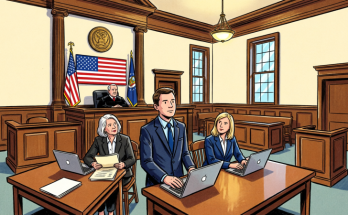
It was on a screen in a federal courtroom, her hair neatly styled, her face scrubbed clean of blood and innocence, wearing an expression she thought looked remorseful.
The judge asked her a question about the staged incident.
Melinda lowered her eyes, voice trembling. “I was scared,” she whispered. “My sister has always been volatile.”
The old anger rose in me like a wave, familiar and choking.
Then Vance leaned toward me and murmured, “Watch her hands.”
I focused.
Melinda’s fingers were still. Not trembling. Not fidgeting.
She was performing fear.
But her body wasn’t afraid.
That detail mattered more than her words, because it was the same detail I’d missed at sixteen. I’d been too busy bleeding to notice how calm she was while she did it.
The federal judge didn’t care about her performance.
The judge cared about evidence.
The hallway video played again in court.
The moment Jared coached: we need bruises.
The countdown.
Melinda’s deliberate self-harm to manufacture injury.
The judge’s expression didn’t change, but the sentence did.
No bail.
The decision landed like a door slamming shut.
After the federal arraignment, Ohio issued a detainer for Melinda pending her release—meaning she couldn’t walk out of federal custody and vanish. She would be transferred to Ohio to face assault charges linked to the stabbing when her federal case resolved.
When I heard that, my knees went weak.
Not because I felt triumphant.
Because the word assault felt too small for what she’d done to my life.
But the legal system names things in categories. It doesn’t name the way it changes how you breathe.
In therapy, I told my therapist, “I don’t want to become someone who needs them to suffer in order to feel whole.”
My therapist nodded. “That’s good,” she said. “But wanting truth isn’t the same as wanting revenge.”
So I kept showing up.
Not to watch them punished.
To watch the story finally stop being theirs.
The civil side came next.
The charity whose funds Melinda stole filed suit. My employer, furious at the attempt to weaponize my credentials, offered legal resources. The building management filed charges for the staged police incident in my hallway. The city pursued false reporting penalties.
My parents’ carefully curated life began to collapse in every direction at once.
And still, even with everything falling, Susan tried one more time.
She called from jail.
The call came through as an unknown number, but the automated voice told me it was from a correctional facility. My finger hovered over decline, and my body screamed yes and no at the same time.
I answered.
“Katie,” my mother sobbed immediately.
I closed my eyes.
“I don’t answer to that,” I said quietly.
A pause.
“Catherine,” she corrected, voice trembling. “Please. I’m your mother.”
The old chain tugged hard. It always did when she used that word.
Then my therapist’s voice echoed in my head: boundaries are love for yourself.
“I didn’t have a mother on the kitchen floor,” I said. “I had a woman who stepped over me.”
My mother made a wounded sound. “I was trying to keep peace.”
“You were keeping Melinda safe,” I corrected. “At my expense.”
Silence.
Then Susan’s voice sharpened, the mask slipping. “You always do this,” she hissed. “You always make everything about you.”
I almost laughed.
The audacity was so familiar it felt like home and that made me sick.
“I’m hanging up now,” I said calmly.
“Wait—” she panicked. “Please. Please don’t let them take Melinda to Ohio. They’ll ruin her. She’s fragile.”
Fragile.
I thought of the knife. The staged blood. The calm eyes.
“She’s dangerous,” I said.
“She’s your sister!” Susan cried.
“And you’re my mother,” I replied. “And you still won’t tell the truth without trying to control it.”
I hung up.
My hands shook afterward.
Not from guilt.
From grief.
Because a part of me had still hoped the call would sound like accountability.
Instead it sounded like the same old system begging me to resume my role as sacrifice.
A month later, Jared took a plea.
Not because he suddenly grew a conscience.
Because his lawyer showed him the numbers.
His fake emergency call. The hallway footage. The cross-state transfer. The charity ledger. The emails where he instructed Susan to “keep Katie unstable” in writing, as if cruelty was a business plan.
He signed his name on the deal with a hand that probably didn’t shake.
He never apologized.
Susan pleaded too. Her plea included “mitigating trauma” and “family pressure,” words designed to make her look like a victim of Jared instead of an active participant.
Melinda refused.
She insisted on trial.
She wanted a stage.
She wanted the one arena where she could still try to win: a room full of strangers who didn’t know our history.
Ohio scheduled my testimony for the assault case to be preserved—video deposition—so even if Melinda delayed for years, the record would not fade.
I sat in a sterile conference room facing a camera, an Ohio court reporter, my lawyer beside me. Melinda wasn’t there physically, but her attorney was, asking questions designed to make me look unstable.
“You were jealous of your sister, correct?” he asked.
“No,” I said.
“You had a history of anger issues.”
“No,” I said again.
“You threatened your sister.”
“No.”
He leaned in, voice smooth. “Your mother says you were always difficult.”
I looked at him and felt my calm settle in. “My mother also said I stabbed myself,” I replied. “Do you want to keep using her as a reliable narrator?”
The attorney’s mouth tightened.
The court reporter’s pen scratched.
Truth doesn’t always feel cathartic.
Sometimes it feels like sandpaper.
But sandpaper makes things smooth enough to hold.