“Don’t let them twist loyalty into greed,” he said in the video, his eyes glassy. “Family is not defined by who shares your blood. It’s defined by who protects your heart.”
When the video ended, Sophie sat very still.
Tears streaked her cheeks.
“So when they called me,” she said softly, “they were trying to finish what they started.”
“Yes,” I said. “They see this house, this land, as a loose end. And now, with Summit Crest’s development looming, they see dollar signs. They also know that you, as Michael’s daughter, might be a weak point. A way to pressure me.”
She sniffed and wiped her nose with the back of her hand, then let out a shaky laugh.
“They don’t know me very well,” she said.
I smiled, pride swelling in my chest. “No,” I agreed. “They don’t.”
“So what do we do?” she asked, leaning forward. “We can’t just let them take everything Dad worked for. And we can’t just hand it over to some resort company either, can we?”
“No,” I said. “We can’t. What we can do is use what your father left us.”
I outlined the plan that had been forming in my mind over the past twenty-four hours, honed by late-night reading in the bunker, phone calls with Daniel, and conversations with Teresa. Sophie listened intently, her eyes brightening with a fire I hadn’t seen in her since before Michael’s illness.
“We don’t fight on their terms,” I said finally. “We fight on ours.”
The next morning, Blue Heron Ridge felt different.
Daniel arrived with an assistant, both loaded with additional files and legal pads. Sophie sat at my right hand, Michael’s old watch on her wrist, its face scratched and worn.
Teresa moved quietly in the background, bringing coffee, arranging chairs, occasionally offering a piece of practical advice that landed with surprising strategic weight. At one point, she said, “If they start yelling, lower your voice. People lean in to hear the quietest voice.” I filed that away like a weapon.
I had also made one more phone call the previous evening—to a number I’d found in the Summit Crest folder, next to a name underlined several times.
Evan Carr, CEO.
He had picked up on the second ring. His voice was smooth, practiced, with a hint of impatience.
“Mr. Carr,” I’d said, “my name is Naomi Quinn. I believe my husband’s property in Blue Heron Ridge is causing you some complications.”
There’d been a pause, then a shift in his tone as he realized who I was. “Mrs. Quinn,” he’d said. “Yes, your late husband’s estate is… a pivotal piece of our expansion plans. I’m very sorry for your loss, by the way.”
“Thank you,” I’d replied. “I’d like to invite you to the house tomorrow morning at ten. My in-laws will be there, as well as my attorney. I think it’s time we all had a very frank conversation.”
Another pause. Then, to his credit, he’d said, “I’ll be there.”
At exactly ten, tires crunched on the gravel.
This time, the black sedan returned with a second car behind it—a sleek silver one that practically screamed corporate executive. Victor, Pierce, and Noah emerged, dressed more formally than the day before—suits, ties, polished shoes. With them was a man in his sixties, carrying a leather briefcase, his hair silver and perfectly combed.
“Our lawyer,” Pierce said when I raised an eyebrow.
“And that must be Summit Crest,” Daniel murmured under his breath as a tall man in a dark suit stepped out of the second car. He carried himself with a certain effortless confidence—the kind of man used to having doors opened for him. His eyes took in the house, the grounds, and us in one sweeping glance.
“Mrs. Quinn,” he said as we met them on the porch. “I’m Evan Carr.” He extended a hand. His grip was firm. “Thank you for inviting me.”
“Thank you for coming,” I said. “Let’s go inside.”
In the great hall, the contrast between the orchid paintings and the papers laid out on the table was stark. My husband’s two worlds—the artist and the strategist—converged in that room, and for once, I felt firmly planted in both.
Victor was the first to speak once we were all seated.
“Naomi,” he began, plastering on a smile that didn’t reach his eyes. “Look, there’s no need for all this tension. We’re family. We all loved Michael. We just want to make sure that his legacy is handled in a way that benefits everyone.”
“By ‘everyone,’ you mean you,” I said calmly.
His smile flickered. “We mean the Quinn family,” he corrected. “You married into that. So did Sophie. This estate has been part of our family’s future for decades. Michael knew that. It’s why he built here in the first place. If you just sign over a portion of the ownership, we can present a united front to Summit Crest. We all profit. Nobody goes to court.”
He gestured toward the window, where the ridge rolled away in green waves. “This land is more valuable than you realize, Naomi. You could spend the rest of your life as a very wealthy woman.”
I glanced at Sophie, who suppressed an eye roll worthy of an Olympic medal.
“Feel free to correct me if I’m wrong, Mr. Carr,” I said, turning to the Summit Crest CEO, “but from what I’ve read, this particular parcel is more than just valuable. It’s essential. Without it, your Phase 2 expansion—golf course, luxury villas, the whole thing—falls apart. The terrain doesn’t support your design anywhere else. You’ve already sunk a lot of money into infrastructure on the assumption that you’d acquire this land, haven’t you?”
“My husband did,” I corrected. “I’m just reading the notes.”
I picked up the remote and clicked. The projector hummed to life, casting a map onto the far wall. It was one of the surveys from the bunker, overlaid with Summit Crest’s own planning documents. Colored lines indicated roadways, building sites, water lines. A large swath ran directly through the section labeled QUINN ESTATE.
“In case anyone here is still under the illusion that we’re talking about a nice little vacation home,” I said, “let me dispel that. This isn’t just sentimental real estate. It’s the lynchpin to a multi-million dollar corporate strategy and a long-standing family dispute.”
I clicked again. The slide changed to a series of bullet points summarizing, in broad strokes, the evidence Michael had gathered of his brothers’ financial activities—the shell companies, the creative accounting, the siphoning of funds.
“This,” I said, placing a neat stack of copied documents in the center of the table, “is a summary of your previous misdeeds. Forged signatures. Misappropriated funds. Tax evasion. It’s not exhaustive, but it’s damning. If we go to court over this property, all of this becomes public record. I suspect neither your businesses nor Summit Crest would enjoy that kind of publicity.”
The brothers’ lawyer shifted uncomfortably in his seat, flipping through the top pages. His frown deepened with each one.
“No one is accusing anyone of anything—” Victor began.
“Oh, I am,” Sophie interrupted, her voice clear and steady. All eyes turned to her. She looked suddenly much older than her twenty years. “You stole from my father. You spent years pretending it was his fault that he walked away, when in reality, he was the only one honest enough to leave. You don’t get to come here now and talk about ‘family legacy’ like you’re doing us a favor.”
Her hands trembled slightly on the table, but her gaze was unwavering.
“You did this once,” she said. “You’re not doing it again.”
Silence followed, thick and charged.
I could see the calculation happening in Victor’s mind, the way his eyes flicked from the documents to Evan to Daniel, weighing options, running numbers. Pierce’s jaw clenched. Noah stared down at the table, his face pale.
“The question is simple,” I said finally, my voice soft but firm. “Do you want to walk away from this with your businesses intact and your secrets still mostly your own? Or do you want to fight me in court, drag this into the spotlight, and risk losing far more than a piece of land?”
Victor’s gaze hardened. “You’re bluffing,” he said.
“I’m not,” I replied. “My husband may have hated conflict, but he prepared for this. He knew you. He knew how you operate. He left me everything I need to burn your empires down if I have to. I don’t want to. I’d prefer to focus my energy on, I don’t know, teaching and gardening and grieving my husband in peace. But I will not be bullied. Not by you. Not by anyone.”
Teresa’s advice echoed in my mind.
Lower your voice.
I did, just a fraction.
“Withdraw your challenge,” I said. “Leave us alone. This is your only warning.”
Across the table, Evan folded his hands, watching with interest. I realized that for him, this was probably one of many high-stakes negotiations. But there was a glint in his eyes that suggested he recognized something unusual here—a woman who hadn’t asked for this fight but had decided she was willing to see it through.
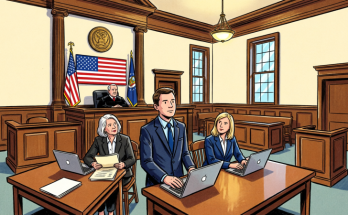
In the end, it was not some grand speech that pushed Victor over the edge. It was his lawyer.
“Victor,” the man murmured, leaning in. “We’re exposed here. If even half of this is accurate, a civil suit could lead to criminal investigation. We need to cut losses.”
“I already regret ever meeting you,” I said evenly. “So we’re square.”
They left shortly after, their grand exit somewhat spoiled by the way Pierce stumbled on the front step, catching himself awkwardly on the railing. Noah paused at the threshold, glancing back at the walls of orchid paintings, something like regret flickering across his face. It was gone in a heartbeat, and then they were all outside, their cars shrinking on the drive.
When the door closed behind them, the house seemed to exhale.
It wasn’t over, of course. There would be paperwork, filings, probably some minor skirmishes. But the main battle line had been drawn, and they had stepped back rather than forward.
Only Evan remained, standing thoughtfully at one end of the table.
“Mrs. Quinn,” he said. “May we speak privately?”
I nodded, sending Sophie and Daniel into the adjacent room to call Teresa and do whatever debriefing warriors do after their first victory. Evan walked to the window, gazing out at the ridge.
“This house,” he said. “It’s… impressive.”
“It is,” I agreed, letting some pride seep into my voice. “My husband had good taste.”
“He also had good instincts,” Evan said. “He knew that the leverage here wasn’t just money. It was timing and optics. Summit Crest has already invested heavily in our Blue Heron Ridge expansion. If that collapses publicly, it could trigger a cascade we’re not prepared for.”
“And I should feel sorry for you because…?” I asked, raising an eyebrow.
He smiled faintly. “You shouldn’t,” he said. “But you should recognize that you have an unusual amount of power for someone who didn’t ask for it. You could sell me this land outright and walk away with more money than most people will see in a lifetime. Or you could refuse to sell, tank our expansion, and make yourself several corporate enemies.”
He turned to face me fully.
“Or,” he said, “we could make a different kind of deal.”
I folded my arms. “I’m listening.”
“I’ve seen your husband’s notes,” he said. “We pulled some of them through back channels when he started sniffing around, trying to figure out what he knew. He was less interested in money than in control—specifically, controlling what happened to this piece of land. He wanted to protect something here. You.”
“And the orchids,” I said.
“And the orchids,” he agreed. “And that greenhouse. And, perhaps, whatever you choose to build from here.”
He leaned against the window frame, casual but calculated.
“We can’t move the resort,” he said. “WE can scale it. We can adjust it. We can re-route certain amenities. But we need at least a portion of your land to make the numbers work. What if, instead of buying it, we lease a segment? You retain ownership. We secure the rights to use specific parts for limited purposes under a long-term agreement. In exchange, we fund a conservation easement for the remainder of the estate. It becomes legally protected, a sanctuary. No one—not us, not any future buyer—could develop it without violating that easement.”
This was more or less the exact scenario Michael had outlined in one of his notebooks—a long-term lease to generate income and leverage, paired with a conservation deal to protect the ridge.
I suspected Evan knew that.
“And the orchids?” I asked.
He smiled. “We make them the centerpiece,” he said. “A unique selling point. ‘The Summit Crest Blue Heron Resort—steps away from a world-class orchid sanctuary and art studio.’ We pay to maintain the collection. You manage it. We sponsor educational programs, guided tours, retreats. It’s good PR for us and fulfills your husband’s vision of this place as more than just a hermit’s hideout.”
He paused, then added, “We also fund an endowment. For the orchids, for the land, and for whatever community art and healing programs you want to run. You become director of this… call it the Blue Heron Ridge Foundation. We get to brag about donating to a worthy cause instead of bulldozing over someone’s grief.”
I stared at him, my mind racing.
“This isn’t charity,” he said, reading my expression. “Make no mistake, Summit Crest will still profit. But this way, we do it without destroying the one thing that makes this place truly special. Frankly, that benefits us. Cookie-cutter resorts are everywhere. This gives us a story.”
He wasn’t wrong. And I could feel, beneath my suspicion of corporate motives, a small, tentative thread of hope.
“Why should I trust you?” I asked.
He shrugged. “You shouldn’t,” he said honestly. “You should trust your lawyer. And your husband’s notes. And your own instincts. But if it helps, know this: I built Summit Crest from one tiny ski lodge. I did it by playing the long game, not by burning bridges at every opportunity. I don’t need this particular profit margin so badly that I’d destroy my reputation over it.”
He extended his hand.
“Consider it,” he said. “We’ll put something on paper. Your lawyer can chop it to pieces. If you decide you’d rather live up here alone and slam the door on the world, that’s your right. But from where I’m standing, this looks like a chance to turn your husband’s secret into something that could touch a lot of lives.”
His hand hung there between us, an invitation.
For a moment, I saw Michael’s face behind him in the reflection of the glass, or imagined I did. His faint, crooked smile. The way he’d tilted his head when he was about to propose something he knew I’d initially resist but eventually embrace.
I took Evan’s hand.
“Let’s see what you come up with,” I said. “And then we’ll negotiate.”
Sophie started spending more weekends there, trading her dorm’s cramped living room for the wide, light-filled spaces of Blue Heron Ridge. She set up a desk in one of the upstairs bedrooms, its windows looking out over a slope of pines. Sometimes I would find her sitting on the porch steps at dawn, wrapped in a blanket, watching the sun climb over the ridge with a mug of coffee in her hands.
“You’re becoming a morning person,” I teased once.
She snorted. “Don’t tell anyone,” she said. “I have a reputation.”
We developed new rituals.
Every morning, before we dove into legal documents or property surveys or plant care schedules, we would sit at the kitchen table with our coffee and open one of Michael’s video files. Some were practical—guides to household systems, explanations of where certain tools were kept, instructions on how to winterize the greenhouse. Others were more personal.
In one, he reenacted our first date, complete with a terrible imitation of the server at the restaurant who had spilled water all over my lap. In another, he walked through the garden, pointing out plants he’d chosen because they reminded him of places we’d visited or things I’d said. In yet another, he sat in the studio—one of the few times he’d filmed there—talking about how he’d found my old college paintings in a box we’d left in storage years ago.
“You always downplayed your art,” he said in that one, his voice softer. “Said it was just something you did for class, that you weren’t any good. You were wrong. You have an eye for color, Naomi. For composition. I’ve seen the way you look at the world when you think no one’s watching. I wanted you to have a place where you could go back to that, if you ever wanted.”
He panned the camera around the studio, revealing the shelves of brushes and paints, the big wooden easel, the tall cabinet. Then he swung it back to his face.
“Maybe you’ll never pick up a brush again,” he said. “That’s okay. This room can be whatever you need it to be. A quiet space. A therapist’s office. A storage closet for all the random crap you can’t bear to throw away. But if you do feel that itch one day, if your fingers start twitching when you see a blank canvas, I wanted you to have somewhere that welcomes that.”
I watched that video twice before I dared to open the cabinet he’d shown.
Inside, carefully wrapped in brown paper and tied with twine, were my old paintings. Pieces I’d done in college—messy, earnest, full of more feeling than technical skill. They smelled faintly of oil and acrylic, of turpentine and time.
Behind them, leaning against the back of the cabinet, was a single, larger canvas. It was wrapped in heavier paper, and across the front, in Michael’s handwriting, were the words:
FOR WHEN YOU’RE READY.
I turned the canvas around and leaned it on the easel, but for several days, I couldn’t bring myself to unwrap it. It sat there, a quiet question mark in the room.
In the meantime, life filled with meetings and decisions.
Daniel negotiated back and forth with Summit Crest’s lawyers. Drafts of the lease agreement and conservation easement flew across email servers like migrating birds. Each iteration brought us closer to something that felt fair—financially, ethically, emotionally.
The plan, in its final form, was elegant.
Summit Crest would lease a defined portion of the estate—a wedge of land on the western edge that could accommodate some of their planned villas and a portion of the golf course, re-routed to minimize environmental impact. In exchange, they would pay a substantial annual fee and fund the full maintenance of the estate’s infrastructure.
The remainder of the land—roughly two-thirds of the property, including the ridge crest, the greenhouse, the studio, and the main house—would be placed under a conservation easement managed by an independent land trust. It would remain privately owned by me and, eventually, by Sophie. But certain development rights would be permanently relinquished, ensuring that no future owner could clear-cut the forest or sell it to a developer without violating the easement.
They would also fund the creation of the Blue Heron Ridge Foundation, an entity whose mission we drafted with equal parts grief and hope: to provide space and programming for people in transition—grieving, recovering, rebuilding. We envisioned workshops, retreats, art therapy sessions, horticultural therapy among the orchids. A place where people could come not just to escape, but to actively engage in their own healing.
The more concrete it became, the more I felt a strange peace settle over me.
One evening, after a particularly intense negotiation session, I found myself standing once more in the studio as the last light of day pooled on the floor.
The wrapped canvas waited.
“Okay, you stubborn man,” I murmured to the air. “Let’s see what you did.”
I untied the twine and peeled away the paper.
The painting took my breath away.
It was unfinished—sections of the canvas still bare or only roughly blocked in—but the core was there. A woman standing on a ridge, her back to the viewer, looking out over a valley bathed in dawn light. The suggestion of a greenhouse glowed faintly to one side, its glass catching the sunrise. Beside the woman, slightly turned toward her, was a young girl, taller than a child but not yet fully grown. Their hair blew in the wind, tangled together.
Behind them, almost like a guardian spirit, a man stood slightly apart, holding a single blue orchid in his hand. His face was indistinct, sketched but not detailed, as if the artist had intended to refine it later and never got the chance.
My throat constricted so tightly it hurt.
I sank onto the stool in front of the easel and stared until my vision blurred, then cleared, then blurred again.
Michael hadn’t just built a house or collected orchids or gathered evidence. He had tried, in his imperfect, secretive way, to paint our future. To give us a picture to step into after he was gone.
He hadn’t finished it.
Maybe that was the point.
I picked up a brush.
The first stroke of color onto the canvas felt like stepping off a ledge and finding, to my surprise, that there was ground beneath my feet. It was shaky, uneven ground, but it held.
I worked slowly at first, eyes flicking between the reference photos he’d left on a nearby shelf and the canvas. I refined the ridge line, softened the girl’s shoulders, added more depth to the clouds. As I painted, memories surfaced—not in a torrent, but in small, manageable waves. Michael teaching Sophie to ride a bike. Michael burning dinner as he tried a new recipe and then laughing as we ordered pizza instead. Michael struggling to pronounce the Latin names of my favorite plants and making up ridiculous nicknames when he failed.
And the next.
Sometimes Sophie would join me, curling up in a chair with her laptop or sketching in a notebook. Sometimes Teresa would bring tea and sit quietly nearby, sewing something or reading. The studio became, as Michael had hoped, a space for whatever we needed it to be.
We were still sad. We were still angry. But we were not stuck.
One evening, as the sun hovered just above the ridge, tires crunched once more on the gravel drive.
For a second, my stomach clenched, bracing for the worst—another ambush, another attempt at pressure. I wiped my hands on a rag and peered out the studio window.
A single car, older than the others, navy with a dent in the bumper, had pulled up by the front steps.
Victor stepped out.
He did not stride this time. He walked more slowly, his shoulders not quite as squared. There was no suit jacket, just a dress shirt with the sleeves rolled up, his tie hanging loose. He held something small in his hand.
I met him at the front door, not stepping out, but not slamming it either.
“Naomi,” he said.
“Victor,” I replied, keeping my tone neutral.
He cleared his throat. Up close, I could see deeper lines around his eyes than I remembered, a tightness at the corners of his mouth.
“I don’t want anything,” he said. “I’m not here to challenge or threaten. I just… wanted to give you this.”
He held out the object he’d been holding. It was a photograph, its edges worn, the colors slightly faded.
I took it cautiously.
Three boys stared out from the image, standing under a large cottonwood tree. The tallest—probably around twelve—stood in the center, his arm thrown around the shoulders of the two younger ones. His hair was dark and messy, his grin wide and mischievous.
On his right, a boy with sharper features squinted at the camera, one eyebrow lifted as if asked to participate in something he found slightly ridiculous.
On his left, a smaller boy clutched a flowerpot with both hands. Inside the pot, a tiny orchid plant with two leaves and a single bud poked up, fragile and determined. The boy’s smile was breathtakingly familiar.
Michael.
“He found this in Dad’s old desk,” Victor said quietly. “The last time he came up here before…” He trailed off, swallowing. “He and I—things were bad. But for a few minutes, we looked at this and remembered something good. Before the business. Before the money.”
His gaze drifted past me, into the house, where the walls glowed with painted orchids.
“I was wrong about a lot,” he said. “About what mattered. About what he wanted. I thought he was running away from responsibility. Turns out he was the only one who understood it.”
“And Pierce?” I asked. “Noah?”
“Pierce will follow the money,” he said with a bitter huff of almost-laughter. “He’s already moved on to other projects now that this looks like a headache instead of a payday. Noah…” He hesitated. “Noah might call you. Or he might disappear. He’s always been better at vanishing when things get complicated.”
I nodded slowly.
“Thank you,” I said, surprising myself with the sincerity in my voice. “For the photo. And for… stopping.”
He shifted, uncomfortable. “You know,” he said, glancing at the surrounding hills, “we always thought this place was cursed. Too much happened here. Too much fighting. Too many secrets.” His gaze returned to me. “Maybe we were the curse. Maybe it just needed new… caretakers.”
Care. It was an odd word to hear from his mouth.
“We’ll do our best,” I said.
He nodded once, abruptly, as though that was all he had prepared to say. Then he turned and walked back to his car.
As his taillights disappeared down the drive, I looked at the photograph again.
Three boys under a tree. One holding an orchid, his face alight.
“Thank you,” I whispered, though the person who most needed to hear it was gone.
Behind the headlines, quieter things unfolded.
The greenhouse flourished. Under Teresa’s care and my occasional meddling, the orchids not only survived but multiplied. We added a few new specimens, donations from botanical gardens and private collectors who were delighted at the idea of their plants residing in a mountain sanctuary.
The house filled with different kinds of sounds. Laughter during a pilot weekend retreat for widows and widowers, organized somewhat chaotically but heartfeltly. The murmur of voices during a support group for caregivers. The scratch of pencils and the swish of brushes during an art therapy workshop run by a colleague Sophie knew from her program.
We converted one of the smaller wings into guest rooms, cozy and simple. People came with their grief, their burnout, their transitional bewilderment, and for a few days they lived among the orchids and the paintings and the views.
It was not a miracle cure. No place could be. But it was a space.
Sometimes that was enough.
In the studio, the unfinished painting of the woman and the girl and the man with the blue orchid gradually became something more complete.
I never fully sharpened the man’s features. It felt wrong, somehow, to pin him down more than Michael himself had. But I added more detail to the orchid in his hand, letting its petals catch the light. I deepened the colors of the sky, made the ridge line more precise, added tiny hints of other people in the distance, walking along the path.
On the day I finally signed my name at the bottom, Sophie stood beside me.
“Nice composition,” she said, her voice teasing but thick.
“Your father did most of the work,” I replied.
“Yeah,” she said. “But you finished it.”
We stood there for a long time, not speaking, just looking.
Later that night, after everyone had gone to bed and the house had settled into its nighttime creaks and sighs, I sat alone at the kitchen table. The laptop was open in front of me, one last video file cued up—the only one we hadn’t watched yet, buried in a subfolder.
It was shorter than the others.
Michael appeared, older than in the first videos, a little thinner, the shadows under his eyes more pronounced. He was sitting in the studio, the unfinished painting visible behind him.
“Naomi,” he said. His voice was calm, steady. “If you’re watching this, it means you’ve done more than I ever had the courage to do. You came to Blue Heron Ridge. You faced my brothers. You made choices about this place. Whether you kept it or sold it or remade it entirely, I know you did it with more clarity than I had.”
He smiled, that crooked little half-smile that had always melted some of my anger even when I wanted to stay mad.
“I need you to hear this,” he said. “The house, the orchids, the studio—all of that is just… stuff. Beautiful stuff, maybe, but still just things. They can be lost in a fire or a bad contract or a landslide. The real legacy—what I hope I leave you with—is the reminder that you always have a choice.”
He leaned forward slightly, as if confiding something.
“I spent too much of my life reacting,” he said. “Running away from my family. Running toward safety. Building and hiding. I wanted to give you and Sophie something that wasn’t born out of running. Something you could choose freely.”
He glanced back at the painting.
“I know I left you with a mess,” he admitted. “Secrets, paperwork, a dying request that probably confused the hell out of you. I’m sorry for that. I did the best I could with a brain that was ticking and a heart that was terrified. I hope, someday, you can forgive the ways I failed.”
I reached out without thinking and touched the screen, my fingertip resting on his cheek.
“I already do,” I whispered.
He drew a breath.
“Whatever you do next,” he said, “know that I trusted you to do it. Not because you’re my wife, not because you’re Sophie’s mother, but because you’re you. Because you’ve always seen beauty in unlikely places. Because you turn pain into understanding. Because you’re a better steward of this ridge, of this life, than I ever was.”
His smile deepened.
“And hey,” he added, some of the old playfulness surfacing. “If you happen to keep the studio, maybe hang that painting somewhere. Just… don’t let anyone judge it too harshly. The artist had a few distractions.”
The video ended there, abruptly, as if he’d run out of tape or decided that was enough.
I sat for a long time in the quiet kitchen, the laptop screen slowly dimming, the hum of the refrigerator the only sound.
Outside, the ridge was a dark silhouette against the sky. Somewhere among the trees, an owl hooted. The greenhouse would be glowing softly, its humidity a little world unto itself.
Looking back now, sitting at that same table years later, I can see the arc that none of us inside it could see clearly at the time.
A man ran from a house on a ridge, convinced that if he left it behind, he could escape all the damage it contained. He tried to build a new life as far from it as possible. He fell in love, became a father, and for a long time, it worked.
But the ridge never really left him.
When he learned his time was limited, he did what engineers do—he drew up plans. He built. He tried to control variables that were, by nature, uncontrollable. He made mistakes. He held back truths too long.
And still, somehow, his love threaded through the mess. In orchards painted and planted. In a greenhouse humming with life. In a hidden room full of carefully gathered evidence meant to shield us. In a studio stocked with brushes and my old paintings. In a letter with a key.
For a while, I thought the story was about his secret.
Now, I think it’s about what we did after we discovered it.
We stood on the ridge and chose.
On some evenings, I climb the hill behind the house to the highest point of the ridge. From there, I can see the faint outline of the Summit Crest villas in the distance, their lights like scattered fireflies. I can see the sweep of the valley, the line where the conservation boundary begins, the darker, taller trees that will remain long after I’m gone.
I stand there and picture that unfinished-now-finished painting—the woman, the girl, the man with the blue orchid. I picture them not as ghosts, but as a snapshot of a moment when everything was still possible, when all the hard parts were still ahead.
And I think, not with bitterness, but with a kind of fierce gratitude:
We did it, Michael.
We took your secret and turned it into something bigger than your fear.
Your last words to me were a plea to stay away. But the words that stayed with me, in the end, were the ones hidden in your videos, in your paintings, in the very bones of this house:
Trust yourself. Protect what matters. Keep creating.
The ridge remains. The orchids bloom and wither and bloom again. The house, once forbidden, has become the place where I finally stopped running from the hardest parts of our story and started living the rest of it.
And that, more than any house or key or hidden folder of evidence, is the legacy you left.
THE END.