I looked straight at her. “Tonight, I finally understand—they will never see me the way I needed. They see me as expendable.”
I swallowed, feeling my chest tighten.
“So I’m getting rid of them instead,” I said. The words felt like stepping into cold water—shocking, but also clean.
When my statement ended, they told me to wait in a different room while they questioned my sister. I sat with a paper cup of vending machine coffee that tasted like burned dirt. The wall clock ticked louder than it should have. The precinct lights made everything look sickly and pale.
A victim advocate came in sometime after three. She was young, with worn eyes that looked too old for her face.
“Do you have somewhere safe to stay tonight?” she asked.
The question hadn’t even occurred to me. Safety was never something I’d associated with home.
“I have an apartment,” I said.
“Will your parents know where it is?” she asked.
Of course they would. They’d show up full of fury and blame, trying to pressure me back into the role they needed. The thought made my stomach roll.
“I can connect you with resources,” the advocate said, handing me a card. “Counseling. Temporary housing. Familial trauma like this—”
“I’m fine,” I said automatically, the reflex of someone who learned early not to ask for help.
The advocate held my gaze, not fooled. “You don’t have to be fine,” she said quietly.
I nodded, but even as I took the card, I knew I wouldn’t call. I’d handled everything in my life the same way: alone, silent, without expecting anyone to catch me.
At 4:45 a.m., Detective Mercer found me.
He looked tired but satisfied in the way cops do when the truth has finally stopped fighting them.
“Your sister confessed,” he said.
The words hit me so hard I felt dizzy.
“Confessed?” I repeated, as if my brain didn’t trust the sound.
He nodded. “The evidence was overwhelming. Traffic camera footage, paint transfer on her vehicle, and her blood alcohol test from tonight. She tried to shift the story a few times, but she finally admitted it.”
Relief surged through me so fast it almost made me nauseous. I hadn’t realized how tightly I’d been clenching my body until the tension loosened.
“What happens now?” I asked.
“She will be charged,” Mercer said. “DUI, hit-and-run, leaving the scene of an injury accident. Given the condition of the victim—serious injuries—she’s facing significant prison time.”
I stared at my hands, watching them shake, then slowly still.
“And me?” I asked.
“Your testimony will matter,” Mercer said. “Especially about the coercion attempt. We take that seriously.”
He hesitated, then added, “Your parents are still in the building. If you want to avoid them, we can take you out the back.”
I thought about the girl I’d been at sixteen, swallowing tears at cookouts. At nineteen, watching my DC trip dissolve into Scarlett’s prom ride. At twenty-five, still hoping for scraps of approval.
Then I stood up.
“I’ll walk out the front,” I said. “I’m not hiding anymore.”
They were waiting in the lobby.
My father stood with his arms folded, face like a thundercloud. My mother sat slumped on a plastic chair, looking hollowed out, like she’d aged ten years in one night. Scarlett wasn’t there—she’d already been processed, booked, moved somewhere she couldn’t charm her way out of.
Dad’s gaze locked onto me with a ferocity that would have terrified the younger version of me.
“You’ve destroyed this family,” he said.
His voice wasn’t grief. It was accusation, like I’d vandalized property.
“You destroyed it yourself,” I said, and my voice surprised me with its calm. “When you decided one daughter was worth more than the other. I just refused to go along with it.”
My mother looked up slowly, eyes glassy. Her voice came out thin, pleading. “She’s your sister,” she whispered. “How could you do this to her?”
“She hit a woman and left her to die,” I said. The words felt heavy, but true. “How are you defending her?”
My mother flinched as if I’d slapped her. “After everything we’ve done for you,” she whispered.
“Like what?” I asked, and the sharpness in my tone startled even me.
They’d fed me. Given me a room. That was the bare minimum of parental obligation, not a debt I owed them for life.
My father stepped closer, voice lowering into a menace meant to force obedience.
“If you walk out that door,” he said, “you’re dead to us. No family. No support. You will have nothing.”
I smiled.
Not a happy smile. Not a cruel one. A smile of deep, freeing truth.
“I already have nothing from you,” I said, meeting his eyes. “At least now I’m free.”
I walked past them into the early morning.
The sky was bruised blue at the edges, that quiet moment before sunrise when the world looks like it’s holding its breath. My car sat alone in the parking lot. I drove home through empty streets, and for the first time in years, my chest felt lighter—not because I wasn’t hurting, but because the weight of pretending had finally fallen off.
The weeks that followed were a blur of court dates, paperwork, and my parents’ escalating attempts to rewrite reality.
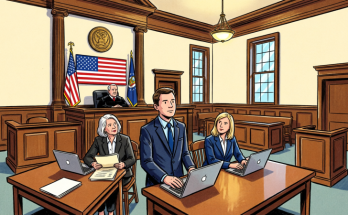
They hired a lawyer who tried to undermine my statement, painting me as a jealous, vengeful sister who’d invented a story out of spite. It would have worked in a different case, maybe—because courts are used to family drama. But evidence doesn’t care about narratives.
Traffic cameras showed Scarlett’s car.
Paint samples matched the victim’s clothing and the car’s bumper.
A jogger had witnessed the impact and called it in.
Scarlett’s blood alcohol was nearly double the legal limit.
Facts piled up like bricks, heavy and immovable.
My parents tried anyway.
They called. They texted. They left voicemails that swung wildly between guilt and rage.
The first voicemail from my mother was almost gentle.
“Clare,” she said, voice trembling, “we need to discuss this. You’ve made your point.”
By the sixth voicemail, her real feelings surfaced like rot under varnish.
“You ruined your sister’s life out of spite,” she hissed. “I always knew you were envious of her. I never thought you’d be this cruel.”
My father’s voicemails were colder, focused on money and consequence.
“Scarlett’s actions were wrong,” he said, “but your stubbornness has cost this family hundreds of thousands in legal fees. Her future is destroyed. I hope you can live with it.”
I could.
I slept better than I had in years.
Then the prosecutor’s office asked if I’d meet with Evelyn Parker’s family.
The idea turned my stomach. I’d been fighting my parents, my sister, the court system. But meeting the woman whose life Scarlett had shattered felt like stepping into the core of it all.
I agreed anyway, because truth wasn’t just a courtroom stance. It was a responsibility.
Evelyn Parker was in a wheelchair when I met her. Her daughter, Natalie, pushed her gently into the victim services office. Evelyn was smaller than I expected—gray hair, trembling hands, face lined with pain and time. But her eyes were sharp and bright, and when she looked at me, she didn’t look at me like I was guilty.
She looked at me like I was human.
“You’re Clare Bennett,” she said softly. “You look like you haven’t slept in weeks.”
“Neither do you,” I blurted, then immediately regretted it, because it sounded rude. But Evelyn laughed—a thin, rustling sound like leaves in wind.
“I like honesty,” she said. “Sit down, dear. Let’s talk.”
We sat for two hours. Evelyn told me about the night of the accident—leaving book club, stepping into the crosswalk, seeing headlights, then impact. She described waking up in the hospital, unable to move her legs, the months of physical therapy, the financial ruin, the nightmares that still woke her at 3:18 a.m.
“I’m so sorry,” I said, and my voice cracked, because I didn’t know what else to do with the shame of being connected to my sister.
“You didn’t do this,” Evelyn said firmly. “And according to the police, you’re the only one in your family who tried to make it right.”
Natalie leaned forward then, her jaw tight. “Your parents actually approached me,” she said. “Did you know that?”
My blood went cold. “What?”
Natalie pulled up a voicemail on her phone and hit play.
My father’s voice filled the small office—smooth, controlled, the same voice he used when he wanted people to believe he was reasonable.
“Hello, Mrs. Parker,” he said. “This is Robert Bennett. I’m calling to negotiate a settlement. My daughter made a terrible mistake, but she’s young and has a future ahead of her. I’m willing to pay substantial compensation if you’re willing to speak with the prosecution about lowering the charges…”
He tried to buy her silence.
He tried to buy his way out of consequence the way he’d always bought his way out of discomfort.
Natalie’s eyes flashed. “I told him to go to hell,” she said simply. “Your sister nearly killed my mother and drove away. No amount of money changes that.”
Evelyn reached across the table and took my hand. Her fingers shook, but her grip was surprisingly strong.
“But you,” she said, looking me in the eye, “you told the truth. In a family that clearly values image over integrity, you chose the right thing. That takes a kind of strength most people never have to find.”
Her words stuck with me through the trial, through Scarlett’s conviction, through the sentence that landed like a final door slamming.
Five years.
Scarlett cried in court. My mother sobbed dramatically. My father stared ahead, jaw locked, as if staring hard enough could punch a hole through consequence.
My sister was led away in cuffs, mascara smeared, face twisted with rage when she looked at me.
I packed my studio apartment the day after sentencing. Not because I had to—nobody was evicting me—but because the air in my old life felt poisonous. I needed distance. I needed a new zip code that didn’t carry my parents’ shadow.
My phone rang constantly with calls from my parents. I let them go to voicemail. Their messages grew nastier as they realized I wouldn’t respond.
And then I left.
I moved to Portland—three states away from Ohio, far enough that I could breathe differently. The city felt damp and alive, gray skies and coffee shops and strangers who didn’t know my family story. I enrolled in community college using money I’d scraped together from extra shifts at the grocery store. The plan had always existed in the back of my mind, buried under my parents’ low expectations and my own resignation.
Now nothing could stop me.
The first person to look at me like I wasn’t disposable was my academic adviser, Dr. Allison Walsh.
She was in her fifties, with sharp brown eyes and glasses she pushed up her nose when she was thinking. She studied my placement test scores with her head tilted slightly, as if the numbers were speaking to her.
“Have you ever considered majoring in computer science?” she asked.
I blinked. “Computer science?”
“These scores,” she said, tapping the page, “are extraordinary. Logic, pattern recognition, analytical reasoning… Clare, where have you been hiding?”
I laughed awkwardly. “I barely finished high school,” I admitted. “My family always said I wasn’t… college material.”
Dr. Walsh took off her glasses and looked at me in a way that made my chest tighten.
“Your family was wrong,” she said simply. “I’ve been doing this for twenty-eight years. You have aptitude.”
No one had ever said that to me without a “but” attached.
You’re smart, but…
You’re hardworking, but…
You’re fine, but Scarlett…
Dr. Walsh didn’t add a “but.”
Those words altered everything.
I threw myself into school with a hunger that felt almost feral. Programming made sense to me in a way people never had. Code was honest. You couldn’t guilt-trip a compiler. You couldn’t manipulate an algorithm with tears. If something didn’t work, you fixed it. Effort mattered. Work yielded results.
The first semester nearly broke me anyway.
I’d been out of school for eleven years. My study skills were nonexistent. My classmates seemed to know how to take notes, how to prepare for exams, how to juggle deadlines. I had to learn everything by trial and error like someone dropped into a foreign country without a dictionary.
I failed my first programming midterm.
I sat in my car afterward and cried for twenty-five minutes, convinced my parents had been right all along. My chest hurt with the old familiar shame—the feeling of being behind, of being less, of being the daughter who never measured up.
Then I wiped my eyes, marched to Dr. Walsh’s office hours, and asked for help.
She didn’t sugarcoat it.
“You’ve fallen behind,” she said. “Your fundamentals are weak. But you’re also one of the most driven students I’ve met. Determination can accomplish a lot.”
She connected me with a tutor—Kevin O’Connor, a doctoral student with gentle patience and the kind of calm that made you feel safe admitting you didn’t know something. We met four times a week in the library. He walked me through problems again and again until my brain stopped panicking and started understanding.
Slowly, gradually, I began to climb.
I earned a B on my third midterm.
I earned an A on my final.
When grades posted, Kevin gave me a high-five like we’d just won something.
“Do you know what the difference was?” he asked, eyes bright.
I shook my head, laughing through exhaustion.
“You got over your fear of making mistakes,” he said. “You just kept trying until you got it right.”
His words cut deeper than he knew. I’d spent my whole life terrified of being wrong, because being wrong in my family meant proving my parents’ story about me: that I wasn’t enough.
In this new world, being wrong just meant I hadn’t learned it yet.
There was no moral judgment in it. Only progress.
The next semester, I took six classes and worked twenty-eight hours a week at a tiny software firm to pay bills. Sleep became a luxury I couldn’t afford. I lived on ramen and cheap coffee and stubbornness. I studied in breaks between work tasks. I debugged code in the dark at my kitchen table while rain tapped at the window.
The firm’s owner, Marcus Grant, had started the company in his garage six years ago. He was stubborn in a way I recognized—like someone who refused to accept the role the world assigned him.
One night, he found me still at my desk at 1:10 a.m., eyes bloodshot, fingers flying over a keyboard.
“You’re going to burn out,” he said gently.
“I can’t afford to slow down,” I replied. “I’m making up for lost time.”
“Lost time from what?” he asked.
So I told him, a shortened version. Family. Sister. Prison. The night my parents tried to trade my life for hers.
Marcus listened without interrupting. When I finished, he leaned back and nodded once.
“My parents wanted me to become a doctor,” he said. “Traditional. Prestigious. I dropped out of med school to write code in my garage. They didn’t talk to me for three years.”
“Did they come around?” I asked.
“Eventually,” he said. “But by then I realized I didn’t need their approval. This,” he gestured around the office, “exists whether they accept it or not.”…………………………….
Click Here to continuous Read Full Ending Story : Parents Tried to Frame Me for Sister’s Crime__PART3(ENDING)