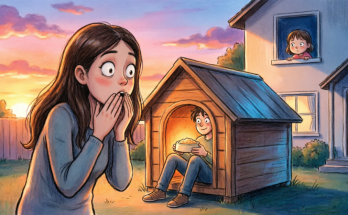
We’re hurt, Morin. We don’t understand why you did this. You know we would never intentionally harm you.
They never intentionally harmed me. That was always their story. Harm, to them, was something that happened with screaming and fists and strangers. Harm wasn’t taking money because you assumed your daughter would be too “mature” to protest. Harm wasn’t turning her into the butt of the joke every holiday and then expecting her to thank you for being included.
That Friday, the credit card company reversed the charge. Efficient. Quiet. No apology needed. The dealership pulled the car, the bank returned my money, and the financial part of the mess resolved itself like a clean spreadsheet.
The emotional part didn’t.
I sat on my couch that night with my laptop open and my bank app on the screen, watching the numbers like I was checking for a glitch. Everything was in order. Everything was mine again.
I should’ve felt relieved.
Instead, I felt hollow, like I’d spent my entire life trying to earn something my family didn’t know how to give.
I thought back to childhood in fragments, the way memory does when it’s trying to protect you.
Kay at eight, crying because her dance tights were itchy. Mom spending an hour soothing her, buying new ones, promising ice cream after class.
Me at nine, crying because a boy at school had called me ugly. Mom telling me, distracted, “Don’t be so sensitive,” and then calling me “strong” for not needing comfort.
Dad never came to my middle school play because Kay had a soccer game. When I tried to complain, he’d said, “You understand, right? Kay needs us.”
I always understood.
That was the problem.
By Sunday, my parents’ house went up for sale. I found out through a forwarded listing link from my cousin, who texted: I’m not taking sides but… are you okay?
The listing photos were dim and slightly crooked, taken quickly, like my parents wanted the house to look appealing but couldn’t muster the energy for care. The living room was right there on my screen—the same couch Dad had sat on, the same coffee table where my mug had landed like a punchline.
I clicked through every photo and felt nothing. Not satisfaction. Not guilt. Not joy.
Just the quiet certainty that I wasn’t going back to the way things were.
A week later, Mom texted: Can we talk? Just you and me. Like adults.
It made me laugh, a short sound that startled even me. Like adults. As if adulthood was something you could summon only when you needed money.
I didn’t respond right away.
Instead, I called my friend Jessa, the closest thing I had to family that didn’t come with strings. She answered on the second ring.
“You okay?” she asked immediately.
That was always her first question. Not “What happened?” Not “What did you do?” Just: Are you okay?
I surprised myself by saying, “No.”
Then I told her the story, the whole thing, from the mug to the car to the charge to the tow truck. She listened without interrupting, the way people do when they’re actually trying to understand instead of waiting for a turn to speak.
When I finished, she exhaled. “That’s… insane.”
“I keep thinking I’m overreacting,” I admitted. “Like maybe I should’ve handled it privately.”
“Morin,” she said gently, “they spent twenty-three thousand dollars on your card without asking.”
“I know.”
“And when you confronted them, they didn’t apologize. They defended it. And they blamed you.”
“I know.”
“So what exactly would ‘handling it privately’ have done?”
I didn’t have an answer. Because the truth was, handling it privately was what I’d done my entire life. Handling it privately meant swallowing my anger so it wouldn’t inconvenience anyone. It meant letting resentment rot quietly inside me while everyone else kept smiling.
“Okay,” Jessa said. “What do you need right now?”
I looked around my apartment. My small, clean space. My paid bills. My fridge full of groceries I’d bought with my own money. My life that was mine, not borrowed.
“I think,” I said slowly, “I need to stop letting them rewrite reality.”
“Good,” she said. “Then don’t let them.”
The next day, I found a therapist.
It felt dramatic, like something characters did in movies, but I was tired of trying to be my own emergency room. In my first session, I sat on a gray couch and stared at a plant in the corner while I explained the mug and the car. The therapist didn’t flinch. She didn’t ask what I did to provoke it. She didn’t tell me to consider my parents’ feelings.
She just said, “That sounds like a painful pattern.”
Pattern. The word made my throat tighten.
Because patterns are harder to excuse than one-time mistakes.
Over the next few weeks, the pattern revealed itself everywhere. I noticed how my mother’s messages were always about her suffering, never mine. I noticed how Kay’s posts framed her as the victim of my jealousy, never the beneficiary of my family’s entitlement. I noticed how Dad tried to sound like a mediator while quietly supporting whatever kept Kay comfortable.
They weren’t confused about what they’d done.
They were confused that I’d stopped accepting it.
Mom kept pushing for a conversation. She offered coffee. Lunch. A walk. She promised she just wanted to “clear the air.”
The therapist asked me, “What do you think she wants?”
I thought of Mom’s hands on my arm outside by the car, her voice sugarcoated: You understand, right?
“She wants me to make it okay,” I said.
“Do you want to make it okay?” the therapist asked.
And for the first time, I considered the question seriously. Not out of guilt. Out of honesty.
“No,” I said. “I want it to be true.”
That month, I started a new routine. I muted Kay on social media. I set my parents’ texts to silent. I stopped checking my phone every time it lit up like a trained response.
When my aunt Diane texted again, I didn’t reply.
When a cousin sent me screenshots of a family chat where they called me heartless, I didn’t argue. I just sent her the same three attachments: the credit card statement, the old text outlining the card’s terms, and the police report confirmation.
No explanation. No defense. Just facts.
The cousin didn’t message again.
And the silence that followed wasn’t the old silence, the kind meant to punish.
This silence felt like space.
Like breathing room.
Still, the meeting request from Mom sat in my inbox like an unopened bill. Eventually, a part of me that still wanted closure—the part that still wished for a different mother—decided to say yes.
I agreed to meet her at a café near my apartment. Neutral ground. Public. No home-field advantage.
The day before we met, I took the joke mug out of the trash and set it on the counter again.
Not because I missed it.
Because I wanted to look at it one more time and remember exactly what I was walking away from.
Then I turned it upside down, like a period at the end of a sentence.
And I went to bed, knowing the next conversation would either crack something open or seal it shut forever.
Part 4
Mom was already seated when I arrived, hands folded around a paper cup like she’d been waiting in a church pew.
The café smelled like espresso and clean wood, the kind of place where people typed quietly on laptops and didn’t make eye contact. I’d picked it on purpose. My mother loved cozy booths and dim lighting, spaces where she could turn every conversation into a scene. Here, the world stayed bright and indifferent.
She stood as soon as she saw me, her face opening into a smile that looked rehearsed. She leaned forward for a hug.
I didn’t move.
Her arms hesitated midair, then dropped, and she tried to hide the sting by smoothing her hair.
“Hi, honey,” she said.
“Hi,” I answered, and sat across from her.
For a moment, she studied me like she was searching for the daughter who would apologize for upsetting her. When she didn’t find that version, she cleared her throat and glanced down at her cup.
“I’ve had some time to think,” she began.
I nodded once and waited. I didn’t fill the silence for her. That was an old habit I was trying to break—rushing in to make everyone comfortable.
Mom’s lips tightened at the lack of help. Then she launched.
“We were under pressure, Morin. Your father’s been stressed. Kay’s been… lost. We didn’t mean to hurt you.”
Of course they didn’t mean to. They never meant to. Intent was the shield they held up to block consequences.
“You didn’t ask,” I said simply.
Mom’s eyes flashed. “We didn’t think we had to. You’ve always been responsible. You’ve always handled things.”
There it was. The compliment that doubled as a leash.
I kept my voice calm. “Being responsible doesn’t mean you get to take from me.”
Mom looked wounded, like I’d called her a stranger. “You know we love you.”
“I’m not questioning whether you love me,” I said, though part of me wanted to. “I’m questioning how you treat me.”
She shifted in her seat, discomfort breaking through her performance. “You’re making it sound so… harsh.”
“It was harsh,” I said. “You bought my sister a luxury car with my money and gave me a mug that mocked me.”
Mom’s cheeks flushed. “It was a joke.”
“It was a message,” I replied. “And you’ve been sending it for years.”
For the first time, she went quiet. Not the dramatic quiet she used to punish, but an actual pause, like she’d been forced to consider something she didn’t want to see.
Then she leaned forward, voice lowering as if sharing a secret.
“We’re trying to sell the house,” she said. “It’s taking longer than we thought. We’re behind on a few things. If you could just help with the mortgage for a few more months—just until things stabilize.”
My stomach didn’t drop this time.
I’d expected it. Not this exact wording, but this ending. The conversation wasn’t about accountability. It was about access.
I set my hands flat on the table. “No.”
Mom blinked, her smile flickering like a bad lightbulb. “Morin—”
“No,” I repeated, steady. “I’m not paying your mortgage again.”
Her face tightened. “So you’re really going to let your parents lose their home?”
I leaned in slightly. “You used me like a bank,” I said. “Banks have terms. You broke them.”
Mom’s eyes watered, but I’d seen her cry on cue before. Her voice grew soft, trembling.
“We were desperate.”
“No,” I said. “You were entitled. There’s a difference.”
That landed like a dropped plate. Mom sat back, suddenly smaller, not fragile—deflated. The air went out of her in a way that was almost startling.
For a brief moment, I saw her as a person separate from my pain: a woman who’d built a life around control and favoritism because it was easier than fairness. A woman who’d told herself a story so long she believed it. A woman facing the fact that her oldest daughter wasn’t going to keep the family afloat anymore.
“I hope time heals things,” she whispered.
I didn’t argue. I didn’t promise anything. I just stood.
“Tell Dad I’m not coming back to talk about this again,” I said.
Mom looked up sharply. “He’s your father.”
“I know,” I said. “And I’m his daughter. That didn’t stop him.”
I left the café without looking back.
Outside, the air was cold and clear. The world kept moving: cars passing, people walking dogs, someone laughing on the sidewalk. It was both comforting and brutal, how little the universe cared about my family’s drama.
Two days later, my cousin sent me another screenshot—this one from a family group chat I wasn’t in.
It’s disgusting what Morin’s done. Calling the police. It was a misunderstanding and now our parents are scrambling to survive over a mistake.
Misunderstanding. Mistake. Accident.
A luxury car didn’t happen by accident.
I didn’t respond with anger. I didn’t respond at all. I just forwarded the screenshot to my therapist and wrote: They’re rewriting it again.
She replied: And you don’t have to participate.
That week, I did something I’d never done before: I planned a holiday that wasn’t centered around my family.
Jessa invited me to her place for a small New Year’s dinner. Her boyfriend cooked. Two of her friends brought cheap wine and a board game. Nobody asked me to be smaller. Nobody teased me for being “dramatic.” Nobody treated generosity like a currency they could steal.
At one point, Jessa’s friend asked, “So what’s your family like?”
I hesitated. The old instinct was to minimize, to protect the image of people who had never protected me.
Then I said, “Complicated.”
And that was enough. No one pushed. No one demanded details. They just accepted my answer and passed me the bread.
On January second, Kay messaged me directly.
You happy now? she wrote. Hope ruining our lives was worth it.
I stared at the text for a long time. For a moment, my fingers itched to respond with every ounce of anger I’d swallowed for years. To remind her that she’d laughed while they handed her keys. That she’d called me uptight while spending my money. That she’d tagged me in a tow video like a teenager.
Instead, I typed one sentence.
I didn’t ruin your life. I stopped letting you use mine.
Then I blocked her.
My heart raced as if I’d done something dangerous. But when the adrenaline faded, I felt something else: relief. Real, clean relief.
In therapy, I started naming things I’d never named before: scapegoat. Golden child. Emotional neglect. Financial abuse. Words that felt heavy and sharp, but also accurate, like putting the right label on a file you’ve been fumbling for years.
“It makes sense that you feel guilty,” my therapist said one day. “You were trained to feel responsible for their emotions.”
“I don’t want to be responsible anymore,” I admitted.
“You don’t have to be,” she said. “But you will have to grieve what you didn’t get.”
Grief was the part I hadn’t expected.
Not grief for losing them, exactly. Grief for realizing I’d never truly had them in the first place.
One night in late January, I found the joke mug in the back of my cabinet. I don’t remember putting it there. Maybe I couldn’t stand to see it. Maybe I still needed proof of what happened.
I held it for a moment, feeling the cheap ceramic cool against my palm.
Then I walked to the sink, filled it with water, and poured it slowly down the drain.
It was a small, quiet act, but it felt symbolic. Like emptying something that had taken up space in me for too long.
I rinsed the mug, dried it, and set it in a donation box by the door.
Not because I wanted someone else to drink from it.
Because I didn’t want it in my home anymore.
That was the new rule: my home, my life, my boundaries.
And as winter pushed toward spring, I started to understand something that would’ve terrified me before.
They might never admit what they did.
They might never apologize.
But I could still move forward.
Not as their punchline.
As myself.
Part 5
By February, the story my family told about me had hardened into something polished and public.
In their version, I was the successful daughter who “forgot where she came from.” The ungrateful one. The cold one. The one who cared more about money than family. Kay posted quotes about loyalty. Mom sent emails full of wistful memories and carefully edited pain. Dad stayed quiet, which was its own kind of statement.
Meanwhile, my life did what it always did: it kept going.
At work, we were gearing up for a major systems transition. Long days. Tight deadlines. The kind of pressure that used to make me feel alive because it meant I was needed. I noticed the old instinct rising—overfunctioning, overachieving, proving my worth.
This time, I tried something different.
I left at a reasonable hour. I ate dinner standing at my counter. I went to therapy. I slept.
One afternoon, my manager called me into a meeting and said, “We want to promote you.”
The words should’ve made me ecstatic. Instead, I felt the first flicker of sadness, sharp and unexpected. Because my first thought wasn’t pride.
It was: Who am I going to tell?
Then I realized I could tell people who would actually be happy for me.
I texted Jessa. Her reply came instantly.
YESSSS. I’m buying champagne. We’re celebrating.
No guilt. No comparison. No joke mug.
That weekend, we went out for brunch. We clinked glasses. Jessa made a toast that made me blush. Her friends cheered like my success belonged in the room instead of threatening it.
Later, when I got home, my phone buzzed with an email from Mom.
Subject line: Address Update.
It was short. We’ve moved. Here’s the new address in case things change.
No apology. No accountability. Just a new mailing location, like I was expected to update my records and continue funding their life from a distance.
I didn’t reply.
I didn’t even feel angry. I felt oddly detached, like I’d finally stepped far enough away to see the whole machine.
A week later, a letter arrived in my mailbox in my father’s handwriting. My chest tightened as I opened it, as if paper could still control me.
Inside was a single page.
Morin,
We didn’t raise you to turn on your family. Your mother is devastated. Kay is struggling. People are talking. I don’t know what happened to you, but this isn’t you. Call me.
Dad
I read it twice.
This isn’t you.
As if the version of me they wanted—silent, compliant, endlessly giving—was my real self, and the version setting boundaries was an impostor.
I folded the letter carefully, like it deserved that much respect, and placed it in a folder labeled Taxes and Other Necessary Evils. Not because it belonged there, but because I was done giving emotional weight to their words. If I needed it later for documentation, fine. Otherwise, it was just paper.
That night, I dreamed I was back in my childhood kitchen. Mom was baking cookies, humming, and I was trying to tell her something important. But every time I opened my mouth, she turned up the radio. The music drowned me out until I was shouting and still unheard.
I woke up sweating, heart racing, the old panic clinging to me like a smell.
In therapy, I told my therapist about the dream. She nodded.
“You learned early that being heard was conditional,” she said.
“Conditional on what?” I asked, though I knew.
“On being convenient,” she answered.
The next time my family tried to contact me, it wasn’t through guilt or anger.
It was through nostalgia.
Mom sent a photo of me at six years old, missing a front tooth, standing next to Kay. The email said: Remember when you two were best friends? I miss that.
My throat tightened, because for a second, I did miss it. Not the reality, but the idea. The version of childhood that looked like safety in photographs.
Then I remembered the parts outside the frame: Kay pinching my arm until I cried and then telling Mom I was “being dramatic.” Dad watching and saying, “Girls will be girls.” Mom brushing my hair too hard and calling me “tough” when I flinched.
I didn’t reply.
Instead, I started building something new.
I took a weekend trip by myself to a small town with antique shops and hiking trails. I ate pancakes at a diner where the waitress called me “hon.” I walked through a snowy park and felt my shoulders lower as if my body was learning, slowly, what it meant to be unbraced.
On the drive back, I passed a dealership. A row of shiny cars sat under bright lights. For a second, the memory surged: the fraud alert, the number on my screen, the cold slap of understanding.
Then it passed.
That spring, Kay tried a new approach. She emailed me from an address I didn’t recognize.
Subject line: Can we talk?
The message was longer than I expected………………………….
 :
: