The gravel crunched under my heels because my father didn’t stop the Bentley so much as punish it into stillness.
One moment we were gliding down the highway in a cocoon of new leather and quiet power, the kind of cabin that makes you forget road noise exists. The next, the car lurched hard onto the shoulder, gravel spitting against the undercarriage like a hissed insult. My graduation cap slid sideways. The tassel brushed my cheek. My gown pooled around my knees in black, glossy folds.
I was still holding the program the university had mailed out—thick paper, gold embossing, the word commencement shining like it meant something permanent.
My father didn’t even look at it.
He didn’t look at me, either.
“Get out,” he said, voice flat, eyes on the road ahead as if I were already gone.
I blinked. “What?”
He finally glanced sideways, not at my face, but at the back seat behind me. The enormous orange box was wedged there like a shrine. A Hermès box. The kind that announces itself before you even see the logo. It took up the space where my body was supposed to be.
“We need the back seat for Tiffany’s gift,” he said, as if that explained everything. As if the math was obvious. Orange box equals priority. Daughter equals removable.
I stared at the box, then at him. “We’re on the highway.”
My father’s mouth tightened. “And the stadium is ten minutes away,” he said. “You can take the bus.”
My mother made a small sound beside him—something between a sigh and a sympathetic tsk—without turning around. Cynthia always had a way of sounding like she cared while doing nothing to prove it.
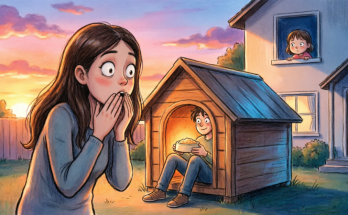
Tiffany sat in the passenger seat, scrolling on her phone with her legs crossed and her nails gleaming. She didn’t look back. She didn’t ask what was happening. She already knew she was safe. She always was.
My father leaned over the center console, closer now, and delivered it like it was wisdom instead of cruelty.
“Bentleys don’t carry failures,” he said. “Savannah, take the bus.”
Then he opened his door lock with a soft click—permission granted, not for me to stay, but for me to leave.
The air outside rushed in. Cold and sharp and exhaust-heavy. Reality, unfiltered.
I stepped out onto the asphalt in cap and gown like a joke someone had told wrong. The shoulder was narrow. Cars tore by, wind punching my gown against my legs. For a second, I thought my knees might shake.
They didn’t.
My father didn’t wait to see if I would fall. He didn’t check that the door shut safely. He didn’t ask if I had my phone.
He floored it.
The Bentley surged forward with a deep, confident growl, and then it was gone—black paint flashing, taillights disappearing, leaving me in a cloud of exhaust that smelled like money and arrogance.
I stood there, gown fluttering, cap crooked, watching the empty space where my family’s car had been.
I didn’t cry.
I didn’t even gasp.
I checked my watch.
8:41 a.m.
Plenty of time.
I walked to the bus stop at the next exit with my gown gathered in my hands so it wouldn’t drag in the dirt. My heels clicked against the pavement, each step measured. Cars roared past. A billboard advertised luxury condos with smiling couples and the word exclusive in bold letters. I laughed once under my breath, not because it was funny, but because the universe had a sense of timing.
At the bus shelter, the glass was smeared with fingerprints and old rain. The bench was damp. A man in a worn hoodie stared at the schedule like it had personally offended him. A teenage girl with a backpack and headphones tapped her foot impatiently.
No one looked at me for more than a second.
A girl in a graduation gown on the side of the highway wasn’t unusual enough to interrupt their lives. People see broken things all the time. They just learn not to stare.
When the bus finally arrived, it hissed to a stop with a tired sigh. The doors folded open. Warm air rushed out—stale, damp, smelling like diesel fuel and wet umbrellas.
I stepped inside.
The bus smelled like old rain and fatigue, a sharp contrast to the clean leather scent that was filling the cabin of my father’s Bentley right now. I moved toward the back, my gown bunched up around my waist to keep it from touching the sticky floor. The plastic seat was cold through the thin fabric. The windows were smudged. The city slid past in gray blur and billboard promises.
Strangers stared at their phones or out the window with tired faces in a tired city. If they noticed me, they saw what they expected to see: a broke student riding public transit on graduation day, probably crying because adulthood was arriving without mercy.
They didn’t know my eyes were dry.
They didn’t know I wasn’t thinking about humiliation.
They didn’t know I was thinking about numbers.
My phone buzzed.
Not an email. Not a call.
A notification from my family group chat.
I opened it and saw the photo Tiffany had posted.
There she was, sitting in the front seat of the Bentley with a glass of champagne tilted toward the camera. The orange Hermès box sat on her lap like a newborn. Her lipstick was perfect. Her smile was wide and smug.
The caption read: Finally got rid of the extra weight. Graduation vibes only.
My mother had hearted it.
My father had replied with a thumbs-up.
I stared at the screen and felt something in me stop wanting.

Not break.
Stop.
The tears I’d been holding back didn’t simply evaporate. They burned off, leaving behind a cold, clinical clarity that settled into my bones like ice.
For years, I had told myself they were just thoughtless.
I told myself they were busy. Stressed. That they gravitated toward Tiffany because she was needier, louder, more demanding. That maybe they didn’t realize how often they diminished me.
I had defended their cruelty the way a lawyer defends a guilty client: searching for context, for mitigating circumstances, for anything that could make it less damning.
But looking at that photo, the truth clicked into place with the clean certainty of a lock turning.
This wasn’t an accident.
This wasn’t a logistical error because the car was too small.
This was a ritual.
They didn’t leave me on the side of the highway because they had to.
They did it because they wanted to remind me of my place.
They needed me beneath them.
My struggle was the battery that powered Tiffany’s shine. If I was successful—if I was worthy—then their golden child was just average. They needed me on this bus so they could feel rich in that Bentley.
That realization didn’t break my heart.
It stopped it.
It killed the last desperate part of me that still wanted them to love me.
Somewhere between exit four and exit five on the interstate, the daughter who craved their approval died. Quietly. Without drama. Like a switch flipped and the lights never came back on.
The woman who arrived at the stadium was someone else entirely.
I slid my phone into my bag, then pulled it back out and unlocked the secure folder with my thumbprint.
The screen showed a single email at the top, flagged and pinned.
REGULATORY COMMISSION FINAL APPROVAL — CONFIRMATION
I opened it and read the first line again, not because I needed reassurance, but because I wanted to feel how final it was.
The merger was approved.
My company—the AI infrastructure firm I had built in silence while living in a studio apartment the size of a closet—had been acquired.
The wire transfer was scheduled for that afternoon.
$1.2 billion.
I looked down at my scuffed heels and the wrinkled gown bunched in my lap.
My parents thought they were punishing a failure.
They thought they were teaching me a lesson about the real world.
They had no idea they were currently ghosting a billionaire.
They were treating the most powerful person in their bloodline like a stray dog, completely unaware the power dynamic had already flipped.
I wasn’t the victim on the bus anymore.
I was the predator lying in wait.
I put the phone away, smoothed my gown, and stared out the window as the stadium’s silhouette rose ahead like a coliseum.
Let them have their champagne.
Let them have their Bentley.
They were celebrating a depreciating asset.
I was about to walk across that stage and start a war.
And the best part was they wouldn’t even see it coming until the first shot was fired.
The stadium was packed with twenty thousand people, a sea of black gowns and eager parents. The noise was a living thing—cheers, chatter, the squeal of seats folding down, the hum of expectation. The air smelled like sunscreen, cotton candy from concession stands, and that faint metallic scent that comes from too many people breathing in the same place.
I stepped off the bus, cap straight now, tassel fixed. My gown moved around my legs like a shadow. I blended with the crowd of graduates funneling toward the entrance, all of us identical from a distance.
No one saw the highway shoulder in my posture.
No one saw the Bentley’s exhaust in my eyes.
I checked in. I got my seat assignment. I joined my row.
Around me, students laughed, took selfies, hugged friends. Parents leaned over barriers to shout names and wave signs.
I scanned the crowd automatically as I walked toward the staging area, my eyes locking onto the VIP section high above the field.
It was reserved for major donors and university trustees, a roped-off area with plush seating and shade. Naturally, that’s where my family was.
They didn’t have tickets for that section. They didn’t have tickets for the floor. But Richard and Cynthia Hart never let rules get in the way of a photo opportunity. They bullied their way past a student usher, claiming my father was a “prospective major donor” and flashing a business card like it was a badge.
They weren’t watching the ceremony, though.
They were filming Tiffany.
Tiffany stood near the front of the VIP section with her back turned to the podium, holding a stolen program like a prop. She tilted her head, checked her angle, adjusted her hair. My mother hovered beside her, fixing Tiffany’s collar, smoothing her gown—Tiffany wasn’t even graduating today, but she wore a designer dress that mimicked the academic style, because the spotlight had to stay on her even in someone else’s ceremony.
My father stood just behind them, phone held up, recording Tiffany as she practiced her smile.
They were so busy curating their image, they didn’t notice the dean stepping up to the microphone.
The ceremony began with the usual: national anthem, speeches, platitudes about grit and resilience. I listened with half my mind while the other half tracked time.
The email on my phone said the wire transfer was scheduled for 2:00 p.m.
It was 9:58 a.m.
We had plenty of time for my family to ruin themselves before lunch.
Then the dean’s voice boomed across the stadium, and something in it shifted. A weight. A deliberate pause. The kind of pause that signals something big.
“Ladies and gentlemen,” he said. “Today is a historic day for our university.”
My parents didn’t look up. Tiffany was checking her makeup in the selfie camera.
“We often speak of potential,” the dean continued, “but rarely do we see it realized so spectacularly within our own halls.”
The crowd quieted. Heads tilted. People leaned in.
“It is my distinct honor,” he said, “to introduce our valedictorian.”
A ripple moved through the graduates around me. People straightened. Parents raised phones.
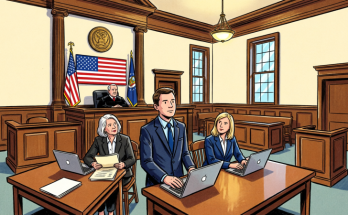
“But she is more than a student,” the dean continued, his voice carrying. “As of this afternoon, following a landmark acquisition of her AI infrastructure firm, she has officially become the youngest self-made female billionaire in history.”
The word billionaire hit the stadium like a physical wave.
There was a hush, then a low buzzing murmur as people processed it.
That word finally got my father’s attention.
I watched him look up, confused at first, as if his brain couldn’t compute a sentence that didn’t include Tiffany. Then something lit behind his eyes—the greed radar pinging. The instinct that had built his entire personality.
“Please welcome,” the dean shouted, voice rising, “Savannah Hart!”
The giant screens flanking the stage cut to a live feed of my face.
My face.
Twenty thousand people saw my expression: calm, composed, almost bored. Not because I wasn’t feeling anything, but because my feelings had already burned away on the bus.
In the VIP section, I saw my family freeze.
I saw the blood drain from my mother’s face, leaving her pale beneath her spray tan. I saw Tiffany’s phone slip in her hand, hover, then drop for a full five seconds as her brain scrambled to catch up. I saw my father’s mouth open slightly, the smirk falling apart like wet paper…………………………………………….
Click Here to continuous Read Full Ending Story : Graduation Day Betrayal: The Dean’s Announcement Changed Everything._____PART2