At My Paternal Grandmother’s Funeral, Her Lawyer Pulled Me Aside And Whispered, “Miss, Please Come With Me Immediately. There’s Something Extremely Important I Need To Show You.” Then He Added, “Don’t Tell Your Parents Or Your Younger Brother. You’ll Be In Danger.” When I Arrived And Saw Who Was Standing At The Door, I Was Frozen In Shock.
I walked to the pantry and stared at the place where the hidden panel blended into the wall. I’d told Henry about the room below. The binders. The notes. He’d collected everything properly, cataloging it so no one could accuse me of tampering.
Still, seeing the pantry made my skin prickle.
Look for the door that doesn’t belong.
My grandmother’s last lesson wasn’t just about a secret basement. It was about the way evil hides in familiar places. In kitchens. In paperwork. In smiles.
Henry met us at the house that afternoon with a thin folder and a keychain.
“Your grandmother’s will is settled,” he said. “There are no more surprises. Everything is legally yours and Ethan’s, as she intended.”
Ethan didn’t react much. He looked tired, like he’d aged ten years in six months.
Henry handed me the keys. “She left you instructions too. A separate letter. Not legal, but… personal.”
My fingers tightened around the keys. “Where is it?”
Henry tapped the folder. “In there.”
I waited until Ethan wandered into the living room before I opened it.
The letter was simple.
Payton,
A house is meant to protect people. If it stops protecting, it’s just wood and nails.
Do something good with what they tried to steal.
Love,
Grandma
I sat down hard on the kitchen chair, the weight of it pressing into my bones.
Do something good.
I thought about the shelter my grandmother used to donate to every winter. The one she’d dragged me to as a teenager, insisting we serve soup instead of shopping on Black Friday. I’d complained the whole time, freezing and annoyed, until an older woman with shaking hands had thanked me like I’d handed her the sun.
Evelyn had told me later, “The world takes a lot. We don’t have to help it.”
Two weeks later, I sold my car and moved to Portland.
Not because Seattle was to blame, but because the air in that city felt haunted. Every corner held a memory that made my chest tighten. Every time a kettle whistled, my skin went cold.
Portland wasn’t a fresh start so much as it was distance. Space to breathe without tasting betrayal.
I found a small apartment above a bookstore. The floors creaked. The walls were thin. But the place felt mine, and that mattered more than square footage.
Ethan stayed in Seattle at first. He couldn’t leave immediately—school, friends, the need to prove he wasn’t running. We spoke less than I wanted. Sometimes days passed without a message. Sometimes he’d text at 2 a.m. with a single line: I hate him. Sometimes I’d answer: I do too. Sometimes I’d just send a heart emoji because language failed us.
I threw myself into work, partly to build something and partly to avoid sitting alone with my thoughts.
Using part of the inheritance, I funded a shelter in my grandmother’s name. Not a grand, shiny building with plaques and ribbon cuttings, but a renovated house with locked doors that worked the way doors should.
A safe place for women escaping abusive homes.
It felt right, like turning my grandmother’s story into something that could save someone else.
The day we opened, the staff brought in donated furniture. Someone painted the walls a soft neutral color. Someone else planted flowers in the front yard.
I stood on the porch holding a chipped teapot in my hands.
I’d taken it from my grandmother’s kitchen before I left Seattle. It wasn’t valuable. It was stained. The handle had a crack.
But it reminded me of two things: how easy it is to swallow what someone hands you, and how important it is to spit it out before it kills you.
Marcus came to the opening quietly, slipping in without fanfare. He wore a plain jacket, hands in his pockets, eyes scanning out of habit.
“You did it,” he said, nodding toward the house.
“I’m trying,” I replied.
He hesitated, then added, “Your grandmother would be relieved.”
I didn’t say proud, because pride felt too simple for what Evelyn had carried. Relief fit better.
After the opening, I started therapy. I learned that trauma doesn’t leave just because the trial ends. It stays in your body, waiting for the sound of a kettle, the smell of chamomile, the sight of a legal document on a coffee table.
I learned how to breathe through panic. How to sleep without jolting awake. How to be angry without letting anger become my whole personality.
Six months after the shelter opened, Ethan visited me in Portland.
He looked older. He had circles under his eyes. But when he hugged me, it was real, tight, desperate.
“I couldn’t stay there anymore,” he admitted.
I nodded. “I know.”
We sat on my couch, eating takeout, talking in halting sentences. He told me he’d changed his number after Dad’s letters started coming more often. He told me Laura had tried to contact him once, through her attorney, asking for forgiveness.
“I didn’t answer,” he said.
“Good,” I replied.
He stared at his hands. “Do you ever think… if she’d just kicked them out sooner—”
I shook my head. “She thought she could fix it without destroying the family. She thought love would matter.”
Ethan looked up, eyes wet. “And it didn’t.”
“It mattered,” I said quietly. “Just not enough to stop them.”
A year later, I visited my grandmother’s grave again.
It was spring. The sky was brighter than it had been at the funeral, the air soft with new growth. I brought flowers. I also brought a small tin of herbal tea—my grandmother’s actual blend, the one she’d hidden behind the flour canister.
I didn’t drink it there. I just held it for a moment, like an offering.
“I’m sorry I didn’t understand sooner,” I whispered. “But I understand now.”
The wind moved through the trees, and for the first time in a long time, the sound didn’t feel like a warning.
It felt like permission.
I left the cemetery and didn’t look back.
Not because I didn’t love her.
Because I finally trusted that she wasn’t only in the place we’d buried her. She was in every door I kept locked against harm. In every person who found safety inside the shelter. In every time Ethan and I chose honesty over denial, even when it hurt.
My father became a cautionary tale I refused to let define me. Laura became a name I didn’t speak.
And that dark door—first in Henry’s office, then in the pantry, then in my own understanding—stopped being a symbol of fear.
It became proof.
Proof that truth can be hidden for a while, but it doesn’t disappear. It waits. It gathers weight. And when it finally opens, it changes everything.
In the end, they didn’t just poison my grandmother’s tea.
They tried to poison my future.
And the clearest ending I can give you is this: they failed.
Part 6
Two years after the funeral, I learned that peace isn’t a place you arrive. It’s a routine you protect.
Portland had become familiar in the way a scar becomes familiar—still there, still tender if you press it, but no longer bleeding every time you move. My apartment above the bookstore smelled like paper and dust and the cinnamon rolls they baked on Saturdays. I worked too much, slept better than I used to, and kept my grandmother’s chipped teapot on a shelf where the morning light could hit it.
The shelter, Evelyn House, was doing what it was meant to do. We kept it quiet on purpose. No big sign, no neon announcement. Just a normal-looking home with strong locks, thicker curtains, and staff who understood that safety isn’t only physical. Some nights women arrived with nothing but a plastic grocery bag and a phone that had been cracked in half. Some arrived with children who wouldn’t speak. Some arrived with the kind of stillness that meant they’d learned to disappear in their own lives.
The first time I heard a woman laugh in our kitchen, loud and surprised like she’d forgotten she could, I went into the hallway and cried into my sleeve.
By then, Ethan was living in Portland too, renting a small place on the east side. He was taking classes and pretending he wasn’t. He’d come by the shelter to fix things because working with his hands made his mind quieter. He was good at it. He could make a door swing properly, make a cabinet stop sticking, make a room feel less broken.
One rainy Tuesday in October, I was in the office behind the shelter’s kitchen, dealing with an insurance renewal that required three different passwords and my last shred of patience. The day had been typical: a resident’s court date, a staff meeting, an argument with the city about permits for the new security gate. Typical, meaning exhausting.
Then the front door alarm chimed.
Not the gentle arrival chime. The alarm.
I froze.
Through the camera feed on my monitor, I saw the front porch at an odd angle. Rain slicked the steps. The porch light was on. No one stood there.
The second camera showed the side gate.
It was open.
My stomach dropped in a familiar way, as if my body kept a file labeled danger and could pull it up instantly.
I grabbed my phone and stepped into the hall. “Maya?” I called, keeping my voice low.
Maya, our evening staff lead, appeared from the living room, eyes wide. “I didn’t open it.”
I didn’t answer. I moved fast, quiet, toward the kitchen. From there, I could see the side door at the end of the short corridor that led to the laundry room.
The door was cracked open.
A thin line of darkness ran down the seam like a warning.
Maya whispered, “Should we call—”
“Yes,” I said, barely moving my lips. “Now.”
She pulled out her phone, hands trembling as she dialed. I stepped closer to the door, listening.
Nothing. No footsteps. No voices. Just the hum of the fridge and the rain tapping the window.
I pushed the door shut gently until it latched. Then I turned the deadbolt, feeling it click into place like a promise. My hands were steady, but my pulse was loud enough to drown out my thoughts.
We moved everyone to the living room and told them it was a drill. A few women looked skeptical. One woman, older, didn’t look surprised at all. She just gathered her son closer and stared at the windows like she was waiting for the glass to break.
Police arrived fast. They walked the perimeter, checked the gate, checked the locks, swept the backyard with flashlights.
“There’s no forced entry,” the officer said afterward, standing in our kitchen. “Looks like the gate code was used.”
My mouth went dry. “Only staff have it.”
He nodded. “Then it’s either staff, or someone learned it. Or someone guessed it.”
He said it like those were equal possibilities. Like the difference between a random guess and a deliberate intrusion didn’t matter.
After they left, Maya sat at the kitchen table, rubbing her temples. “I swear I didn’t tell anyone.”
“I believe you,” I said, but the words tasted thin. Not because I doubted her. Because the feeling crawling up my spine wasn’t about Maya.
It was about pattern.
That night, after the residents were settled and the building was quiet again, I checked every camera clip from the previous hour.
At 6:41 p.m., the side gate swung open.
No one entered.
No shadow crossed the yard.
No face appeared.
The gate opened, stayed open for twenty seconds, then closed again.
Like someone wanted us to know they could.
I watched the clip three times, my throat tight.
Then I saw it.
Right before the gate opened, the camera caught a small flicker near the keypad. A hand, quick and blurred, moving out of frame.
Someone had been there. Someone had known exactly where to stand to avoid the camera’s angle.
My phone buzzed with a text from Henry.
Call me when you can.
I stared at it, then dialed immediately.
Henry answered on the second ring. His voice was calm, but I could hear the edge underneath. “Payton. I didn’t want to do this by text.”
“What happened?” I asked, already knowing it wouldn’t be good.
He exhaled. “Your father filed a motion. He’s attempting to appeal based on alleged procedural issues and claims of coercion. And someone on his side is asking for access to your grandmother’s estate records. They’re trying to reopen what was settled.”
My mouth went cold. “Can he do that?”
“He can try,” Henry said. “But the bigger concern is this: he’s not doing it alone. Someone is funding it. Legal filings like this aren’t cheap.”
My mind jumped to the open gate, the invisible hand.
“Henry,” I said carefully, “someone got into the shelter’s gate tonight. They didn’t come inside, but they opened it. Like a message.”
Silence on the line for a beat.
Then Henry’s voice tightened. “Payton, call Marcus. Tonight.”
I already had.
Marcus answered like he’d been expecting me. “Tell me everything.”
When I finished, he didn’t waste words. “I’m coming up there.”
“You’re in Seattle,” I said.
“I’ll be in Portland in three hours,” he replied. “Lock down the code. Change it. Turn off any predictable routines. And Payton—don’t go anywhere alone for a while.”
After I hung up, I stood in my apartment, staring at my grandmother’s teapot.
For two years, I’d used it as a reminder that the nightmare was over.
Now it looked like an object from a story that wasn’t done with me yet.
And somewhere in the city, someone had just turned a lock to make sure I knew it.
Part 7
Marcus showed up before midnight, rain on his jacket, eyes sharp like he’d been driving on pure adrenaline.
He didn’t hug me or ask how I was. He went straight to the shelter’s keypad, examined it, then stepped back and looked up at the camera placement with the faint irritation of someone who hates sloppy angles.
“They tested you,” he said.
“That’s what it felt like,” I replied, arms crossed tight.
He pulled a small case from his car and spent the next hour swapping out our cameras with ones that had wider coverage, better resolution, and something he called “redundancy,” which sounded like the kind of thing you want when people start playing games with your safety.
When he was done, he sat at the kitchen table with a cup of coffee that had long since gone cold. His gaze moved around the room like he was mapping exits.
“Who would do this?” I asked.
Marcus didn’t answer immediately. “Your father’s appeal is a hook,” he said finally. “Hooks need hands.”
Henry’s call echoed in my head. Someone is funding it.
Ethan arrived the next morning, hair still wet from the rain, eyes dark with worry. “Pay, what’s going on?” he demanded the second he stepped inside.
I took him into my office and shut the door. Marcus sat across from us, calm in a way that made Ethan more anxious.
“Our gate was opened last night,” I said. “Someone used the code.”
Ethan’s face tightened. “How?”
“I don’t know yet,” I admitted. “But Henry called. Dad filed an appeal. Someone’s backing him.”
Ethan’s jaw clenched. “He doesn’t have money. Not from prison.”
“No,” Marcus said. “Which means someone else wants this reopened.”
Ethan stared at him. “Who?”
Marcus slid his phone across the desk and showed us a name from the court filing’s contact information.
Marilyn Sullivan.
I blinked. “Aunt Marilyn?”
My father’s sister. The one who lived in Tacoma and sent Christmas cards with long handwritten notes about how family was everything. The one who’d hugged me at the funeral and whispered, He loved her, you know. He loved his mother.
I remembered her perfume and the way her hand had squeezed my arm too hard.
Ethan looked stunned. “She’s doing this?”
“Not necessarily alone,” Marcus said. “But she’s attached to it. And she’s angry.”
“About what?” Ethan snapped.
Marcus’s eyes didn’t soften. “About losing her brother. About losing access. About the story the world believes now.”
Henry met us downtown later that day. His office smelled like old leather and fresh copier ink.
“She’s petitioning for a review of estate distribution,” Henry explained, placing documents on the conference table. “She’s claiming undue influence. That your grandmother was manipulated into changing her will.”
I laughed once, sharp and humorless. “By me?”
Henry’s gaze held mine. “That’s the implication.”
My throat tightened. “She’s trying to paint Grandma like she was confused.”
Henry nodded. “And you as opportunistic.”
Ethan leaned forward, furious. “That’s insane.”
“It’s strategic,” Henry corrected gently. “If they can cast doubt, they can create openings. Even if they don’t win, they can drain you with legal fees. They can pressure you into settlements. They can make you tired enough to make mistakes.”
My grandmother’s letter flashed in my mind. Don’t let them rush you. Don’t let them scare you into silence.
I looked at Henry. “What do we do?”
Henry folded his hands. “We respond quickly. We show the court the documentation Evelyn left. The binders. The timeline. The recordings. The lab results. The footage. It’s strong.”
Marcus added, “And we treat the gate incident like what it is: intimidation.”
Henry nodded slowly. “I can file for a protective order if we can tie it directly to Marilyn or her associates. But we need proof, not suspicion.”
Ethan sat back, running a hand through his hair. “So what—she’s just going to keep poking us?”
“She’ll poke until she finds a soft spot,” Marcus said. “So we remove soft spots.”
Over the next week, my life shrank to essentials: shelter, apartment, Henry’s office, therapy appointments. Marcus insisted on driving me half the time, which made me feel both safer and angrier. I hated needing it. I hated that fear could restructure a life so easily.
One evening, a woman arrived at the shelter with bruises on her arms and a toddler asleep on her shoulder. She looked at me like she expected judgment. Like she’d been trained to expect it.
“We can’t stay,” she whispered. “He’ll find us.”
I thought about the open gate. The unseen hand. The motion filed in court.
“You can stay,” I said firmly. “And if someone tries to find you, they’ll have to go through me.”
The words surprised me with how true they felt.
The hearing was scheduled for early December.
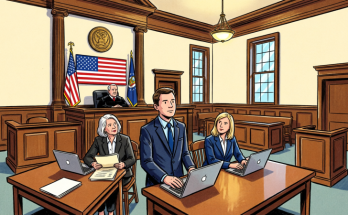
The courthouse was bright and sterile, with benches that made your back ache and fluorescent lights that made everyone look tired. I sat beside Henry at the counsel table, my hands folded tightly in my lap. Ethan sat behind me, stiff, jaw set. Marcus waited near the back, watching the room like it was a threat assessment.
Marilyn Sullivan walked in with a man in a suit and an expression like she’d already decided we were villains.
She was smaller than my father, with the same sharp chin and the same talent for looking wounded even while swinging a knife. She wore black, but not funeral black. Court black. Her eyes landed on me, and she smiled sadly, as if I’d broken her heart.
The judge listened, patient but brisk.
Marilyn’s attorney talked about “family concerns” and “sudden changes in testamentary intent” and “possible undue influence from a grieving granddaughter.” He painted my grandmother as fragile, me as manipulative, my father as a tragic man punished too harshly.
I sat still, my face calm, while heat climbed my neck.
Then Henry stood.
He didn’t raise his voice. He didn’t grandstand. He simply laid out the facts like stones you couldn’t step around.
He submitted my grandmother’s notebook. Her signed letters. Medical records confirming her mental clarity. Copies of the independent lab report initiated before her death. The audio recordings describing fear and suspicion. The video footage of Laura adding powder to the teapot.
The courtroom shifted as the footage played.
Marilyn’s face tightened. Her mouth opened slightly, then shut.
For a moment, she looked genuinely stunned, like she’d managed to avoid seeing the proof until now by simply refusing to look.
Then her eyes hardened.
When it was my turn, Henry asked me to speak. Not about money, not about legal clauses. About my grandmother.
I took a breath and stood.
“My grandmother wasn’t confused,” I said clearly. “She was cautious. She was afraid, and she was right to be. She built protections because she knew what was happening in her own home.”
Marilyn’s attorney tried to object. The judge allowed me to continue.
“I didn’t take anything from her,” I said. “She gave me responsibility. And she gave me instructions. One of them was to do something good with what they tried to steal. That’s what I did.”
The judge’s eyes narrowed slightly, thoughtful.
Henry finished with a final, quiet blow: a notarized letter from Evelyn, dated weeks before her death, describing why she changed her will and specifying that any challenges should be treated as harassment.
The judge dismissed the petition.
Not with drama. With a firm decision that sounded like a door closing.
Outside the courthouse, Marilyn approached me before Henry could block her.
Her eyes were glossy, but her voice was sharp. “You destroyed our family.”
I stared at her, feeling a strange, steady calm. “No,” I said. “Your brother did.”
Her expression twisted. “He’s still your father.”
“And she was still his mother,” I replied. “That didn’t stop him.”
For a second, the sadness flickered. Then it vanished, replaced by something colder.
“This isn’t over,” she hissed, and turned away.
Ethan let out a breath like he’d been holding it for years. “Is she going to keep coming?”
Henry stepped beside us. “She can try,” he said. “But today made it harder.”
Marcus’s gaze stayed on Marilyn as she walked down the steps. “Harder doesn’t mean impossible,” he murmured.
As we drove back to the shelter, rain streaking the windows, I realized something that should’ve been obvious: victory doesn’t always feel triumphant.
Sometimes it just feels like you bought yourself another stretch of quiet.
And sometimes, quiet is worth fighting for.
Part 8
The trouble with surviving something is that people assume surviving means you’re fine.
December came with cold rain and short days. The shelter was full. The holidays made everything worse for the women who lived with us. Abusers got sentimental. Families got demanding. Courts closed for weeks. The world slowed down at the exact time our residents needed speed.
Ethan started showing up more often, sometimes early, sometimes late, always with that restless energy like he didn’t know what to do with his own skin.
He’d fix a hinge, replace a lightbulb, repaint a chipped baseboard. He’d volunteer for shifts that weren’t his. He’d stand in the kitchen after everyone went to bed, staring at nothing.
One night, I found him on the back porch with a hoodie pulled over his head, rain misting into the porch light.
“You’re going to freeze,” I said, stepping outside.
He shrugged without looking at me. “Feels right.”
I leaned on the railing beside him. The yard was dark, slick with rain.
After a long silence, he said, “I keep thinking about the tea.”
My chest tightened. “Yeah.”
“I drank it too,” he whispered. “All the time. She made it for us.”
I swallowed hard. “I know.”
“What if it hurt me and I didn’t even notice?” His voice cracked on the last word.
I turned to him. Under the hood, his face looked younger than he wanted it to. “Ethan,” I said softly, “you’re here. You’re okay.”
He shook his head, eyes fixed on the yard. “That’s not what I mean.”
I waited.
He swallowed. “What if I helped them without knowing? What if I gave her the tea sometimes? What if I handed her the cup that—”
“Stop,” I said firmly, but not harsh. “You were a kid. You didn’t know.”
He laughed bitterly. “I wasn’t a kid. I was seventeen. I was old enough to notice she was scared.”
“You were old enough to be manipulated,” I replied. “So was I.”
He finally looked at me, eyes wet. “You noticed.”
“Not soon enough,” I said quietly. “And I had help. Henry, Marcus. Grandma’s notes. I didn’t magically know. I had evidence.”
Ethan’s shoulders sagged. He looked exhausted in a way that made me afraid.
“Have you been sleeping?” I asked.
He shrugged again.
“Have you been drinking?” I asked, because the question needed to exist even if the answer hurt.
His jaw clenched. “Sometimes.”
The word hung between us, heavy.
I took a slow breath. “Sometimes means enough.”
He rubbed his face with both hands, dragging them down like he was trying to wipe himself clean. “It’s the only time my brain shuts up.”
“I get it,” I said, and I meant it. “But it’s not going to give you peace. It’s going to give you a new problem.”
He stared at the porch floor. “I don’t know how to be a person after this.”
I felt my throat tighten, because it was the same thing I’d said in therapy a hundred different ways.
“You practice,” I told him. “You mess up. You practice again. You let people help you.”
He scoffed. “Like who?”
“Like me,” I said simply. “Like a counselor. Like a support group. Like Marcus if you can handle his personality.”
A tiny, reluctant smile flickered at the corner of his mouth, then disappeared.
I nudged his shoulder gently with mine. “Come inside. Let’s make hot chocolate like we’re eight years old and pretending life is easy.”
He hesitated, then nodded.
Inside, while the kettle warmed water, Ethan watched me measure cocoa powder and sugar. His hands trembled slightly when he picked up a mug.
“Grandma used to make it with a pinch of salt,” he said quietly.
“I know,” I replied. “She said it made it taste ‘real.’”
We sat at the kitchen table in silence for a while, sipping slowly. The shelter was quiet, the kind of quiet that comes from people finally sleeping safely.
Ethan stared into his mug. “Do you ever think Dad was always like this?”
I considered. “No,” I said finally. “I think he became like this. One step at a time. But that doesn’t excuse it.”
He nodded, eyes distant. “Sometimes I miss him.”
The honesty of it hurt.
“I miss the version of him that didn’t exist for long,” I admitted. “I miss the idea of a dad who protects you. Not the man who did what he did.”
Ethan’s throat bobbed. “Marilyn called me.”
My body went rigid. “When?”
“Last week,” he said. “I didn’t tell you because I didn’t want you to worry.”
I stared at him, anger flaring and then dropping into fear. “What did she say?”
He swallowed. “That she still loves me. That she can help me if I ‘stop letting you control the narrative.’”
My hands tightened around my mug. “Did you answer her?”
“I hung up,” he said quickly. “But—” He hesitated. “She left a voicemail later.”
“What did it say?”
Ethan’s eyes met mine. “That Dad wrote her. That he says you and Henry and Marcus set him up.”
My stomach turned.
“That’s what he does,” I said. “He rewrites reality until he can live with himself.”
Ethan nodded slowly. “I know. But… hearing it out loud made me feel crazy for a second.”
I reached across the table and covered his hand with mine. “You’re not crazy,” I said firmly. “That’s the whole point of gaslighting. It’s not about truth. It’s about making you doubt your own mind.”
His fingers tightened around mine. “What if she keeps calling?”
“Then we block her,” I said. “And if she shows up, we call the police.”
He exhaled, shaky. “I hate that we have to keep doing this.”
“I know,” I said. “But we’re not doing it alone anymore.”
Over the next month, Ethan started therapy. Not enthusiastically, but he went. He stopped drinking, not perfectly, but honestly. He took on a consistent volunteer schedule at the shelter, becoming the quiet guy who fixed things without asking questions, who made kids laugh by turning broken toys into working ones again.
One afternoon, I walked into the living room to find him kneeling on the carpet with a resident’s little girl, showing her how to screw a wheel back onto a toy truck. She giggled like it was magic.
Ethan glanced up at me and smiled, real and small.
I felt something in my chest loosen.
That night, Marcus called me.
“I have an update,” he said.
My stomach tightened automatically. “About Marilyn?”
“About Laura,” he replied.
I blinked. “Laura?”
Marcus’s voice was steady, but there was something new in it. “She’s eligible for a parole review in the spring. And she requested a meeting with you.”
The room went quiet around me, even though the heater was humming and cars were passing outside.
“I don’t want to see her,” I said immediately.
“I figured,” Marcus replied. “But she says she has information your father didn’t want anyone to know. She says it affects you.”
My skin went cold.
“What kind of information?” I asked, even though every part of me wanted to hang up and pretend the past couldn’t reach this far.
Marcus exhaled. “She didn’t tell me. She told her attorney, and her attorney told Henry. Henry asked me to tell you: it might be important.”
I stared at my grandmother’s teapot on the shelf.
Sometimes survival is the real revenge, I remembered thinking years ago.
But survival also meant facing things you didn’t want to face.
“Tell Henry I’ll consider it,” I said, voice tight.
Marcus paused. “Payton—whatever you decide, you’re in control. Not her.”
I swallowed. “I know.”
But my body didn’t feel like it knew.
Because the truth was, the story that had ended in court was trying to start again in a different room.
And this time, Laura was the one asking for the door to open.
Part 9
Henry arranged the meeting like he arranged everything: carefully, with layers of protection and no room for improvisation.
It happened in late March, on a day when the sky was bright enough to feel unfair. I drove to the correctional facility with Marcus in the passenger seat and Ethan in the back seat, because I refused to do it alone and because Ethan refused to let me.
“I don’t have to go in,” Ethan said quietly as we parked.
“Yes, you do,” I replied, surprising myself with the firmness. “Not because you owe me. Because you deserve to know what she says.”
His throat worked. He nodded once.
Inside, the facility smelled like disinfectant and boredom. Everything was painted in bland, calming colors that didn’t calm anything. We were led to a visitation room with plastic chairs bolted to the floor and a thick glass partition.
Laura entered from the other side.
For a second, I didn’t recognize her.
The Laura I remembered had been polished: perfect hair, soft sweaters, jewelry that caught light. This Laura wore a plain uniform. Her hair was pulled back tightly, showing more of her forehead than she used to. Fine lines had formed around her mouth. Her eyes still had that sharpness, but it was dulled, like a knife left out too long.
She sat down, picked up the phone on her side of the glass, and looked directly at me.
I picked up mine with hands that didn’t feel like my own.
“Payton,” she said, voice quieter than I expected.
I didn’t answer.
Ethan picked up the phone too, sitting slightly behind me. Marcus stood near the wall, arms crossed, watching everything. He wasn’t allowed to intervene, but his presence felt like armor.
Laura swallowed. “You look… healthy.”
I finally spoke, flat. “Why did you ask to see me?”
Her gaze flicked to Ethan, then back to me. “Because I’m up for parole review,” she said, and for a moment her voice sounded like the old Laura, practical and strategic. “And because I’m tired of carrying all of it.”
“Funny,” I said. “You didn’t look tired when you were pouring powder into a teapot.”
Her jaw tightened. A flicker of shame crossed her face and vanished.
“I’m not asking you to forgive me,” she said quickly. “I’m asking you to listen.”
Ethan’s voice came rough through his phone. “Say what you have to say.”
Laura inhaled. “Daniel didn’t just want his mother’s house.”
My body went rigid.
She continued, eyes locked on mine. “He wanted control. Over everything. Over you.”
I felt my pulse jump. “He already had—”
“No,” she cut in, shaking her head. “He had plans. Bigger ones.”
I stared at her. “What plans?”
Laura glanced down, then back up, like she had to force herself. “The paperwork. The power of attorney. The healthcare directives. That wasn’t just about protecting you.”
I laughed once, harsh. “No kidding.”
Laura’s mouth tightened. “He intended to use it.”
The room seemed to tilt.
Ethan’s voice cracked. “Use it how?”
Laura swallowed hard. “He talked about getting you evaluated. Declaring you unstable from grief. He said if you wouldn’t cooperate, you’d ‘need help.’ And with those documents, he could decide what help looked like.”
My skin went ice cold.
Marcus shifted slightly behind me, his jaw tightening.
I gripped the phone. “Who would evaluate me?”
Laura hesitated, then said a name.
“Dr. Weller.”
I blinked. The name meant nothing at first, then a memory flickered: a man at a family barbecue once, shaking my dad’s hand, laughing too loudly. A doctor friend. A guy my dad had called “a good connection.”
My stomach twisted.
Laura continued, words coming faster now, as if once she started she couldn’t stop. “Daniel said it would be temporary. Just until everything was settled. He said you’d sign what you needed to sign if you were scared enough. Or… medicated enough.”
Ethan made a sound that wasn’t quite a word. His face had gone pale.
I stared at Laura through the glass. “And you went along with that?”
Laura’s eyes flashed, defensive. “I didn’t want it to go that far.”
I couldn’t help it. I leaned forward, voice sharp. “You didn’t want it to go that far, but you still poisoned my grandmother.”
Laura flinched as if I’d hit her.
“I know,” she whispered.
For a second, her eyes looked genuinely frightened. “Payton, I’m telling you because… because he’s still trying. From prison. He has people. Marilyn, yes, but not just her. He wrote letters. He told her you manipulated everything. He told her you’re unstable. He’s trying to create a picture.”
My throat tightened. “So this is about saving yourself.”
Laura’s gaze dropped. “Partly,” she admitted, and the honesty was almost worse. “But it’s also because—” She swallowed. “Because he scares me now too.”
I stared at her, unwilling to offer sympathy, but aware that fear was its own currency.
“What do you want?” I asked.
Laura lifted her chin slightly. “I want to testify against his appeal. Fully. No half-truths. I want to put it on record what his plan was for you. And I want you to know this: if you think he stopped at Evelyn, you’re wrong.”
My stomach dropped. “What do you mean?”
Laura’s eyes flicked around the room, as if even here she was afraid of being overheard. “He talked about his first wife sometimes,” she said quietly. “Your mom. Not like he missed her. Like she’d been a problem he didn’t solve correctly.”
My breath caught.
Ethan’s voice came out tight. “Don’t.”
Laura pressed on anyway, as if she’d decided she was done protecting him. “He said she left because she ‘couldn’t handle him.’ He joked about how easy it would’ve been to make her look crazy.”
My hands shook so hard the phone trembled.
I thought about my mother’s absence, the way no one spoke about it without turning vague. The story had always been simple: she left, she didn’t want the responsibility, she disappeared.
I’d never questioned it because questioning it meant reopening something everyone had sealed shut.
Laura looked directly at me. “Payton, I don’t know if he did anything to her. I don’t have proof. But I know what he was willing to do. I lived with it.”
The visitation room felt too bright. My chest felt too tight.
I forced myself to speak evenly. “If you testify, you do it with specifics. Dates. Names. Letters. Anything you have.”
Laura nodded quickly. “I have copies. I kept them. Insurance papers, emails, notes. I can give them to Henry.”
Marcus stepped forward slightly, voice low but clear. “You give them through your attorney. And if you lie, it will bury you.”
Laura’s eyes flicked to him, then back to me. “I’m not lying,” she said, and for the first time, she sounded less like a manipulator and more like a person who’d realized too late that the monster in her house wasn’t going to spare her.
Ethan lowered his phone, shaking. His eyes were wet, furious, confused.
I stared at Laura through the glass and felt something strange: not forgiveness, not pity, but clarity.
This wasn’t about giving Laura power over me again. It was about taking power away from my father, finally, completely.
I lifted the phone. “Testify,” I said. “Give Henry everything. And when your parole hearing happens, I will be there.”
Laura’s face tightened. “To support me?”
I held her gaze. “To tell the truth.”
Her shoulders sagged slightly, like she’d expected that.
When we left the facility, Ethan didn’t speak until we were in the car and the doors were shut and the world was moving again.
He stared out the window, voice thin. “Dad would’ve done that to you.”
I swallowed. “He tried.”
Ethan’s hands clenched. “And he might’ve done something to Mom.”
“I don’t know,” I said honestly. “But we’re going to find out what we can.”
Marcus drove, quiet, focused. “Henry will move fast once he has documents,” he said. “If there’s anything actionable, we’ll surface it.”
Rain started again as we crossed the river, soft and steady like the city was trying to wash something clean.
That night, I took my grandmother’s teapot off the shelf and held it in both hands.
For years it had meant: remember.
Now it meant something else too.
Stay awake. Stay ready. Stay honest.
And even if the past had more teeth than I wanted to admit, I was no longer the person who could be rushed into silence.
THE END!
Disclaimer: Our stories are inspired by real-life events but are carefully rewritten for entertainment. Any resemblance to actual people or situations is purely coincidental.