At My Paternal Grandmother’s Funeral, Her Lawyer Pulled Me Aside And Whispered, “Miss, Please Come With Me Immediately. There’s Something Extremely Important I Need To Show You.” Then He Added, “Don’t Tell Your Parents Or Your Younger Brother. You’ll Be In Danger.” When I Arrived And Saw Who Was Standing At The Door, I Was Frozen In Shock.
Part 1
If you’ve ever stood in the middle of your own family and suddenly felt like a stranger, then you know the exact kind of cold that has nothing to do with weather.
My name is Payton Sullivan, and the day we buried my grandmother was the day grief stopped being the worst thing in the room.
The cemetery sat just outside Seattle, tucked behind a line of evergreen trees that looked like they’d been painted in charcoal. The sky hung low and heavy, the kind of gray that makes everything feel quieter than it should. The wind cut through my coat and found the space between my ribs, as if it had a map.
My grandmother, Evelyn Sullivan, had been seventy-eight, stubborn as a locked door and warm as a kitchen light. Official cause: heart failure. It was believable. She’d been tired lately. She’d started sitting down to stir soup. She’d pressed her fingertips to her chest now and then, eyes narrowing like she was doing math in her head.
Still, the part of me that had known her best couldn’t accept how fast it happened. One week she was scolding me for not eating enough vegetables. The next week, I was staring at a closed casket like it was a magic trick I didn’t understand.
Family stood in a tight cluster around the gravesite. My father, Daniel, held my stepmother Laura’s hand. My younger brother Ethan stood on my other side, his jaw clenched so hard it made his cheek jump. A few neighbors were there, faces solemn, hands folded. Someone’s baby started to fuss, and the sound felt wrong in the hush.
The pastor said gentle things. People nodded. Dirt hit the coffin with soft, dull thuds that sounded like the end of a sentence.
That’s when Henry Caldwell moved.
I’d known Henry all my life in the vague way you know someone who exists in the adult world of paperwork and law. He was my grandmother’s attorney, the man who showed up at holidays with a bottle of wine and left early because he had “an early morning.” Calm. Polite. Never dramatic.
So when he brushed past the mourners and leaned close to me, my first thought was that he was going to talk about the will or ask when I wanted to meet.
Instead, his voice dropped to a whisper that didn’t match the setting.
“Your grandmother didn’t die naturally, Payton.”
My throat went dry so fast it felt like the air had changed.
He didn’t wait for my reaction. He kept his eyes on the grave like he was saying something normal, like he was commenting on the weather.
“If you want the truth, come to my office after everyone leaves,” he said. “And don’t tell your father. Or Laura. Or your brother.”
My heart stuttered.
“You could be in danger,” he added, and then he stepped away like he hadn’t just split the world open.
I stood there frozen while the pastor continued, while my father dabbed at his eyes with a handkerchief, while Laura pressed her lips into a perfect line that said grief but not too much grief.
The words wouldn’t leave my head.
Didn’t die naturally.
Evelyn didn’t do anything naturally. She made decisions the way other people made coffee: carefully, with intention, and always with one extra spoonful of something you didn’t expect. If she’d felt threatened, she wouldn’t have said it outright. She’d have made a plan. She’d have left clues. She’d have warned me without warning me.
A week before she died, she’d pulled me into her kitchen. It smelled like lemon soap and the rosemary plant she kept on the windowsill. She’d been filling the kettle, her hands trembling a little more than usual.
“If anything happens to me,” she’d said softly, not looking at me, “don’t let them rush you into anything.”
I’d thought she meant funeral arrangements. My grandmother hated being rushed. She once spent two months choosing paint for her hallway.

Now, standing over her grave, I realized she might have been talking about something else entirely.
The cemetery started to empty. Neighbors hugged and left. Someone told my father they were “so sorry.” He nodded like his neck was made of concrete. Ethan stared at the ground.
I pretended to adjust my scarf while I watched my father and Laura.
They lingered near the grave after most people left, close enough that their voices carried when the wind turned. Laura leaned toward him, a hand on his sleeve like a warning.
“The paperwork has to be done before anyone starts asking questions,” she murmured.
My stomach dropped, slow and heavy.
Dad muttered something back. I caught only the edge of it.
“—before Henry gets involved.”
Henry. My grandmother’s lawyer. The same man who’d just told me she didn’t die naturally.
Laura’s head snapped up when she noticed me looking. Her face shifted into a soft expression, the one she used when she wanted to appear harmless. She smiled like we were a normal family at a normal funeral.
Something inside me shifted too. Not grief. Something sharper.
At home that evening, the house smelled like casseroles from neighbors and the sharp tang of lilies. People had dropped off food as if carbs could fill the hole a person leaves behind. My father had been quiet all day, the kind of quiet that felt staged.
He called me into the living room after Ethan went upstairs.
“Pay,” he said, using the nickname he’d only used when he wanted something. “Sit down.”
Laura stood beside him, hands folded, eyes gentle. She looked like a woman posing for a portrait called Support.
On the coffee table sat a thick stack of documents. Neat. Organized. Tabs. Sticky notes. The kind of thing my grandmother would’ve hated unless she’d assembled it herself.
Dad tapped the pile.
“Power of attorney,” he said casually. “Healthcare directives. Just to make sure everything’s protected.”
Laura nodded. “It’s standard, Payton. We’re family.”
I flipped through the pages. The language was dense, legal, full of words that sounded harmless until you read them twice.
Assume control.
Deemed unable.
Medical decisions.
Financial decisions.
A clause sat there like a trap: if I was ever considered unable to manage my affairs, they could step in. My father and Laura.
Unable. That word lodged in my chest.
“Can I read these first?” I asked, keeping my voice steady.
Dad waved his hand like I was being dramatic. “No need to overthink it. We just want to keep things smooth.”
Laura’s gaze didn’t leave my face. Not even when she smiled.
I looked up at them and saw, for the first time, the patience in their expressions. The waiting. Like they’d been rehearsing this moment.
“I’m not signing tonight,” I said.
Dad’s jaw tightened. “Payton—”
“I said not tonight.”
Laura’s smile thinned. “You’re exhausted. Of course. Tomorrow, then.”
I nodded like I agreed. Like I wasn’t already making my own plan.
That night, I lay in bed listening to the house settle and creak. Evelyn’s warning replayed in my mind. Henry’s whisper pressed in around it. Down the hall, I heard Laura’s voice in low conversation with my dad, too quiet to catch.
At midnight, I got up, dressed, and left without waking anyone.
Henry’s office was downtown, in an older building with a lobby that smelled faintly of marble dust and stale coffee. Most of the windows were dark. One light glowed behind the front desk, a single bulb that made the hallway look longer than it should’ve.
The elevator was out, so I took the stairs. Each step echoed like it was counting down.
On the fourth floor, Henry’s door stood half open.
Inside, only one lamp was on. Shadows gathered in corners, thick and watchful. Henry stood by his desk, his suit jacket off, sleeves rolled up. His face looked tighter than it had at the cemetery, like he’d been holding his breath all day.
“You came,” he said, relief flickering across his features.
Before I could answer, I noticed the other presence in the room.
A man stood near the far wall, half hidden in the dimness. Not sitting. Not leaning. Just standing, still as a held secret.
He was taller than Henry, broad-shouldered, with tired eyes that seemed to measure everything. The kind of eyes that had seen enough to stop being surprised.
Behind him, a door sat in shadow—unmarked, painted the same dark color as the wall. I hadn’t noticed it at first. It looked less like an entrance and more like a void cut into the room.
Henry followed my gaze.
“That door,” he said quietly, “is why I told you not to bring anyone.”
The man’s head tilted slightly, watching me.
My pulse hammered as I stepped closer, my hand reaching for the knob of that dark door, even though every instinct I had screamed not to touch it.
Part 2
The door was colder than it should’ve been. Not just cool metal, but a chill that felt like it had been stored somewhere deep and let out only when needed.
Henry’s voice stopped me before I turned the knob.
“Payton,” he said, gentle but firm. “Let me introduce you first.”
The man stepped forward, just enough to let the light catch his face. He wasn’t old, not really—mid-thirties maybe—but something in him looked worn. Like he carried his days in his bones.
“This is Marcus Reed,” Henry said. “Your grandmother hired him privately.”
Marcus didn’t offer his hand. He didn’t smile. He just nodded once, as if acknowledging that we’d both shown up to the same storm.
“You’re Evelyn’s granddaughter,” he said. His voice was low, steady. “The one she trusted.”
The phrase hit me harder than it should’ve. Trusted. Like it was a role. Like it came with consequences.
Henry gestured me toward a chair near his desk. My legs felt unsteady, but I sat. Marcus remained standing, a quiet wall between me and that dark door.
Henry opened a file folder and slid a single sheet of paper across the desk.
“We don’t have the kind of proof that makes this simple,” he said. “But we have enough to make it dangerous.”
The paper was a lab report. The kind of clinical format that tries to pretend it’s not about a human life.
Most of the ingredients listed were things I recognized from my grandmother’s pantry: chamomile, valerian, hawthorn, a blend she’d sworn by for years. Next to them were the results, normal ranges, little notes.
But one line was highlighted in yellow.
Unidentified substance detected. Further analysis recommended.
My stomach tightened.
Marcus spoke, matter-of-fact. “Evelyn started noticing symptoms after drinking her tea. Heart palpitations, weakness, tremors. She told me it tasted bitter. Metallic sometimes.”
I swallowed. “She told me that too.”
Henry nodded. “She didn’t want to accuse anyone without certainty. You know her. She believed family deserved the benefit of doubt, right up until they proved they didn’t.”
Marcus crossed his arms, gaze fixed on me. “She sent samples to a lab through me. Not her usual doctor, not anyone connected to your father. Independent.”
My mind ran in circles, trying to find a version of reality that didn’t include what this implied. “Are you saying someone poisoned her?”
“I’m saying,” Henry replied, “that her decline didn’t match the timeline of natural heart failure.”
Marcus leaned forward slightly. “Slow-acting compounds don’t always show up like a dramatic overdose. They weaken. They stress the heart. They turn normal strain into a final event.”
A sound came from my throat that wasn’t quite a word.
Henry opened his desk drawer and pulled out a heavy envelope. My name was written on it in my grandmother’s unmistakable handwriting—sharp letters with a slight slant, as if she was always in a hurry to get to the point.
“Evelyn asked me to keep this locked away until… until it was necessary,” he said.
He slid it across the desk. My hands shook as I opened it.
Inside was a small flash drive and a folded note.
Payton,
Trust Marcus. The recordings are on the drive. Protect yourself. Don’t let them rush you. Don’t let them scare you into silence.
Love,
Grandma
My vision blurred. For a second, I was eight years old again, standing in her kitchen while she taught me how to crack an egg with one hand. She’d laughed when I dropped shells into the bowl. She’d said, You’ll learn, honey. You always do.
Henry cleared his throat softly. “Do you want to hear them?”
I nodded, because if I didn’t, I’d be running back into a house full of people who might be smiling at me while planning my disappearance.
He plugged the flash drive into his computer. The speakers clicked. A file opened.
My grandmother’s voice filled the office.
It wasn’t the strong voice I remembered from Sunday dinners. It was weaker, thinner, like it had to fight its way out.
“The tea tastes metallic again today,” she said. “My chest hurts. I don’t want to worry Payton, but… if you’re hearing this, it means I was right not to ignore it.”
There was a pause, a faint sound of her swallowing.
“Payton, baby,” she continued, and the endearment cracked something inside me, “don’t let them win. Don’t let them rush you into signing anything. Don’t trust the paperwork they put in front of you.”
I squeezed my eyes shut. My chest felt tight, not from any poison but from the sudden understanding that she’d been alone inside her own home.
The recording ended. Another began.
“I asked Daniel why the tea tin was moved,” she murmured. “He said he was cleaning. Laura says I’m imagining things. They keep looking at me like I’m inconvenient.”
In the background, faintly, I heard what sounded like a kettle, the hiss of steam.
“I’m not imagining the bitterness,” she said, voice sharper. “I’m not imagining the tremors.”
Another file. A longer pause.
“If something happens quickly,” she said, “call Henry. Payton, if you ever feel like you’re being cornered, you leave. You hear me? You leave.”
The last file ended with her breathing, shallow and shaky, and then silence.
I wiped my face with the back of my hand, angry at myself for crying in front of strangers, even if they weren’t strangers to her.
Marcus didn’t look uncomfortable with my tears. He looked angry, but controlled. Like he’d been carrying this anger for days and it didn’t get to spill unless it could be useful.
“Evelyn also asked me to look into your father’s finances,” he said.
Henry’s expression grew grim. “This is the part that makes motive fit.”
I stared at them. “My dad’s fine. He has his business—”
Marcus cut in gently, not mocking. “He had his business. Past tense.”
He pulled another folder from a briefcase and laid it on the desk. Receipts. Bank statements. Loan notices. Things that looked like a foreign language until you realized the pattern: red ink, overdue stamps, numbers that grew larger and more desperate.
“He made a series of real estate investments,” Marcus said. “High risk. He lost. Then he borrowed to cover the losses. Then he borrowed more to cover that.”
Laura’s face flashed in my mind, smiling at family dinners, touching Dad’s arm as she spoke.
“Laura pushed him,” Marcus continued. “Not alone—he made his own choices. But she encouraged the next step. The bigger loan. The more aggressive refinance.”
Henry leaned forward. “Evelyn’s house is worth close to a million. There are insurance policies. Daniel is the primary beneficiary.”
My breath caught.
“And you and Ethan?” I asked, already knowing.
“Secondary,” Henry confirmed. “If Evelyn dies and Daniel’s in control, the money moves through him. He’s also executor in an older draft of her will.”
“Older draft,” I repeated.
Henry’s eyes flicked toward the dark door in the corner. “Evelyn updated her will recently. She didn’t tell Daniel. She didn’t tell Laura. She didn’t even tell Ethan.”
I stared at that door like it might open on its own and explain everything.
“What’s in there?” I asked.
Marcus’s gaze followed mine. “A secure room. Your grandmother insisted Henry build it into his office renovation years ago. She called it her back pocket.”
Henry stood, walked to the door, and unlocked it with a key that hung on a chain around his neck. The lock clicked, loud in the quiet.
He opened the door.
Inside was a small, windowless room, darker than the office. A safe was bolted into the wall. Shelves held labeled boxes and sealed envelopes. A single overhead light flickered on, casting sharp shadows.
The sight hit me like a second funeral. My grandmother had prepared for this. She’d been afraid enough to build a secret room in her lawyer’s office.
Henry stepped aside so I could see.
“Evelyn kept copies of documents here,” he said. “And—”
Marcus finished for him. “Insurance papers. Medical records. A timeline of her symptoms. And the updated will.”
I stood slowly, my knees weak. I walked toward the dark room and felt my pulse hammer in my throat.
Henry opened the safe, fingers steady. He pulled out a sealed envelope with a red string tied around it. The paper was thick, official.
“This is the updated will,” he said. “And this—” he reached for another envelope, smaller, plain “—is a letter she wrote for you.”
My hands hovered before I took it. The paper felt heavier than paper should.
Marcus watched me like he was watching someone step onto thin ice. “Before you read it,” he said, “we need to talk about what happens next.”
I looked up. “What happens next is I call the police.”
Henry’s face tightened. “Not yet.”
The word landed like a slap.
Marcus spoke carefully. “If you call them now, without video evidence or confirmed tox screens, your father and Laura have time to destroy what matters. They’ll claim your grandmother was confused. They’ll say she was sick. They’ll say you’re grieving and unstable.”
Unstable. Another trap word.
“And those documents they wanted you to sign?” Marcus added. “If they can make you look unreliable, they can activate those clauses.”
I stared at him, my stomach turning. “So what—what do you want me to do? Pretend everything’s fine?”
“Pretend,” Marcus said, “that you’re still reachable. That you still trust them. Long enough to catch them doing what Evelyn believed they were doing.”
My skin crawled at the thought.
Henry’s voice softened. “Payton, your grandmother didn’t want you in danger. She wanted you protected. She believed you were the only one who could survive this without being pulled under by it.”
I looked down at the letter in my hands, my grandmother’s handwriting pressing through the paper like it was trying to reach me.
In the quiet of Henry’s office, with the dark room open behind him, I realized the funeral wasn’t the end of my grandmother’s story.
It was the beginning of whatever she’d been fighting alone.
And if she was right, the fight was about to move into my house.
Part 3
I didn’t sleep.
Not that night. Not the next. I existed in a strange, buzzing state where every sound felt like a signal and every silence felt like a threat.
I read my grandmother’s letter in Henry’s office with Marcus standing nearby like a guard.
Payton,
If you’re reading this, then they pushed too far. I’m sorry you’re carrying this. I tried to keep you out of it, but I’d rather you be angry with me than buried by their lies.
Your father has always loved you in his way, but love doesn’t stop people from doing terrible things when they’re cornered. Laura is not the beginning of his flaws, but she knows how to use them.
You have a good head. Use it. Don’t trust tears. Don’t trust apologies. Trust patterns.
If you need proof, it’s in the house. Not in the obvious places. Look for the door that doesn’t belong.
Love you endlessly,
Grandma
Look for the door that doesn’t belong.
I read that line three times. It sat in my mind like a splinter.
Marcus drove me home just before dawn. He didn’t like me going back alone. Henry had insisted on it too, but there was only so much they could control. The whole plan required me inside the house, playing my role.
On the drive, Seattle’s streets were empty, the city still asleep under streetlights that buzzed faintly. My hands twisted in my lap.
“What if they already know I came to you?” I asked.
Marcus kept his eyes on the road. “Then they’re either waiting, or they’re too confident to worry.”
“That’s not comforting.”
“It’s honest,” he replied. “Confidence makes people sloppy.”
He pulled up across the street from my father’s house—my grandmother’s house, technically, but it didn’t feel like hers anymore. The porch light was on. Laura liked it on. She said it looked welcoming.
Now it looked like a lure.
Marcus handed me a small phone that wasn’t mine. “If you need me, you call. If you feel unsafe, you leave. No arguments.”
I stared at the device. “What are you going to do?”
“Install cameras,” he said. “Quietly. Places they won’t notice. And I’ll collect evidence from the inside if your grandmother was right about something being in the house.”
“The door that doesn’t belong,” I murmured.
Marcus nodded once. “Exactly.”
I went inside like I’d never left. I moved through the entryway slowly, listening. The house smelled like coffee and grief, like someone had tried to scrub death out of the air with lemon cleaner.
Laura stood in the kitchen in a robe, hair piled up messily in a way that looked effortless. She turned when she heard me.
“Oh, honey,” she said, voice syrupy. “I wondered where you went.”
I forced a tired smile. “Couldn’t sleep. Went for a drive.”
Her eyes lingered on my face, searching for cracks. “Your dad’s still asleep. Ethan too.”
I nodded and walked toward the stairs, pretending exhaustion. Inside, every nerve was awake.
In my room, I locked the door and sat on the edge of my bed. My phone buzzed—a text from Henry.
Be careful. Remember: don’t let them rush you.
I put my head in my hands, breathed slowly. Then I began planning my performance.
That morning at breakfast, my father looked worn in a way I hadn’t noticed at the funeral. Dark circles under his eyes. A twitch in his jaw.
He held a mug of coffee like it was the only thing keeping him upright.
“Hey, kiddo,” he said softly.
Laura moved around the kitchen, setting out plates. “I’m making tea too,” she said. “Grandma’s blend.”
My stomach turned.
I forced myself to keep my voice light. “That sounds nice.”
She smiled, pleased, and went to the pantry.
I watched her hands as she reached for the tin my grandmother always kept on the second shelf. A silver canister with a small dent on the side. I’d seen Evelyn refill it a hundred times, scooping herbs with a practiced rhythm.
Laura set it on the counter. The kettle whistled. My heart matched its pitch.
She poured hot water into the teapot.
Then she shifted slightly, blocking the angle with her body in a way that might have looked casual to anyone else.
But I was watching like my life depended on it.
Because it might.
A faint clink of glass.
My stomach dropped.
Laura’s hand moved quickly. Something small and clear flashed between her fingers—a vial. White powder inside.
She tipped it toward the teapot.
I felt the room narrow. Sound dulled. My pulse roared.
Then she turned back, smiling. “Careful,” she said, pouring tea into my cup first. “It’s hot.”
My hands trembled, but I forced them steady. I lifted the cup toward my lips.
I didn’t drink.
Instead, I let my hand wobble deliberately.
The tea spilled across the table, steaming, soaking into a napkin. I gasped like I was clumsy and overwhelmed.
“Oh my God,” I said, letting my voice crack. “I’m sorry. I’m such a mess.”
Laura’s smile twitched. “It’s okay, honey. It’s been a hard week.”
She reached for towels, but her eyes were sharper now. Assessing.
“I’ll make another cup,” she said.
She did.
And this time, I watched her more carefully, using the reflection in the microwave door to see what her body tried to hide.
The vial appeared again. The powder again.
My throat tightened so hard it hurt.
I sipped nothing. I pretended, touching the cup to my lips without letting it pass. My mind screamed at my body to stay calm. My hands stayed steady because fear would be a tell.
When she turned away, I took my phone from the table and texted Marcus under the cover of my lap.
She’s doing it. Vial. White powder. Twice.
No response came immediately. Marcus would be somewhere in the walls of the house, a shadow moving with purpose. He’d told me he’d installed a small camera the night before, hidden behind a framed photo in the corner of the kitchen. If it worked, it had caught everything.
I needed more than suspicion. I needed the kind of proof that didn’t require belief.
Later that day, my father called me into the living room again.
The papers sat on the coffee table like a trap waiting patiently.
Dad cleared his throat. “About last night. I know you were upset. We all were.”
Laura sat beside him, her hand resting on his knee. A quiet claim.
“We just want to make sure you’re protected,” Dad continued. “Your grandmother’s gone. It’s on us now.”
On us.
My grandmother’s warning echoed in my head. Don’t let them rush you.
I picked up the papers, flipping through slowly, as if reading for the first time.
“What happens if I don’t sign?” I asked.
Dad’s smile didn’t reach his eyes. “Payton, don’t make this harder than it has to be.”
Laura’s voice softened. “Sweetheart, you’re grieving. We want to make sure you don’t have to deal with legal headaches.”
I nodded slowly, like I was considering. Like I was still the daughter who believed them.
“All right,” I said quietly. “I’ll sign.”
Relief flickered across Laura’s face so fast she couldn’t hide it.
Dad let out a long breath, like he’d been holding it. “Thank you.”
I signed with a steady hand, because Marcus had already warned me this might be necessary. He’d taken photos of the pages and pointed out an important detail: I could revoke later. It wasn’t ideal. But it bought me time. And time was the currency I needed.
That night, while Dad and Laura watched television downstairs, I slipped into the hallway and walked toward the back of the house.
Look for the door that doesn’t belong.
My grandmother’s house was old enough to have quirks. A closet under the stairs. A narrow linen cabinet. A pantry that always smelled faintly of cinnamon.
I started with the pantry.
I ran my fingers along the shelves, feeling for seams, for anything that shifted. I checked behind boxes. Behind jars. Behind the old cookbook stand Evelyn never used but insisted looked “homey.”
Then my hand brushed something smooth and vertical behind the last row of canned tomatoes.
A panel.
My pulse spiked.
I shifted the cans carefully, one by one, setting them on the floor. The panel wasn’t a normal part of the wall. The paint was slightly different, the edge too clean.
I pressed on it.
It gave, just slightly, like a door breathing.
A latch clicked.
The panel swung inward, revealing a narrow, dark space. A small stairwell leading down, hidden inside my grandmother’s pantry like a secret swallowed whole.
I stared into the darkness, a chill creeping up my arms.
This was the door that didn’t belong.
And whatever my grandmother had hidden behind it, she’d hidden it from the people who lived in her house.
I stepped forward, one foot on the first narrow stair, and the dark seemed to lean toward me like it had been waiting.
Part 4
The air down the hidden stairs smelled like dust and cold stone. Not moldy, not rotten—just sealed-away air, untouched for years.
I kept one hand on the wall as I descended, moving slowly so the stairs wouldn’t creak. My phone flashlight cut a thin beam into the dark, revealing narrow steps that ended at a small concrete landing.
There was a basement beneath the basement, a pocket of space that didn’t exist in any of my childhood memories.
At the bottom, my light fell on a metal door.
Not wood. Not an old cellar door. Metal, heavy, with a keypad lock.
My grandmother’s idea of a hiding place wasn’t a loose floorboard or a secret drawer. It was something designed to keep people out.
For a moment, my mind blanked. How would I open it? Did I even have the right?
Then I remembered: Evelyn loved patterns. She loved numbers that meant something.
Her birthday? Too obvious.
My birthday? She would’ve thought that was sweet.
I tried mine first.
The keypad beeped angrily.
I swallowed, steadying my breath. Then I typed in hers: 041948.
The keypad clicked.
The lock released with a soft, mechanical sigh.
I pulled the handle. The door opened.
Inside was a small room, no bigger than a walk-in closet, lined with shelves. A single lamp sat on a table, already plugged into an outlet, as if she’d wanted the room usable, not just hidden.
On the shelves were labeled binders. Manilla folders. A lockbox. A small, battered notebook.
And in the center of the table sat an envelope with my name on it.
Again.
My throat tightened. I stepped inside and closed the door behind me, more from instinct than logic. The room felt like my grandmother’s presence—organized, deliberate, quietly furious.
I opened the envelope.
Payton,
If you found this, then you’re doing exactly what I hoped you’d do. I’m proud of you already.
In this room are copies of everything: bank statements, insurance policies, the updated will, and my notes. If Daniel tries to take control, you don’t argue with him. You show him proof. If he threatens you, you leave and you call Henry.
If Laura is involved, don’t underestimate her. She has the kind of ambition that doesn’t care who it steps on.
And one more thing: the tea tin you’ve seen her use is not mine. Mine is hidden behind the flour canister. I changed it weeks ago.
Love,
Grandma
My hands shook. The tea tin wasn’t hers.
I felt sick.
I grabbed the battered notebook and flipped it open. My grandmother’s handwriting filled the pages. Dates. Symptoms. Notes about conversations.
Daniel asked again about the will.
Laura watched me count pills.
Tea tastes bitter again. Metallic.
Caught Laura in pantry near my tea shelf.
The last entry was written in shakier script.
If I go quickly, they will say it was my heart. It will be true and not true. Payton will understand.
I pressed my hand to my mouth, fighting the urge to sob. She had mapped her own decline like an investigator, because she’d realized she couldn’t trust the people living with her.
Footsteps thudded upstairs.
I froze.
A door opened. Voices drifted faintly through the floor.
Laura laughing, light and easy.
Dad’s deeper murmur.
My pulse thundered as I moved quickly, taking photos of the binders with my phone. I didn’t have time to carry everything out. But I could document it. I could show Henry and Marcus.
I tucked the notebook back, then grabbed the lockbox and tested it. Locked. Too heavy to force quickly.
I turned to leave, then hesitated. The lamp. The table. The fact that my grandmother had made this space functional.
She’d planned for me to be here.
I left the room, locked the metal door, and climbed the stairs quietly. I swung the pantry panel shut and replaced the cans as neatly as I could, trying to erase my disturbance.
Then I walked back to my bedroom with my heart pounding like I’d just committed a crime.
In a way, I had. I’d stolen the truth from the hiding place my grandmother built to protect it.
My phone buzzed a few minutes later.
Marcus: Camera got it. Clear. Do not drink anything she hands you. Meeting tomorrow 9 a.m. Henry’s office.
I stared at the text until the letters blurred.
The next day, I left the house with the excuse of “running errands.” Laura smiled too widely as I walked out, as if she liked the idea of me being out of sight.
Henry’s office felt different in daylight. Less ominous, but no less tense.
Marcus already had the footage queued up when I arrived.
On the screen, the kitchen looked ordinary. A family kitchen. The kind of place where people make soup when someone dies.
Then Laura stepped into frame, reached for the tin, poured water—
And produced the vial.
The angle was perfect. The tiny clink of glass was audible. The careful tilt of powder into the teapot was unmistakable.
My hands went cold.
Henry exhaled slowly. “That’s enough to get law enforcement involved.”
Marcus nodded. “It’s also enough to make them panic if they realize you know.”
I swallowed. “We call the police.”
“We do,” Henry said. “But we control the moment. We make sure they can’t destroy evidence or disappear.”
Marcus slid his phone across the desk to show me a list. “I already alerted a detective I trust, off the record. They’re ready to move when we give the word.”
My mind snapped back to my brother. “Ethan is still in that house.”
Marcus’s expression softened slightly. “We get him out first.”
We formed the plan like people building a bridge while standing over a canyon.
That evening, I asked Ethan to come for a drive with me. I told him I needed air. He looked wary, exhausted, but he came.
We parked at a overlook where you could see the city lights flicker faintly in the distance. The wind was cold, but the car was warm.
Ethan stared ahead. “You’ve been weird,” he said quietly.
I took a breath. “Grandma didn’t die naturally.”
His head snapped toward me. “What?”
I told him enough. Not everything—because I couldn’t dump the full horror on him all at once—but enough to get him to understand that something was wrong. I showed him a still image from the footage, Laura’s hand holding the vial.
Ethan’s face drained of color.
“That’s… that’s not real,” he whispered.
“It is,” I said. “And tomorrow morning, you’re staying with a friend. Anywhere but that house.”
He shook his head slowly, like his mind was trying to reject it. “Dad wouldn’t—”
I didn’t argue. I just let silence fill the car until the truth had room to settle.
By the time we drove back, Ethan’s hands were trembling.
The next morning, Marcus and the detective coordinated. I stayed in the house, because the plan required Laura and Dad to act naturally, to repeat their pattern.
Laura offered tea.
This time, I didn’t spill it.
I stood in the kitchen, heart hammering, and said, “Grandma knew.”
Silence dropped like a curtain.
Dad looked up from his coffee. “What did you say?”
Laura’s smile stiffened. “Payton, honey—”
I pulled out my phone and hit play.
The footage filled the screen, bright and undeniable.
Laura’s hand. The vial. The powder.
Dad’s face went gray.
Laura stepped back, a sharp inhale escaping her. “That’s not—Daniel, tell her—”
Dad’s voice cracked. “Laura.”
In that single word, I heard it. The truth between them. The blame already shifting.
Laura’s eyes flashed. “You planned it!”
Dad shook his head, panic rising. “You said it was harmless. You said it would just calm her down.”
“Calm her down?” I repeated, my voice sharp.
Laura’s composure shattered. “He was drowning!” she snapped, pointing at my father. “He was drowning and she wouldn’t help him the way she should’ve!”
Dad’s mouth opened, closing again. “You told me it was just—just something to make her tired. To make her stop fighting me on the paperwork.”
Their words collided, spilling secrets they’d kept tidy until now.
Sirens wailed outside. Close. Getting closer.
Laura’s eyes went wide. “What did you do?”
I didn’t answer, because the front door slammed open.
Police flooded the house. Commands. Hands raised. The sound of boots on hardwood.
Laura screamed. Dad lifted his hands slowly, shock etched into his face like a bruise.
Ethan appeared at the top of the stairs, drawn by the noise. He looked down at Dad like he was seeing him for the first time.
“Ethan,” Dad said, voice pleading.
Ethan didn’t move.
“They hurt Grandma,” I said quietly, more to myself than anyone.
Dad’s eyes flicked toward me, and for the first time, I saw something behind his grief: calculation. Regret, maybe. Fear, definitely. But also the awareness that he’d lost.
They led him out in handcuffs.
They led Laura out too, still shouting, still trying to explain and blame and survive.
When the house finally fell quiet again, I stood in the kitchen where my grandmother had brewed tea for decades, and I realized grief had changed shape.
It wasn’t soft anymore.
It was a weapon.
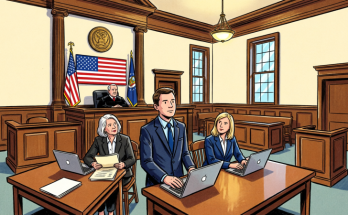
The trial lasted six months.
The forensic results confirmed what the footage suggested: toxic compounds in the tea, slow acting, hard to detect. Enough to push a weakened heart into failure over time. The lab report from Marcus’s sample matched what they found in the house.
My father was convicted as the primary conspirator. Life without parole.
Laura cooperated. She testified. She cried. She got a reduced sentence.
In the courtroom, Dad never once looked at me.
Laura tried, as if my eyes could offer forgiveness. I didn’t give it.
When it was over, Ethan sat beside me outside the courthouse, staring at the concrete like it held answers.
“What happens now?” he asked, voice hollow.
I breathed in cold air and tasted the edge of rain.
“Now,” I said, “we decide what kind of people we’re going to be after all this.”
And for the first time since the funeral, I felt the faintest shape of a future—sharp, fragile, but real.
Part 5
There are endings that feel like a door closing.
And then there are endings that feel like you’re walking out of a burning house and realizing you don’t have a home anymore, even though your body is still intact.
After the trial, I went back to my grandmother’s house one last time.
It didn’t feel like mine. It didn’t feel like Evelyn’s. It felt like a crime scene with fresh paint.
The police had returned what they could. Henry had handled the legal aftermath with the calm precision of someone who’d spent his life cleaning up other people’s messes. Marcus had turned in his reports and stepped back, but he still checked in—brief texts, occasional calls, making sure I wasn’t alone in the quiet.
Ethan came with me that day, moving through the rooms like a ghost revisiting his own childhood.
We stood in the kitchen in silence. The counter was empty. The tea tin was gone, confiscated as evidence. The kettle sat on the stove like an object from another life.
Ethan’s voice was rough. “I keep thinking I should’ve noticed.”
I shook my head. “Grandma noticed and it still happened.”
He swallowed, eyes glossy but stubborn. “Dad wrote me a letter.”
My stomach tightened. “Did you read it?”
Ethan nodded once. “It wasn’t… it wasn’t an apology. Not really. It was like he was explaining a business decision that went wrong.”