The applause hit me like a physical force.
It rolled across the glass and steel of the Aries MedTech auditorium, bounced off the vaulted ceiling, and crashed into me where I stood at the very edge of the stage, half-hidden behind a column of LED screens. A thousand well-dressed strangers rose to their feet, clapping for a man I had watched sleep on the office couch with a hangover while I debugged his code at three in the morning.
“Ladies and gentlemen,” my father’s voice boomed, rich and smooth and perfectly amplified, “the sole genius behind the Aries system—my son, Brent.”
Spotlights swung like searchlights, converging on the tall, handsome figure stepping forward in a perfectly tailored navy suit. Brent smiled the smile he had practiced in the bathroom mirror for years, the one that said humble and brilliant and blessed in equal measure. His teeth caught the light. His eyes didn’t.
I didn’t move. I couldn’t. My whole body felt like it had been poured into a mold and left to set.
My father, Edward, turned toward me for a fraction of a second, just long enough to press something into my hand—a wireless mic. His smile stayed pinned to his face, aimed at the crowd, but his eyes cut sideways, sharp and cold as scalpels.
“Don’t make a scene, Mia,” he murmured, lips barely moving. From somewhere out in the audience, a camera flash went off. “You’re just the mechanic. Mechanics don’t get equity. Now, smile, or you won’t even get a severance package.”
I could smell his cologne, something expensive and woody and suffocating. I could feel the smooth plastic of the microphone biting into my palm. I could feel my heart beating against my ribs with such force I thought it might burst out and land on the glossy black stage floor in front of everyone.
But I didn’t scream.
I didn’t cry.
Neither reaction had ever helped me with this man, and I doubted they would move him now, in front of a room full of billionaire investors and media executives and the FDA observers he’d spent months schmoozing over golf.
Instead, I reached into the pocket of my suit jacket, wrapped my fingers around the familiar hard edge of my security badge, and pulled it out.
Aries MedTech employee badge, Level Five: Senior Systems Architect & Regulatory Supervisor. My name—MIA VANCE—printed in block letters below a photo of me taken eight years and a lifetime ago.
I turned it over once in my fingers, feeling the faint ridges of the RFID chip through the plastic, then I stepped forward, past my father, past Brent as he accepted the microphone with a chuckle he didn’t earn, and gently placed the badge on the polished mahogany table that served as part of the stage design.
It made a small, crisp click as it landed.
Nobody heard it over the cheering.
Then I turned around and walked out.
I walked past the wall-length screen showing an animated rendering of our flagship product—the Aries Mark IV robotic prosthetic arm—rotating slowly in midair like some kind of chrome and titanium halo. I walked past the champagne towers, the catering staff with their silver trays, the gaggle of tech journalists refreshing their live blogs. I walked past the investors who had each wired more money into my family’s company than I would see in ten lifetimes.
I walked past ten years of my life.
On the screen behind me, Brent was talking about innovation and vision and leadership, three things he knew about only in theory.
By the time the doors hissed shut behind me, the applause had faded to a dull roar muffled by glass and distance. The air in the hallway was cooler, less perfumed, tinged with the faint scent of copier toner and industrial carpet glue. My shoes clicked on the marble as I made my way to the elevator, the sound echoing in the empty corridor.
The world outside the building was a different planet altogether.
The evening had settled into that in-between gray, the sky a smudged watercolor of dying light and approaching night. The parking garage swallowed me whole as I descended the ramp, the fluorescent lights above flickering in a way that made everything look vaguely unreal.
I found my car—a ten-year-old sedan wedged between a Tesla and something German and aggressive—and slid behind the wheel. The seat was cold. The silence was absolute.
Then, faintly, through the concrete, I heard it.
The bassline of the celebration music, pulsing up from the floors above. A party built on my labor, my sleepless nights, my decade of sacrifice. A party I wasn’t invited to.
I rested my forehead against the steering wheel and let the sensation wash over me.
My name is Mia.
I am thirty-two years old, and for the last ten years, I have been a ghost.
Inside that building, they were raising crystal flutes to the future of Aries MedTech, the company my father founded, my brother fronted, and I quietly kept from collapsing into a heap of lawsuits and corpses. They were celebrating “the next era of class III medical robotics,” a fleet of prosthetics and exoskeletons and surgical aids that could, as Brent had just proclaimed to the crowd, “let a paralyzed man run a marathon.”
They didn’t know that a paralyzed man could die just as easily as run, if one line of code misfired.
They didn’t know that every safety protocol, every FDA compliance log, every system heartbeat and self-check had been written, reviewed, and signed off on by me.
They didn’t know that the elegant charts on the screen upstairs, the uptime metrics and incident-free reports and glowing regulatory summaries, all bore my digital fingerprints.
My brother, Brent—the “architect,” the “visionary,” the “face” of Aries MedTech—couldn’t even spell compliance. Literally. I’d seen him try.
He was a gambling addict who treated the company accounts like an ATM and the stock market like a roulette wheel. I’d spent my twenties cleaning up his messes, undoing his risky shortcuts, patching the holes he punched in the system every time he tried to “improve efficiency” by skipping yet another safety step.
Eighteen-hour days, seven days a week, chasing bugs through million-line codebases, tracing phantom errors back to some stupid workaround he’d installed at 2 a.m. after a night out, because “waiting for QA would slow our momentum, sis.”
I worked on Christmas mornings, on my birthday, on every birthday I could remember, because a red error marker doesn’t care about holidays.
I signed every safety log because Brent couldn’t. Didn’t have the license. Didn’t have the patience to sit through the certification process, let alone pass it. He had always delegated the boring parts of genius.
I was the safety net that caught him every time he fell.
You might ask why I stayed.
Why does someone stay a ghost in their own life? Why does someone sacrifice friendships, relationships, sleep, health, in service of parents who treat her like a convenient piece of machinery?
I asked myself the same question every time I drove home alone in the dark while my brother texted drunk selfies from the VIP section of some club I’d partially funded by catching a bug that would’ve cost the company millions.
The truth isn’t neat. It doesn’t fit on a motivational poster or in a therapist’s catchphrase.
Psychologists call it the trap of normalized cruelty. You don’t realize you’re bleeding out because the knife went in one millimeter at a time.
My father, Edward, didn’t break me in a day.
He sanded me down.
He began when I was small enough to still think he was a god.
I still remember that day when I was twelve. I’d stayed up three nights in a row, soldering wires and coding on a borrowed laptop to finish a project for the state science fair—a sensor array that could detect tremors in the hand and stabilize small movements with micro-servos. My science teacher had said it was college-level work. I’d won first place out of hundreds.
I came home with the blue ribbon clutched in my hand, buzzing with pride and a kind of terrified hope. Maybe this time he would really see me.
I found him in the living room, standing over Brent, who was crying over a broken remote-controlled car, plastic wheels scattered around him like shrapnel.
“Dad!” I’d said breathlessly. “I won. I—look!”
Edward didn’t even glance at the ribbon.
He pointed at the car.
“Fix it, Mia,” he said. “Your brother is the statue. You are the pedestal. Without you, he falls. So don’t you dare move.”
He’d said it like it was a compliment.
That was the lesson.
I wasn’t the art. I was the support structure. I wasn’t the star. I was the gravity that kept their world from spinning apart.
When you’re told something often enough as a child, it doesn’t sound like cruelty anymore. It sounds like truth.
So I became very good at being invisible.
I learned to be the one in the corner with the laptop, the one who stayed late, who double-checked everything, who pushed the impossible deadlines across the line. They rewarded me with more work, not more credit.
My mother, Cynthia, enforced the story in her own way—not with direct orders, but with sighs and delicate little looks. She played helpless when it suited her, wounded when I stepped out of line, saintly when she forgave me for being “difficult.” She always forgave me when I gave in.
They trained me to believe that being a good daughter meant setting myself on fire to keep them warm.
They assumed that training would last forever.
They assumed I would stay the pedestal.
They forgot one crucial thing.
If you remove the pedestal, the statue doesn’t just look a little less impressive.
It falls. And when it falls from that high, it doesn’t crack—it shatters.
I lifted my head from the steering wheel and looked at my hands resting on it—short nails, faint calluses on my fingertips from typing, a thin burn scar on my wrist from a soldering accident back in grad school.
These were the hands that wrote the core of the Aries control system from scratch.
These were the hands that encoded the safety overrides, the fail-safes, the compliance protocols that made our devices legal. That made them safe.
These were the hands that held the only key to the kingdom.
My phone buzzed in my lap.
The sound was so familiar it might as well have been my own heartbeat.
5:00 p.m.
A small notification slid into view on the screen, stark black text on white: Biometric handshake required. Level Five Administrator authorization needed for daily operations.
For ten years, every single day, I had pressed the green “ACCEPT” button without thinking. It was as much a part of my routine as brushing my teeth.
I pressed it on Christmas morning while my family gathered around the tree, the glow of wrapping paper and fairy lights reflecting in their eyes. I was in the kitchen by the power outlet, thumb tapping the screen while Cynthia cooed over what Brent had bought her “with his own money.”
I pressed it during my best friend Ava’s wedding reception, standing in a bathroom stall in my bridesmaid dress, the muffled thump of “Uptown Funk” leaking through the walls while I authorized another day of operation for machines that would never know my name.
I pressed it while I had the flu, shaking with fever under a blanket, the phone screen burning my eyes.
I pressed it in the parking lot of a cemetery while they lowered my grandmother’s casket into the ground.
That button was the invisible leash around my neck, tying me to the company every day, wherever I was, binding my identity to a system that could not legally function without my consent.
Edward had stripped me of my plastic badge. He’d announced to the world that his son was the genius and I was expendable. He thought firing me meant he could delete me from the story.
He forgot that he hadn’t just built a company.
He’d built a kingdom of class III medical devices that, by law, required a licensed monarch to keep running.
And he had just exiled the queen.
My tablet lay on the passenger seat, its screen still on from when I’d tossed it there. The livestream of the event was ongoing—my father liked to show the world how important he was in real time. I propped the tablet up on the steering wheel and unmuted it.
On-screen, the camera panned across the boardroom we’d converted into a media set. Edward was in the center, glass of champagne in hand, laughing too loudly at something the lead investor had said. Behind him, the Aries Mark IV prototype arm sat on a pedestal, sleek and beautiful, its titanium fingers dancing across a piano keyboard placed there just for tonight. It was performing a delicate sonata, each note perfect, each motion smooth.
My code. My algorithms. My years.
“Zero equity,” I whispered to the empty car.
I looked down at my phone again.
The notification was still there. Two buttons, one green, one red. ACCEPT. DECLINE.
The green button meant safety. It meant keeping the peace. It meant swallowing the insult, going home, lying in bed staring at the ceiling all night while my mind replayed the moment my father erased me in front of a crowd.
The red button meant war.
I didn’t hesitate. I didn’t shake. For the first time in a decade, my thumb moved without guilt.
I pressed DECLINE.
The phone vibrated once in acknowledgement.
A new message appeared almost immediately.
Authorization denied. Initiating emergency protocol.
On the tablet, the piano music stopped mid-phrase.
The Aries arm didn’t slow down. It froze—every motor locking simultaneously, the fingers suspended above the keys in a rigid, unnatural claw. Its joints held in what looked like a protective rigor mortis, every axis immobilized by design.
The sudden silence in the boardroom was louder than the applause had ever been.
For a second, nobody moved. I watched as Edward frowned, his perfect keynote rhythm broken. He tapped his champagne glass with a fingernail, assuming some AV glitch had interrupted the soundtrack. The sharp chime rang out.
He turned to the prototype and waved his hand slowly in front of its sensors, waiting for the arm to perform the programmed “greeting gesture” routine we’d coded for demos.
The arm stayed dead.
I almost felt sorry for him.
Then the alarm began.
A low, rhythmic pulse, loud enough to cut through conversation, came from the control console linked to the prototype. On-camera, I watched as a square red light began flashing under the main display.
Beep. Beep. Beep.
The FDA-mandated alarm for an unsupervised active device. A warning that the required licensed supervisor had not authorized operation for the day.
Investors stopped lifting their glasses to their lips. Conversations stuttered and died. Heads turned toward the sound, then to the frozen prototype, then to my father.
Brent was the first to break.
He rushed toward the console, his confident swagger gone, his face suddenly pale. Up close, even through the slightly pixelated livestream, I could see the sheen of sweat on his forehead as he leaned over the touch display and began jabbing at it, his movements frantic.
He looked like a child at a museum exhibit, banging on buttons to make the lights flash.
Above him, the massive wall display that had been cycling through beautifully designed slides—market projections, ethical commitments, polished slogans—flickered once, then switched.
A new message appeared in stark red letters on white.
SYSTEM LOCKDOWN
UNAUTHORIZED OPERATION
LICENSED SUPERVISOR MISSING
ALL UNITS DISABLED
There it was. My code. My name, hidden behind those words, the invisible signature of the only person who could make those machines move.
Edward’s smile vanished.
He spun around, eyes scanning the room, searching for the one person he had very publicly and triumphantly just thrown out like trash.
I took a slow sip from the lukewarm water bottle in my cup holder, watching him hunt for a ghost.
My phone shattered the moment with a sharp, jarring ringtone.
I didn’t have to look at the caller ID. I’d set that sound for him years ago, a shrill siren that always made my stomach clench.
The name EDWARD flashed across the car’s dashboard screen like a warning label.
I let it ring twice.
Then I answered.
I didn’t say hello.
“WHAT DID YOU DO?” he roared. His voice was so loud it crackled the car’s speakers. Behind him, I could hear chaos—a rising murmur of panicked voices, the relentless beeping of the alarm, the scrape of chairs being shoved back.
On the tablet balanced in front of me, the camera zoomed in on the prototype, then awkwardly cut to a wide shot of the crowd as someone in the control room tried to salvage whatever they could of the stream.
“I don’t have to turn it back on,” I said calmly. My voice surprised me. It sounded almost bored.
“Turn it back on right now, Mia!” He practically spat my name. “I know you did this. I know you rigged it.”
On-screen, Brent was still stabbing at the console, his tie askew now, hair falling into his eyes. He looked utterly lost.
“I didn’t rig anything, Edward,” I said. I didn’t call him Dad. Not now. Maybe not ever again. “I told you, I’m just the mechanic. And since I don’t work there anymore, I can’t authorize the safety protocols.”
“Don’t give me that technical garbage!” he screamed. “You sabotaged the fleet. You planted a virus. I will SUE you for everything you have. I will bury you so deep you’ll never work in this industry again.”
“It’s not a virus,” I said. “It’s a feature.”
There was a pause, a hitch in his breathing as the words landed.
“Specifically, it’s the twenty-four-hour supervisor mandate required for class III medical devices. Without a licensed administrator to biometrically sign the logs, the system defaults to safe mode to prevent patient injury. It’s not sabotage, Edward. It’s the law.”
“I don’t care about the law!” he roared. “I have investors here. I have a billion-dollar deal on the table. Fix it.”
There was a rustling sound, and then another voice came through the line, strained and high and quivering.
“Mia, please,” my mother said. “How could you do this?”
Ah. The guilt phase. We were already there.
Cynthia had perfected the art of sounding like a wounded dove. I’d watched her tremble and tear up in front of cops when Brent crashed his car in college, watched her hug him and say “He’s just stressed, officer. His father expects so much of him.” I’d watched her use that voice to get out of tickets, out of bills, out of responsibility.
“How could you be so cruel to your brother?” she continued, breathless. “This was his big night. He needs this win. Why are you trying to destroy this family?”
I closed my eyes for a moment, pressing my head back against the car seat.
There it was. When threats didn’t work, they pivoted to guilt. They didn’t care that Edward had just fired me, that he’d erased my existence in front of their entire world. They cared that I was ruining the optics.
“I didn’t destroy the family, Mom,” I said quietly. “You did, when you sat there and watched Dad give my life’s work to a gambling addict.”
Her breath hitched.
“You chose your side.”
“We gave you a job!” she shrieked suddenly, the façade cracking. “We fed you. We let you play scientist in that lab, and this is how you repay us? By embarrassing us?”
“Give me the phone,” Edward snarled in the background. There was a scuffle, and then he was back.
“Listen to me, you ungrateful little brat,” he said, his voice low and deadly now. “I want the override code. Right now. Give me the password, and maybe, maybe I won’t call the police.”
I stared at my reflection in the rearview mirror—pale skin, dark hair pulled into a messy bun, faint smudges under my eyes from a decade of not enough sleep.
“There is no password,” I said. “It’s a biometric key. It scans the unique vascular pattern of a licensed engineer’s thumbprint. Specifically, my thumbprint.”
“Then come back here,” he snapped. “Get in here and unlock it.”
“I can’t do that,” I said.
“Why the hell not?”
“Because you fired me,” I said. “And, as you so clearly pointed out, mechanics don’t get equity. So unless you’re planning to sign over fifty percent of the company in the next five minutes…”
I lifted my right hand slowly, looking at my thumb as if it belonged to someone else.
“My thumb stays with me.”
“You can’t do this,” he stammered. For the first time, I heard something like genuine fear threading through his anger. “You can’t just walk away with the keys to a billion-dollar company.”
“I just did,” I said.
There was a moment—just one—where I imagined a different conversation. One where he swallowed his pride, admitted he’d been wrong, begged me to come back, offered me the equity I’d earned plus an apology that cost him something.
It lasted less than a second.
“Good luck with the investors, Edward,” I added. “I hear they hate surprises.”
Then I pressed the red END CALL button with the same thumb that could’ve saved him.
The line went dead.
On the tablet, the lead investor—a man with silver hair and the calm of someone who had seen empires rise and fall—pushed his chair back and stood. His expression was unreadable.
He buttoned his jacket with deliberate care, looked at the frozen prototype, then at my father.
Then he turned and walked toward the door.
Edward lunged after him, grabbing his arm, his mouth moving rapidly. The investor’s face flickered from polite to impatient to something harder as he listened.
I put the car in gear.
I wasn’t going home.
I was going back.
Not to fix the engine.
To finish dismantling the machine that had been eating me alive.
The lobby of Aries MedTech was a cathedral of glass and steel, designed to impress visiting regulators and investors. Tonight, it smelled faintly of spilled champagne and stress.
Mr. Henderson, the night security guard, sat behind the marble desk. He was in his late sixties, with stooped shoulders and kind eyes. He’d watched me stumble into the building at dawn and limp out at midnight more times than I could count. He’d always had a thermos of bad coffee and a quiet, “Long day, Miss Mia?”
Tonight, he couldn’t meet my gaze.
When he saw me, his hand twitched toward the phone, then froze. He glanced at the elevator, then at the badge lying on his desk—not mine, but a temporary guest badge with my name printed on a sticker. Someone had already prepared it.
“Miss Mia,” he said hoarsely. “They—they said you’d be coming back up.”
Of course they had.
He slid the badge toward me with fingers that shook faintly.
I picked it up, the adhesive backing tacky under my thumb, and clipped it to my jacket where the real badge had been an hour ago.
“Thank you, Mr. Henderson,” I said.
“I didn’t… I didn’t see nothing,” he muttered, eyes fixed on the desk.
“I know,” I said softly. “You never did.”
He winced.
The elevator ride to the penthouse floor felt longer than any of the endless nights I’d spent riding those same doors up at 2 a.m. to restart some process Brent had kicked over.
My mind raced ahead of the car, trying to anticipate the shape of the fight waiting for me. I imagined attorneys with frantic eyes and hastily prepared settlement offers. I imagined Edward swallowing his pride enough to trade shares for access, to calculate just how much of my ownership he could tolerate before it felt like losing.
I imagined leverage.
I forgot that when you corner a narcissist, they don’t negotiate.
They annihilate.
The elevator chimed. The doors slid open onto a hallway lined with backlit photos of Aries milestones—Brent shaking hands with a governor; Edward cutting the ribbon on our first manufacturing facility; a glassy-eyed patient walking for the first time with an early exoskeleton model.
At the end of the hallway, the doors to the main boardroom stood open.
The atmosphere inside was thick, suffocating, like the air before a storm.
The investors were still there, scattered around the long table. Some were on their phones, murmuring into them. Others were staring at the frozen prototype with tight jaws. No one was laughing anymore.
Brent leaned against a wall, scrolling on his phone with forced nonchalance, his tie yanked loose. His cheeks were flushed, his eyes darting around like a cornered animal whenever he looked up.
Edward stood at the head of the table, hands on the back of a chair, his head bowed as if in prayer.
He wasn’t sweating. He wasn’t shouting. That, more than anything, made the hair on my arms stand up.
He lifted his head as I stepped into the room.
“I’m here,” I said. My voice sounded small in the cavernous boardroom. “Let’s talk about the equity I was denied.”
For a moment, nobody spoke.
Edward’s expression shifted with practiced grace from haunted to relieved. He didn’t smile, but his eyes filled with something that might have fooled someone who hadn’t grown up watching him rehearse performances in the mirror.
“I’m sorry, Mia,” he said softly. “I really didn’t want it to end like this.”
“End like what?” I asked. “Like me walking away from being exploited? Or like… this?”
He didn’t answer.
Instead, he nodded toward a side door that led to our legal offices. For half a breath, I thought perhaps my fantasy had been right—that a team of lawyers would emerge, trailing rolling briefcases and NDAs.
The door burst open.
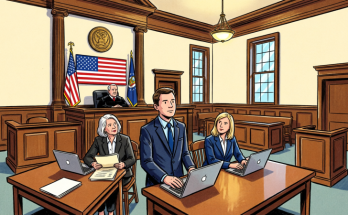
Four men in dark windbreakers stormed into the room.
They moved with the kind of economy that only comes with training. Hands hovered near holstered weapons, eyes swept, bodies angled to see every possible threat at once.
Bold yellow letters stretched across the backs of their jackets.
FBI.
The world narrowed to a tunnel.
The lead agent, a tall man with close-cropped hair and a face carved into hard lines, crossed the room in three strides.
“Mia Vance?” he barked.
My mouth went dry.
“Yes,” I said.
“Hands where I can see them.”
“What is this?” I took a step back without meaning to, my shoulders hitting the doorframe behind me. “I didn’t do anything.”
“You are under investigation for corporate espionage, wire fraud, and the deployment of malicious ransomware,” he said, words clipped, almost bored. “We have a sworn affidavit from the CEO of Aries MedTech and supporting logs from the company servers.”
I turned my head enough to see Edward.
He stood very straight, his expression composed, but his eyes glittered with something like triumph.
He held a manila folder in one hand, thick with printed emails and screenshots and god knew what else.
“She rigged the system,” he said to the agents, his voice cracking on the word “rigged” in a way that sounded suspiciously like heartbreak. “We have logs showing unauthorized access. She planted a virus to hold the company hostage and demanded fifty percent of the shares to unlock it.”
He swallowed dramatically.
“It’s extortion,” he finished, his voice hoarse.
The investors looked from him to me with expressions ranging from disgust to wary calculation.
I stood there, hands cuffed behind my back, feeling the ridges of the metal digging into my skin, my pulse a steady, roaring drum in my ears.
“I didn’t plant a virus,” I said, my voice shaking despite everything I’d promised myself all afternoon. “It’s a safety protocol. Check the code. Check the commit history. It’s all documented.”
“Save it for the judge,” the agent said, tightening the cuffs until I winced.
Brent pushed himself off the wall and swaggered over, his earlier fear now replaced by a smug grin.
He leaned in close, close enough that I could smell whiskey and expensive cologne and the faint sourness of nerves on his breath.
“I told you, sis,” he whispered, just for me. “Dad’s always one step ahead. You think you can steal my company? Enjoy prison.”
Behind him, my mother sat in the corner of the boardroom, half-hidden behind a potted plant, of all things. Her mascara had smudged under her eyes. Her hands twisted the strap of her designer handbag into a knot.
She wasn’t crying now.
She was staring at the floor.
“Edward,” I said loudly, looking directly at him. “You know this is a lie. You know I didn’t rig anything. You know those logs show routine compliance checks, not hacks.”
“We tried to help you, Mia,” Edward said, also loudly, for the benefit of the badges in the room. “We gave you a job. We gave you a purpose, and you betrayed us.”
The agent nudged me toward the door.
“Let’s go.”
As they marched me out, the room blurred at the edges. Faces became smears of judgment and fear. The only things that stayed sharp were the red flashing light on the frozen prototype and the scrolling error message still displayed behind Edward’s head.
SYSTEM LOCKDOWN
FD PROTOCOL 21–2–11
My heart gave a little kick.
He had no idea what he’d just stepped into.
The agent’s voice receded into background noise as he recited my rights. I’d heard the words a thousand times on TV, but in person, they felt different, heavier. Freedom wasn’t a concept anymore—it was a thing slipping through my fingers like water.
I focused on the code instead.
FD protocol 21–2–11.
I knew every line of that subsystem.
Edward thought that if he had me arrested, he could force me to give him what he wanted. That, faced with prison, I would cave. Or that, even if I didn’t, he could spin the narrative to investors and regulators: rogue engineer, isolated incident, company cooperative and innocent.
He thought the law was a tool he could wield like money.
He didn’t understand that the law was the only thing I’d ever had protecting me.
We were almost at the elevator when a voice cut through the chaotic murmur.
“Wait.”
The word cracked across the room like a whip.
Everyone froze.
I turned as much as the grip on my arm would allow.
The lead investor, the silver-haired man in the bespoke suit, stood at the far end of the table. Up close, I recognized him. Malcolm Hargrove. Private equity titan. Sinker of ships that leaked, saver of those that could still be patched. A man whose name alone moved markets.
He wasn’t on his phone anymore.
He was staring at the error message on the screen.
“That code,” he said slowly, pointing at the display. “That’s not a virus alert. That’s… compliance.”
Edward let out a brittle laugh.
“We’ve been trying to fix it,” he said. “We’re managing the situation internally. It’s all under control.”
Hargrove ignored him.
He spoke instead to the lead agent, his voice calm but carrying an unmistakable authority born from a lifetime of people doing whatever he wanted.
“Agent…?”
“Collins,” the man with his hand on my arm said warily.
“Agent Collins.” Hargrove adjusted his cufflinks. “FD protocol twenty-one dash two dash eleven. Do you know what that is?”
The agent frowned.
“No,” he admitted.
“It’s a reference to Title 21 of the Code of Federal Regulations, Part 11,” Hargrove said. “Electronic records and signatures. It’s the section that governs how companies like this one have to handle their digital logs—who signs them, how, and when. I’m not an engineer, but I know enough to recognize a system shutting down because it’s trying to obey federal law, not because some allegedly ungrateful employee is throwing a tantrum.”
A murmur rippled through the room.
Agent Collins looked at the screen, then at me, then at Edward.
“Is that true?” he asked.
Edward opened his mouth, closed it, then forced a smile that didn’t reach his eyes.
“Our systems are compliant, of course,” he said. “This is just a malfunction. We’ve been under a lot of stress preparing for this deal, and Mia—”
“Mr. Hargrove,” I said, cutting him off. My voice was steady now. “If you search twenty-one C-F-R part eleven on your phone right now, you’ll find that any company using electronic records for FDA-regulated devices has to have a designated responsible individual. For class III medical devices, that person must be a licensed regulatory supervisor. That’s me. The system requires a daily biometric handshake from that individual to remain operational. No handshake, no operation. It’s automated. I couldn’t override it if I wanted to without leaving a trace.”
Agent Collins eyed me.
“Is that why the system shut down when you declined the prompt?” he asked.
“Yes,” I said. “And it’s why it shuts down whenever someone without the proper credentials tries to fake the handshake. Check the logs. Every authorization I’ve made for the last ten years is properly timestamped and tagged with my biometrics. Today is the first day those logs will show a DECLINED instead of an ACCEPTED.”
Hargrove pulled his phone out with smooth, unhurried movements, tapped the screen a few times, and frowned as he read.
“‘Part eleven establishes the criteria under which electronic records and electronic signatures are considered trustworthy, reliable, and generally equivalent to paper records…’” he murmured. “And it requires… designated individuals… periodic checks… audit trails… Hm.”
He slipped the phone back into his pocket and looked up at Edward.
“You submitted regulatory assurances as part of the investment package,” he said. “You told us your systems were compliant. That your safety protocols were state-of-the-art. That your devices could not operate without oversight from a licensed supervisor.”
“They can’t,” Edward said quickly. “That’s what I’m telling you. She—”
“So if you fired your only licensed supervisor,” Hargrove continued mildly, “and attempted to operate the devices without her authorization, you didn’t just cause a glitch. You attempted to circumvent federal regulations. You attempted to present illegally operating devices in front of investors and media. That’s… what’s the term, Agent Collins?”
“Fraud,” the agent said slowly. “Potentially. If that’s what happened.”
“And if,” I said carefully, “Mr. Hargrove were to ask IT to pull the system logs for the last, say, three years, he might notice some other… irregularities. Entries where my safety limits were overridden without my knowledge. Instances of ‘data adjustments’ that make performance metrics look better than they should. All performed under administrator accounts that are not mine.”
The room went very, very quiet.
Brent shifted against the wall. The color drained from his face.
“Speaking hypothetically,” I added. “Of course.”
“Pull the logs,” Hargrove said, never taking his eyes off Edward.
“Now.”
One of the junior IT guys, pale and sweating in the back corner of the room, looked like he wanted to melt into the carpet.
“Sir, I—”
“NOW,” Hargrove repeated.
The kid fumbled with his laptop, fingers flying over the keys.
Agent Collins loosened his grip on my arm.
“Hold on her,” he told one of the other agents, then stepped closer to the IT tech. His expression had changed in subtle ways. Less bored, more alert. Predatory.
Lines of text began to scroll across the huge display as the live logs piped through the visualization tool we used for internal audits.
There they were—timestamps, user IDs, actions taken.
I knew what to look for. I’d seen shadows of it before, anomalies that didn’t add up, numbers that twitched wrong, but every time I brought them up, Edward and Brent had brushed them off as “test entries” or “harmless corrections.”
“Stop,” I said. “Scroll back up. There.”
An entry highlighted itself on the screen as the IT technician obeyed.
ADMIN_BRENT_OVRD_LIMITS – DEVICE FLEET – TORQ/LOAD – DATA WRITE OVERRIDE
COMMENT: “TEMPORARY PERFORMANCE BOOST FOR DEMO. WILL RESTORE SAFETY MARGINS LATER.”
A second entry, a day later.
SYSTEM_ADMIN_EDIT_LOG – SAFETY INCIDENT FLAG REMOVED – PATIENT_ID REDACTED – NOTE: “LOGGING ERROR. NO REAL INCIDENT.”
A third.
MARKET_REPORT_EXPORT – MANUAL ADJUST – ERROR RATE FIELD – “ROUNDING”
The investors all leaned forward at once, like a flock of vultures scenting carrion.
“Jesus Christ,” one of them muttered.
My stomach lurched.
I had suspected. I had seen hints. But seeing it spelled out, in black and white, with such cavalier notes attached…
“That’s what this is about,” I said quietly. “You didn’t just fire me because you didn’t want to give me equity. You fired me because I was the only one who could call you on this. Because I signed the logs. Because if I saw one more ‘rounding error,’ I was going to report you.”
Edward’s jaw clenched.
“That’s enough,” he snapped at the IT kid. “Shut it down. Our internal logs are privileged—”
“They’re evidence,” Agent Collins said flatly.
He turned back to me.
“Ms. Vance. Do you consent to a forensic review of your personal access history and your local development environment?”
“Yes,” I said without hesitation. “Take whatever you need. My laptop, my backups, my personal documentation. I’ve been logging every anomaly I noticed for the last two years.”
I watched the calculations flicker across his face.
The narrative had shifted under his feet, and he knew it.
“Remove the cuffs,” he told the agent behind me.
The sudden absence of pressure around my wrists made my hands tingle painfully. I rubbed at the marks, skin burning.
Edward stepped forward, eyes wide.
“You can’t just—she admitted to shutting our system down!” he said. “She threatened to withhold her authorization unless I signed over half the company. That’s extortion.”
“Actually,” Hargrove said, his voice almost conversational, “what I heard was her offering to bring her legally required oversight back online in exchange for a stake in the company she helped build. I’m no lawyer, but that sounds more like negotiation around intellectual property.”
He smiled, the expression ice cold.
“And now that I see what you’ve been doing to my investment, Edward, I’d say she was being remarkably generous.”
For the first time since I had known him, I watched my father’s composure crack.
It wasn’t much at first—a twitch near his eye, a flare of his nostrils. Then his carefully arranged posture sagged, his shoulders rounding, his mouth falling open.
“What are you talking about?” he demanded, his voice losing some of its practiced resonance. “This is my company. I built it. I took all the risk. She’s an employee. A— a glorified tech support—”
“Who also happens to be the only person in this room who can keep you out of prison,” Hargrove said. “If you’re lucky.”
Agent Collins cleared his throat.
“We’re going to need to suspend this event,” he said. “Seal the server room. Interview staff. And Mr. Vance—Edward Vance—we’re going to need you to come with us as well.”
The words hit my father like a physical blow.
“For what?” he barked. “What are the charges? I’m the victim here. I called you.”
“Yes,” Collins said. “You did. You filed a sworn affidavit alleging crimes that, from the preliminary evidence, appear to be consistent with legal compliance protocols. If you filed that complaint knowing it was false…”
He shrugged, an eloquent little roll of his shoulders.
“Well, that’s another problem.”
The other agents moved in now, not toward me, but toward my father and my brother.
“Brent Vance,” one said. “Turn around, please.”
“For what?” Brent sputtered. “What did I— Dad!”
“Data falsification. Potential securities fraud,” the agent said. “We’ll know more once we’ve pulled all the logs, but for now, you’re both going to come downtown so we can sort this out.”
“This is outrageous!” my mother cried, finally lifting her head. “You can’t do this. That’s my husband. That’s my son.”
She got to her feet as if to throw herself between them and the agents, the way she always did when Brent was in trouble. Her gaze flicked to me for the briefest second—a flash of accusation, of betrayal, of naked fear.
Then she looked away.
It took less than a minute.
The same steel bracelets that had dug into my wrists moments ago locked around Edward’s and Brent’s. The sound of the metal closing was louder this time. Maybe because of the silence.
Hands on their arms, agents guided them toward the door. Edward sputtered threats and promises in equal measure, his voice rising and cracking. Brent swore, struggled, then sagged as reality sank its teeth in.
No one clapped now.
The investors watched them go with the cool gaze of people already recalculating portfolios and damage control strategies. Cynthia stood frozen by her chair, her fingers still tangled in her purse strap.
I watched my father, the man who had told me I was only valuable when I was useful, disappear down the hallway with his hands bound behind him.
It should have felt triumphant.
It didn’t.
It felt… empty. Like a building collapsing in slow motion. Necessary, inevitable, but still horrifying to watch.
Three months later, Aries MedTech didn’t exist.
The headlines had come first.
ROBOTICS UNICORN COLLAPSES UNDER REGULATORY SCANDAL
INVESTORS FLEE AS ARIES MEDTECH SAFETY LOGS SHOW FRAUD
CEO AND CTO OF MEDTECH DARLING INDICTED ON MULTIPLE COUNTS
I’d read them all while sitting on the hard plastic chair in a small conference room at the FDA, a paper cup of lukewarm coffee in my hands, an attorney appointed by the company’s now-defunct insurer sitting beside me.
They’d wanted my testimony.
Not against my father, specifically, at least not at first. Against the system. Against the culture that had allowed safety margins to be shaved for the sake of demonstration sizzle, that had allowed a man like Brent to override my signatures with a few strokes of a keyboard.
I’d told them everything.
About the all-nighters. About the “rounding errors.” About the way Edward had framed safety as “obstacle” rather than “requirement.” About the internal emails I’d saved when my concerns were brushed aside—“Don’t be such a Boy Scout, Mia. We’ll fix it after the funding round”—and the increasing frequency of little corruption patches I’d had to run.
They’d listened, nodded, taken notes. Asked questions. Asked more. Checked my logs. Compared my private records to the official ones.
In the end, the narrative that emerged publicly was simpler, cleaner than the messy, human truth.
Aries MedTech had, according to the official statements, “misrepresented safety data to investors and regulators.” They had “failed to maintain compliant oversight of their class III devices.” They had “allowed unlicensed individuals to alter records and override safety protocols.”
Brent took a plea deal.
My brother, the prodigal son, the statue I had been trained to hold up, traded his designer suits for orange.
Five years, with the possibility of parole after three for good behavior.
In sentencing, the judge had said something about the “grave responsibility” he’d failed to honor, about “the lives that could have been at risk.” Brent had nodded, face pale, hands clenched, eyes darting toward the gallery where Cynthia sat, mascara streaked again.
Edward, on the other hand, decided to fight.
He hired lawyers whose names were whispered in legal circles like invocations. He gave interviews calling himself a victim of “regulatory overreach” and “vindictive former employees.” He wrote op-eds railing against bureaucracy stifling innovation.
It didn’t matter.
The evidence was what it was.
Email chains. Logs. Whistleblower reports from a QA engineer who, emboldened by my testimony, had finally come forward with her own.
His trial date was set.
In the meantime, the company he’d built, the one he’d once said he’d leave to his grandchildren like a kingdom, was seized by regulators, picked over by auditors, then dismantled piece by piece.
Equipment was auctioned. Patents were frozen, then sold. The Aries logo came down from the building, leaving faint outlines on the glass where it had been.
I watched the sign removal from the sidewalk one chilly morning, coffee in my hand, scarf wrapped tight around my neck.
Three months ago, I would have been upstairs, hunched over my keyboard, tweaking some last-minute parameter before a demo. Now I was one of the curious onlookers, peering up as the letters came down one by one.
Behind me, someone cursed as a dolly hit a crack in the pavement. I turned.
A team of movers was loading servers into the back of a truck. I recognized the model—top-of-the-line racks we’d installed just last year. My code had run on them. My architecture had hummed through their circuits at three in the morning.
Now, they were labeled with lot numbers.
“Mia?”
The voice came from behind me, hesitant.
I turned again.
My mother stood a few feet away, looking smaller than I remembered. Or maybe I was just seeing her differently. Her coat, once impeccably tailored, hung a little looser. Her hair, always perfectly styled, showed threaded streaks of gray at the roots.
“Hi, Mom,” I said.
Cynthia hesitated, as if unsure whether to step closer or flee.
“I didn’t know you’d be here,” she said finally.
“I didn’t know you’d talk to me,” I replied.
Her mouth tightened.
“I’ve left three messages,” she said.
“I know,” I said. “I listened to them.”
She’d cried in all of them. She’d talked about how hard things were without the company credit card, about legal bills, about “how could you do this to your own brother,” about “you know your father didn’t mean to break the rules, he just… pushed too far.”
She hadn’t asked how I was.
“I need your help,” she said quietly now, dropping the performative tone she used for others. “I… things are… your father’s accounts are frozen. The house, the cars, everything… they say I might have to sell the house, Mia. The house you grew up in.”
“The house where you watched him erase me in front of a thousand people,” I said. The words came out harsher than I’d intended, brittle with fatigue. “The house where you told me to be grateful he ‘let me’ work for him.”
She flinched.
“You’re punishing me,” she said. “I’m still your mother.”
“Are you?” I asked softly.
We stood there, the two of us, in the shadow of the building that had devoured my twenties and her fifties.
Behind her, a mover dropped another server onto a dolly. Metal rattled. Someone swore.
“I’m… I’m not asking for much,” Cynthia said, twisting the strap of her purse again. “Just… help me for a little while. Until this all… settles. I know you must have some money saved. You were always frugal.”
I did have some savings. Not much, considering the hours I’d worked and the value I’d created. Edward had never paid me what I was worth, convinced I should be grateful for “the opportunity.” But I’d been too busy to spend much. No vacations, no fancy dinners, no designer anything. My life had been the office and my bed and the road between.
But the money I had now… I was already counting it a different way. As seed capital. As runway.
“I’m starting something,” I said. “A new company.”
Her eyebrows shot up.
“Doing what?” she asked, incredulous. “After all this… you’d go back into that industry? Who would trust you?”
“The regulators,” I said. “The ones who watched me choose safety over profit. The ones who saw I built a system that shut itself down rather than risk hurting people. The ones who recognized my name on the logs, not my father’s.”
She opened her mouth, then closed it.
“Mia, please,” she said. “We’re family.”
Family.
That word used to mean something to me.
It used to mean Christmas dinners and movie nights and someone holding your hand when you were scared.
In my family, it meant supporting statues.
“I’m not going to let you starve,” I said finally. “If it gets bad, if you can’t afford food or medicine, call me. But I’m not funding your lifestyle. Not the house, not the club membership, not the spa. That was built on lies.”
Her eyes filled with tears.
“You’ve changed,” she whispered.
“No,” I said. “I stopped being your pedestal.”
I left her standing there, looking up at the building as the last letter of ARIES came down.
The auction catalog had listed everything from lab benches to proprietary robotics arms. But there was one lot I’d circled in red the moment I saw it.
Server racks.
Not the data—those were locked down tight by the feds and the courts—but the physical hardware itself. Empty shells. Powerful, configurable, capable of being wiped clean and rebuilt from scratch.
I walked around the side of the building to the loading area where the movers were working. The foreman, a stocky man with a clipboard, was arguing with a thin guy in a cheap suit over signatures.
The thin guy spotted me first.
“You’re Vance,” he said. “The daughter. The one the papers keep quoting.”
“That’s me,” I said.
He looked me up and down, taking in the worn jeans, the hoodie, the scuffed sneakers. No power suit. No Aries logo.
“You here to… reminisce?” he asked, tone vaguely mocking.
“I’m here to buy,” I said.
He blinked.
“Oh,” he said. “You the one who won lot 54?”
“That’s right.”
He frowned at his clipboard, then pointed to a cluster of wrapped, strapped-together server racks on a pallet nearby. The metal gleamed dully under the gray sky.
“Those are yours,” he said. “Sign here, we’ll load ’em.”
I signed.
As the movers maneuvered the racks toward the rental truck I’d parked down the block, someone shouted.
“Hey!” a familiar voice yelled. “You can’t just walk out with that!”
I turned.
Edward stood at the far end of the loading bay, flanked by two court officers who looked already exhausted by him. He wore an expensive coat over a wrinkled shirt, no tie. His hair was messier than I’d ever seen it, gray at the temples more pronounced.
He looked… smaller.
“Those are my servers,” he snapped, pointing. “You can’t sell those. That’s proprietary infrastructure.”
“The court does what the court wants, Mr. Vance,” one of the officers said tiredly. “You signed the order.”
Edward ignored him.
He strode toward me, fury in every line of his body.
“Is this your revenge?” he demanded. “Picking over the bones? You already destroyed the company, Mia. Do you have to take the furniture too?”
“I didn’t destroy the company,” I said. “You did. When you built it on fraud.”
He flinched.
“You think you’re better than me?” he hissed. “You think you’re some kind of hero because you followed the rules? Those rules are written by people who have never built anything. I was changing the world. You… you were a functionary. A cog. And now you’re… what? A scavenger?”
I studied him for a long moment.
The man ranting in front of me didn’t match the one in my childhood memories—the towering figure in a pressed shirt, the booming laugh, the easy command of any room. This Edward was frayed at the edges, his power leaking out like air from a punctured tire.
His power, I realized, had never been real.
It had been borrowed—from investors, from regulators’ goodwill, from the labor of people like me. It was someone else’s trust, leveraged. Someone else’s effort, repackaged. Someone else’s talent, presented as his genius.
Without the money, without the platform, without the institution backing his bluster, he was just a man shouting in a parking lot while strangers moved boxes around him.
I felt something loosen in my chest. A knot I’d carried for years, tying my worth to his approval, began to dissolve.
“You didn’t build this company,” I said quietly. “We did. Me, the engineers, the techs, the ops crew. You stood on a stage and told stories about it. And when the stories didn’t match the reality, you changed the numbers instead of the behavior.”
His face reddened.
“How dare you,” he said. “I am your father.”
“You are a man who made choices,” I replied. “I am no longer responsible for holding you up while you make them.”
The movers rolled the last rack into the truck and slammed the door.
“Ready, miss?” the foreman called.
I nodded.
Edward took a step closer, hand half-raised as if to grab my arm like he had when I was fifteen and late for dinner.
“I forbid you from using any of that hardware to compete with me,” he said. “Do you understand? I will sue you into the ground if you—”
“You don’t have a company to compete with anymore,” I said. “And you don’t have the money to sue anyone.”
The court officer put a hand on his shoulder.
“Time to go, Mr. Vance,” he said.
Edward jerked his arm away, but he didn’t push it. He stood there, breathing hard, hands clenched, watching as I walked past him to the driver’s side of the truck.
I climbed in, the keys cool in my palm.
I looked at him one last time.
For years, every decision I’d made had orbited around this man. His moods, his demands, his vision. His approval had been my sun, the thing I bent around.
Now, he was just another person on the sidewalk, shouting as my world rolled away from his.
I started the engine.
As I pulled out onto the street, sunlight broke through the clouds for the first time that day. A shard of gold slipped between buildings and hit the windshield, making me squint.
Ahead of me, the road stretched out. Uncertain. Unmapped. Mine.
In the back of the truck, empty servers hummed faintly with the promise of whatever I decided to build into them.
An office came next.
It wasn’t much.
A second-floor walk-up in a converted warehouse, with exposed brick and pipes and a persistent smell of old coffee and printer toner. The rent was cheap because the landlord hadn’t managed to sell the place during the boom and was now praying for any steady tenant.
I signed the lease with the hand that had once scribbled my name on my father’s dotted lines, binding myself to his empire. This signature felt different. Not an obligation. A choice.
I set up the server racks in one corner, cables snaking across the concrete before I wrangled them into something resembling order. I bought chairs from a closing call center and desks from a charity store. Ava, my best friend—the one whose wedding I had half-missed for a system prompt—showed up one Saturday with a toolbox and three large coffees.
“So,” she said, standing in the middle of the empty room, hands on hips, looking around. “What’s this place called?”
I hesitated.
I hadn’t let myself name it yet. Naming things made them real.
“Not Aries,” I said.
She snorted.
“Strong start,” she said. “You going to be working on the same kind of stuff?”
“Safer,” I said. “Smaller, at first. Consulting. Helping other MedTech start-ups set up compliance systems right from the beginning. Making sure there’s always a thumbprint that can say no.”
“And eventually?” she asked.
I looked at the servers. At the whiteboard I’d already covered in sketches—modular prosthetic frameworks, decentralized safety checks, community-driven oversight protocols.
“Eventually,” I said slowly, “I want to build devices that don’t require a single monarch to keep them honest. Systems where safety is distributed, where no one person—no father, no brother, no CEO—can override the red flags because they’re inconvenient.”
Ava smiled.
“That sounds like you,” she said.
“Stubborn?” I asked.
“Resilient,” she countered. “Hard to sabotage. Hard to break.”
I thought of the girl with the blue ribbon and the broken toy car. The woman with the badge on the mahogany table. The engineer in handcuffs, staring at a screen flashing FD PROTOCOL.
“Harder than I thought,” I said.
She bumped her shoulder against mine.
“You going to hire people?” she asked. “Or are you going to haunt this place alone like a ghost in a machine?”
I laughed.
“I spent ten years being a ghost,” I said. “I think it’s time I built something where everyone gets a body. A name. A stake.”
The first hire was a QA engineer from Aries who had quietly handed me a thumb drive after our testimony days.
“There’s more,” she’d said. “Logs I kept. Notes. Things I… I didn’t know what to do with at the time.”
She’d been scared then.
Now, she walked into my little office with her shoulders a notch straighter, her resume in hand.
“I heard you were building something,” she said. “I thought maybe… this time… we could do it right from the ground up.”
“We,” I repeated.
The word felt good.
“We,” she said firmly.
I looked at her, at the way her eyes flicked to the servers, to the whiteboard, to the bare walls.
“We’ll do it as partners,” I said.
Her eyebrows shot up.
“Partners?” she echoed. “You mean… equity?”
“Yes,” I said simply. “Real equity. Not imaginary pedestal equity. You’ll own part of whatever we build. And so will everyone else who joins us.”
She swallowed.
“What about you?” she asked. “Don’t you want to… you know… be the statue this time?”
I thought of my father and his statues.
I shook my head.
“I want to build a table,” I said. “One where everyone sits. Where no one is just support structure. Including me.”
She smiled, slow and bright.
“I’m in,” she said.
We shook hands.
Outside, cars hissed by on wet streets. Upstairs, someone dropped something heavy. The world went on.
Inside, in that little office that smelled like dust and possibility, the future shifted.
It didn’t happen overnight.
Nothing ever does.
There were days when the weight of what had happened at Aries sat on my chest so heavily I could barely breathe. Days when headlines about “rogue engineers” or “the MedTech meltdown” made me want to throw my phone into traffic.
There were nights when I woke up thinking I’d heard my old 5 p.m. prompt buzz and reached for a device that wasn’t there.
There were moments, early on, when potential clients looked at my name and hesitated.
“Aren’t you the one who shut your father’s system down?” they’d ask, wary.
“Yes,” I’d say. “Because it was operating illegally. Because it was my job to keep patients safe. Because I built things to fail safe, not fail catastrophically.”
Some walked away.
Others stayed.
“Good,” one small clinic owner said, after listening to my story start to finish. “We need someone who’s willing to hit decline when it matters.”
Slowly, word spread.
Not the sensational, headline-kind of word. The quiet kind that moves through networks of professionals who actually care about their work.
If you want your devices to be safe, people said, you talk to Mia.
If you don’t want to end up like Aries, you talk to Mia.
Regulators started inviting me to panels. Not as an example of what goes wrong—but as someone who had designed systems that, even when abused by others, had ultimately worked as intended.
“You built an emergency brake,” one FDA official said after a conference presentation. “Your father tried to cut the lines. He failed. That’s the story.”
I nodded.
“It cost me everything,” I said.
“Did it?” she asked. “You seem to be doing all right.”
I thought of the ghost I’d been.
I thought of the woman I was becoming, sitting in a room full of other experts, being listened to.
I thought of the line of code that had frozen that arm mid-sonata and how, in that moment, I’d felt more powerful than I ever had with a badge around my neck.
“Maybe not everything,” I said.
Years from that night, when people talk about Aries MedTech, they don’t talk about Brent’s speeches or Edward’s grand visions.
They talk about the shutdown.
They talk about the day a fleet of machines went still rather than operate without supervision.
They talk about the mechanic who walked away, taking her thumbprint with her.
They don’t always remember my name.
That’s okay.
My name is on a different set of documents now.
On incorporation papers where I am listed not as “employee” but as “founder.” On patents that list multiple inventors, not one overrated “genius.” On equity agreements that give engineers, technicians, QA analysts, and project managers slices of the pie.
My thumb opens a different system now—a system designed not to require any single person’s thumb, eventually.
My parents sold my company for 1.2 billion dollars and fired me.
They forgot I owned the code.
They forgot I owned my license.
What they really forgot was that I owned myself.
Sometimes, the only way forward is to let the wrong system collapse.
To step away from the pedestal.
To watch the statue shatter.
And then, with your own hands, to build something new—not to hold anyone up, but to stand on together.